- Top Pick: Intel® Core™ Ultra 9 Processor 285K 24 cores (8 P-cores + 16 E-cores) up to 5.7 GHz
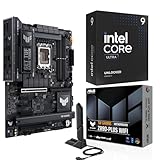
- Best Value: Micro Center CPU Motherboard Combo – Ultra 9 285K 24-Cores LGA 1851 Desktop Processor Bundle with Tuf Gaming Z890-Plus WiFi Motherboard
- Premium Choice: Intel® Core™ Ultra 9 Desktop Processor 285 24 cores (8 P-cores + 16 E-cores) up to 5.6 GHz
Choosing a flagship gaming CPU in 2026 still comes down to the same two families it has for years: Intel’s Core Ultra 9 line and AMD’s Ryzen 9. On one side you have the Intel Core Ultra 9 285K, a 24-core hybrid chip pairing 8 performance cores with 16 efficient cores and boosting to 5.7 GHz. On the other sits the AMD Ryzen 9 9950X3D, a 16-core, 32-thread part built around AMD’s second-generation 3D V-Cache — the technology that has quietly dominated gaming benchmark charts since it arrived.
The choice matters more than it used to. Modern GPUs are fast enough that a weak CPU genuinely holds back frame rates at 1440p, and the rise of heavily simulated open worlds, large-scale strategy titles and 240 Hz esports monitors has made CPU performance a real bottleneck again. Add streaming, editing and local AI workloads on top, and the “which platform do I commit to?” question carries real money and years of upgrade potential behind it. Below is a practical, benchmark-informed breakdown of how these two flagships actually differ.
As an Amazon Associate we earn from qualifying purchases at no extra cost to you.



⚡ Save on Your Next PC — Amazon Prime
Prime members get fast free shipping on the systems above, plus early access to Prime Day & Black Friday PC deals. New members get a 30-day free trial.
Watch: Intel Core Ultra 9 vs Ryzen 9: 2026 Battle — Video Review
Quick Verdict
If gaming frame rates are your single highest priority — especially at 1080p or 1440p with a high-refresh monitor — the Ryzen 9 9950X3D is the safer pick, because its 3D V-Cache delivers a consistent lead in CPU-limited titles and the AM5 socket has a longer upgrade runway. If you want a single machine that games well and chews through multi-threaded productivity, or you value Thunderbolt connectivity, a capable integrated GPU and an NPU for on-device AI, the Core Ultra 9 285K is the more versatile all-rounder.
Key Differences
- Core layout: The Ultra 9 285K uses a hybrid 24-core design (8 P-cores + 16 E-cores, 24 threads), while the Ryzen 9 9950X3D runs 16 identical Zen 5 cores with 32 threads via SMT.
- Cache strategy: AMD stacks extra L3 cache directly on one core complex, which is the single biggest reason it wins CPU-bound games. Intel counters with a wider architecture and higher clocks rather than cache volume.
- Gaming performance: Expect the 9950X3D to lead in simulation, strategy and esports titles at lower resolutions. At 4K with a GPU bottleneck, the gap between the two narrows to near-parity.
- Productivity: The 285K’s 16 E-cores make it excellent at parallel encoding and rendering, but the 9950X3D’s 32 threads keep it highly competitive in compiles and heavy content creation.
- Platform: Intel requires LGA 1851 and a Z890-class board; AMD uses AM5, which has publicly committed support well beyond this generation — a meaningful advantage if you plan a drop-in CPU upgrade later.
- Extras: Intel bundles a genuinely usable integrated Arc GPU, an NPU for local AI acceleration and broad Thunderbolt support. AMD’s integrated graphics are basic display-out only.
Intel Core Ultra 9 285K
The Core Ultra 9 285K is Intel’s most balanced flagship in years. Its 8 P-cores handle latency-sensitive game threads while the 16 E-cores absorb background load — Discord, OBS, browser tabs, shader compilation — without stealing cycles from the game itself. That makes it a strong streaming CPU, and it runs noticeably cooler and draws less power under sustained load than the previous-generation i9 it replaces, which reduces cooling costs. If you want the bundle route, the Micro Center combo pairing the 285K with a TUF Gaming Z890-Plus WiFi board is an easy way to get a matched CPU and motherboard in one purchase.
Intel also offers useful step-downs on the same platform. The locked Core Ultra 9 285 gives you the same 24-core configuration at 5.6 GHz with lower power draw for builders who don’t overclock, and the Core Ultra 7 270K Plus keeps the 24-core layout at 5.5 GHz for less money — a smart choice if your budget is better spent on the GPU.
AMD Ryzen 9 9950X3D
The Ryzen 9 9950X3D exists to solve a problem AMD’s earlier X3D chips had: you used to choose between the gaming-focused cache chip and the multi-core workhorse. This part combines both, giving you a V-Cache-equipped core complex for games and a full 16 cores for everything else. In CPU-limited scenarios the results speak for themselves — large strategy maps, dense simulation titles and 1% low frame rates are where the extra cache pays off most visibly.
Its other advantage is longevity. AM5 has proven to be a long-lived socket, so a board bought today has a realistic chance of hosting a future Ryzen upgrade without a full teardown. Efficiency is excellent too; the 9950X3D typically pulls less power in games than Intel’s flagship, which means quieter cooling and a smaller PSU requirement.
Which Should You Buy?
- For competitive high-refresh gaming: Pick the Ryzen 9 9950X3D — its cache advantage shows up exactly where frame rates matter most.
- For 4K gaming with a top-tier GPU: Either works; the Core Ultra 9 285K is the better value since the GPU sets the ceiling anyway.
- For streaming and content creation alongside gaming: The 285K’s E-cores handle background encoding gracefully.
- For a long-term upgrade path: AM5 and the 9950X3D give you the most future headroom on one motherboard.
- For a tighter budget: Drop to the Core Ultra 7 270K Plus or a prebuilt CPU-and-motherboard bundle and reinvest the savings in your graphics card.
Frequently Asked Questions
Is the Ryzen 9 9950X3D always faster in games?
No. It leads clearly in CPU-bound titles at 1080p and 1440p, but at 4K with maximum settings most games become GPU-limited and the two flagships land within a few frames of each other.
Do I need a Z890 motherboard for the Core Ultra 9 285K?
You need an LGA 1851 board, and Z890 is the enthusiast tier with the best power delivery, memory support and overclocking headroom. Bundles like the Micro Center 285K and TUF Gaming Z890-Plus WiFi kit remove the guesswork.
What about the Core i9-14900K — is it still worth buying?
The i9-14900K remains fast and still hits 6.0 GHz, so it can be good value on discount. But it uses the older LGA 1700 socket with no upgrade path and runs hotter and hungrier, so it’s a value play rather than a forward-looking build.
Which CPU runs cooler?
The Ryzen 9 9950X3D generally draws less power in gaming loads, while the Ultra 9 285K is far more efficient than Intel’s previous flagship. Both deserve a quality 360 mm AIO or a premium air cooler.
Final Verdict
For pure gaming, the Ryzen 9 9950X3D is the more reliable performer and the smarter long-term platform investment; for a do-everything machine that games at a very high level while excelling at creative and AI workloads, the Intel Core Ultra 9 285K — especially as a ready-matched motherboard bundle — is the better-rounded buy. Match the chip to how you actually use your PC and either one will comfortably outlast your next GPU.