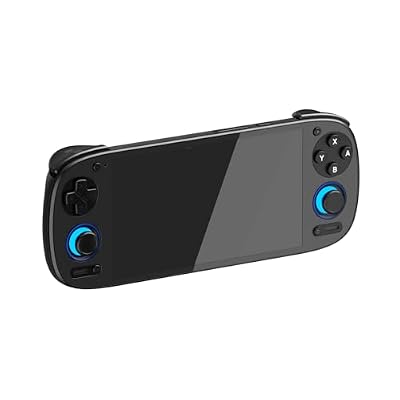
- Top Pick: Valve Steam Deck OLED 512GB
- Runner-up: GameSir G7 SE Wired Controller
- Also consider: 8BitDo Ultimate 2 Bluetooth Controller
Stray is BlueTwelve Studio’s third-person cat adventure: a lost cat, separated from its family, picks through a decaying walled cybercity of robots with a small drone companion named B-12, solving puzzles and dodging the Zurks that infest the slums. Published by Annapurna Interactive and released in July 2022, it became one of the most talked-about indie games of its year, and the Linux question has followed it ever since: is there a native Linux version, or does the cat only reach this platform through a compatibility layer?
The answer is that there is no native Linux build, and there never has been. Steam’s own platform record for Stray lists Windows and Mac builds only, with the Linux flag switched off. What Linux players get instead is close to the best outcome a non-native game can offer: the Windows version carries a Platinum rating on ProtonDB built on hundreds of reports, and Valve rates the game Steam Deck Verified with every published check passing. This article walks through that record piece by piece, including the one Proton branch worth avoiding.
As an Amazon Associate, we earn from qualifying purchases.
Quick answer
Stray has no native Linux build: Steam’s platform flags list Windows and Mac only, and its Linux requirements block is empty. The Windows version runs through Proton, where 479 ProtonDB reports hold it at Platinum. Valve rates it Steam Deck Verified with all four checks passing, so the Steam copy is a safe buy for Linux players today.
Status at a glance
| Question | Answer |
|---|---|
| Native Linux build | No |
| Builds that exist | Windows and Mac |
| Linux route | Proton, via the Steam copy |
| ProtonDB tier | Platinum, from 479 reports |
| Steam Deck rating | Verified, all four checks passing |
| Anti-cheat or publisher launcher | None |
| Multiplayer | None, single-player only |
The store record: Windows and Mac, no Linux build
Start with Steam’s own data, because it settles the native question without argument. The platform flags on Stray’s store record read windows=true, mac=true and linux=false. A Linux requirements block exists in the record, but it is an empty shell with no requirements ever published inside it — a leftover of the store template, not evidence of a build you can buy. The flags are the verdict: no native Linux version of Stray exists on Steam or anywhere else.
The Mac build deserves a sentence of its own, because it regularly causes confusion. Stray did receive a real macOS version, published with requirements naming an Apple processor and macOS 13 Ventura. That is a native build for Apple’s platform: it cannot be installed or run on a Linux system, and its existence does not signal a Linux port. BlueTwelve has announced no Linux version, so treat the Mac build as a separate platform’s good fortune and nothing more.
What the Windows build asks for is modest. The published minimum names Windows 10, an Intel Core i5-2300 or AMD FX-6350 processor, 8 GB of RAM, a GeForce GTX 650 Ti or Radeon R7 360 class graphics card with 2 GB of memory, DirectX 12 and 10 GB of storage. The category record is equally simple: single-player only, full controller support, Steam Achievements, Steam Cloud and Family Sharing. There is no anti-cheat client and no publisher launcher standing between the game and Proton, which is the structural reason the compatibility record below looks the way it does.
What the Platinum record actually says
ProtonDB rates Stray at Platinum, the database’s top tier, drawn from 479 reports. Platinum is the tier ProtonDB reserves for games that run well through Proton with no meaningful workarounds, and a pool of that size matters: it spans years of Proton versions, both major graphics vendors, and everything from handhelds to high-end desktops. A tier held across that many machines and that much time is a stable property of the game, not a lucky week.
The honest texture inside the record is about which Proton branch you pick. The reports that dominate the recent record use the current numbered Proton build and describe an out-of-the-box experience. A recurring minority note says that Proton Experimental failed to launch the game for some players, and that selecting the numbered build instead fixed it. That is the whole tinker story: if Stray ever refuses to start, the documented move is to switch from Experimental to the numbered Proton release in the compatibility settings, not to reach for launch options. A small number of reports also describe performance trouble on individual machines, which is true of every game of this size; they sit inside a Platinum pool, not against it.
Steam Deck: Verified, check by check
Valve’s own compatibility report for Stray resolves to Verified, the highest Deck category. All four of its published checks pass: the default controller configuration is fully functional, the controller glyphs shown in game match the Deck, the interface text is legible on the handheld screen, and the default graphics configuration is performant on the hardware. For a game built around a gamepad — Stray lists full controller support — that is the complete checklist a Deck owner needs.
Two footnotes keep the picture accurate. Valve’s report carries an informational note that external controllers are not supported for the primary player in its test configuration, which matters only if you planned to play docked with a separate pad as player one; the Deck’s own controls are unaffected. And Valve’s separate SteamOS category for the game sits one step lower, at Compatible with game startup functional. That rating covers the wider SteamOS family rather than the Deck itself, and it does not change the Verified badge the Deck carries.
Which copy to buy
The Steam copy is the Linux route, full stop. It is the version the entire ProtonDB record and the Deck Verified badge describe, it updates through the same client, and its Steam Cloud support means a save started on a Windows machine follows you to a Linux desktop or a Deck without any manual file work.
There is no GOG release of Stray — searches of that storefront turn up other games with similar names, not this one — so there is no DRM-free copy or offline-installer route to consider. The console versions, on PlayStation, Xbox and Nintendo hardware, are separate purchases on closed platforms and carry nothing across to a PC library. For a Linux player the decision is genuinely simple: buy it on Steam, leave the compatibility tool on the default numbered Proton, and play.
Gear for a small cat and a big city
Valve Steam Deck OLED 512GB

The natural home for a Verified game: the Deck runs the same Proton build as a Linux desktop, so the cat’s journey moves between your desk and the sofa with the save intact.
Specs:
- 7.4-inch HDR OLED display, 1280 by 800, up to 90Hz refresh
- AMD Zen 2 CPU with RDNA 2 graphics, 16 GB LPDDR5 memory
- 512 GB NVMe storage, microSD expansion
- Wi-Fi 6E and Bluetooth 5.3
- Sold primarily through Valve’s own store; the Amazon listing is a third-party seller listing
GameSir G7 SE Wired Controller

Stray’s platforming is gentle but precise, built on timed leaps between pipes and rooftops. A wired pad with Hall Effect sticks removes battery management and stick drift from the equation entirely.
Specs:
- Wired USB connection, officially licensed for Xbox
- Hall Effect joysticks and Hall Effect triggers
- 1000Hz polling rate on PC
- Two mappable back buttons and a 3.5mm headphone jack
- Works with Xbox Series X|S, Xbox One and Windows PC
8BitDo Ultimate 2 Bluetooth Controller

For players who split time between a Linux desktop and a docked Deck, the Ultimate 2 covers both ends of the room, with modern stick hardware and its own charging dock.
Specs:
- TMR joysticks with switchable Hall Effect and tactile trigger modes
- Bluetooth, 2.4G wireless and wired connections
- 1000Hz polling over 2.4G and wired connections
- 1000mAh battery with multifunctional charging dock included
- Two back paddle buttons, extra bumpers and motion control
Logitech G502 HERO Wired Gaming Mouse

Exploring the city with a mouse gives you free camera control for reading the environment, which is where Stray hides most of its memories and collectables. The G502 HERO is the long-running wired anchor for that style of play.
Specs:
- HERO 25K optical sensor
- 100 to 25,600 DPI range
- 11 programmable buttons
- Five optional 3.6 g weights
- Wired USB connection
Samsung T9 Portable SSD 2TB

Stray itself needs only 10 GB, but a fast portable drive keeps a whole Linux library movable between a desktop and a handheld dock. The T9 is rated by Samsung for read speeds up to 2,000 MB/s on a USB 3.2 Gen 2×2 host; on a lesser port it runs at that port’s lower ceiling instead.
Specs:
- 2TB capacity, model MU-PG2T0B/AM
- USB 3.2 Gen 2×2 interface over USB-C
- Maker-rated reads up to 2,000 MB/s on a Gen 2×2 host
- Compact metal enclosure
How to choose your setup
Choose by where the cat will spend its time. If you own a Steam Deck, you already hold the platform Valve verified the game on, and no purchase beyond the game itself is necessary. If you play at a desk, decide between pad and mouse by taste: the game was designed around a controller and wears its Verified badge on one, but its exploration rewards the free camera a mouse gives you. Docked Deck players should note Valve’s external-controller footnote and plan seating accordingly. Everyone should make one settings decision before the first launch: leave Proton on the default numbered build rather than Experimental, which is where the only recurring launch complaint in the record lives.
Who should skip this route
Skip it if you buy only native Linux games on principle — Stray will not meet that standard, and no port has been announced. Skip it if you were hoping the Mac build implied a wider set of options; it does not run on Linux and changes nothing here. Skip it if you want multiplayer, because there is none: this is a solitary, single-player journey of modest length. And if your only copy is on a console and you expected it to transfer, it will not — the Steam copy is a separate purchase.
FAQ
Is there a native Linux version of Stray?
No. Steam’s platform record lists Windows and Mac builds with the Linux flag off, and the Linux requirements block in the record is empty. No Linux port has been announced by BlueTwelve Studio or Annapurna Interactive.
How well does Stray run through Proton?
ProtonDB rates it Platinum, its top tier, across 479 reports. Most reporters describe an out-of-the-box experience on the numbered Proton build; a recurring note says Proton Experimental failed to launch for some players, and switching to the numbered build resolved it.
Is Stray good on Steam Deck?
Valve rates it Steam Deck Verified, with all four published checks passing: functional default controls, matching glyphs, legible interface text and a performant default configuration. One informational note flags external controllers as unsupported for the primary player in Valve’s test setup.
Do my saves carry over from a Windows PC?
Yes, through Steam Cloud, which Stray supports. A save made on a Windows machine syncs to the same Steam account on a Linux desktop or a Steam Deck, because Proton runs the same Windows build and the same save format.
Final verdict
Stray on Linux is the cleanest kind of no-native story: the build does not exist, and it barely matters. A Platinum record across 479 ProtonDB reports, a Steam Deck Verified badge with every check passing, no anti-cheat and no launcher in the way, and exactly one documented pitfall — Proton Experimental — that a single settings change avoids. Buy the Steam copy, use the numbered Proton, and go find the way home.