- Top Pick: Intel Core Ultra 7 Desktop Processor 265KF – 20 cores (8 P-cores + 12 E-cores) up to 5.5 GHz
- Best Value: Intel® Core™ Ultra 9 Processor 285K 24 cores (8 P-cores + 16 E-cores) up to 5.7 GHz
- Premium Choice: Intel® Core™ Ultra 7 Desktop Processor 265 20 cores (8 P-cores + 12 E-cores) up to 5.3 GHz
The Intel Core Ultra 7 265KF is one of the most interesting value picks in Intel’s Arrow Lake desktop range — a twenty-core, twenty-thread enthusiast-class chip at a mainstream price, with the KF suffix dropping the integrated graphics in exchange for a lower sticker. Priced around $232 it offers serious specifications for a buyer already planning to use a discrete GPU. This Intel Core Ultra 7 265KF review covers architecture, performance, platform and value.
- Intel Core Ultra 7 265KF at a Glance
- Architecture and Key Specifications
- Gaming and Productivity Performance
- Platform, Memory and Compatibility
- Cooling, Power and Build
- Who Is the Intel Core Ultra 7 265KF For?
- Pros and Cons
- Is the Intel Core Ultra 7 265KF Worth It?
- Frequently Asked Questions
- More CPU Reviews
- Related Articles
- Related Articles
- Related Guides

Intel Core Ultra 7 Desktop Processor 265KF - 20 cores (8 P-cores + 12 E-cores) up to 5.5 GHz




As an Amazon Associate we earn from qualifying purchases. Product prices and availability are accurate as of the date/time indicated.
🛒 Best Price Today on Amazon
Prime members get fast, free shipping on everything above, plus member-only deals. New members get a 30-day free trial — cancel anytime.
As an Amazon Associate we earn from qualifying purchases.


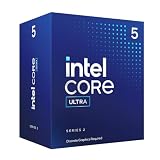


Intel Core Ultra 7 265KF at a Glance
| Component | Specification |
|---|---|
| Cores / threads | 20 cores (8 P-cores + 12 E-cores) / 20 threads |
| Base / boost clock | Up to 5.5 GHz boost |
| Cache | 36MB total cache (30MB L3) |
| Architecture | Arrow Lake (hybrid, no Hyper-Threading) |
| Socket | LGA1851 |
| TDP | 125W |
| Integrated graphics | None (KF suffix — discrete GPU required) |
| Cooler in box | Not included |
| Price | Around $232 |
Architecture and Key Specifications
The Ultra 7 265KF is an Arrow Lake chip with eight Performance cores and twelve Efficient cores, totalling twenty cores. Because Arrow Lake removes Hyper-Threading, the thread count equals the core count: twenty threads in total. Boost reaches up to 5.5 GHz on the P-cores, with 36MB of total cache (30MB L3) and a 125W TDP.
The KF suffix is the headline value play — it removes the integrated graphics block versus the K version, allowing Intel to price the chip more aggressively. For buyers who are always going to install a discrete GPU, the iGPU is not a meaningful loss and the saving is a meaningful gain. The chip is unlocked for overclocking.
Gaming and Productivity Performance
For gaming, eight Arrow Lake P-cores at 5.5 GHz make the 265KF competitive across modern titles at 1080p, 1440p and 4K when paired with a strong GPU. It will not match an X3D Ryzen for the very highest competitive frame rates, but it is comfortably in the upper-tier of mainstream gaming CPUs.
For productivity, twenty cores is a serious specification — even without Hyper-Threading, twenty Arrow Lake cores handle code builds, video encoding, multi-track audio work and parallel virtualisation impressively. For a mixed gaming and content creation machine at this price, the 265KF is one of the most capable picks on the market.
Platform, Memory and Compatibility
The 265KF uses Intel’s current LGA1851 socket on Intel 800-series chipset motherboards. There is no compatibility with the older LGA1700 platform. Memory is DDR5 only, with EXPO and XMP kits at standard Arrow Lake speeds widely supported by Z890 and B860 boards.
LGA1851 boards are typically more expensive than the mature LGA1700 ecosystem, but the chip’s value at this price helps balance the total build cost. The platform brings current PCIe and connectivity standards. See our best LGA1851 motherboards guide for matching boards.
Cooling, Power and Build
No cooler is included. The 125W TDP and high boost clocks mean the 265KF deserves strong cooling — a quality 240mm or 280mm AIO, or a top-tier dual-tower air cooler, is the natural pairing. Lower-tier coolers will work but will see the chip throttle under sustained multi-threaded loads.
Power draw under load is moderate-to-high; a quality 750W power supply is sensible when paired with a strong GPU. The 265KF is an enthusiast chip at a mainstream price, and the cooling and PSU budget should be specified to match the performance on tap.
Who Is the Intel Core Ultra 7 265KF For?
The 265KF is for the buyer who wants enthusiast-class specifications on Intel’s current platform without paying enthusiast prices, and who is already planning a discrete GPU. It is ideal for 1440p and 4K gaming paired with an RTX 4070, RTX 4070 Ti, RTX 4080 or similar GPU, and equally strong as a creator workhorse.
It is less suited to two groups: buyers who need integrated graphics for display output without a GPU (consider the K version instead); and pure gamers chasing maximum frame rates, who should look at the 9800X3D. For value-focused enthusiasts, the 265KF is a strong pick.
Pros and Cons
Pros: Twenty cores; up to 5.5 GHz boost; 36MB total cache; unlocked KF chip; very competitive price for the specification; modern Arrow Lake architecture on the current LGA1851 platform.
Cons: No integrated graphics (discrete GPU required); no cooler included; LGA1851 board prices are higher than legacy LGA1700; thread count equals core count due to no Hyper-Threading.
Is the Intel Core Ultra 7 265KF Worth It?
At around $232 the Intel Core Ultra 7 265KF is one of the strongest value specifications on the current Intel platform — twenty cores and a 5.5 GHz boost on the latest socket is a serious amount of CPU for the price.
Buyers who need integrated graphics should pay for the K version; pure gamers should consider AMD’s X3D chips. But for buyers who already plan a discrete GPU and want a current-gen Intel chip with serious thread count at a sharp price, the 265KF earns a clear recommendation.
Frequently Asked Questions
How many threads does the Intel Core Ultra 7 265KF have?
Twenty threads. Arrow Lake has no Hyper-Threading, so the Ultra 7 265KF’s twenty cores translate to exactly twenty threads.
Does the Core Ultra 7 265KF have integrated graphics?
No. The KF suffix indicates no integrated graphics, so the 265KF requires a discrete graphics card to function.
Does the Core Ultra 7 265KF come with a cooler?
No. Intel does not include a cooler with the K and KF series, and a quality 240mm or 280mm AIO is recommended.
What socket and chipset does the Core Ultra 7 265KF use?
It uses the LGA1851 socket on Intel 800-series chipset motherboards. It is not compatible with the older LGA1700 platform.
Compared with the older 13600K, the 265KF offers more cores, higher clocks and a newer platform but at the cost of integrated graphics. Compared with the K version of the same chip, the KF’s price discount is meaningful if you are always going to use a discrete GPU — and most buyers in this performance tier already are. The 265KF is at its best in mixed gaming and content-creation builds where the extra cores justify themselves in everyday use, and where the DDR5-only LGA1851 platform makes sense as a long-term Intel investment. It is one of Arrow Lake’s most clear-cut value picks.
One useful framing: the 265KF is the chip you pick when you want enthusiast-class specifications at a mainstream-friendly price and you are happy to bring your own discrete GPU. The KF suffix is a deliberate value lever, and at this price tier most buyers are already specifying an RTX 4070-class card or stronger, which makes the missing iGPU a non-issue. Twenty Arrow Lake cores at 5.5 GHz is a serious amount of compute for the money, and the chip is well-suited to mixed gaming, content creation and developer workloads on a fresh LGA1851 build that should remain relevant well into the next platform cycle.
More CPU Reviews
- Intel Core Ultra 9 285K Review: Flagship Arrow Lake Desktop CPU
- AMD Ryzen 5 5500 Review: Ultra-Budget AM4 Six-Core
- AMD Ryzen 5 7600X Review: Entry AM5 Six-Core
- AMD Ryzen 5 9600X Review: Zen 5 Mainstream Six-Core
- AMD Ryzen 7 9700X Review: Zen 5 Eight-Core
- AMD Ryzen 7 7800X3D Review: Gaming Legend AM5 X3D
- AMD Ryzen 7 9800X3D Review: Current Gaming Flagship
- AMD Ryzen 9 9950X Review: 16-Core Productivity Flagship
Affiliate Disclosure: As an Amazon Associate, we earn from qualifying purchases. If you click a link and make a purchase, we may earn a small commission at no extra cost to you. Prices and availability are accurate as of publication and may change.
Related Articles
Looking for more on this topic? Browse the hand-picked guides below — each one applies the same scoring rubric used in this review.