- Top Pick: Compatible for PICO 4 Ultra VR Glasses, Smart 3D, Panoramic, Gaming, Screen Casting, All-in-one Movie Viewing Device MR Headset Vision
- Best Value: Meta Quest 3 512GB | Virtual Reality — VR Headset — Gorilla Tag Bundle
- Premium Choice: Meta Quest Pro Headset with Virtual Reality Field Trips 1-Month Subscription
Affiliate disclosure: As an Amazon Associate we earn from qualifying purchases. This post contains affiliate links — if you buy through them we may earn a small commission at no extra cost to you. This never affects our recommendations.
In a hurry? See the top-rated Pico 4 Ultra deals available right now:
🛒 Check Pico 4 Ultra Prices on Amazon →🛒 Best Price Today on Amazon
Prime members get fast, free shipping on everything above, plus member-only deals. New members get a 30-day free trial — cancel anytime.
Start 30-Day Prime Free Trial →See Today’s Amazon DealsPico 4 Ultra Review: Quest 3 Alternative Worth Buying?
The Pico 4 Ultra stands as ByteDance’s premium entry in the VR gaming market, challenging Meta’s dominance with solid hardware and competitive pricing. As a China-focused alternative to the Meta Quest series, the Pico 4 Ultra offers impressive display quality, capable hand-tracking, and integration with ByteDance’s growing game ecosystem. For gamers considering VR but hesitant about Meta’s ecosystem lock-in, the Pico 4 Ultra presents an interesting option. This review examines whether the Pico 4 Ultra deserves consideration alongside the Meta Quest 3, evaluating its display technology, performance capabilities, game library depth, and overall value proposition. We’ll compare it with established competitors and help you decide if stepping outside the Meta ecosystem is worth it.
Quick Verdict
The Pico 4 Ultra is a solid VR headset with excellent display quality that challenges the Meta Quest 3 on hardware specs. However, its limited global availability and smaller game library make it a riskier purchase for Western gamers. If you prioritize display quality and can access Pico’s game ecosystem, it’s worth considering. For most buyers, the Quest 3’s superior game selection and proven support make it the safer choice. The Meta Quest 3S offers better value if budget is your primary concern.
As an Amazon Associate we earn from qualifying purchases at no extra cost to you.
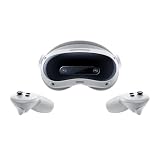


Display & Lenses: Premium Visual Experience
The Pico 4 Ultra features dual 1800 x 1920 LCD panels per eye—comparable to the Meta Quest 3S but slightly below the Quest 3’s resolution. The display quality compensates with excellent color accuracy and contrast, delivering vibrant visuals in colorful games like Beat Saber and detailed environments in exploration titles. The 90-degree horizontal and 98-degree vertical field of view offers slightly better vertical coverage than competitors, creating a more immersive picture. Fresnel lenses provide good clarity across the visual field with minimal distortion. The 90Hz refresh rate supports smooth gameplay, though the display doesn’t reach the 120Hz maximums of premium PCVR systems. Compared to the HTC Vive Focus Vision, the Pico 4 Ultra offers brighter, more saturated colors. The passthrough color camera system is less capable than the Quest 3’s mixed reality implementation, limiting augmented reality applications.
Tracking & Controllers: Solid Performance
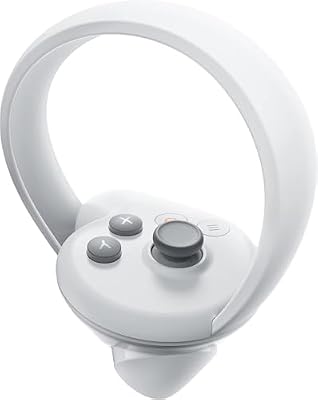
The Pico 4 Ultra employs inside-out tracking with four cameras, delivering accurate headset position sensing during gameplay. Hand-tracking is functional but less responsive than Quest 3 systems, with occasional drops during rapid hand movements. The redesigned controllers feel premium with tactile buttons and satisfying haptic feedback. Tracking consistency is good during normal gameplay but occasionally struggles in cluttered environments or extreme lighting conditions. Battery life reaches 20+ hours, exceeding most competitors. When compared to the Bigscreen Beyond 2‘s lighthouse tracking, the Pico 4 Ultra’s inside-out system is less accurate but offers greater freedom of movement without external sensors.



As an Amazon Associate we earn from qualifying purchases. Product prices and availability are accurate as of the date/time indicated.
Performance & Comfort: Capable Hardware
The Pico 4 Ultra runs Qualcomm Snapdragon XR Gen 1 processor, delivering solid performance for most VR games with consistent 72-90Hz frame rates. Performance is slightly lower than the Quest 3 on demanding titles but sufficient for casual and mid-core gaming. The headset weighs 630 grams, making it heavier than the Meta Quest 3S but still manageable for extended sessions. The adjustable head strap distributes weight reasonably well, though some users report fatigue after 2+ hours. Thermal management is adequate, with minimal throttling during normal play. Storage options of 128GB and 256GB are standard, providing space for 5-10 large titles. Battery life ranges from 2-2.5 hours, matching Quest 3 performance but lower than some PCVR-tethered alternatives.
Game Library: Growing but Limited
The Pico 4 Ultra’s game library includes popular titles like Beat Saber, Superhot, and Blade & Sorcery, but lacks the depth of the Meta Quest Store. Western gamers will find fewer exclusive titles and a smaller selection of indie games. The ecosystem is strongest in China, where ByteDance’s partnerships provide localized content. PC connection capabilities exist but are less polished than Meta’s Air Link implementation. Updates to the game library have slowed relative to the Quest ecosystem, and future support is uncertain given Meta’s market dominance.
Pros & Cons
| Pros | Cons |
|---|---|
| Excellent color and contrast quality | Limited game library compared to Quest |
| Good controller battery life (20+ hours) | Less hand-tracking precision than Quest 3 |
| Premium build quality | Heavier than some alternatives |
| Competitive pricing | Poor Western market availability |
| Dual LCD display technology | Uncertain long-term support |
| Good thermal management | Less mature ecosystem than Quest |
Versus Alternatives
Compared to the Meta Quest 3, the Pico 4 Ultra matches display quality but falls behind on game library and ecosystem maturity. Against the Samsung Galaxy XR, the Pico 4 Ultra is more established but faces the same ecosystem constraints. When compared to PCVR headsets like the Pimax Crystal Light, the Pico 4 Ultra is more affordable and portable but sacrifices visual fidelity. The HTC Vive Focus Vision offers better tracking and more mature enterprise support.
Who Should Buy It?
The Pico 4 Ultra is best suited for Western gamers who have good access to Chinese import channels and don’t mind a smaller game library. It’s ideal if you prioritize display quality over ecosystem breadth or want to avoid Meta’s platform. For most Western audiences, the risk of limited support and reduced game library makes the Quest series a safer investment. Technical enthusiasts who enjoy exploring alternative platforms might appreciate the Pico 4 Ultra’s unique position.
Pico 4 Ultra Specifications
| Specification | Value |
|---|---|
| Display Resolution | 1800 x 1920 per eye |
| Field of View | 90° H x 98° V |
| Refresh Rate | 90Hz |
| Processor | Snapdragon XR Gen 1 |
| RAM | 8GB |
| Storage | 128GB / 256GB |
| Weight | 630g (1.39 lbs) |
| Battery Life | 2-2.5 hours |
| Controller Battery | 20+ hours |
| IPD Adjustment | Mechanical |
| Hand Tracking | Yes (4 cameras) |
| Price | $399-479 (import) |
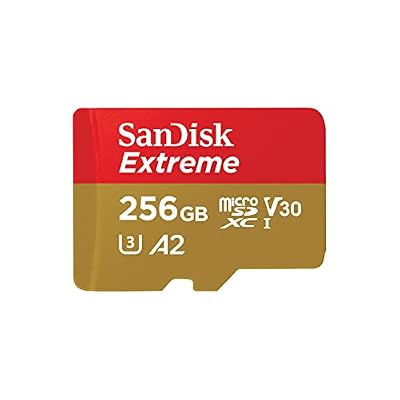
SANDISK 256GB Extreme microSD Card + Adapter, Up to 190MB/s Read Speeds | UHS-I, V30, 5K & 4K UHD, U3, C10, A2, Up to 130MB/s Write Speeds, Ideal for Action Cam, Drone, Smartphone- SDSQXAV-256G-GN6MA





As an Amazon Associate we earn from qualifying purchases. Product prices and availability are accurate as of the date/time indicated.
Frequently Asked Questions
Is the Pico 4 Ultra available in the US?
Official availability is limited. You can purchase it through international import channels, but warranty support and software updates may be unreliable for Western users.
Can I use the Pico 4 Ultra with my gaming PC?
Yes, but the experience is less polished than Meta’s Air Link. Connection can be finicky, and frame rate consistency isn’t as reliable as Quest systems.
Does the Pico 4 Ultra have hand-tracking?
Yes, it includes four cameras for hand-tracking, though the accuracy isn’t as high as the Meta Quest 3’s implementation.
What’s the warranty situation for importing a Pico 4 Ultra?
Third-party warranties are typically limited. Repairs may be difficult to arrange outside of China, making purchase riskier than domestic headsets.
Can I download games from the Meta Store on the Pico 4 Ultra?
No. You’re limited to the Pico ecosystem, which has significantly fewer titles than Meta’s store.
Final Verdict
The Pico 4 Ultra is a technically competent VR headset with excellent display quality that deserves consideration by enthusiasts willing to navigate import logistics. However, for the vast majority of Western gamers, the limited game library, uncertain support, and import hassles make it a riskier choice than the Meta Quest 3 or Meta Quest 3S. Unless you have specific reasons to avoid Meta’s ecosystem or plan to use the headset exclusively in China, stick with the Quest series for better ecosystem support and game selection.
Related Articles
Looking for more on this topic? Browse the hand-picked guides below — each one applies the same scoring rubric used in this review.