

The AMD Ryzen 5 9600X is the entry point into AMD’s newest Zen 5 architecture on AM5 — a six-core, twelve-thread chip that boosts to 5.4 GHz inside a tight 65W TDP. Priced around $180, it positions itself as the efficient, drop-in successor to the popular 7600X. This AMD Ryzen 5 9600X review covers architecture, performance, platform and value.
- Watch: AMD Ryzen 5 9600X Review: Zen 5 Mainstream Six-Core — Video Review
- AMD Ryzen 5 9600X at a Glance
- Architecture and Key Specifications
- Gaming and Productivity Performance
- Platform, Memory and Compatibility
- Cooling, Power and Build
- Who Is the AMD Ryzen 5 9600X For?
- Pros and Cons
- Is the AMD Ryzen 5 9600X Worth It?
- Frequently Asked Questions
- More CPU Reviews
- Related Articles
- Related Articles
- Related Guides
As an Amazon Associate we earn from qualifying purchases at no extra cost to you.








14
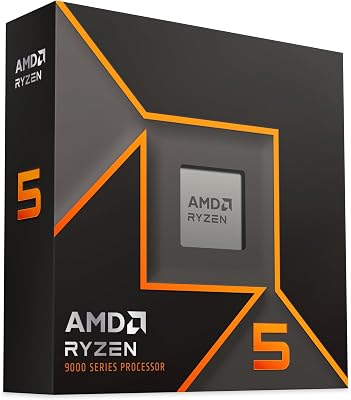
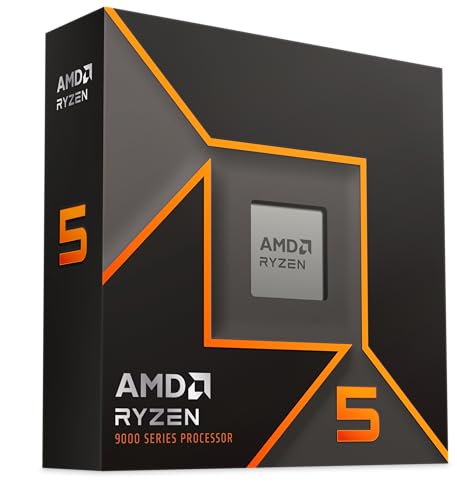
AMD Ryzen™ 5 9600X 6-Core, 12-Thread Unlocked Desktop Processor
In Stock
Updated: July 24, 2026



As an Amazon Associate we earn from qualifying purchases. Product prices and availability are accurate as of the date/time indicated.
🛒 Best Price Today on Amazon
Prime members get fast, free shipping on everything above, plus member-only deals. New members get a 30-day free trial — cancel anytime.
Watch: AMD Ryzen 5 9600X Review: Zen 5 Mainstream Six-Core — Video Review
AMD Ryzen 5 9600X at a Glance
| Component | Specification |
|---|---|
| Cores / threads | 6 cores / 12 threads |
| Base / boost clock | 3.9 GHz base / up to 5.4 GHz boost |
| Cache | 32MB L3 |
| Architecture | Zen 5 |
| Socket | AM5 |
| TDP | 65W |
| Integrated graphics | Basic AMD Radeon Graphics (RDNA 2) |
| Cooler in box | Not included |
| Price | Around $180 |
Architecture and Key Specifications
The 9600X is a Zen 5 part with six cores, twelve threads and 32MB of L3 cache, boosting up to 5.4 GHz inside a 65W TDP — a notable drop from the 105W of the 7600X for very similar real-world performance, which is the headline efficiency story of the Ryzen 9000 series. A small RDNA 2 iGPU is included for display output.
Zen 5 brings IPC improvements over Zen 4 thanks to a wider front end and faster execution resources, and the 9600X is the cheapest way to access that architecture today. It is the new mainstream baseline for AMD on AM5, replacing the role the 7600X has played since 2022.
Gaming and Productivity Performance
For gaming, the 9600X delivers strong 1080p and 1440p performance in modern titles, with the high 5.4 GHz boost keeping it competitive in CPU-bound scenes. It is a natural pairing with an RTX 4060, RTX 4060 Ti, RX 7700 XT or RTX 4070, where it will rarely be the bottleneck at mainstream settings.
On productivity, six Zen 5 cores comfortably handle daily multitasking, code compilation, web work and light content creation. Multi-threaded rendering throughput is improved over Zen 4 thanks to the architectural gains, but buyers running serious creator workloads should still look at the 9700X or higher-core Ryzen 9 parts.
Platform, Memory and Compatibility
The 9600X uses Socket AM5, with compatibility across the full B650, B650E, X670, X670E and X870 motherboard ecosystem. AMD has been clear that Zen 5 drops into existing AM5 boards with a BIOS update — owners of a Ryzen 7000-series system can typically upgrade without replacing the motherboard.
Memory is DDR5, with EXPO kits at DDR5-6000 CL30 remaining the standard well-tuned pairing for Ryzen on AM5. PCIe 5.0 support continues on the GPU slot and primary M.2. AM5 remains AMD’s stated long-term socket. See our best AM5 motherboard guide for board picks.
Cooling, Power and Build
No cooler is included in the box. The good news is that the 65W TDP makes the 9600X friendly to cool — a quality 120mm or 240mm air cooler is plenty, with a 240mm AIO being overkill in most cases. This is one of the easiest current desktop CPUs to keep quiet under load.
Lower power draw also means lower system power requirements: a quality 550W to 650W supply is comfortable for typical builds. The 9600X is one of the most well-mannered chips in the current AMD line-up — a sensible base for builders who care about efficiency.
Who Is the AMD Ryzen 5 9600X For?
The 9600X is for the mainstream gamer or daily-driver buyer who wants a current-generation, efficient CPU on AMD’s long-supported AM5 platform. It pairs well with mainstream and upper-mainstream GPUs, runs cool, and gives access to the latest architecture without paying for cores you do not need.
It is less suited to two specific groups: buyers focused purely on absolute gaming performance, who will get more out of the 7800X3D or 9800X3D thanks to 3D V-Cache; and serious content creators, who should step up to higher core counts. For everyone else, it is a sensible default.
Pros and Cons
Pros: Newest Zen 5 architecture; 5.4 GHz boost; very efficient 65W TDP; easy to cool; AM5 long upgrade path; basic iGPU included; drop-in upgrade for Ryzen 7000 owners.
Cons: No cooler included; pure gaming buyers may prefer an X3D part; only modest gen-on-gen gaming uplift over the 7600X in many titles.
Is the AMD Ryzen 5 9600X Worth It?
At around $180 the AMD Ryzen 5 9600X is a strong mainstream choice for buyers building a new system on AM5 or upgrading from an older Ryzen. The efficiency story is genuine, performance is competitive, and the platform has the longest runway in the current desktop market.
If you already own a Ryzen 7000-series chip, the upgrade is incremental. But for a fresh mainstream build that prioritises efficiency and current-gen architecture, the 9600X is one of the most rational picks at this price.
Frequently Asked Questions
Does the Ryzen 5 9600X come with a cooler?
No. AMD does not include a cooler, but the 65W TDP makes it easy to cool with a quality mid-range air or AIO cooler.
Does the Ryzen 5 9600X have integrated graphics?
Yes. A small AMD Radeon RDNA 2 iGPU is included, suitable for display output rather than gaming.
Can I drop the Ryzen 5 9600X into an existing AM5 motherboard?
Yes, in most cases. Existing AM5 boards typically need a BIOS update to support Zen 5 chips like the 9600X.
Is the Ryzen 5 9600X better than the Ryzen 5 7600X?
It is more efficient and a touch faster overall, with modern Zen 5 IPC, but gaming gains over the 7600X are modest in many titles.
Compared with the older 7600X, the 9600X is the more efficient, slightly faster choice for new buyers — and the 65W TDP makes it easier to put in a compact case or a quiet build. Compared with Intel’s Core Ultra 5 225, the 9600X holds an SMT thread-count advantage (12 vs 10) and benefits from the longer AM5 upgrade path. For mainstream gamers who want a future-proof base and would rather not overspend on cores they will not use today, it is a confident default — and it leaves headroom in the budget for a stronger GPU, which is usually the better way to spend the money.
One useful framing: the 9600X is best understood as the ‘gentle upgrade’ option in AMD’s current line-up — the chip you specify when you want the newest architecture without dramatic platform reshuffles. Builders coming from a Ryzen 5 5600X on AM4 will see a clear generational lift across gaming and productivity, and the move to DDR5 and PCIe 5.0 quietly futureproofs the system. For shoppers who plan to spend big on the GPU and prefer a sensible, current-gen CPU to anchor the rest of the build, the 9600X fits a very common 2026 buying pattern: invest where it counts most, keep the rest balanced, and revisit the CPU in a couple of years when more powerful AM5 chips have come down in price and the upgrade is a simple drop-in.
More CPU Reviews
- AMD Ryzen 7 9700X Review: Zen 5 Eight-Core
- AMD Ryzen 7 7800X3D Review: Gaming Legend AM5 X3D
- AMD Ryzen 7 9800X3D Review: Current Gaming Flagship
- AMD Ryzen 9 9950X Review: 16-Core Productivity Flagship
- AMD Ryzen 9 9950X3D Review: 16-Core Gaming + Creator Hybrid
- Intel Core i5-13600K Review: Popular 14-Core Gaming Intel
- Intel Core Ultra 5 225 Review: Entry Arrow Lake Desktop CPU
- Intel Core Ultra 7 265KF Review: Mainstream Arrow Lake (No iGPU)
Affiliate Disclosure: As an Amazon Associate, we earn from qualifying purchases. If you click a link and make a purchase, we may earn a small commission at no extra cost to you. Prices and availability are accurate as of publication and may change.
Related Articles
Looking for more on this topic? Browse the hand-picked guides below — each one applies the same scoring rubric used in this review.
Ready to decide? Our #1 pick for 2026 is the Cores / threads.
Live price & availability on Amazon.


