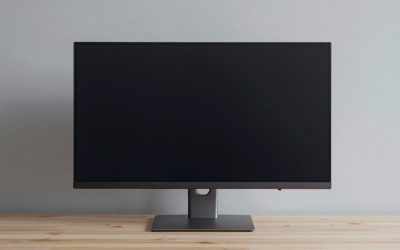
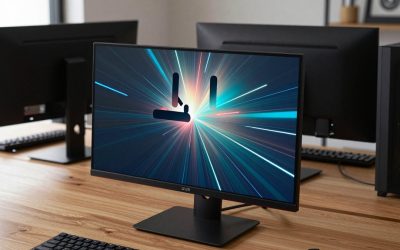
- Top Pick: Dell 27 240Hz Gaming Monitor – SE2726HG – 27-inch FHD (1920×1080) 240Hz Display, in-Plane Switching (IPS) Technology, AMD FreeSync Premium, TÜV 3-Star, 2X HDMI, DisplayPort 1.4, Tilt
- Best Value: Dell 24 240Hz Gaming Monitor – SE2426HG – 23.8-inch FHD (1920×1080) 240Hz Display, in-Plane Switching (IPS) Technology, AMD FreeSync™ Premium, TÜV 3-Star, 2X HDMI, DisplayPort 1.4, Tilt
- Premium Choice: AOC 27" Gaming Monitor QHD 260Hz Overclocked IPS NVIDIA G-SYNC Q27G41ZE
Affiliate disclosure: As an Amazon Associate we earn from qualifying purchases. This post contains affiliate links — if you buy through them we may earn a small commission at no extra cost to you. This never affects our recommendations.
- Best 240Hz Gaming Monitor in 2026: Top 5 Picks for Competitive-Level Smoothness
- Quick Comparison: Top 5 240Hz Gaming Monitors in 2026
- The Top 5 Best 240Hz Gaming Monitors
- 240Hz vs 165Hz vs 360Hz: Where the Real-World Difference Is Felt
- GPU Requirements for 240Hz Gaming
- IPS vs OLED vs TN at 240Hz: Which Panel Technology Wins?
- Conclusion: Which 240Hz Monitor Should You Buy?
- Frequently Asked Questions
- Related Articles
- Related Articles
As an Amazon Associate we earn from qualifying purchases at no extra cost to you.
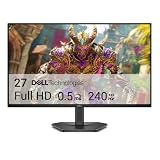


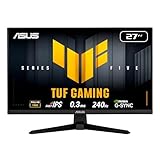


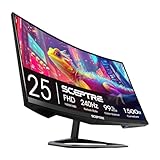
In a hurry? See the top-rated 240Hz Gaming Monitor deals available right now:
🛒 Check 240Hz Gaming Monitor Prices on Amazon →🛒 Best Price Today on Amazon
Prime members get fast, free shipping on everything above, plus member-only deals. New members get a 30-day free trial — cancel anytime.
Start 30-Day Prime Free Trial →See Today’s Amazon DealsBest 240Hz Gaming Monitor in 2026: Top 5 Picks for Competitive-Level Smoothness
Not everyone needs 240Hz. Let’s say that upfront.
If you’re playing open-world RPGs at 60 fps or strategy games at capped framerates, a 240Hz panel buys you nothing but a higher electricity bill. But if you’re deep in competitive shooters — CS2, Valorant, Apex Legends, Overwatch 2 — or any game where tracking moving targets at speed is the skill floor, 240Hz is where the experience genuinely changes.
The visual difference between 60Hz and 144Hz is dramatic. Between 144Hz and 240Hz, it’s subtler but real: less motion blur during fast flicks, lower perceived input latency, and smoother target tracking under pressure. Elite players don’t run 240Hz monitors because of placebo — they run them because the physics of human visual perception respond to higher frame presentation, and in games where milliseconds determine outcomes, that edge compounds.
Who actually needs a 240Hz monitor in 2026:
- Competitive FPS players (CS2, Valorant, Apex, R6 Siege)
- Fighting game players who read frame data in real time
- Anyone with a mid-to-high-end GPU that regularly hits 200+ fps in their main titles
- Streamers who game competitively and want both performance and visual quality
GPU requirements reality check: To saturate a 1080p 240Hz panel, you need to sustain 240+ fps consistently. An RTX 4060 or RX 7600 handles that in most esports titles. For 1440p 240Hz — the sweet spot in 2026 — you’re looking at an RTX 4070 or RX 7900 GRE minimum for competitive titles, and an RTX 4080 or better if you want to run demanding games like Cyberpunk 2077 above 200 fps at that resolution.
Quick Comparison: Top 5 240Hz Gaming Monitors in 2026
| Monitor | Resolution | Panel | Response Time (GtG) |
|---|---|---|---|
| ASUS ROG Swift PG27AQN | 1440p | IPS | 1ms |
| LG 27GR95QE-B | 1440p | OLED | 0.03ms |
| AOC AGON AG274QZM | 1440p | Mini-LED | 1ms |
| ASUS TUF Gaming VG27AQM | 1440p | Fast IPS | 1ms |
| BenQ ZOWIE XL2546X | 1080p | TN | 0.5ms |
The Top 5 Best 240Hz Gaming Monitors
1. ASUS ROG Swift PG27AQN — Best 1440p 240Hz Overall
ASUS ROG Swift PG27AQN
The PG27AQN is the benchmark that other 1440p 240Hz monitors get measured against. ASUS built this panel specifically for competitive play at higher resolutions — it’s a 27-inch 1440p IPS running at a native 240Hz with G-Sync Ultimate certification, which means it carries NVIDIA’s full hardware module rather than a software implementation.
Panel specs that matter:
- Panel type: IPS (In-Plane Switching)
- Pixel response time: 1ms GtG (gray-to-gray) with overdrive engaged
- Color accuracy: DCI-P3 98% coverage — unusually wide for a competitive monitor
- Adaptive sync: G-Sync Ultimate (hardware module)
- Ergonomics: Full tilt, swivel, pivot, and height adjustment; solid build quality throughout
At 240Hz and 1440p simultaneously, IPS glow is present but controlled. The panel’s overdrive implementation is clean — inverse ghosting is minimal at the recommended overdrive setting, which matters when tracking enemies through high-contrast backgrounds.
The G-Sync Ultimate module adds cost but also adds variable overdrive, which adjusts pixel transition aggressiveness in real time as your frame rate fluctuates. When you dip from 240 to 180 fps mid-session, the monitor adapts rather than introducing ghosting artifacts.
Power draw sits around 40–45W under typical gaming loads — reasonable for the panel category.
Who it’s for: RTX 4070 Ti and above owners who want the highest-certified 1440p 240Hz experience without compromises.
2. LG 27GR95QE-B — Best OLED 240Hz, Incredible Contrast
LG 27GR95QE-B
OLED at 240Hz changes how competitive gaming looks. The LG 27GR95QE-B is a 27-inch 1440p WQHD OLED panel that delivers pixel-perfect blacks alongside a 240Hz refresh rate — a combination that was premium-tier exotic just two years ago and is now an attainable upgrade for serious players.
Panel specs that matter:
- Panel type: OLED (self-emissive)
- Pixel response time: 0.03ms GtG — the fastest category in consumer monitors
- Contrast ratio: Effectively infinite (true black, no backlight bleed)
- Color accuracy: DCI-P3 98.5% — exceptional out of the box
- Adaptive sync: FreeSync Premium Pro, G-Sync Compatible
- Ergonomics: Height, tilt, swivel adjustment; clean industrial design
The 0.03ms response time is not marketing math — OLED pixels switch state nearly instantaneously because they emit their own light and don’t require liquid crystal rotation. In motion-intensive games, this eliminates trailing artifacts on moving objects that even fast IPS panels exhibit at high overdrive.
The trade-off is OLED-specific: burn-in risk is real over multi-year ownership, particularly for static HUD elements. LG’s pixel-shift algorithms help, but if you park on a game’s main menu for hours daily, the risk is non-trivial. For players who rotate between multiple titles, it’s largely a non-issue in practice.
Power draw is lower than IPS at typical brightness — around 25–35W — because OLED only powers lit pixels.
Who it’s for: Players who want the best possible motion clarity and are willing to manage OLED care habits. The contrast advantage also makes dark maps — Mirage night, night-mode Apex — genuinely easier to read.
3. AOC AGON AG274QZM — Best Local Dimming at 240Hz
AOC AGON AG274QZM
Mini-LED backlighting at 240Hz is the AG274QZM’s specific value proposition. Where standard IPS panels use a uniform backlight that bleeds light into dark regions, Mini-LED arrays hundreds of individually controlled zones behind the panel, allowing dramatic improvements in contrast without going full OLED.
Panel specs that matter:
- Panel type: IPS with Mini-LED backlight (FALD — Full Array Local Dimming)
- Pixel response time: 1ms GtG
- Dimming zones: 576 local dimming zones
- Peak HDR brightness: Up to 1,400 nits
- Color accuracy: DCI-P3 95%+
- Adaptive sync: FreeSync Premium Pro, G-Sync Compatible
- Ergonomics: Full ergonomic adjustment, solid stand with cable management
At 576 zones, halo blooming — the glow-around-bright-objects artifact common to lesser local dimming implementations — is visibly reduced compared to monitors with 64 or 128 zones. It’s not zero, but in real gameplay it’s infrequent enough to stop being distracting.
The HDR implementation here is legitimate: 1,400 nit peak brightness with proper local dimming creates a genuinely different visual experience compared to “HDR 400” budget implementations that are essentially SDR with a higher brightness cap.
Power draw peaks high — up to 120W under full HDR load — because driving hundreds of LED zones is power-intensive. Typical gaming draws 55–70W.
Who it’s for: Players who want meaningful HDR quality alongside 240Hz, or who game in environments where contrast and brightness matter more than OLED-level response times.
4. ASUS TUF Gaming VG27AQM — Best Value 1440p 240Hz+
ASUS TUF Gaming VG27AQM
At roughly half the price of the ROG Swift PG27AQN, the VG27AQM delivers 27-inch 1440p at 260Hz — slightly above the 240Hz baseline — using ASUS’s Fast IPS panel technology. For budget-conscious competitive players, this is the monitor to beat.
Panel specs that matter:
- Panel type: Fast IPS
- Native refresh rate: 260Hz
- Pixel response time: 1ms GtG
- Color accuracy: sRGB 130% (approximately DCI-P3 90%)
- Adaptive sync: FreeSync Premium, G-Sync Compatible
- Ergonomics: Tilt and height adjustment; swivel is limited — a real compromise at this price point
Fast IPS differs from standard IPS by using a modified liquid crystal formulation that reduces pixel transition times. In practice, the VG27AQM’s overdrive implementation is competent — the “Racing” overdrive preset handles most gaming scenarios without significant inverse ghosting.
Color accuracy at 260Hz is solid for competitive gaming though not reference-grade. Calibrated, it hits Delta E below 2 across most of the sRGB gamut.
The 260Hz ceiling is a genuine advantage over strict 240Hz panels — it gives you 20Hz of headroom, which matters if you’re pushing 250+ fps in CS2 and want to reduce screen tearing without hard capping at 240.
Power draw is efficient at around 30–40W — among the lowest in the 1440p 240Hz+ category.

Who it’s for: RTX 4070 owners who want 1440p 240Hz+ without spending $700+. The performance-per-dollar ratio in competitive gaming is exceptional.
5. BenQ ZOWIE XL2546X — Best Pure Esports / CS2 Monitor
BenQ ZOWIE XL2546X
BenQ’s ZOWIE line exists for one purpose: competitive play at the highest level. The XL2546X is a 24.5-inch 1080p TN panel running at 240Hz, and it represents a deliberate set of trade-offs that many professional players still consider correct.
Panel specs that matter:
- Panel type: TN (Twisted Nematic)
- Pixel response time: 0.5ms GtG — fastest among non-OLED panels in this list
- Color accuracy: sRGB ~95% — narrower gamut than IPS, muted colors
- Adaptive sync: FreeSync, G-Sync Compatible
- DyAc+ (Dynamic Accuracy Plus): Proprietary backlight strobing for motion clarity
- Ergonomics: Extensive adjustment including height, tilt, swivel, pivot; monitor hood included; quick-detach stand system
TN panels have a justified reputation for poor viewing angles and washed-out colors. On the XL2546X specifically, colors look acceptable straight-on, but shift noticeably past 30 degrees off-axis. In a fixed gaming setup where you’re always centered, this rarely matters.
What TN does better than any other technology is raw pixel response. At 0.5ms GtG, transitions are faster than Fast IPS — and when combined with BenQ’s DyAc+ backlight strobe, perceived motion blur drops to near-zero. DyAc+ works by pulsing the backlight in sync with frame delivery, effectively eliminating sample-and-hold blur. The result is target tracking that looks crisper than higher-Hz IPS monitors in motion-intensive scenarios.
The 1080p resolution is intentional: lower pixel count means your GPU can more easily push 240+ fps, reducing the hardware barrier. An RTX 4060 or even RTX 3070 can sustain 240+ fps in CS2 at 1080p without strain.
Power draw: TN panels are efficient — approximately 25–35W under load.
Who it’s for: Dedicated CS2, Valorant, and Apex players who want maximum motion clarity above everything else. Also the correct pick for tournament/LAN environments where consistent performance matters more than visual fidelity.
240Hz vs 165Hz vs 360Hz: Where the Real-World Difference Is Felt
The refresh rate wars have produced monitors from 60Hz to 500Hz+. Understanding where returns actually diminish is essential before spending money.
60Hz to 144Hz: Transformational. Tracking moving targets is objectively easier. Menus, animations, and general desktop use all feel dramatically smoother. This jump is the most impactful upgrade most gamers can make.
144Hz to 240Hz: Meaningful for competitive play. The reduction in motion blur during fast flicks is perceivable — especially when switching from a 144Hz panel side by side. Input latency at the display level drops. Most players notice a real adjustment period when switching back to 144Hz after extended time at 240Hz.
240Hz to 360Hz: Marginal for most. Professional players at the apex of precision-based esports may extract real benefit. For the majority of competitive gamers, 360Hz is diminishing returns territory — the GPUs required to sustain 360+ fps consistently in any title with meaningful graphics push hardware costs dramatically upward.
The practical sweet spot in 2026: 240Hz at 1440p, paired with a capable GPU. You get the competitive responsiveness of high refresh rate alongside enough pixel density that targets and environmental detail are genuinely sharper than 1080p.
GPU Requirements for 240Hz Gaming
Matching your GPU to your monitor’s refresh rate is critical. A 240Hz monitor running at 120 fps average delivers worse motion clarity than a 144Hz monitor at consistent 144 fps, because the variable frame pacing creates judder artifacts.
1080p 240Hz targets (sustained 240+ fps):
- CS2, Valorant, Overwatch 2: RTX 4060 or RX 7600 is sufficient
- Apex Legends, R6 Siege: RTX 4060 Ti recommended for consistent headroom
- More demanding titles (CoD Warzone, Fortnite max settings): RTX 4070 recommended
1440p 240Hz targets (sustained 240+ fps):
- CS2, Valorant: RTX 4070 achieves this in most scenarios
- Apex Legends: RTX 4070 Ti recommended for consistent 240+ fps
- Demanding titles at quality settings: RTX 4080 or RTX 4090 to maintain 240+ fps reliably
A practical approach: use DLSS 3 (Frame Generation on RTX 4000 series) to boost framerates in supported titles. Frame generation adds latency, so its benefit is more visual smoothness than competitive responsiveness — use it for single-player titles, disable it for ranked play.
IPS vs OLED vs TN at 240Hz: Which Panel Technology Wins?
Each panel technology makes a different set of trade-offs at 240Hz.
IPS at 240Hz is the versatile default. Good color accuracy, wide viewing angles, 1ms GtG pixel response with overdrive, and competitive pricing. IPS glow in dark corners is the main visual compromise. Fast IPS variants push response times lower while maintaining color quality. Best for: players who switch between competitive and single-player titles.
OLED at 240Hz delivers the highest motion clarity (0.03ms GtG) and infinite contrast, but introduces burn-in risk over multi-year ownership. Power draw is lower than IPS but the cost premium remains significant. Best for: dedicated competitive players who also appreciate visual quality in narrative games, and who will rotate content regularly.
TN at 240Hz is the legacy competitive standard. Fastest non-OLED pixel response (0.5ms), lowest power draw, lowest latency — but poor viewing angles and color reproduction that trails IPS noticeably. TN made more sense before Fast IPS panels became affordable. In 2026, TN remains relevant primarily for budget-conscious competitive players and professionals using DyAc-style strobe technology. Best for: pure esports use where motion clarity is the only priority.
Mini-LED IPS at 240Hz adds high-brightness HDR and improved local contrast to the IPS formula, at the cost of power consumption and price. Best for: players who want one monitor for both competitive gaming and HDR content consumption.
Conclusion: Which 240Hz Monitor Should You Buy?
The best 240Hz gaming monitor depends on your GPU, your games, and your priorities.
Start with the ASUS TUF VG27AQM if budget is a real constraint — 260Hz at 1440p for around $379 is exceptional value, and the performance gap between it and the $699 ROG Swift in actual competitive play is smaller than the price difference suggests.
Go with the LG 27GR95QE-B OLED if you play a mix of competitive and story-driven titles and want the best possible motion clarity alongside cinematic visual quality. The 0.03ms response time is in a different league from IPS.
Choose the ASUS ROG Swift PG27AQN if you want the highest-certified IPS experience with G-Sync Ultimate and plan to keep this monitor for 4+ years — it’s the benchmark panel that holds its value longest.
Pick the AOC AGON AG274QZM if HDR fidelity matters alongside competitive performance — the Mini-LED implementation is among the best in the 240Hz category.
Buy the BenQ ZOWIE XL2546X if CS2 or Valorant is your primary game and you want maximum motion clarity without the OLED premium. TN’s limitations matter far less when you’re locked in at optimal viewing distance and angle.
Any of these five panels represents a legitimate upgrade over sub-240Hz gaming. The key is pairing the right monitor with a GPU that can actually feed it frames.
Prices are approximate at time of publication. Always verify current pricing and availability before purchasing. Affiliate links support gamingpcguru.com at no extra cost to you.
Frequently Asked Questions
Is a 240Hz monitor worth it?
For competitive and esports players, yes. 240Hz delivers very smooth motion and low latency, a clear step above 144Hz. Casual gamers may find 144Hz sufficient and easier to drive.
What GPU do I need for 240Hz gaming?
Reaching 240fps needs a strong GPU and CPU, easily achievable in esports titles but tough in demanding AAA games. The monitor still benefits any frame rate with smoother, tear-free motion.
240Hz or 144Hz for gaming?
144Hz is the affordable mainstream choice, while 240Hz suits competitive players chasing every advantage. If you mostly play fast esports titles and have the hardware, 240Hz is worth it.
Can I see the difference at 240Hz?
The jump from 144Hz to 240Hz is noticeable in fast motion but more subtle than 60Hz to 144Hz. Competitive players appreciate it most, while casual gamers see a smaller benefit.
Related Articles
Looking for more on this topic? Browse the hand-picked guides below — each one applies the same scoring rubric used in this review.