- Top Pick: 27" 360Hz QHD Fast IPS Gaming Monitor,0.5ms FreeSync+G-Sync,HDR400,VESA
- Best Value: ASUS ROG XG279CNS 27 Inch 1080p 380Hz USB-C Gaming Monitor
- Premium Choice: Alienware AW2725DF OLED Gaming Monitor – 26.7-inch Quantom-Dot WQHD (2560×1440) 360Hz 0.03Ms Display, AMD FreeSync Premium Pro, HDMI/DP/USB 3.2 Gen1, Height/Tilt/Swivel/Pivot Adjustability – Black
Affiliate disclosure: As an Amazon Associate we earn from qualifying purchases. This post contains affiliate links — if you buy through them we may earn a small commission at no extra cost to you. This never affects our recommendations.
- Best 360Hz Gaming Monitor in 2026: Top 5 Picks for Pro-Level Competitive Play
- Quick Comparison: Top 360Hz Monitors in 2026
- The 5 Best 360Hz Gaming Monitors
- Can You Actually See the Difference Between 360Hz and 240Hz?
- GPU Requirements for Sustained 360fps
- 360Hz at 1080p vs 240Hz at 1440p — The Real Trade-Off
- Final Verdict
- Frequently Asked Questions
- Related Articles
- Related Articles
As an Amazon Associate we earn from qualifying purchases at no extra cost to you.


In a hurry? See the top-rated 360Hz Gaming Monitor deals available right now:
🛒 Check 360Hz Gaming Monitor Prices on Amazon →🛒 Best Price Today on Amazon
Prime members get fast, free shipping on everything above, plus member-only deals. New members get a 30-day free trial — cancel anytime.
Start 30-Day Prime Free Trial →See Today’s Amazon DealsBest 360Hz Gaming Monitor in 2026: Top 5 Picks for Pro-Level Competitive Play
If you’re pulling 300+ frames per second in CS2 or Valorant and still running a 240Hz display, you’re leaving performance on the table. Not metaphorically — the physics of motion clarity mean your monitor is already the bottleneck. The gap between 240Hz and 360Hz is smaller than the jump from 144Hz to 240Hz, but for players operating at the highest level of competitive play, it is measurable, it is real, and the hardware in 2026 finally makes it practical.
This guide covers the five best 360Hz gaming monitors available today: what their panels actually do, who should buy each one, and whether any of them are worth it for someone who isn’t grinding ranked for a living.
Quick Comparison: Top 360Hz Monitors in 2026
| Monitor | Resolution | Panel | Response Time | VRR |
|---|---|---|---|---|
| ASUS ROG Swift Pro PG248QP | 1920×1080 | TN | 0.2ms GtG | G-Sync |
| Alienware AW2524H | 1920×1080 | IPS | 0.5ms GtG | G-Sync Esports |
| LG 27GR75QB | 2560×1440 | IPS | 1ms GtG | FreeSync Premium |
| MSI MEG 271QRX QD-OLED | 2560×1440 | QD-OLED | 0.03ms GtG | G-Sync Compatible |
| ASUS ROG Swift OLED PG27AQDM | 2560×1440 | QD-OLED | 0.03ms GtG | G-Sync Compatible |
The 5 Best 360Hz Gaming Monitors
ASUS ROG Swift Pro PG248QP — Best Overall 360Hz Monitor
ASUS ROG Swift Pro PG248QP
The PG248QP is built for one thing: winning. ASUS ships this panel rated at 360Hz but with the headroom to push to 540Hz through its Overclocking Mode — a spec no other monitor in this category can match. At its native 360Hz, the 24.1-inch TN panel delivers a measured 0.2ms GtG response time, which is fast enough that pixel transition is never the limiting factor in competitive play.
Panel and Display
TN panels have a reputation problem they don’t entirely deserve at this price tier. Yes, viewing angles are narrower than IPS. Yes, colors are less vibrant than OLED. But for a monitor that sits directly in front of a player at a fixed viewing distance, those trade-offs are engineering choices, not compromises. The PG248QP resolves 1080p at this extreme refresh with near-zero overshoot, which matters more than color volume when you’re tracking a moving target across a map.
Blur Reduction and Sync
ULMB2 (Ultra Low Motion Blur 2) is ASUS’s backlight strobing implementation. When active at 360Hz, it produces motion clarity scores that competitive players describe as “seeing individual frames” — which is exactly what it does. G-Sync hardware module handles variable refresh from 1Hz to 360Hz with no tearing, no ghosting.
Esports Features
Dark Boost and Black Equalizer are both present. Dark Boost lifts shadow detail in dark areas without blowing out highlights. Black Equalizer adjusts gamma curve to make enemies in shadowed environments visible without washing out the rest of the scene. These are the settings pros actually use.
Who It’s For
This is the monitor for a CS2 player who wants the absolute fastest display available and has an RTX 4080 or 4090 to feed it. It is not for someone who also wants to watch movies or play single-player titles.
Alienware AW2524H — Best 360Hz IPS Monitor
Alienware AW2524H
Dell’s Alienware line has historically been overpriced relative to performance. The AW2524H breaks that pattern. At 500Hz native (with 360Hz as a certified operating point), it uses an IPS panel instead of TN, giving it noticeably better color accuracy and viewing angles without sacrificing competitive-grade response times.
Panel and Display
The IPS panel runs at 0.5ms GtG — slower than the PG248QP by a hair, but within the range of imperceptibility in actual gameplay. What IPS gives you is a 178-degree viewing angle and a color gamut that makes the monitor usable for anything outside of competitive FPS. If you sometimes play RPGs or watch video content, this is the pick over the TN-based ROG.
G-Sync Esports Certification

The AW2524H carries G-Sync Esports certification, which is a higher bar than standard G-Sync Compatible. Dell and NVIDIA co-validated this monitor’s performance characteristics with professional esports organizations. In practical terms: the certification guarantees timing accuracy, input latency, and response consistency at 360Hz that meets pro-player standards.
Blur Reduction
ELMB (Extreme Low Motion Blur) operates alongside G-Sync on this panel — a technical feat that many monitors cannot manage. Most blur reduction systems require disabling VRR. The AW2524H runs both simultaneously at up to 360Hz, giving you crisp motion with no tearing.
Who It’s For
The best choice for a competitive player who doesn’t want to fully sacrifice image quality or use the monitor exclusively for one genre. More versatile than the ROG TN panel, still faster than anything running at 240Hz.
LG 27GR75QB — Best 1440p 165Hz (The Value Benchmark)
LG 27GR75QB
This one is not a 360Hz monitor. It’s included here deliberately, because no honest buyer’s guide in this category should skip the most important question: what are you actually paying for when you go from 165Hz to 360Hz?
The Premium in Context
The LG 27GR75QB runs at 1440p/165Hz with a 1ms IPS panel, FreeSync Premium, and excellent color reproduction. It costs around $250. The IPS response is competitive, the image quality is substantially better than any 360Hz 1080p panel, and it can push to 1440p resolution.
Moving from this monitor to any 360Hz option costs you $200–$650 more. Moving to 360Hz at 1080p also downgrades your resolution. That trade-off is only rational if you are consistently hitting 300+ FPS in your primary game and are playing at a level where sub-millisecond motion clarity improvements translate to wins.
Who It’s For
Anyone who games competitively but isn’t at a level where 360Hz provides a measurable outcome advantage. It’s also the correct choice if you play a mix of competitive and non-competitive titles and don’t want to run a 1080p panel for everything.
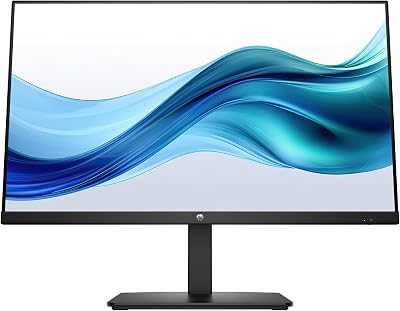
MSI MEG 271QRX QD-OLED — Best OLED 360Hz Monitor
The MSI MEG 271QRX is what happens when a manufacturer decides to build a monitor without compromise. It runs 2560×1440 at 360Hz on a QD-OLED panel, delivers 0.03ms GtG response times that no LCD technology can approach, and produces infinite contrast ratio through per-pixel light emission.
Why QD-OLED Changes the Competitive Equation
On an LCD panel — TN or IPS — pixel response time is measured by how fast liquid crystals can reorient. Even at 0.2ms, there’s physical movement involved. On OLED, pixels switch by turning on or off. The 0.03ms GtG measurement isn’t marketing headroom — it reflects a fundamentally different mechanism. Motion clarity on this panel at 360Hz is in a category of its own.
1440p at 360Hz: GPU Reality
Running 2560×1440 at 360Hz requires significantly more GPU headroom than 1080p at 360Hz. In CS2 at 1440p, an RTX 4090 averages roughly 300–400 FPS at competitive settings. That feeds the 360Hz panel adequately but not with the headroom a 1080p setup provides.
OLED Considerations
QD-OLED panels have improved burn-in resistance significantly since first-generation OLED monitors. MSI includes pixel refresh cycles, logo luminance reduction, and automatic pixel shift. Static HUD elements in competitive titles (maps, ammo counters) present lower burn-in risk at 360Hz than on slower panels because each frame updates faster. The practical risk for a gamer using this as a primary display is low, but it is not zero.
Perfect Blacks and Competitive Play
The infinite contrast of OLED makes dark map areas genuinely dark and enemies against light backgrounds genuinely clear. For games with high contrast environments — Valorant’s bright maps, CS2’s dust environments — the panel rendering is an advantage in visibility.
Who It’s For
The player who wants 360Hz performance without sacrificing the image quality a 1080p panel requires. Budget is not the primary concern. This is also the right call for streamers or content creators who use their gaming monitor for color-critical work.
ASUS ROG Swift OLED PG27AQDM — Best 360Hz OLED Value
ASUS ROG Swift OLED PG27AQDM
The PG27AQDM runs at 240Hz rather than 360Hz, which makes it a technical disqualifier from this category’s headline — but calling it a disqualifier misses the point. At 1440p/240Hz on a QD-OLED panel with Micro Texture Coating, it sits in a practical middle ground that most 360Hz buyers should seriously consider.
Micro Texture Coating
Standard glossy OLED panels produce reflections that are visible in anything short of a completely dark room. ASUS’s Micro Texture Coating diffuses reflections without the haze of traditional anti-glare coatings. The result is the color vibrancy of a glossy panel with substantially reduced glare — a meaningful improvement for players who don’t game in a blacked-out room.
240Hz vs 360Hz on OLED
The 0.03ms response time of the QD-OLED panel means that at 240Hz, motion clarity on the PG27AQDM exceeds what a 360Hz TN or IPS panel produces. A faster pixel with a slower refresh rate still outperforms a slower pixel at a higher refresh rate for actual perceived motion sharpness.
The Value Argument
At approximately $750, the PG27AQDM is $150 cheaper than the MSI MEG 271QRX. For 120 fewer Hz on a panel where the Hz advantage of 360Hz is marginal, the savings are real. If you’re debating between 240Hz OLED and 360Hz LCD, the OLED at 240Hz wins on motion clarity in most test scenarios.
Who It’s For
The competitive player who wants OLED quality at a slightly lower cost and can accept 240Hz rather than 360Hz. Also the correct recommendation for anyone whose GPU tops out at an RTX 4070 Ti, which feeds 240Hz at 1440p more comfortably than 360Hz.
Can You Actually See the Difference Between 360Hz and 240Hz?
This is the question the monitor marketing never directly answers, so here is a direct answer: yes, under controlled conditions, trained observers can detect the difference. No, most players in real gameplay scenarios will not consistently perceive it.

The science: human visual perception of motion fluidity plateaus significantly after 150Hz for most people. The perceptual improvement from 60Hz to 144Hz is dramatic and universally noticeable. From 144Hz to 240Hz, it is noticeable to most players and measurable in reaction time studies. From 240Hz to 360Hz, studies show improvement only in trained individuals specifically tested for it, and the effect size is smaller.
What 360Hz does provide that isn’t purely perceptual is input lag reduction. Higher refresh rate directly reduces the time between a frame being rendered and it appearing on your display. At 360Hz, each frame is displayed for 2.78ms. At 240Hz, each frame is displayed for 4.17ms. That 1.39ms reduction in worst-case display latency is real and consistent regardless of whether you consciously see it.
For players at the pro or high-Diamond/Radiant/Global Elite level who have trained their mechanical skills to the point where the display is genuinely their limiting factor, 360Hz provides a real advantage. For players below that threshold, the GPU money and monitor premium would produce larger results invested in aim training or coaching.
GPU Requirements for Sustained 360fps
Feeding a 360Hz monitor requires generating 360 frames per second in your primary title. These are the realistic targets as of 2026:
CS2 at 1080p, competitive settings: RTX 4080 averages 400–500 FPS. RTX 4070 Ti averages 300–380 FPS. Both maintain 360Hz consistently.
Valorant at 1080p, low settings: RTX 4070 averages 350–450 FPS. Even mid-tier cards from the 40-series feed this game at 360Hz without issue.
CS2 at 1440p, competitive settings: RTX 4090 averages 300–420 FPS. RTX 4080 averages 250–350 FPS. The 4080 feeds a 1440p/360Hz panel like the MSI MEG 271QRX adequately but without significant overhead.
The practical minimum for 360Hz: An RTX 4080 or RX 7900 XTX for 1080p titles. An RTX 4090 for 1440p/360Hz. Running a GPU below this threshold with a 360Hz monitor means you will see tearing or need to cap your FPS, eliminating the primary benefit of the display.
360Hz at 1080p vs 240Hz at 1440p — The Real Trade-Off
This is the decision that most competitive players in the $400–$600 monitor budget actually face.
360Hz at 1080p gives you maximum frame rate support, the lowest display latency, and the sharpest motion clarity available on LCD technology. It costs you pixel density — 1920×1080 on a 24-inch panel is 91 PPI, which is visible at typical desk distances.
240Hz at 1440p gives you significantly sharper image quality (108 PPI on 27-inch), better color performance on IPS panels, and refresh rates that most competitive titles can sustain with a mid-high tier GPU. You give up 120Hz of overhead you may never use.
The competitive case for 1080p/360Hz is strongest when: you play CS2 or Valorant exclusively, you compete at a high rank, and your GPU is RTX 4080 or better. In any other scenario, 240Hz at 1440p is the more rational purchase — particularly if you use the monitor for anything other than competitive FPS.
Final Verdict
The best 360Hz gaming monitor for most competitive players is the Alienware AW2524H — it combines G-Sync Esports certification, IPS color, simultaneous ELMB and VRR, and 500Hz headroom in a package that doesn’t require you to forfeit image quality entirely.
Players who want the absolute performance ceiling with no trade-offs: the ASUS ROG Swift Pro PG248QP with its 540Hz overclocking mode is the fastest gaming display commercially available.
Players who want 360Hz performance with OLED quality: the MSI MEG 271QRX QD-OLED is the flagship pick, and the ASUS ROG Swift OLED PG27AQDM at 240Hz is worth serious consideration as the better value.
And if you’re not yet at a level where your monitor is the bottleneck: buy the LG 27GR75QB, put the $200–$650 difference toward a better GPU, and revisit this category when you’re consistently hitting 300+ FPS.
Suggested Images
- Hero: side-by-side of PG248QP and MSI MEG 271QRX on a gaming desk
- Section image: frame rate counter overlay showing 300+ FPS in CS2
- Comparison visual: motion blur test at 144Hz vs 240Hz vs 360Hz (strobed)
- GPU chart: RTX tier vs average FPS in CS2/Valorant at 1080p and 1440p
Frequently Asked Questions
Who needs a 360Hz gaming monitor?
360Hz targets serious competitive players in fast esports titles like CS2 and Valorant, where the ultra-high refresh rate gives the smoothest motion and lowest perceived latency for an edge.
Can I tell the difference between 240Hz and 360Hz?
The difference is subtle and far smaller than 60Hz to 144Hz. Trained competitive players may notice slightly smoother motion, while most gamers will find it hard to perceive.
What PC do I need for a 360Hz monitor?
A powerful CPU and GPU to push frame rates near 360fps, which is realistic mainly in esports titles. In demanding AAA games you will rarely reach those numbers.
Is 360Hz worth it for casual gaming?
Not really. For casual or AAA gaming, 144Hz or 240Hz delivers excellent smoothness for less money. 360Hz is best reserved for dedicated competitive esports players.
Related Articles
Looking for more on this topic? Browse the hand-picked guides below — each one applies the same scoring rubric used in this review.