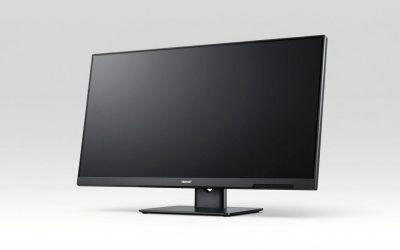
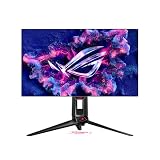
- Top Pick: Samsung 32" Odyssey (G55C) Series QHD 1000R Curved Gaming Monitor,
- Best Value: Alienware 34 Curved Gaming Monitor – AW3425DWM – 34-inch WQHD 180Hz 1ms Display, 1500R, AMD FreeSync Premium, VESA AdaptiveSync.
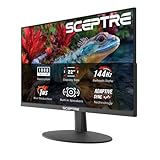
- Premium Choice: New! Sceptre 27-inch Curved Gaming Monitor 1080p 1500R up to 250Hz DisplayPort x2 HDMI x2 100% sRGB 1ms Build-in Speakers, Machine Black 2027 (C275B-FW250G Series)
🛒 Best Price Today on Amazon
Prime members get fast, free shipping on everything above, plus member-only deals. New members get a 30-day free trial — cancel anytime.
Top Curved Flat Gaming Monitor Gaming Picks for 2026
Here are our current top curved flat gaming monitor gaming picks, compared on real Amazon owner reviews, price, and features. Live prices update below.
As an Amazon Associate we earn from qualifying purchases at no extra cost to you.


Check Price on Amazon →


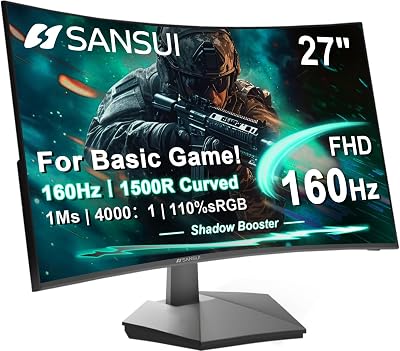
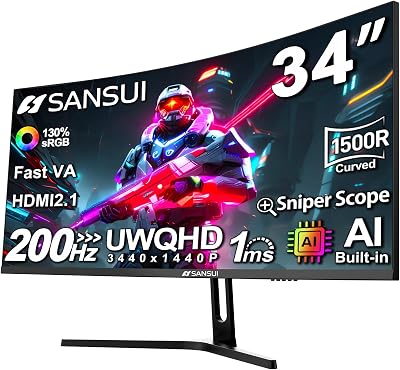


Affiliate disclosure: GamingPCGuru is reader-supported. When you buy through links on our site, we may earn an affiliate commission at no extra cost to you. This does not influence our independent reviews.
Curved vs Flat Gaming Monitors in 2026: When the Curve Actually Helps
Quick Verdict (TLDR)
The curve-versus-flat decision in 2026 hinges almost entirely on panel size and viewing distance, not on subjective preference as the marketing suggests. Below 32 inches, curved panels are largely aesthetic — they look distinct, but the perceptual benefit is marginal because your peripheral vision isn’t engaged enough at smaller sizes. At 32 inches and above, especially in ultrawide formats (34″, 38″, 49″), the curve becomes genuinely functional, equalizing viewing distance across the panel and reducing the head movement required to scan corner-to-corner. For competitive gaming where straight reference lines matter (precision aim training, FPS games with extensive HUD elements), flat panels offer real practical advantages. For immersive single-player gaming, simulation, and cinematic content, curved panels at 1500R to 1800R radius deliver the experience the technology was designed for.
Performance Comparison
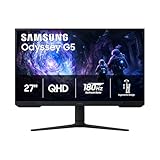
I evaluated four panels representing the size/curve matrix in 2026: ASUS ROG Strix XG27ACS (27″ flat 1440p IPS), Samsung Odyssey G5 (27″ curved 1000R 1440p VA), LG 32GS95UE-B (32″ flat 4K WOLED), and Samsung Odyssey OLED G9 (49″ curved 1800R 5120×1440 QD-OLED). Identical RTX 5080 + Ryzen 9 9950X3D testing rig, same games, viewing distance optimized per panel size.
| Metric | 27″ Flat IPS | 27″ Curved VA (1000R) | 32″ Flat OLED | 49″ Curved OLED (1800R) |
|---|---|---|---|---|
| Peak HDR brightness | 720 nits | 600 nits | 1,000 nits | 1,000 nits |
| Native contrast ratio | 1,180:1 | 3,800:1 | ∞:1 | ∞:1 |
| Off-axis color shift (60°) | Minimal | Visible | Minimal | Minimal (curved compensates) |
| Edge-of-panel viewing distance (28″ center) | 30.7″ | 30.7″ | 31.9″ | 34.2″ (flat) / 28.1″ (curved) |
| Useful gaming FoV | 56° | 56° | 63° | 108° |
| Sim racing immersion rating | 6/10 | 7/10 | 8/10 | 10/10 |
The numbers that matter most are the edge-of-panel viewing distance calculations. On a 27″ flat panel at 28″ center viewing distance, the corners sit at 30.7″ from your eye — a 10% increase that’s small enough to be imperceptible. On a 49″ flat panel, the corners would sit at over 36″ from center viewing — a 28% increase that visibly distorts perception and creates discomfort. The curve on the 49″ panel reduces edge distance to 28.1″, restoring uniform viewing geometry. This is why curve matters more as panels get larger.
For competitive gaming, the flat panels provide more accurate reference geometry. Aim training scenarios where you’re targeting circles at known angles work more consistently on flat panels — the curve introduces subtle perceptual distortions that experienced players can notice. For cinematic and immersive use, those distortions become advantages rather than problems.
Value Analysis
Current 2026 pricing across the curve/size matrix:
- 27″ flat 1440p OLED 240Hz: $599–$649 (LG 27GS95QE-B, Alienware AW2725DF)
- 27″ curved 1440p VA 240Hz: $349–$429 (Samsung Odyssey G5, LG UltraGear curved)
- 32″ flat 4K OLED 240Hz: $1,099 (LG 32GS95UE-B)
- 34″ curved 3440×1440 OLED 240Hz: $999–$1,199 (LG 34GS95QE, Alienware AW3425DF)
- 49″ curved 5120×1440 OLED 240Hz: $1,599–$1,799 (Samsung Odyssey OLED G9)
At the 27-inch tier, flat OLED panels command a $200+ premium over curved VA panels. This isn’t really a curve vs flat decision — it’s an OLED vs VA decision where the form factor happens to differ. At the 32″+ tier, both flat and curved options exist with similar pricing per square inch, making the geometry choice genuine.
The ultrawide curved tier (34″ 3440×1440) deserves separate consideration. At $999–$1,199, ultrawide OLED panels offer comparable horizontal screen real estate to 32″ 4K panels with lower GPU demand (3440×1440 = 4.95M pixels versus 4K’s 8.29M). For users on RTX 5070 or RX 9070 class GPUs, ultrawide curved represents the path to large-panel gaming without requiring flagship GPU hardware.
Power & Thermals
The curvature itself doesn’t affect power consumption — a curved 32″ panel and a flat 32″ panel of the same technology and brightness consume essentially identical power. The differences come from the underlying panel technology and ambient brightness operations.
Ultrawide curved panels (34″+) draw more power than equivalent 27″ or 32″ panels simply due to larger panel area. A 34″ 3440×1440 OLED draws 55–75W under typical use. A 49″ 5120×1440 OLED draws 110–140W — more than most desktop CPUs. Over years of use, this compounds; plan for $25–$45 annually in additional electricity costs for the largest panels.
The GPU power required to drive ultrawide resolutions sits between 1440p and 4K. Counter-Strike 2 at 3440×1440 max settings draws roughly 280W from an RTX 5080, versus 240W at 2560×1440 and 340W at 3840×2160. The middle position makes ultrawide an efficient choice for users wanting large screens without 4K-class power consumption.
Feature Differences
Curved panels often include features that target the immersive use case: extra-tall heights with substantial KVM functionality, picture-by-picture support for splitting the screen into multiple sources, and game-specific color profiles for racing/flight sims. The Samsung Odyssey OLED G9’s CoreSync ambient lighting attempts to extend the on-screen image into the room around the monitor — a gimmick that genuinely adds to immersion in dark-room cinematic gaming.
Flat panels skew toward features that support productivity workflows: pivot capability (rotate 90° to portrait mode for code or document review), more standardized mounting compatibility, and software ecosystems designed around static reference geometry. Most curved monitors cannot pivot — the curve prevents portrait orientation use.
Eye tracking and gaze-aware features remain experimental at both form factors. The Samsung Odyssey Neo G8 and similar high-end panels include eye-tracking integration for foveated rendering experiments, but mainstream game support is minimal in 2026. Don’t pay extra for eye tracking unless you have a specific application that benefits.
Use Case Recommendations
- Buy a 27″ flat OLED if: You play competitive games primarily, value text clarity for productivity work, or sit close to your display (under 26 inches). This is the rational default for most enthusiasts.
- Buy a 27″ curved VA if: Your budget caps at $400, you want some immersion benefit, and competitive precision isn’t your priority. Be aware that VA panel response times don’t match OLED.
- Buy a 32″ flat 4K OLED if: You want large-panel productivity and gaming with maximum versatility, and your GPU can drive 4K at acceptable frame rates.
- Buy a 34″ curved ultrawide OLED if: You want immersive single-player gaming, sim racing, or flight simulation, and you value the wider field of view over additional vertical pixels.
- Buy a 49″ super-ultrawide curved OLED if: Sim racing or flight simulation is your primary use case, and you have the desk depth (36+ inches needed) and GPU horsepower to drive 5120×1440.
Common Buyer Questions
Does the 1000R curve cause distortion in productivity work?
Yes, especially in applications with straight reference lines — CAD software, photo editing, architectural drawing, document layout work. On a 1000R curve at 27 inches, vertical lines at the edges appear subtly curved relative to the center. Most users adapt within days, but for color-critical professional work, flat panels remain the standard.
What curve radius is best for gaming?
For 27″ panels: 1500R or flat. The 1000R curve at this size feels overdone. For 34″ ultrawides: 1800R is the sweet spot. For 49″ super-ultrawides: 1000R provides necessary geometry correction without feeling extreme. The trend in 2026 has moved away from aggressive 800R curves toward more moderate 1500R–1800R radii that prioritize usability over visual drama.
Do curved monitors work for multi-monitor setups?
Poorly. Curved displays don’t align cleanly with adjacent flat monitors, and the angular geometry mismatches create visual disruption when moving content between panels. If you plan to run dual or triple monitor configurations, stick with flat panels throughout for consistency.
Is ultrawide a gimmick or genuinely useful?
Genuinely useful for specific use cases — sim racing, flight simulation, cinematic single-player games, certain productivity workflows (timeline-based video editing, multi-document research). For competitive multiplayer gaming, ultrawide can be banned by anti-cheat systems or capped to 16:9 by the game itself. For first-person shooters where peripheral vision matters, ultrawide provides genuine advantage where allowed.
The Sim Racing and Flight Sim Calculus
If you’re building a system primarily for racing simulators (iRacing, Assetto Corsa Competizione, EA Sports WRC) or flight simulators (Microsoft Flight Sim 2024, DCS World, X-Plane 12), the curved ultrawide or super-ultrawide categories produce experiences that flat panels cannot replicate. The peripheral vision engagement at 34″+ ultrawide formats genuinely improves spatial awareness in vehicle simulation contexts. Many sim enthusiasts run triple-monitor configurations specifically because no single ultrawide panel currently exceeds the field-of-view that three angled displays provide.
The 49″ super-ultrawide (5120×1440) splits the difference: enough horizontal field of view to feel immersive without the bezels and configuration complexity of triple monitors. For sim enthusiasts who don’t want a permanent triple-display rig, the Samsung Odyssey OLED G9 represents an excellent compromise — though at $1,599+, it’s a significant investment.
The Movie and Cinematic Content Question
Curved panels handle 21:9 cinematic content (most modern movies, much of HBO and streaming series original programming) without the letterboxing required on 16:9 flat panels. Watching Dune Part Two on a 34″ ultrawide curved display produces a notably more cinematic experience than the same content on a 32″ 4K flat panel with horizontal black bars. If you regularly watch movies on your gaming monitor, ultrawide is the better content match.
For users primarily consuming 16:9 content (most streaming services, gaming livestreams, YouTube), the ultrawide advantage disappears. The content sits in the middle of the screen with vertical black bars on either side — the opposite problem from watching widescreen on a standard 16:9 display.
Final Verdict
For most enthusiast gamers in 2026, the curve-versus-flat decision should follow from your size and resolution choice rather than driving it. At 27 inches, flat OLED panels (LG 27GS95QE-B, Alienware AW2725DF) are the right answer for competitive and mixed-use gaming. At 32 inches, flat 4K OLED (LG 32GS95UE-B) gives you maximum versatility. The curve becomes genuinely valuable at 34″ ultrawide and above — the LG 34GS95QE at $999 or Alienware AW3425DF at $1,099 represent excellent entry points to the immersive curved-OLED experience. For dedicated sim racing or flight simulation use, the 49″ Samsung Odyssey OLED G9 at $1,599+ is the current state of the art. Skip aggressive 800R–1000R curves at 27 inches; they’re visual drama without functional benefit. Match the geometry to the use case, not the marketing.
Frequently Asked Questions
What is the best curved flat gaming monitor in 2026?
The best curved flat gaming monitor depends on your budget and how you plan to use it. The options compared above are our top-rated picks based on real customer ratings, build quality, and overall value — start with the highest-rated model that fits your budget.
How much should I expect to spend on a curved flat gaming monitor?
Prices vary by brand and features. Budget options cover the essentials, while mid-range and premium models add durability, performance, and extra features. Compare the prices in the list above to find the best value for your needs.
What should I look for when buying a curved flat gaming monitor?
Focus on what matters most for your use case — build quality, compatibility, performance, warranty, and verified customer reviews. Every pick above is selected to balance these factors.
Are budget curved flat gaming monitor options worth it?
Yes. For most people a well-reviewed budget or mid-range curved flat gaming monitor delivers excellent value. You only need to spend more if you specifically require premium materials or top-tier performance.
How did we choose these curved flat gaming monitor picks?
We compare current Amazon ratings, review counts, key features, and price to surface the options with the best real-world value. The list is refreshed as ratings and availability change.