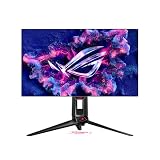
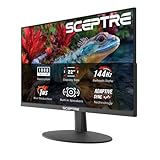
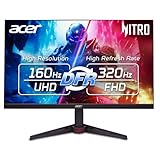
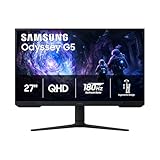
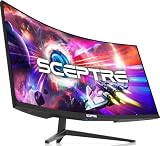
- Top Pick: Sceptre Curved 24-inch Gaming Monitor 1080p R1500 98% sRGB HDMI x2 VGA Build-in Speakers, VESA Wall Mount Machine Black (C248W-1920RN Series)
- Best Value: New! Sceptre 27-inch Curved Gaming Monitor 1080p 1500R up to 250Hz DisplayPort x2 HDMI x2 100% sRGB 1ms Build-in Speakers, Machine Black 2027 (C275B-FW250G Series)
- Premium Choice: Sceptre Curved 27-inch Prime Gaming Monitor 1500R 100Hz HDMI X2 DisplayPort 1ms 100% sRGB, Build-in Speakers Machine Black 2025 (C275W-FW100T Series)
Affiliate disclosure: As an Amazon Associate we earn from qualifying purchases. This post contains affiliate links — if you buy through them we may earn a small commission at no extra cost to you. This never affects our recommendations.
- Best Curved Gaming Monitor in 2026: Top 5 Picks for Immersive Play
- Quick Comparison Table
- The 5 Best Curved Gaming Monitors in 2026
- 1000R vs 1800R vs 1500R: Choosing the Right Curve
- Curved 16:9 vs Ultrawide: Which Shape for Gaming?
- Curved Monitors for FPS Games: Does Curvature Help or Hurt?
- Conclusion
- Frequently Asked Questions
- Related Articles
- Related Articles
As an Amazon Associate we earn from qualifying purchases at no extra cost to you.



In a hurry? See the top-rated Curved Gaming Monitor deals available right now:
🛒 Check Curved Gaming Monitor Prices on Amazon →🛒 Best Price Today on Amazon
Prime members get fast, free shipping on everything above, plus member-only deals. New members get a 30-day free trial — cancel anytime.
Start 30-Day Prime Free Trial →See Today’s Amazon DealsBest Curved Gaming Monitor in 2026: Top 5 Picks for Immersive Play
Flat monitors are fine. Curved monitors pull you in. If you’ve spent any time gaming on a quality curved display, going back to a flat panel feels like watching a movie through a porthole. In 2026, curved gaming monitors have matured into a genuine performance category — not just a gimmick — with curvature radii, panel technologies, and resolution options that genuinely change how you experience games.
This guide cuts through the noise. We’ll explain what curvature radius actually means for your eyes, break down the five best curved gaming monitors on the market right now, and tell you exactly which one to buy based on how you game.
What Curvature Radius Actually Means
Curvature is measured in “R” — the radius of a circle in millimeters whose arc matches the curve of the screen. Lower numbers mean more aggressive curves.
- 1000R is the most aggressive curve available. It matches the approximate focal length of the human eye, meaning every point on the screen sits at roughly the same distance from your face. Best for large ultrawides and super-ultrawide panels where edge-to-eye distance would otherwise be significant.
- 1500R sits between aggressive and standard. Less disorienting than 1000R on smaller screens, still noticeably immersive. A good middle ground for 27–32-inch panels.
- 1800R is the industry standard for curved gaming monitors. Noticeable at normal viewing distances without being aggressive. Works well on 32–40-inch displays.
- 3000R is subtle — you’ll notice it compared to flat, but it won’t feel dramatically curved. Common on entry-level curved monitors.
A practical rule: the larger the screen, the more aggressive the curve you need to maintain optical consistency across the panel’s width.
Quick Comparison Table
| Monitor | Curvature | Resolution | Panel | Refresh Rate |
|---|---|---|---|---|
| Samsung Odyssey Neo G9 49″ | 1000R | 5120×1440 | Mini-LED VA | 240Hz |
| LG 34GP950G-B 34″ | 1800R | 3440×1440 | Nano IPS | 160Hz |
| Samsung Odyssey G7 32″ | 1000R | 2560×1440 | VA | 240Hz |
| MSI MAG401QR 40″ | 1800R | 3440×1440 | VA | 165Hz |
| ASUS TUF VG34VQL3A 34″ | 1500R | 3440×1440 | VA | 180Hz |
The 5 Best Curved Gaming Monitors in 2026
Samsung Odyssey Neo G9 49-Inch DQHD — Best Super-Ultrawide Curved
The Neo G9 is not for everyone. It is, however, the most impactful gaming display you can buy if your setup and GPU can support it.
Curvature: 1000R — at 49 inches, this is the correct choice. Without an aggressive curve, the edges of a super-ultrawide panel sit noticeably further from your eyes than the center. The 1000R keeps the whole display in your natural focal plane.
Resolution and Aspect Ratio: 5120×1440 DQHD, which is essentially two 1440p QHD monitors stitched side by side in a 32:9 aspect ratio. Flight simulators, racing games, RPGs, and strategy titles use this real estate in ways that genuinely transform the experience.
Panel: Mini-LED VA with Samsung’s Quantum Matrix Pro technology. The 2026 model delivers local dimming across thousands of zones, achieving VESA DisplayHDR 2000 certification. Contrast is extraordinary for a non-OLED panel — blacks are deep, highlights are blinding, and HDR content looks genuinely cinematic.
Refresh Rate and Response: 240Hz with a 1ms GtG response time. Fast enough for competitive play, though most esports titles won’t run at native 5120×1440 framerates on consumer GPUs. Most players use the Neo G9 with a mid-resolution mode for fast-paced play.
GPU Requirements: This display demands serious hardware. Plan on an RTX 4090, RTX 5080, or AMD RX 9070 XT at minimum for high-fidelity gaming at native resolution. For 1080p-equivalent gaming at high refresh, an RTX 4070 Ti can manage.
HDR Spec: VESA DisplayHDR 2000. One of the brightest HDR gaming displays available outside of OLED.
Best for: Flight sims, racing, open-world RPGs, RTS, productivity alongside gaming.
LG 34GP950G-B 34-Inch WQHD — Best Curved IPS Ultrawide
If color accuracy and IPS-class viewing angles matter as much as speed, the LG 34GP950G-B is the curved ultrawide to beat. It occupies the sweet spot where most mid-to-high-end GPUs can deliver competitive refresh rates at native resolution.
Curvature: 1800R — appropriate for a 34-inch ultrawide. At this screen size, 1800R delivers a perceptible wrap without the intensity of 1000R, which can feel excessive on 34-inch panels.

Resolution and Aspect Ratio: 3440×1440 in 21:9, the most widely supported ultrawide resolution. Game support is broad, most titles handle the aspect ratio without black bars, and image quality is excellent at a manageable GPU load.
Panel: Nano IPS. LG’s Nano IPS coating expands color gamut coverage and maintains the wide viewing angles that distinguish IPS from VA. Colors are accurate out of the box, the panel covers 98% of DCI-P3, and there’s no significant color shift when viewing off-axis — relevant if multiple people share the setup.
Refresh Rate and Response: 160Hz with a 1ms GtG response time. Fast enough for competitive play in most genres, though dedicated esports players may want a 240Hz panel.
HDR Spec: VESA DisplayHDR 600. Capable HDR performance for an IPS panel, though VA panels with full-array local dimming will produce deeper blacks in HDR content.
GPU Requirements: An RTX 4070 or RX 7800 XT can sustain 100+ fps at 3440×1440 in most AAA titles. RTX 4080 or better for high-end performance at full refresh.
Best for: Content creators who game, immersive RPG and adventure players, anyone who values color accuracy alongside gaming performance.
Samsung Odyssey G7 32-Inch QHD — Best Curved 16:9 VA
Not everyone wants ultrawide. The Odyssey G7 makes a strong case for 16:9 curved gaming — high refresh, aggressive curve, and wide game compatibility without the GPU demands of a 21:9 or 32:9 panel.
Curvature: 1000R on a 32-inch 16:9 panel is aggressive. Some users find it immersive; others find it slightly disorienting at close viewing distances. Sit at arm’s length (60–70cm) and the curve enhances peripheral awareness. Sit further back and it becomes subtle.
Resolution and Aspect Ratio: 2560×1440 QHD in 16:9. Every modern GPU handles this well. Game compatibility is universal — no letter-boxing, no stretched HUDs, no ultrawide aspect ratio headaches.
Panel: VA. Samsung’s VA panels in the Odyssey line deliver contrast ratios that IPS cannot match — typically 2500:1 to 3000:1 native. Dark scenes in games like Elden Ring or cyberpunk titles look dramatically better than on IPS. The tradeoff is slightly slower response times compared to IPS at identical refresh rates, and some ghosting in very dark fast-motion content.
Refresh Rate and Response: 240Hz with 1ms GtG. Competitive-grade performance at a mainstream GPU budget. An RTX 4060 Ti can sustain 144+ fps at 1440p in most titles.
HDR Spec: VESA DisplayHDR 600. Strong local dimming for a curved VA panel, producing genuine HDR contrast.
GPU Requirements: RTX 4060 Ti or RX 7700 XT will drive this panel comfortably. Very accessible entry point for 1440p 240Hz gaming.
Best for: Competitive gaming with immersion, console gaming at 4K equivalent quality, budget-conscious 1440p gamers.
MSI MAG401QR 40-Inch WQHD — Best Large Curved 40-Inch
The 40-inch curved category has grown significantly in 2026. The MSI MAG401QR hits the right balance of screen size, resolution, and price — delivering a big-screen gaming experience without requiring a super-ultrawide setup.
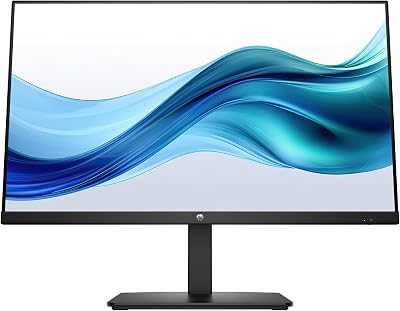
Curvature: 1800R at 40 inches is well-matched. The screen wraps gently into your peripheral vision without the aggressive curve of smaller 1000R panels. At this size, you feel enveloped rather than surrounded.
Resolution and Aspect Ratio: 3440×1440 in 21:9. At 40 inches, pixel density drops to around 93 PPI — acceptable for gaming viewed at typical desk distances (70–90cm), though you won’t be reading small text comfortably without scaling.
Panel: VA. MSI’s implementation delivers solid contrast for HDR gaming, and the large panel size makes the deep blacks more impactful than they’d be on a 27-inch display. Colors are punchy rather than accurate — great for gaming, not ideal for professional color work.
Refresh Rate and Response: 165Hz with a fast VA response time. Not quite as fast as the top competitive panels, but more than sufficient for immersive gaming. The large panel size makes this better suited to single-player and cinematic experiences than high-speed esports anyway.
HDR Spec: VESA DisplayHDR 400 — the entry-level HDR certification. HDR mode improves over SDR, but full-array local dimming is absent. For HDR performance, the Neo G9 is the better choice.
GPU Requirements: RTX 4070 or RX 7800 XT for high-refresh 3440×1440 gaming. The 165Hz cap is approachable for mid-range GPUs.
Best for: Immersive single-player gaming, couch-style desk setups, gamers upgrading from 27-inch to a larger screen.
ASUS TUF Gaming VG34VQL3A 34-Inch — Best Budget Curved Ultrawide
At under $350, the ASUS TUF VG34VQL3A delivers curved ultrawide gaming at a price that undercuts most competitors by $200 or more. Concessions were made, but none that kill the value proposition for budget-conscious buyers.
Curvature: 1500R — a middle-ground radius that works well at 34 inches. More noticeable than 1800R, less intense than 1000R. A good fit for users new to ultrawide curved displays.
Resolution and Aspect Ratio: 3440×1440 in 21:9. Same native resolution as the LG 34GP950G-B, but on a VA panel rather than Nano IPS.
Panel: VA. Color accuracy lags behind IPS and Nano IPS alternatives, but contrast performance improves the look of dark gaming environments significantly. An acceptable tradeoff at this price point.
Refresh Rate and Response: 180Hz — competitive for the category, and accessible for mid-range GPUs. FreeSync Premium Pro support ensures smooth variable refresh rate performance on AMD hardware; NVIDIA cards can use this via G-Sync Compatible mode.
HDR Spec: VESA DisplayHDR 400. Functional but limited — don’t buy this for HDR performance. Buy it for the ultrawide curved experience at an accessible price.
GPU Requirements: RTX 4060 or RX 7600 XT can sustain 100+ fps at 3440×1440 in many titles. Entry-level to mid-range GPU territory.
Best for: First ultrawide buyers, budget gaming setups, students, gamers who prioritize immersion over color accuracy.
1000R vs 1800R vs 1500R: Choosing the Right Curve
Curvature choice depends on screen size and your use case — not just personal preference.

1000R works best on large panels (40 inches and above). On a 32-inch 16:9 panel, it’s aggressive but workable at arm’s length. On a 49-inch super-ultrawide, it’s the right call by geometry — without it, the panel edges sit significantly further from your eyes than the center. For productivity work, 1000R can feel distorting when reading horizontal text near the edges. For gaming, it enhances immersion.
1500R is the reliable middle option. Works across 27–34-inch panels without feeling forced. If you game for hours and are sensitive to display fatigue, this radius is less likely to cause issues than 1000R. ASUS uses 1500R on several of their curved ultrawides to balance immersion and comfort.
1800R is the industry standard for good reason. It improves over flat monitors in gaming feel, causes minimal eye adjustment issues, and works across panel sizes from 27 to 40 inches. If you’re buying your first curved monitor, 1800R is the safer starting point.
Curved 16:9 vs Ultrawide: Which Shape for Gaming?
The shape choice is as important as the curve.
Curved 16:9 (like the Odyssey G7) offers universal game compatibility, lower GPU demands, and works well for competitive gaming where peripheral vision matters less than reaction time. The curve enhances the central field of view without changing HUD positioning or requiring game-level ultrawide support. Console gaming through HDMI also works seamlessly.
Curved ultrawide 21:9 (like the LG 34GP950G-B or ASUS VG34VQL3A) delivers a genuinely different experience in supported titles — racing games wrap the environment around you, RPG worlds feel expansive, cockpit views fill your peripheral vision. The limitations: some older titles and multiplayer games don’t support 21:9 natively, requiring black bars or stretched rendering. GPU demands are roughly 33% higher than 16:9 at equivalent quality settings.
Super-ultrawide 32:9 (the Neo G9) is the maximum available immersion. It replaces a dual-monitor setup in a single panel. Game support has improved substantially in 2026, but you’ll still encounter titles that require third-party ultrawide patches or modding.
For competitive FPS players: 16:9 curved. For immersive single-player gaming: ultrawide or super-ultrawide curved.
Curved Monitors for FPS Games: Does Curvature Help or Hurt?
This is the most contested question in the curved monitor debate, and the honest answer is nuanced.
The case against: In ultra-competitive FPS play, some professional players prefer flat displays because curved panels can create subtle distortions at the edges of the screen — particularly relevant when tracking targets near the periphery. Horizontal lines near the edges appear slightly bent, which a minority of players find disorienting.
The case for: For the vast majority of FPS players — anyone below the top 1% of competitive ranking — the difference is imperceptible in practice. What you gain is a more enveloped feel in the game world, which enhances situational awareness in slower tactical games like Valorant or Rainbow Six Siege. The wrap makes it feel like you’re inside the environment rather than observing it through a rectangle.
The verdict: If you’re grinding ranked at a professional level and every millisecond of target tracking matters, a flat 360Hz IPS panel is probably your tool. For everyone else, the best curved gaming monitor enhances FPS gaming without measurable competitive cost. The Odyssey G7 at 240Hz and 1000R is the pick for FPS players who want both speed and immersion.
Conclusion
The right curved gaming monitor in 2026 depends on how you actually game:
- Super-ultrawide immersion at any cost: Samsung Odyssey Neo G9 49-inch
- Color accuracy + ultrawide speed: LG 34GP950G-B 34-inch
- Competitive 1440p with immersion: Samsung Odyssey G7 32-inch
- Large-screen single-player focus: MSI MAG401QR 40-inch
- Best value entry into curved ultrawide: ASUS TUF VG34VQL3A 34-inch
Curved monitors reward the investment most in single-player, open-world, and simulation genres. For competitive esports, a flat high-refresh panel remains competitive — but even there, a quality 1000R or 1800R curved display won’t hold you back. The immersion gains are real, the technology has matured, and 2026 prices make curved gaming more accessible than ever.
Pick the screen that matches your genre, GPU, and desk space — then stop looking at flat panels and don’t look back.
Suggested Images
- Hero: Side-angle shot of a super-ultrawide curved monitor showing wrap effect in a dark room
- Samsung Neo G9 section: Top-down desk shot showing the 49-inch footprint
- Curvature comparison section: Overhead diagram showing 1000R vs 1800R vs 1500R arc radii
- 16:9 vs ultrawide section: Same game scene shown in 16:9 and 21:9 side by side
- Conclusion: Clean desk setup with one of the featured monitors
Frequently Asked Questions
Is a curved monitor better for gaming?
A curved monitor wraps the image slightly around your vision, which can boost immersion and reduce edge distortion on larger screens. The benefit is most noticeable at 27 inches and above.
What curve rating should a gaming monitor have?
Curve is measured as a radius like 1800R or 1000R, where a lower number means a deeper curve. 1500R-1800R suits most setups, while aggressive 1000R curves feel most immersive on ultrawides.
Curved or flat monitor for gaming?
Curved excels for immersion on large and ultrawide screens, while flat is better for competitive play and work needing straight lines. For a single standard-size screen it is mostly personal preference.
Are curved monitors good for competitive gaming?
They work fine, though some competitive players prefer flat panels for consistent geometry. The curve does not hurt performance; it is about immersion rather than a competitive edge.
Related Articles
Looking for more on this topic? Browse the hand-picked guides below — each one applies the same scoring rubric used in this review.
Ready to decide? Our #1 pick for 2026 is the Monitor.
Live price & availability on Amazon.