Affiliate disclosure: As an Amazon Associate we earn from qualifying purchases. This post contains affiliate links — if you buy through them we may earn a small commission at no extra cost to you. This never affects our recommendations.
As an Amazon Associate we earn from qualifying purchases at no extra cost to you.

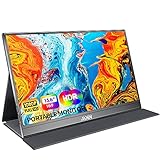
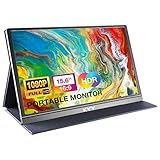


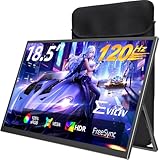


Portable gaming monitors have quietly become one of the smartest accessories a gamer can own. Whether you’re hauling your gaming laptop to a friend’s LAN party, plugging a Nintendo Switch into a hotel room TV that barely runs at 60Hz, or turning a Steam Deck into a proper desktop setup at a coffee shop, a good portable display changes everything. The best ones today are thin enough to slip into a laptop sleeve, weigh under 2 lbs, and power entirely over a single USB-C cable — no wall brick, no tangle of adapters. This guide breaks down the top five portable gaming monitors worth buying in 2026, what to look for before spending your money, and who each pick is actually built for.
In a hurry? See the top-rated Portable Gaming Monitor deals available right now:
🛒 Check Portable Gaming Monitor Prices on Amazon →🛒 Best Price Today on Amazon
Prime members get fast, free shipping on everything above, plus member-only deals. New members get a 30-day free trial — cancel anytime.
Start 30-Day Prime Free Trial →See Today’s Amazon DealsQuick Comparison Table
| Monitor | Size | Resolution | Refresh Rate | Power |
|---|---|---|---|---|
| ASUS ROG Strix XG16AHP | 15.6″ | 1080p | 144Hz | USB-C + Built-in Battery |
| LG 16MQ70 | 16″ | 1440p (QHD) | 60Hz | USB-C PD |
| ASUS ZenScreen MB166C | 15.6″ | 1080p | 60Hz | USB-C PD |
| Lepow Z1 Gamut | 15.6″ | 1080p | 60Hz | USB-C / Mini-HDMI |
| INNOCN 15.6″ OLED | 15.6″ | 4K OLED | 60Hz | USB-C PD |
Our Top 5 Portable Gaming Monitor Picks (2026)
1. [Best Overall] ASUS ROG Strix XG16AHP — Best Portable Gaming Monitor with Battery
The ASUS ROG Strix XG16AHP is the portable gaming monitor to beat in 2026. It packs a 15.6-inch 1080p IPS panel with a 144Hz refresh rate and a 3ms response time — specs that hold up against many desktop monitors — into a chassis that weighs just 1.9 lbs. What sets it apart from every other portable on this list is its 7,800mAh built-in battery, which delivers up to 2.5 hours of untethered gaming with no cable at all, or you can USB-C tether to a laptop for simultaneous charging and display. ROG’s Smart KVM lets you switch between two connected devices instantly, making it an easy call for anyone who games on both a laptop and a console. This is the pick for serious gamers who want the full package — high refresh, battery backup, and a premium IPS panel — without checking a second bag.
2. [Runner-Up] LG 16MQ70 — Best Portable IPS 1440p Monitor
The LG 16MQ70 is the only portable gaming monitor in this price range delivering true 1440p QHD resolution on a 16-inch IPS panel, and the jump in pixel density over 1080p is immediately visible in text sharpness and fine game detail. It supports 100% sRGB coverage and hits a rated 350 nits of brightness — solid for indoor gaming and conference-room use — and powers completely over a single USB-C cable from any laptop or USB-C charger rated at 60W or higher. At 60Hz the refresh rate is a trade-off compared to the ROG, but for RPGs, strategy games, or any title you’d play on a Steam Deck, the resolution advantage matters more than the extra frames. It also doubles as a productivity monitor, which makes the ~$249 price easier to justify if you travel with a work machine.
3. [Best Budget] ASUS ZenScreen MB166C — Best Under $150 Portable Monitor
The ASUS ZenScreen MB166C is the easiest recommendation for anyone who wants a solid secondary travel display without the premium price tag. The 15.6-inch 1080p IPS panel covers 72% NTSC with accurate-enough color for gaming and streaming, and its ultra-slim 7.8mm chassis slips into most 15-inch laptop bags without adding meaningful bulk. Power and video both run through a single USB-C port — plug into any laptop that outputs DisplayPort Alt Mode and you’re done — or use the included USB-A-to-C cable with a powered hub if your machine’s ports are limited. You won’t get high refresh or a built-in battery at this price, but at under $150 the MB166C punches well above its weight for LAN parties, hotel rooms, and anyone who just needs a reliable second screen on the road.

4. [Best for Switch/Steam Deck] Lepow Z1 Gamut — Best Console Portable Monitor
The Lepow Z1 Gamut earns its spot on this list specifically because of how well it plays with consoles and handhelds that don’t always cooperate with USB-C-only displays. It supports both USB-C and Mini-HDMI input, which means you can plug in a Nintendo Switch dock, a Steam Deck running Desktop Mode via USB-C, or even a PlayStation 5 over HDMI without needing a separate adapter. The 15.6-inch 1080p IPS panel covers 99% sRGB — one of the best color figures in this price range — and the built-in dual 1W speakers are serviceable for casual gaming sessions when you’ve forgotten your headset. At around $149 it’s not the cheapest option, but the dual-input flexibility and wide console compatibility make it the go-to pick for multi-platform gamers who want one portable monitor that connects to everything.
5. [Best 4K Portable] INNOCN 15.6″ OLED — Best 4K OLED Portable
The INNOCN 15.6″ OLED is in a category of its own: the only true 4K portable gaming monitor with an OLED panel you can buy without spending north of $400. OLED brings per-pixel illumination, which means perfect blacks, infinite contrast, and colors that IPS simply cannot match — fire effects, neon-lit cityscapes, and HDR10-enabled content look stunning on this display. At 15.6 inches, 4K resolution is a mixed bag for gaming since most laptops and handheld GPUs won’t push enough frames at native resolution, but at 1080p or 1440p scaled output the panel’s pixel response and color accuracy still outshine every IPS alternative on this list. Power delivery is USB-C only (no built-in battery), and at ~$279 it’s a specialized pick — but if visual fidelity is your top priority and you’re feeding it from a powerful gaming laptop, nothing portable touches it.
INNOCN 15.6″ OLED 4K Portable Monitor
What Makes a Good Portable Gaming Monitor?
Not every portable monitor is built the same, and the specs that matter for gaming differ from what you’d prioritize in a business travel display. Here’s what to evaluate before buying.
Panel quality at 15–17 inches. Most portable monitors in this size range use IPS panels, which offer good viewing angles and accurate color. Avoid TN panels — they’re rare in portables today but still show up on ultra-budget options, with noticeably worse color and narrow viewing angles. OLED is the premium tier, delivering contrast ratios that IPS can’t approach, but costs more and can be subject to burn-in with static UI elements over time.
USB-C Power Delivery. The single biggest quality-of-life feature in any portable monitor is USB-C PD — the ability to receive both video signal and power through one cable connected to your laptop. With USB-C PD you eliminate the wall adapter entirely: one cable from laptop to monitor, and the monitor runs. Look for monitors that accept at least 45W PD charging; 60W is better if you want the laptop to charge simultaneously.
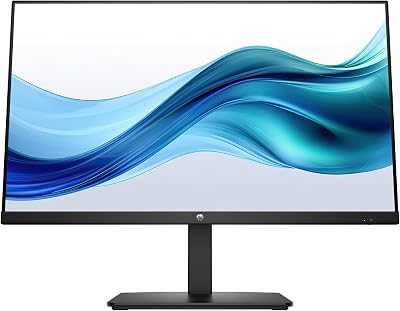
Built-in battery for cordless use. A handful of portable monitors include an internal battery, which lets you run the display for 1.5–3 hours with no cable connected at all. This is genuinely useful for outdoor gaming, airplane trays, or setups where routing cables is awkward. Battery-equipped portables cost more and weigh slightly more, but the flexibility is significant.
1080p vs 1440p at 15 inches. At 15–16 inches, 1080p is perfectly sharp for gaming — pixel density is high enough that individual pixels aren’t visible at normal viewing distance. 1440p offers a noticeable bump in text clarity and fine detail, which matters more for productivity than pure gaming. The trade-off: 1440p portables tend to max out at 60Hz, while 1080p portables can reach 144Hz or higher.
60Hz vs 144Hz portable options. 60Hz is acceptable for most single-player games, especially on console or Steam Deck where 60fps is the common target anyway. For fast-paced shooters or games where you’re running above 60fps on a capable gaming laptop, 144Hz makes a real difference in perceived smoothness and input response. The ROG XG16 is currently the only widely available portable that hits 144Hz without sacrificing too much elsewhere.
Weight and thickness for travel. A good portable monitor should weigh under 2.2 lbs and measure under 9mm thick to slide cleanly into a laptop bag. Check whether the monitor ships with a protective sleeve or kickstand case — many do, which eliminates a separate purchase.
How to Choose the Best Portable Gaming Monitor
USB-C Power Delivery: One-Cable Setup Explained
USB-C Power Delivery is the standard that allows a single USB-C cable to carry both a video signal (via DisplayPort Alt Mode) and power simultaneously. When your laptop supports USB-C with DP Alt Mode output — most gaming laptops made after 2021 do — you connect one cable from the laptop to the monitor and the monitor powers on immediately. No separate power brick. No second outlet. This is the feature that makes portable monitors actually portable in practice.
One caveat: not all USB-C ports support DisplayPort Alt Mode. Some laptops have USB-C ports that only carry data and charging, not video. Before buying any portable monitor, check your laptop’s USB-C spec in its product page or manual. Look for “Thunderbolt 3/4,” “USB4,” or “DisplayPort Alt Mode” in the port description. If your port doesn’t support video output, you’ll need to use an HDMI or Mini-HDMI connection instead — which some portables (like the Lepow Z1 Gamut) support alongside USB-C.
Built-In Battery: How Much Gaming Time Can You Expect?
The ASUS ROG Strix XG16AHP’s 7,800mAh battery is the largest you’ll find in any portable gaming monitor right now, delivering roughly 2–2.5 hours at 144Hz brightness. Real-world usage varies: higher brightness and higher refresh rates drain the battery faster, while running at 60Hz and 50% brightness can stretch runtime toward 3 hours. Battery-equipped portables also support pass-through charging, meaning you can run the monitor off its battery while a USB-C cable slowly tops it back up — useful when you have one outlet to share between monitor and laptop.

Portables without a battery (LG 16MQ70, INNOCN OLED, ZenScreen MB166C) must always be powered by a connected device or USB-C charger. This is fine for most use cases but limits spontaneous setups where outlets aren’t available.
1080p vs 1440p at 15–16 Inches: Does It Matter?
At 15.6 inches, a 1080p panel has a pixel density of roughly 141 PPI — sharp enough that individual pixels are invisible at 30+ cm viewing distance. A 1440p panel at 16 inches hits approximately 184 PPI — a meaningful step up in clarity for text, fine UI elements, and detailed textures in open-world games. Whether the difference matters depends on your use case: for fast-paced shooters where you prioritize frames and response time, 1080p at 144Hz is the smarter trade. For RPGs, strategy titles, productivity work, or any content where fine detail and color accuracy matter more than raw frame rate, 1440p is worth the 60Hz cap.
The INNOCN OLED’s 4K resolution at 15.6 inches reaches 282 PPI — overkill for gaming but exceptional for content creation, photo editing, or watching HDR content on the road.
Compatibility: Laptops, Consoles, and Steam Deck
Most modern gaming laptops work plug-and-play with USB-C portable monitors via DisplayPort Alt Mode. Steam Deck supports USB-C video output natively in both Gaming Mode and Desktop Mode, making it an excellent portable monitor companion. Nintendo Switch requires the Switch Dock (sold separately or included in the base bundle) to output HDMI — use a portable with Mini-HDMI input like the Lepow Z1 Gamut, or add a USB-C hub with HDMI output between the Switch Dock and a USB-C monitor.
PlayStation 5 and Xbox Series X output HDMI only, so any portable without an HDMI or Mini-HDMI port will require an active HDMI-to-USB-C adapter — results vary, and latency can be inconsistent. For console gaming specifically, a Mini-HDMI input on the portable is the cleanest solution.
Final Verdict
For most gamers, the ASUS ROG Strix XG16AHP is the best portable gaming monitor you can buy in 2026 — it’s the only option that combines a genuine 144Hz gaming panel, a built-in battery for cable-free use, and USB-C PD convenience in a single travel-ready package. If you prioritize pixel density and don’t need high refresh, step up to the LG 16MQ70 for sharp 1440p at a fair price, or go all-in on the INNOCN 15.6″ OLED if color accuracy and contrast are non-negotiable.
Frequently Asked Questions
What is a portable gaming monitor used for?
A portable monitor is a slim, lightweight USB-C or HDMI display for gaming on the go. It adds a screen for laptops, consoles, and handhelds while traveling or in tight spaces.
How does a portable monitor connect?
Most use a single USB-C cable carrying video and power, or HDMI plus separate power. USB-C is most convenient, but the source device must support video output over USB-C.
What refresh rate do portable gaming monitors have?
Many portable monitors are 60Hz, but a growing number offer 120Hz, 144Hz, or higher for smoother gaming. Choose a high-refresh model if you want a proper gaming experience.
Can a portable monitor run from a console?
Yes. Portable monitors work with consoles and handhelds via HDMI or USB-C. Check whether the monitor needs separate power, since consoles do not always supply enough over the cable.
Related Articles
Looking for more on this topic? Browse the hand-picked guides below — each one applies the same scoring rubric used in this review.
Ready to decide? Our #1 pick for 2026 is the Monitor.
Live price & availability on Amazon.