Affiliate disclosure: As an Amazon Associate we earn from qualifying purchases. This post contains affiliate links — if you buy through them we may earn a small commission at no extra cost to you. This never affects our recommendations.
- Why CRTs Still Matter for Retro Gaming in 2026
- Specs & Provenance: The Gaming-Grade CRT
- Why It Matters: High Refresh + Scan Lines
- Where to Buy in 2026: Reasonably Accessible
- Modern Accessories You’ll Need: PC Gaming Setup
- Vs. Modern Alternatives: Gaming Performance Comparison
- Pros & Cons: The Gamer’s CRT
- FAQ: Questions from Gaming-Focused Buyers
- Final Verdict
- Related Articles
- Frequently Asked Questions
- Related Articles
In a hurry? See the top-rated Mitsubishi RDT272WLM deals available right now:
🛒 Check Mitsubishi Rdt272Wlm Prices on Amazon →🛒 Best Price Today on Amazon
Prime members get fast, free shipping on everything above, plus member-only deals. New members get a 30-day free trial — cancel anytime.
Start 30-Day Prime Free Trial →See Today’s Amazon DealsWhy CRTs Still Matter for Retro Gaming in 2026
The Mitsubishi RDT272WLM represents a unique bridge between CRT technology and modern PC monitor design. Released in the early 2000s as a high-refresh gaming monitor, the RDT272WLM achieves 120Hz refresh rate—a capability that positioned it as the ultimate esports monitor of its era. Unlike broadcast-grade CRTs like the Sony BVM-D24, the RDT272WLM is a consumer-grade aperture-grill CRT designed specifically for PC gaming. In 2026, it remains one of the finest PC CRTs ever manufactured.
The physics of CRT gaming remain unchanged: an electron beam responds instantaneously to the incoming signal, creating zero input lag and authentic scan lines. A 120Hz refresh rate on the RDT272WLM means the beam refreshes 120 times per second, enabling silky-smooth motion at higher frame rates than typical 60Hz retro consoles. For modern emulation pushing 60+ fps, or for competitive gaming on vintage arcade boards, the 120Hz capability is genuinely useful.
Specs & Provenance: The Gaming-Grade CRT
The RDT272WLM is a 27-inch aperture-grill CRT with an unusually fast electron gun, capable of driving 120Hz refresh at 1600×1200 native resolution. This was cutting-edge gaming hardware in 2003; today it remains one of the fastest consumer CRTs ever made. The “RDT” designation indicates Mitsubishi’s Diamondtron tube (aperture grill), competing with Sony Trinitron in the professional and consumer markets.
Key characteristics: 27-inch diagonal, 1600×1200 native resolution, 120Hz maximum refresh (at 1024×768), 100Hz at 1280×1024, and 85Hz at 1600×1200. The monitor accepts both analog (VGA) and DVI-D inputs, making it compatible with both vintage PC hardware and modern graphics cards via adapters. Geometry adjustment is less extensive than broadcast monitors but still professional-grade.
| Specification | Value |
|---|---|
| Screen Size | 27.0″ (16:10 aspect ratio) |
| Tube Type | Mitsubishi Diamondtron (aperture grill) |
| Native Resolution | 1600×1200 @ 85Hz, 1280×1024 @ 100Hz, 1024×768 @ 120Hz |
| Maximum Refresh Rate | 120Hz (at 1024×768) |
| Video Inputs | VGA (D-Sub 15), DVI-D |
| Weight | 120 lbs (54 kg) |
| Year Discontinued | ~2005 (21 years ago) |
| Typical Market Price (2026) | $400–$1,200 (depending on condition) |
Why It Matters: High Refresh + Scan Lines
The RDT272WLM’s 120Hz capability is genuinely unique among consumer CRTs. For retro gaming, this means smoother motion when emulating games at high frame rates. A Dolphin emulation session running Melee at 60fps displays with exceptional smoothness—the 120Hz refresh allows for perfect frame-to-frame consistency without the microstutter associated with 60Hz displays.
The Diamondtron tube delivers crisp scan lines with excellent geometry, though not quite matching the color accuracy of broadcast-grade Trinitron monitors. For gaming purposes, this is a minor trade-off—you gain high refresh rate and a more compact form factor (27″ instead of 24″+ broadcast monitors), losing only 5–10% of color reference accuracy.
Where to Buy in 2026: Reasonably Accessible
The RDT272WLM was manufactured for the consumer and gaming markets, meaning more units survive than broadcast-exclusive monitors. In 2026, availability is significantly better than professional CRTs, though still limited.
Where to source:
- eBay listings (search “RDT272WLM” or “Mitsubishi gaming CRT”); several available globally at any time
- Local classifieds and Facebook Marketplace (more units available locally than broadcast monitors)
- Japanese import sellers (Mitsubishi was popular in Japan; international shipping adds $300–$600)
- Retro PC gaming communities (enthusiasts often have spares)
Pricing reality: Good-condition units range $400–$1,200, with excellent low-hours specimens reaching $1,500. Significantly more affordable than broadcast monitors and more available.
Modern Accessories You’ll Need: PC Gaming Setup
The RDT272WLM uses standard VGA and DVI-D inputs, making it compatible with modern graphics cards via passive adapters. For retro console gaming (which this monitor isn’t ideally suited for due to high resolution), you’d need analog-to-component conversion and upscaling.

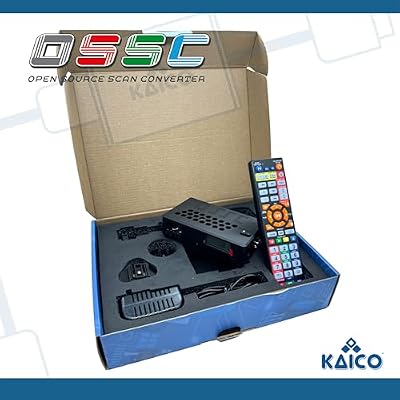
Kaico OSSC 1.8 Open Source Scan Converter, SCART Component VGA to HDMI | SCART to HDMI converter, line multiplier upscaler for zero-lag RGB retro gaming, with HDR mode, 6X output and image filters


As an Amazon Associate we earn from qualifying purchases. Product prices and availability are accurate as of the date/time indicated.

For PC gaming: A DVI-D cable to modern GPU is straightforward. For console gaming on this monitor, an HDMI-to-DVI adapter combined with an upscaler (OSSC Pro, RetroTink 4K) allows 240p/480p console signals to scale appropriately.
Vs. Modern Alternatives: Gaming Performance Comparison
Modern gaming monitors have surpassed the RDT272WLM in refresh rate (360Hz+ now available) and resolution, but they lack the temporal properties of a CRT. The RDT272WLM at 120Hz delivers zero input lag and instantaneous pixel response—properties that modern 120Hz IPS or VA panels cannot match due to pixel response time limitations.
For retro esports (emulated Capcom arcade, old fighting games), the RDT272WLM’s 120Hz + zero input lag is genuinely superior to most modern displays. The larger 27-inch screen also allows for higher native resolution, making it excellent for PC gaming emulation.
Comparison: Eizo FlexScan T968 Buying Guide, Dell P1130 Buying Guide, CRT vs OLED for Retro Gaming
Pros & Cons: The Gamer’s CRT
Pros:
- 120Hz refresh rate—fastest consumer CRT ever made
- Zero input lag; excellent for competitive gaming and emulation
- Large 27-inch screen; excellent for high-resolution PC gaming
- Native 1600×1200 resolution provides sharp image quality
- Diamondtron tube delivers solid color accuracy and geometry
- More available than broadcast monitors; more affordable ($400–$1,200)
- VGA and DVI-D inputs; compatible with modern graphics cards
Cons:
- High native resolution (1600×1200) makes it suboptimal for low-res 240p retro content
- Not ideal for broadcast work; color accuracy is good but not reference-grade
- Large footprint (32″ wide, 26″ deep, 19″ tall); requires substantial desk space
- Weighs 120 lbs; difficult to move or transport
- Will require recap service ($300–$600) within 5–7 years
- Tube brightness dims over time; no replacement tubes available
- Geometry adjustments less extensive than broadcast models
FAQ: Questions from Gaming-Focused Buyers
Is this good for retro console gaming?
Not ideally. The 1600×1200 native resolution means 240p/480p signals scale awkwardly (not integer multiples). You’d need an upscaler and component video converter, which adds complexity. Better choices: Eizo FlexScan T968 or Dell P1130 (1280×1024 native, cleaner scaling for 240p).
Is 120Hz actually useful for emulation?
Yes. Dolphin emulation running Melee at 60fps displays beautifully on 120Hz. MAME, Stella, and other emulators benefit from the high refresh for smooth motion. Modern emulation often runs at 60+ fps, making the 120Hz refresh genuinely valuable.
How long until it needs recap service?
Budget 5–7 years. Gaming-grade CRTs like the RDT272WLM are pushed harder than broadcast monitors, so capacitor stress is higher. Plan for $300–$600 service cost.
Can I use it for both gaming and content creation?
Gaming, yes. Professional color work, no. The Diamondtron tube is good but not broadcast-reference grade. For content creation, a BVM-D24 or JVC DT-V1900 is more appropriate.
Final Verdict
The Mitsubishi RDT272WLM is the best CRT for high-refresh PC gaming and emulation in 2026. It’s a bridge technology—not quite broadcast-professional, but far superior to any modern gaming monitor in temporal response and zero input lag. For emulation at 60+ fps, it’s hard to beat.
Buy one if: You’re serious about PC emulation, competitive retro gaming, or want a high-refresh CRT gaming setup. Excellent value at $400–$1,200.
Skip it if: You want to display classic 240p/480p console content (poor scaling); opt for a smaller PC CRT with 1024×768 native resolution instead.
In 2026, gaming-grade CRTs are more accessible than broadcast monitors, making the RDT272WLM an excellent entry point for enthusiasts wanting authentic CRT performance without breaking the bank.
Related: Eizo FlexScan T968 Buyer’s Guide: Trinitron Tube PC CRT, Dell P1130 Buyer’s Guide: Affordable 21-Inch Trinitron Monitor, RetroTink 4K Review
Related Articles
Looking for more on this topic? Browse the hand-picked guides below — each one applies the same scoring rubric used in this review.
Frequently Asked Questions
Is the RDT272WLM really as sharp in motion as a CRT?
Not identical, but close in the way that matters. Its 120Hz refresh combined with Mitsubishi’s black frame insertion mode blanks the backlight between frames, cutting the sample-and-hold blur that makes normal LCDs smear. Fast panning text stays legible, though a real Trinitron still edges it on phosphor response.
What resolution and panel does it use?
It is a 27-inch 1920×1080 panel, so pixel density is low by modern standards and text looks chunky next to a 1440p monitor. The trade-off is that 1080p is easy to drive at a locked 120fps, which is exactly the frame rate the strobing mode needs to look clean.
Does black frame insertion reduce brightness?
Yes, noticeably. Strobing the backlight means the screen is dark for part of every refresh, so peak brightness can drop by roughly half depending on the mode you pick. In a bright room you may need to close the blinds; in a dim setup the loss is rarely a problem.
Where can I buy one, and will it work on my power outlet?
These were sold mainly in Japan and now surface on used marketplaces and proxy shopping services. Units are wired for 100V Japanese mains, so outside Japan check the supplied adapter or use a step-down transformer. Shipping a 27-inch panel internationally also adds meaningful cost and breakage risk.
Is it worth buying in 2026 over a modern gaming monitor?
Only for a specific buyer. A current 1440p 240Hz OLED beats it on contrast, colour, latency and resolution. The Mitsubishi appeals if you want that particular strobed 120Hz look, want a rare collector piece, or want a second display dedicated to older games and emulation.