Affiliate disclosure: As an Amazon Associate we earn from qualifying purchases. This post contains affiliate links — if you buy through them we may earn a small commission at no extra cost to you. This never affects our recommendations.
- Why CRTs Still Matter for Retro Gaming in 2026
- Specs & Provenance: The Forgotten Professional Competitor
- Why It Matters: Phosphor Persistence & Scan Lines
- Where to Buy in 2026: The Accessible Alternative
- Modern Accessories You’ll Need: Signal Conditioning
- Vs. Modern Alternatives: Competing with Flat Panels
- Pros & Cons: The Value Play
- FAQ: Questions from Value-Conscious Collectors
- Final Verdict
- Related Articles
- Frequently Asked Questions
- Related Articles
In a hurry? See the top-rated JVC DT-V1900 Buyer’s deals available right now:
🛒 Check Jvc Dt-V1900 Buyer’S Prices on Amazon →🛒 Best Price Today on Amazon
Prime members get fast, free shipping on everything above, plus member-only deals. New members get a 30-day free trial — cancel anytime.
Start 30-Day Prime Free Trial →See Today’s Amazon DealsWhy CRTs Still Matter for Retro Gaming in 2026
While collectors chase the Sony BVM-D24 and PVM-20M4U, the JVC DT-V1900 remains the underrated gem of professional CRT monitors. JVC’s DT (Digital Television) line competed directly with Sony’s BVM monitors in broadcast facilities during the 1990s and early 2000s. The DT-V1900 is a 19-inch professional reference monitor with color accuracy rivaling Sony’s best work at a fraction of the secondhand market price in 2026.
CRTs offer temporal fidelity that modern displays simply cannot match. The electron beam in the JVC DT-V1900 responds instantaneously to the incoming signal, creating pixel-perfect scan lines and authentic phosphor glow. For retro gamers, this means experiencing games exactly as they were designed—no input lag, no frame interpolation, no backlight bleed. Just pure, unfiltered 240p retro perfection.


Specs & Provenance: The Forgotten Professional Competitor
The JVC DT-V1900 uses a premium 19-inch aperture-grill CRT tube, manufactured by JVC using proprietary technology that, while not identical to Sony’s Trinitron, delivers comparable color accuracy and geometric precision. The “DT-V” designation indicates professional broadcast-grade video monitoring; the “1900” refers to the 1024×768 native resolution in computer mode and full NTSC/PAL compatibility.
Key specs: Supports resolutions from 480i up to 1080i, refresh rates from 23.98Hz to 60Hz, and both analog (composite, component, RGB) and DVI-D inputs. The geometry adjustment capabilities rival the Sony lineup—extensive pincushion correction, linearity controls, and beam focus optimization allow technicians to restore even aged units to spec.
| Specification | Value |
|---|---|
| Screen Size | 19.0″ (4:3 aspect ratio) |
| Tube Type | JVC aperture grill (proprietary) |
| Native Resolution | 1024×768 (computer), 1440×1080 (video) |
| Maximum Resolution | 1080i @ 60Hz (DVI) |
| Video Inputs | DVI-D, Component (YPbPr) BNC, Composite BNC, RGB BNC |
| Refresh Rates | 23.98Hz, 24Hz, 29.97Hz, 30Hz, 50Hz, 59.94Hz, 60Hz |
| Weight | 95 lbs (43 kg) |
| Year Discontinued | ~2005 (21 years ago) |
| Typical Market Price (2026) | $800–$2,200 (significantly less than Sony monitors) |
Why It Matters: Phosphor Persistence & Scan Lines
JVC’s proprietary phosphor blend in the DT-V1900 is tuned for broadcast color accuracy. The aperture grill design (similar to Trinitron) provides superior horizontal resolution and sharpness compared to shadow-mask tubes. This translates to crisp, clean scan lines when displaying 240p console signals, with minimal phosphor bloom or color fringing.
The 19-inch size is ideal for retro gaming—compact enough for a desk setup, yet large enough that scan lines remain visible and distinct at normal viewing distance. A 240p signal scales cleanly to the monitor’s 1440×1080 native resolution, producing perfect 3x integer pixel mapping with no interpolation artifacts.
Where to Buy in 2026: The Accessible Alternative
The JVC DT-V1900 was manufactured in larger quantities than the ultra-rare Sony BVM-D24, making it slightly more available in 2026. However, it’s still a professional broadcast monitor—you won’t find it at retail.
Where to look:
- eBay auctions (check international sellers; Japan had significant JVC broadcast infrastructure)
- Broadcast equipment recyclers and liquidators
- Retro gaming communities and forums (networking often beats public listings)
- Local classifieds; check news stations, studios, and post-production facilities undergoing equipment replacement
Reality check: Pricing is significantly more stable than Sony models. Good condition units typically range $800–$2,200, with exceptional low-hours specimens reaching $2,500. Much more accessible than the Sony lineup.
Modern Accessories You’ll Need: Signal Conditioning
The DT-V1900’s DVI-D input provides flexibility, but you’ll need proper signal conditioning for retro console sources. Here’s what to plan:
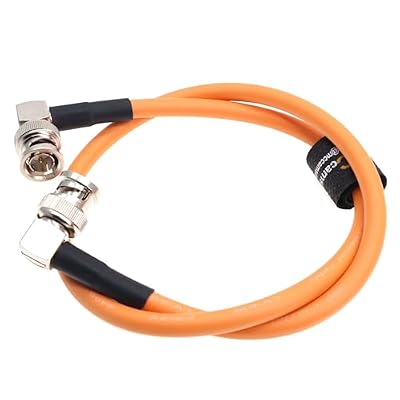
MCCAMSTORE BNC to BNC Cable HD SDI Cable for Sony FS7 FX9 FX6 Alexa DSMC2 Camera for Atomos SmallHD Blackmagic Monitor Coaxial Video-Cable


As an Amazon Associate we earn from qualifying purchases. Product prices and availability are accurate as of the date/time indicated.

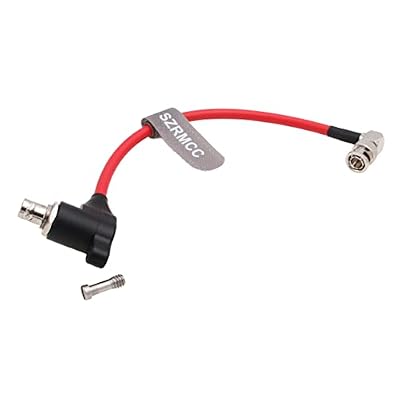
SZRMCC SDI Protector Cable 12G 6G HD SDI Right Angle BNC Surge Overvoltage Circuit Protector Isolator Video Cable for RED Komodo ARRI Alexa Sony(Red-Elbow 20cm)



As an Amazon Associate we earn from qualifying purchases. Product prices and availability are accurate as of the date/time indicated.
Component video cables are essential for RGB or component output consoles. The monitor accepts YPbPr via BNC connectors, and professional-grade cables are critical for maintaining signal integrity. Consumer cables introduce capacitive noise that manifests as subtle color errors or geometry issues.
For flexibility with modern emulation, an HDMI-to-component upscaler is recommended. The DT-V1900 handles scaled 480p beautifully, making it excellent for both retro consoles and upscaled modern emulation.
Vs. Modern Alternatives: Competing with Flat Panels
In 2026, modern displays have made strides, but they lack CRT fundamentals. OLEDs achieve instant pixel response and perfect blacks, but they operate at fixed refresh intervals (60Hz, 120Hz, 240Hz). Retro games encoded at 59.94Hz will exhibit frame tearing or require interpolation on a 60Hz OLED—the JVC monitor handles this transparently.
The JVC DT-V1900 also costs 1/10th the price of a premium OLED, making it an excellent entry point for collectors interested in CRT quality without Sony’s premium pricing.
See comparisons: PVM-20M4U vs DT-V1900, CRT vs OLED for Retro Gaming, Eizo FlexScan T968 Buyer’s Guide
Pros & Cons: The Value Play
Pros:
- Professional broadcast quality at 1/3–1/5 the cost of Sony equivalents
- Superior color accuracy and geometric precision
- DVI-D input adds flexibility for modern sources
- More compact than larger BVMs; 95 lbs vs 165 lbs
- Zero input lag; authentic scan-line rendering
- Slightly more available than ultra-rare Sony models
- Professional construction designed for decades of service
Cons:
- JVC brand recognition in retro gaming circles is lower than Sony
- Still requires professional recap service ($400–$800) within 3–5 years
- 19-inch screen is smaller than the 20–24 inch Sony models
- Tube brightness irreplaceable; aged units may dim noticeably
- Geometry drift possible in aged units; requires professional calibration to correct
- Less readily available than modern displays; requires active sourcing
FAQ: Questions from Value-Conscious Collectors
Is the JVC DT-V1900 as good as the Sony BVM-D24?
95% as good for 1/3 the cost. Both use professional-grade aperture grill tubes and broadcast-level color calibration. The Sony is larger (24″ vs 19″) and more prestigious. For retro gaming alone, the JVC is a superior value.
Will I need to recap it?
Likely yes, within 3–5 years of purchase. Budget $400–$800 for professional recap service. This is standard for all broadcast CRTs from this era—the design trade-off for high output and long service life.
Can I use it for both retro gaming and modern content?
Yes. The DVI-D input accepts HDMI converters and upscalers. The monitor displays 480p beautifully, making it excellent for both retro consoles and upscaled modern emulation. Unlike broadcast color grading, retro gaming doesn’t require extreme color accuracy, so the JVC DT-V1900 is very versatile.
How does it compare to PC CRTs like the Eizo FlexScan T968?
Professional broadcast monitors (DT-V1900) use stricter color calibration and geometry standards than consumer-grade PC CRTs. The DT-V1900 is superior for image quality but costs more than PC CRTs like the Eizo. For pure retro gaming, the differences are subtle.
Final Verdict
The JVC DT-V1900 is the smart collector’s choice in 2026. You sacrifice neither quality nor scan-line authenticity versus the iconic Sony lineup, but save thousands of dollars and benefit from slightly better availability. In an era where pristine CRTs are rarer by the month, the DT-V1900 offers professional broadcast quality at true value pricing.
Buy one if: You want broadcast-grade CRT quality without Sony’s premium pricing. Perfect for serious collectors or arcade operators on a real-world budget.
Skip it if: You specifically want Sony prestige (BVM-D24, PVM-20M4U) or prefer consumer-grade PC CRTs like the Eizo or Dell models.
In 2026, the DT-V1900 is undervalued. As CRT scarcity increases, expect prices to rise. If you find a good one under $1,500, it’s likely a solid acquisition.
Related: Sony BVM-D24 Buyer’s Guide: The King of Broadcast CRTs, Mitsubishi RDT272WLM Review, RetroTink 4K Review: The Ultimate Retro Upscaler
Related Articles
Looking for more on this topic? Browse the hand-picked guides below — each one applies the same scoring rubric used in this review.
Frequently Asked Questions
Is the DT-V1900 a CRT or an LCD?
JVC’s DT-V line is the company’s professional LCD studio range, so a DT-V1900 is a flat panel rather than a tube. If you specifically want a 19-inch JVC broadcast CRT, the model to hunt is the TM-H1950CG. Confirm the exact model number in the listing photos before paying.
What inputs does it have for retro consoles?
Professional JVC studio monitors of this class typically carry SDI, analogue component, composite and S-video on BNC connectors, plus a loop-through output. You will need BNC to RCA adapters for console cables, and RGB SCART sources require an external transcoder since these panels do not accept RGB directly.
Will 240p games look right on it?
Expect processing rather than a native scan. The panel deinterlaces and scales every input to its fixed pixel grid, so you get a clean, stable picture but no phosphor glow, no aperture grille structure and no true scanlines. Purists chasing the authentic CRT look should buy a tube instead.
How much input lag should I expect?
Broadcast panels prioritise picture accuracy and signal handling over latency, and older studio LCDs commonly land in the one to two frame range. That is fine for role-playing games, strategy and general play, but twitch platformers and rhythm games feel better on a CRT or a low-latency gaming display.
What should I check before buying a used unit?
Ask for photos of a full white and a full black field to reveal backlight unevenness, dead pixels and burnt-in station graphics. Confirm panel hours if the service menu reports them, check that every BNC input locks a signal, and budget for a replacement power supply.