Affiliate disclosure: As an Amazon Associate we earn from qualifying purchases. This post contains affiliate links — if you buy through them we may earn a small commission at no extra cost to you. This never affects our recommendations.
- Why CRTs Still Matter for Retro Gaming in 2026
- Specs & Provenance: The Ultimate Professional Reference Monitor
- Why It Matters: Phosphor Persistence & Scan Lines
- Where to Buy in 2026: The Hunt Begins
- Modern Accessories You’ll Need: Completing the Setup
- Vs. Modern Alternatives: Why Digital Displays Miss the Mark
- Pros & Cons: Is the King Worth the Crown?
- FAQ: Questions from Serious Collectors
- Final Verdict
- Related Articles
- Frequently Asked Questions
- Related Articles
In a hurry? See the top-rated Sony BVM-D24 Buyer’s deals available right now:
🛒 Check Sony Bvm-D24 Buyer’S Prices on Amazon →🛒 Best Price Today on Amazon
Prime members get fast, free shipping on everything above, plus member-only deals. New members get a 30-day free trial — cancel anytime.
Start 30-Day Prime Free Trial →See Today’s Amazon DealsWhy CRTs Still Matter for Retro Gaming in 2026
The Sony BVM-D24 represents the absolute pinnacle of CRT monitor engineering. “BVM” stands for Broadcast Video Monitor—professional-grade equipment designed for color-critical video production, mastering suites, and broadcast operations. The “D24” designation indicates a 24-inch diagonal display with digital inputs (component, DVI, and analog RGB). In 2026, this is the monitor that arcade operators, preservation specialists, and obsessive collectors dream about. Unlike the smaller PVM-20M4U, the BVM-D24 was manufactured in even smaller quantities and has become nearly impossible to source.
CRTs inherently preserve the temporal qualities of retro games that digital displays cannot replicate. The electron beam in a CRT refreshes at the exact frequency of the incoming signal, creating pixel-perfect scan lines and natural phosphor glow. Games were authored for this behavior—the pixel art, sprite animations, and color palettes all assume CRT physics. Feed a 1990s arcade board or console to an LCD, and you’re seeing an approximation, not the original vision.
Specs & Provenance: The Ultimate Professional Reference Monitor
The BVM-D24 is built around Sony’s premium 24.1-inch Trinitron tube, the largest aperture-grill CRT ever manufactured for professional use. This massive tube demanded equally sophisticated cooling and deflection circuitry. The monitor supports resolutions from 480i up to 1080i/p, with an exceptional range of refresh rates from 23.98Hz to 60Hz in multiple standards (NTSC, PAL, PAL-M, SECAM).
What sets the BVM-D24 apart: digital input capabilities. Unlike the analog-only PVM-20M4U, the D24 accepts DVI-D and component video via BNC connectors, making it more flexible for modern source material. The built-in digital calibration allows for precise color temperature and gamma adjustment through menus rather than physical potentiometers. A professional technician can store multiple calibration profiles, switching between them for different content.
| Specification | Value |
|---|---|
| Screen Size | 24.1″ (16:9 and 4:3 compatible) |
| Tube Type | Sony Trinitron (aperture grill, premium grade) |
| Maximum Resolution | 1080p @ 60Hz (DVI), 1080i @ 60Hz (analog) |
| Video Inputs | DVI-D, Component (YPbPr) BNC, Composite BNC, RGB BNC |
| Refresh Rates Supported | 23.98Hz, 24Hz, 29.97Hz, 30Hz, 50Hz, 59.94Hz, 60Hz |
| Weight | 165 lbs (75 kg) |
| Year Discontinued | ~2006 (20 years ago) |
| Typical Market Price (2026) | $4,000–$7,500 (in excellent condition) |
Why It Matters: Phosphor Persistence & Scan Lines
The BVM-D24 uses a proprietary phosphor blend formulated for color accuracy across the full CIE chromaticity diagram. This means the red, green, and blue phosphors have been tuned not just for brightness but for precise color reproduction matching ITU-R BT.709 standards. For retro gaming, this translates to impossibly accurate color rendition—the cyan in a Mega Man sprite appears exactly as Capcom’s artists intended in 1987.
The 24.1-inch screen size combined with 1440×1080 native resolution means that 240p console signals can be displayed with perfect 3x integer scaling, producing clean horizontal scan lines without interpolation artifacts. The tube’s ultra-fine dot pitch (around 0.31mm) ensures that even at 1080i resolution, individual scan lines remain visible and distinct—critical for that authentic retro appearance.
Where to Buy in 2026: The Hunt Begins
The BVM-D24 was discontinued around 2006. Fewer than 5,000 units were manufactured globally. In 2026, finding one is a project requiring patience, networking, and significant capital. Sources include:
- Broadcast equipment auctions: When TV stations upgrade, old BVM-D24s occasionally surface. Expect to compete with other collectors.
- Post-production facility liquidations: Rare but high-value sources. Estate sales and equipment auctions occasionally include these monitors.
- International markets: European and Japanese sellers sometimes have units. Import costs ($500–$2,000) and shipping damage risk are significant.
- Retro gaming networks: Connect with arcade operators and preservation societies. These circles have better intel on available units.
Reality check: A working BVM-D24 in 2026 is a unicorn. Budget aggressively and expect to wait months or years. Price fluctuates wildly ($3,500 for a problem unit to $10,000+ for a pristine, low-hours specimen).
Modern Accessories You’ll Need: Completing the Setup
The BVM-D24’s DVI input makes it more flexible than older BVMs, but you’ll still need signal conditioning for retro console sources. Here’s what to plan:
As an Amazon Associate we earn from qualifying purchases at no extra cost to you.





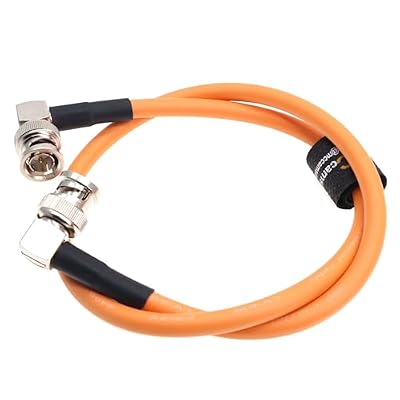
MCCAMSTORE BNC to BNC Cable HD SDI Cable for Sony FS7 FX9 FX6 Alexa DSMC2 Camera for Atomos SmallHD Blackmagic Monitor Coaxial Video-Cable


As an Amazon Associate we earn from qualifying purchases. Product prices and availability are accurate as of the date/time indicated.
Component video adapters are essential for consoles with RGB or component output. The BVM-D24 accepts YPbPr via BNC connectors, requiring professional-grade component cables. Consumer-grade cables introduce signal degradation that’s visible as color smearing or geometry errors.
For maximum flexibility, an HDMI-to-component converter and upscaler (like the RetroTink 4K) allow you to feed modern emulation or streaming content. However, this somewhat defeats the BVM-D24’s purpose—it’s optimized for analog video mastery, not digital conversion.
Vs. Modern Alternatives: Why Digital Displays Miss the Mark
Modern broadcasting has moved entirely to digital workflows, making professional CRT monitors obsolete for their original purpose. But for retro gaming, nothing matches their capabilities. A modern reference monitor (like a high-end LCD) can achieve 99% DCI-P3 color accuracy, but it cannot match the temporal behavior of a CRT.
OLEDs in 2026 have improved response time and contrast, but they operate at fixed refresh intervals. A retro game encoded at 59.94Hz on a 60Hz OLED display will exhibit frame tearing or require frame interpolation—neither solution is transparent to the viewer. A CRT beam responds instantly to the signal, eliminating this entirely.
Comparisons: Sony PVM-20M4U vs BVM-D24, JVC DT-V1900 Buyer’s Guide, CRT vs OLED for Retro Gaming
Pros & Cons: Is the King Worth the Crown?
Pros:
- Largest high-quality CRT tube ever produced for home/studio use
- Premium Trinitron tube delivers superior image quality and color accuracy
- DVI-D input adds flexibility for modern sources
- Storable digital calibration profiles for instant switching
- Geometric precision for both 4:3 and 16:9 content
- Zero input lag; authentic scan-line rendering
- Professional-grade construction; designed for 24/7 operation
Cons:
- Extremely rare (fewer than 5,000 manufactured); acquisition is a multi-month hunt
- Prohibitively expensive ($4,000–$7,500+); may exceed $10,000 for mint specimens
- Weighs 165 lbs; requires reinforced furniture and professional installation
- Massive footprint (29″ wide, 24″ deep, 21″ tall); dominates any space
- Likely needs professional recap service ($800–$2,000) within 3–5 years
- Tube brightness irreplaceable; no spare Trinitron tubes manufactured after 2010
- DVI input is DVI-D only (single link); supports up to 1080p but not higher resolutions
FAQ: Questions from Serious Collectors
Is this even available in 2026?
Technically yes, but you’re hunting a unicorn. Fewer than 100 working units probably remain in private hands globally. Be prepared to contact equipment brokers, attend auctions, and network extensively. Budget 6–12 months for a search.
Should I buy a problem unit and have it restored?
Only if you’re experienced with CRT work or have a trusted technician. A BVM-D24 with geometry issues or missing the original deflection board is a $500–$2,000 problem to fix. Verify the unit powers on and displays a clean image before committing.
How much will recap service cost?
Professional recap service for a BVM-D24 ($800–$2,000) is specialized work. Only a handful of technicians globally are qualified. Factor this into your total cost of ownership—you may be looking at $6,000–$9,500 total investment.
Can I use this for retro gaming and modern streaming?
Yes, the DVI-D input allows connection to HDMI converters and upscalers. However, the BVM-D24 was designed for broadcast mastery, not gaming. Its color-critical calibration may look different from a modern OLED display for bright, saturated modern content.
Final Verdict
The Sony BVM-D24 is the mountaintop of CRT technology. Only the most dedicated collectors, arcade curators, and preservation specialists should pursue one. The hunt itself becomes part of the hobby—networking, traveling to auctions, and finally securing a piece of broadcasting history.
Buy one if: You operate a professional arcade, run a retro gaming streaming service, or are a collector with resources to invest and maintain it properly.
Skip it if: You have any budget constraints. The PVM-20M4U offers 85% of the experience for 60% of the cost.
In 2026, the BVM-D24 has achieved cult status. It’s less a practical purchase and more a statement about commitment to the craft of retro display technology.
Related reading: JVC DT-V1900 Buyer’s Guide: Underrated 19-Inch BVM Alternative, Mitsubishi RDT272WLM Review: 120Hz CRT-Style PC Monitor
Related Articles
Looking for more on this topic? Browse the hand-picked guides below — each one applies the same scoring rubric used in this review.
Frequently Asked Questions
What makes the BVM-D24 better than a PVM?
The BVM line was Sony’s reference tier, with higher tube resolution, tighter geometry and convergence, more precise colour calibration and a digital control system that stores setup data. PVM monitors were production-grade and cheaper. For retro gaming the visible gains are sharpness, uniformity and far better greyscale tracking.
Do I need input cards to use it?
Yes. The D-series relies on removable BKM input boards, and a monitor sold without them cannot accept a signal at all. Analogue component and RGB boards are the ones retro gamers want; SDI boards are common but far less useful for consoles. Budget for cards separately.
How heavy is it and can one person move it?
A 24-inch broadcast tube is a two-person lift, comfortably over 50kg with the chassis, and it is deep as well as heavy. Plan the shelf or cart before it arrives, use a rated stand, and never ship one by standard courier without a crate and freight service.
What faults should I look for?
Check for burn-in from station graphics, dim or worn tubes that cannot reach proper brightness, convergence and purity errors in the corners, and capacitor failure showing as a shrinking or unstable image. Ask the seller to power it on and photograph a bright test pattern before you commit.
Is there a cheaper monitor with similar results?
The PVM-20M4U and PVM-20L5 deliver most of the retro experience at a fraction of the price and weight, and a well maintained consumer Trinitron with component input is cheaper again. Only buy the BVM if you specifically want reference geometry and accept the servicing burden.