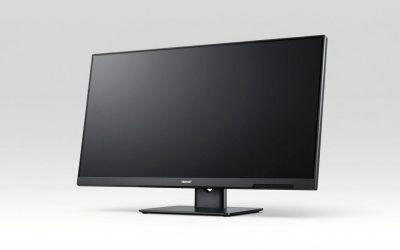
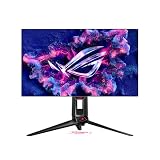
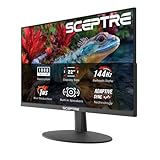
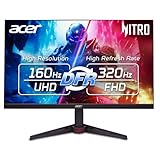
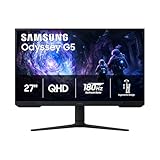
- Top Pick: Sceptre New 22-Inch Gaming Monitor, FHD 1080p, Up to 144Hz, HDMI, DisplayPort, Built-in Speakers, Machine Black (E225W-FW144 Series, 2026)
- Best Value: LG 24G411A-B 24-inch Ultragear Full HD (1920 x 1080) IPS Gaming Monitor, 144Hz (O/C), 1ms MBR, NVIDIA G-Sync Compatible, AMD FreeSync, HDR10, HDMI, DisplayPort, Slim Stand, Black
- Premium Choice: Dell 27 240Hz Gaming Monitor – SE2726HG – 27-inch FHD (1920×1080) 240Hz Display, in-Plane Switching (IPS) Technology, AMD FreeSync Premium, TÜV 3-Star, 2X HDMI, DisplayPort 1.4, Tilt
Affiliate disclosure: As an Amazon Associate we earn from qualifying purchases. This post contains affiliate links — if you buy through them we may earn a small commission at no extra cost to you. This never affects our recommendations.
- Best 1080p 144Hz Gaming Monitor in 2026: Top 5 Picks for Smooth Budget Gaming
- Quick Comparison: Best 1080p 144Hz Gaming Monitors
- The Top 5 Picks
- 1080p vs 1440p in 2026 — Should You Just Go 1440p?
- 144Hz vs 165Hz vs 240Hz — The Real-World Difference at 1080p
- GPU Pairing Guide — What Cards Work with 1080p 144Hz
- Conclusion
- Related Articles
- Frequently Asked Questions
- Related Articles
As an Amazon Associate we earn from qualifying purchases at no extra cost to you.


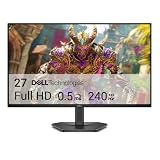


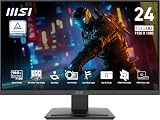

In a hurry? See the top-rated 1080p 144Hz Gaming Monitor deals available right now:
🛒 Check 1080P 144Hz Gaming Monitor Prices on Amazon →🛒 Best Price Today on Amazon
Prime members get fast, free shipping on everything above, plus member-only deals. New members get a 30-day free trial — cancel anytime.
Start 30-Day Prime Free Trial →See Today’s Amazon DealsBest 1080p 144Hz Gaming Monitor in 2026: Top 5 Picks for Smooth Budget Gaming
If you’re building or upgrading a budget gaming rig in 2026, the 1080p 144Hz monitor is still the smartest starting point. It sounds almost old-school at this point — 4K monitors are everywhere, 1440p panels have gotten cheaper, and refresh rates keep climbing past 360Hz — but that doesn’t make the 1080p 144Hz category irrelevant. If anything, it makes it more mature.
This is the sweet spot for gamers pairing a GTX 1660 Super, an RTX 3060, or even a mid-range laptop GPU. If you’re playing competitive titles like Valorant, CS2, Apex Legends, or Fortnite, you do not need 1440p. What you need is high, stable frame rates — and 1080p is where you’ll get them consistently. Less rendering load means more headroom for frames, and more frames means the 144Hz panel actually earns its keep.
This guide covers five monitors that represent the best the category has to offer in 2026: the straight-up best overall, the best from LG, a step-up 240Hz pick for esports diehards, the best budget 165Hz option, and the leanest sub-$120 pick for first-time buyers.
Quick Comparison: Best 1080p 144Hz Gaming Monitors
| Monitor | Panel | Response Time | HDR | VRR |
|---|---|---|---|---|
| AOC 24G2 | IPS | 1ms GtG | No | FreeSync Premium / G-Sync Compatible |
| LG 24GN650-B | IPS | 1ms MBR | No | FreeSync Premium |
| ViewSonic XG2431 | IPS | 0.5ms GtG | No | FreeSync Premium / G-Sync Compatible |
| ASUS TUF VG249Q1A | IPS | 1ms MPRT | No | FreeSync Premium |
| MSI Optix G241 | IPS | 1ms MPRT | No | FreeSync |
The Top 5 Picks
AOC 24G2 — Best Overall 1080p 144Hz Gaming Monitor
Panel: IPS | Refresh Rate: 144Hz | Response Time: 1ms GtG | VRR: FreeSync Premium + G-Sync Compatible
The AOC 24G2 has been near the top of this category for years, and it’s still there in 2026 — not because nothing better has come along, but because it continues to deliver exceptional value at around $130. It’s the monitor that covers every base without cutting visible corners.
The IPS panel offers solid color accuracy with roughly 95% sRGB coverage, wide viewing angles (178°/178°), and that characteristic brightness punch that VA panels struggle to match. The 1ms GtG response time is genuine — not an MPRT marketing number — which keeps ghosting minimal in fast-paced games. FreeSync Premium certification means it supports low framerate compensation (LFC), so even if your GPU drops below the VRR range, tearing stays under control. G-Sync compatibility is officially certified too, making this a clean choice regardless of whether you’re on Team Red or Team Green.
Stand adjustability is reasonable — tilt and height adjustment are both present, which separates it from many budget monitors. Build quality feels solid. If someone asks for one monitor to recommend without context, this is the one.
Best for: Gamers who want maximum value, AMD and NVIDIA users, anyone who wants a do-everything 1080p panel.
LG 24GN650-B — Best LG 1080p 144Hz Monitor
LG 24GN650-B
Panel: IPS | Refresh Rate: 144Hz | Response Time: 1ms MBR | VRR: FreeSync Premium
LG’s IPS panels consistently rank among the best for color accuracy at this price tier, and the 24GN650-B is the flagship expression of that in the 1080p 144Hz space. The 99% sRGB coverage is the headline — it’s one of the highest sRGB ratings you’ll find under $160, and it’s noticeable. Colors are vivid without being oversaturated, and the panel handles skin tones in games like The Witcher or Cyberpunk noticeably better than cheaper IPS options.

The response time listed is 1ms MBR (Motion Blur Reduction), not GtG. That distinction matters: MBR is a backlight strobe technique that improves perceived sharpness during motion, but it can’t be used simultaneously with FreeSync. You pick one or the other in the OSD. In practice, most users will leave FreeSync on and the MBR off — and the native GtG response time (typically 4–5ms) is still competitive for 144Hz content.
The height-adjustable stand is a genuine ergonomic win. Most monitors in this range offer tilt only. The 24GN650-B gives you full height adjustment plus tilt and swivel, which matters if you spend hours in front of it.
Best for: Color-conscious gamers, content creators who also play games, anyone prioritizing LG’s panel quality.
ViewSonic XG2431 — Best Step-Up Pick (1080p 240Hz IPS)
ViewSonic XG2431
Panel: IPS | Refresh Rate: 240Hz | Response Time: 0.5ms GtG | VRR: FreeSync Premium + G-Sync Compatible
The XG2431 is the upgrade pick for anyone who wants to stay at 1080p but push the refresh rate ceiling. At 240Hz, it targets competitive esports players who can consistently hit high frame rates in titles like Valorant, CS2, or Overwatch 2 — games where the frame budget is low and the GPU headroom is plentiful.
The standout feature is ULMB2 (Ultra Low Motion Blur 2), ViewSonic’s second-generation backlight strobing implementation. It’s among the best blur reduction technologies available at this price, and when properly calibrated, it makes 240Hz motion feel sharper than many 360Hz panels without ULMB. The 0.5ms GtG response time is among the fastest in the 1080p segment.
This is not a budget pick — it runs around $200 — but it’s priced fairly for what it delivers. If esports is your primary use case and you’re already hitting 200+ FPS regularly in your main titles, the jump from 144Hz to 240Hz at this price is well justified.
Best for: Competitive esports players, CS2/Valorant/Apex main-gamemode grinders, anyone already maxing out 144Hz.
ASUS TUF Gaming VG249Q1A — Best Budget 165Hz IPS
Panel: IPS | Refresh Rate: 165Hz | Response Time: 1ms MPRT | VRR: FreeSync Premium
The VG249Q1A sits in an interesting position: it’s priced similarly to the 144Hz competition but ships with a 165Hz panel. That extra 21Hz over 144Hz is genuinely usable — not just a marketing delta — and ASUS’s TUF Gaming line has earned a reputation for consistent panel quality and reliable build standards.
ELMB (Extreme Low Motion Blur) is the blur reduction feature here, equivalent in function to LG’s MBR. It’s a toggle in the OSD and again cannot be used alongside FreeSync simultaneously. The height-adjustable stand is one of the better ergonomic implementations in the sub-$150 space, and the overall build feels sturdy without being heavy.

The 1ms MPRT response time should be understood clearly: MPRT is a motion-picture response time measurement that factors in backlight strobing. The real panel response time (GtG) is typically 4ms on this class of IPS. That’s fine for 165Hz gaming — it won’t produce visible ghosting in normal play — but buyers shouldn’t conflate it with a true 1ms GtG spec.
FreeSync Premium support covers the adaptive sync range well, and NVIDIA G-Sync compatibility is generally achievable though not officially certified. In practice, it works cleanly with modern NVIDIA drivers.
Best for: Budget gamers wanting a slight refresh rate bump over standard 144Hz, ASUS ecosystem buyers, stand ergonomics priority.
MSI Optix G241 — Best Sub-$120 First Gaming Monitor
Panel: IPS | Refresh Rate: 144Hz | Response Time: 1ms MPRT | VRR: FreeSync
The MSI Optix G241 is the entry point. At around $110, it’s the monitor you recommend to someone buying their first gaming display — a college student, a console-to-PC convert, or someone who wants to dip into PC gaming without overcommitting financially.
The thin bezels are a genuine aesthetic win at this price. The IPS panel delivers better color and viewing angles than the TN panels that dominated entry-level gaming monitors five years ago. FreeSync support (standard, not Premium) covers the essentials for AMD GPU users. The 144Hz refresh rate is the main attraction, and it delivers exactly what the spec promises.
The stand is tilt-only — no height adjustment. That’s the most obvious cost-cutting trade-off, and buyers should plan for a monitor arm or riser if ergonomics matter. The G241 also doesn’t carry G-Sync compatibility certification, though many users report successful operation with NVIDIA GPUs through driver-level compatibility.
This is not a monitor for enthusiasts or anyone building a long-term setup. It’s the right monitor for someone who wants 144Hz on a tight budget and plans to upgrade in two or three years.
Best for: First-time gaming monitor buyers, extreme budget constraint, secondary or guest gaming setup.
1080p vs 1440p in 2026 — Should You Just Go 1440p?
It’s a fair question. 1440p IPS monitors with 144Hz have dropped in price significantly over the last two years, and the $200–$250 range now gets you a quality 27-inch 1440p 165Hz panel. So why buy 1080p?
Stick with 1080p if:

- Your GPU is a GTX 1660 Super, RTX 3060, RX 6600, or below
- You play primarily competitive esports titles where high frame rates matter more than resolution
- Your display is 24 inches or smaller (at 24 inches, the pixel density difference between 1080p and 1440p is noticeable but not drastic)
- Budget is a hard constraint under $150
Consider 1440p if:
- Your GPU is an RTX 3070, RTX 4060 Ti, RX 6700 XT, or above
- You play narrative or open-world games where visual fidelity matters
- You’re buying a 27-inch or larger monitor
- You’re planning a 3+ year primary setup
The honest answer: 1080p 144Hz still makes sense in 2026 for the right build and the right use case. It’s not behind the times — it’s still the best performance-per-dollar tier for competitive gaming.
144Hz vs 165Hz vs 240Hz — The Real-World Difference at 1080p
144Hz to 165Hz: The difference is real but subtle. Going from 144Hz to 165Hz adds roughly 14% more frames per second of display headroom. In fast-paced games, experienced players can perceive the difference, but it’s not transformative. If two monitors are priced equally and one is 165Hz, take the 165Hz. But don’t pay significantly more for 165Hz over 144Hz.
144Hz to 240Hz: This is a meaningful jump for competitive play. 240Hz reduces the maximum display latency from 6.9ms (at 144Hz) to 4.2ms (at 240Hz). Combined with a fast 0.5ms GtG panel, the motion clarity improvement in crosshair tracking and enemy visibility is real. The catch: your GPU needs to produce 200+ FPS consistently in your main titles for 240Hz to pay off.
240Hz to 360Hz: At 1080p, this is diminishing returns for most players. The step requires top-end GPU investment and is really only justified for professional competitive players.
For the majority of gamers at 1080p, 144Hz is the right answer. Upgrade to 240Hz only if you’re running a GPU that can sustain high frame rates and you play primarily competitive titles.
GPU Pairing Guide — What Cards Work with 1080p 144Hz
| GPU | 1080p 144Hz | Notes |
|---|---|---|
| GTX 1650 | Good | Hits 144Hz in esports titles; struggles in AAA |
| GTX 1660 Super | Excellent | Strong 1080p 144Hz performer across most genres |
| RTX 3060 | Excellent | Comfortable 144Hz+ in nearly all titles |
| RTX 3060 Ti | Excellent | Overkill for 1080p; consider 1440p |
| RX 6600 | Excellent | Strong 1080p competitive card |
| RX 6700 XT | Excellent | 1080p 144Hz is easy mode; consider 1440p |
| RTX 4060 | Excellent | Easy 144Hz+; 240Hz becomes viable |
| Laptop RTX 3060 | Good | 144Hz achievable; depends on game and TDP |
The GTX 1660 Super and RTX 3060 are the definitive 1080p 144Hz GPUs. They’ll hit or exceed 144Hz in most AAA titles on high settings and exceed 200Hz in esports titles. If your GPU is in this class, a 1080p 144Hz monitor is the right pairing. If you’re above an RTX 3070 or RX 6700 XT, it’s worth considering a step up to 1440p.
Conclusion
The 1080p 144Hz monitor category is mature, competitive, and still the right call for a large percentage of PC gamers. The five monitors listed here cover every meaningful segment: the AOC 24G2 remains the best overall value at $130, the LG 24GN650-B leads on color accuracy, the ViewSonic XG2431 serves competitive players ready to step to 240Hz, the ASUS TUF VG249Q1A adds 165Hz at a reasonable premium, and the MSI Optix G241 delivers the bare minimum for first-time buyers on a hard budget.
Buy the AOC 24G2 if you want the safest, most versatile pick. Buy the ViewSonic XG2431 if you’re serious about competitive performance. And if this is your first gaming monitor, the MSI Optix G241 gets you in the game without breaking the bank.
Pick your panel, pair it to your GPU correctly, and stop leaving frames on the table.
Related Articles
Looking for more on this topic? Browse the hand-picked guides below — each one applies the same scoring rubric used in this review.
Frequently Asked Questions
What is the best gaming monitor 1080p 144hz in 2026?
The best gaming monitor 1080p 144hz depends on your budget and how you plan to use it. The options compared above are our top-rated picks based on real customer ratings, build quality, and overall value — start with the highest-rated model that fits your budget.
How much should I expect to spend on a gaming monitor 1080p 144hz?
Prices vary by brand and features. Budget options cover the essentials, while mid-range and premium models add durability, performance, and extra features. Compare the prices in the list above to find the best value for your needs.
What should I look for when buying a gaming monitor 1080p 144hz?
Focus on what matters most for your use case — build quality, compatibility, performance, warranty, and verified customer reviews. Every pick above is selected to balance these factors.
Are budget gaming monitor 1080p 144hz options worth it?
Yes. For most people a well-reviewed budget or mid-range gaming monitor 1080p 144hz delivers excellent value. You only need to spend more if you specifically require premium materials or top-tier performance.
How did we choose these gaming monitor 1080p 144hz picks?
We compare current Amazon ratings, review counts, key features, and price to surface the options with the best real-world value. The list is refreshed as ratings and availability change.