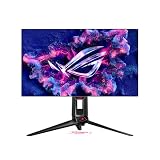
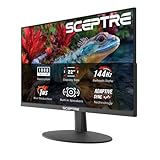
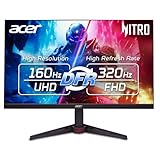
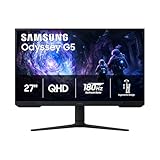
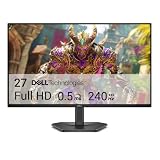
- Top Pick: Dell 27 240Hz Gaming Monitor – SE2726HG – 27-inch FHD (1920×1080) 240Hz Display, in-Plane Switching (IPS) Technology, AMD FreeSync Premium, TÜV 3-Star, 2X HDMI, DisplayPort 1.4, Tilt
- Best Value: Dell 24 240Hz Gaming Monitor – SE2426HG – 23.8-inch FHD (1920×1080) 240Hz Display, in-Plane Switching (IPS) Technology, AMD FreeSync™ Premium, TÜV 3-Star, 2X HDMI, DisplayPort 1.4, Tilt
- Premium Choice: ArcticPro 24 Inch 240Hz Gaming Monitor, FHD 1080p Monitor, Adaptive Sync
Affiliate disclosure: As an Amazon Associate we earn from qualifying purchases. This post contains affiliate links — if you buy through them we may earn a small commission at no extra cost to you. This never affects our recommendations.
As an Amazon Associate we earn from qualifying purchases at no extra cost to you.




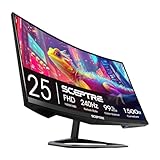

In a hurry? See the top-rated 1080p 240Hz Gaming Monitor deals available right now:
🛒 Check 1080P 240Hz Gaming Monitor Prices on Amazon →🛒 Best Price Today on Amazon
Prime members get fast, free shipping on everything above, plus member-only deals. New members get a 30-day free trial — cancel anytime.
Start 30-Day Prime Free Trial →See Today’s Amazon DealsWhy 1080p 240Hz Is the Esports Standard in 2026
Walk into any major CS2, Valorant, or Apex Legends tournament today and you will see one thing on every desk: a 240Hz or faster monitor running at 1080p. This is not a coincidence. Competitive players made this choice deliberately, and the reasoning has only gotten stronger heading into 2026.
Frame rate beats resolution for competitive gaming — full stop. When your in-game awareness depends on catching a single frame of an enemy peeking around a corner, the difference between 144Hz and 240Hz is the difference between seeing the shot and eating it. At 240Hz, each frame takes just 4.17ms to render and display. At 144Hz, that number climbs to 6.94ms. In a discipline measured in milliseconds, that gap is enormous.
Running 1080p instead of 1440p or 4K also matters for another reason: GPU load. A mid-range card like an RTX 4070 can push 300+ fps in Valorant at 1080p. The same card struggles to maintain 144fps at 4K in the same title. More frames mean the display always has fresh data to pull from, reducing perceived input lag and keeping motion sharp.
Lower resolution also reduces pixel rendering time at the hardware level — the signal pipeline from GPU to panel is shorter, which contributes to lower system latency. Combine that with NVIDIA Reflex or AMD Anti-Lag and you have a genuinely responsive system that would have been flagship-server-room territory five years ago.
The result is a category where the best 1080p 240Hz gaming monitor earns its place not as a budget compromise, but as the deliberate choice of professionals who care about winning.
Quick Comparison Table
| Product | Panel | Refresh Rate | Response Time | Sync | Price Range (2026) |
|---|---|---|---|---|---|
| ASUS ROG Swift PG259QN | IPS | 360Hz | 1ms GtG | G-Sync | $400–$500 |
| Alienware AW2524H | IPS | 500Hz | 0.5ms GtG | G-Sync | $700–$800 |
| BenQ ZOWIE XL2566K | TN | 360Hz | 0.5ms GtG | No VRR | $500–$600 |
| LG 24GN650-B | IPS | 240Hz | 1ms GtG | FreeSync Premium | $180–$230 |
| AOC 24G2ZE | IPS | 240Hz | 0.5ms GtG | FreeSync Premium | $150–$190 |
Top 5 Best 1080p 240Hz Gaming Monitors in 2026
1. ASUS ROG Swift PG259QN — Best Esports Flagship
The ASUS ROG Swift PG259QN is the monitor that cemented IPS panels as a legitimate esports choice. At 360Hz on a 24.5-inch IPS panel, it delivers sharper color and wider viewing angles than any TN competitor while keeping up with the fastest players in the world. The built-in NVIDIA Reflex Latency Analyzer is the headline hardware feature — plug your mouse into the monitor’s USB port and it measures your complete system latency in real time, something no software tool can replicate with the same accuracy.
G-Sync certification means the panel works tightly with NVIDIA GPUs to eliminate tearing without adding the variable input lag that older software-based solutions introduced. The 1ms GtG response time holds up in practice: motion in fast-paced games looks clean even at the most demanding scroll speeds.
Pros:
- 360Hz IPS combines speed with genuinely good color (sRGB coverage is excellent for a competitive panel)
- NVIDIA Reflex Latency Analyzer is a real, measurable diagnostic tool, not a marketing gimmick
- G-Sync eliminates tearing without a meaningful latency penalty at high frame rates
- Ergonomic stand with full height, tilt, swivel, and pivot adjustment
Cons:
- Premium price — you are paying for the flagship badge as well as the hardware
- 360Hz is only fully useful if your GPU can sustain 300+ fps in your titles
- G-Sync module adds cost and limits AMD GPU pairing at maximum specification
ASUS ROG Swift PG259QN on Amazon
2. Alienware AW2524H — Maximum Speed Pick
The Alienware AW2524H does something no other consumer monitor on the market currently matches: it runs at 500Hz. This is not a firmware overclock or a marketing number with asterisks. Dell engineered the AW2524H’s IPS panel specifically to run at this refresh rate, and the 0.5ms GtG response time is a real spec that holds under test conditions.
At 500Hz, each frame occupies just 2ms of display time. The gap between this monitor and a standard 240Hz display is the same as the gap between 240Hz and 120Hz in absolute milliseconds. Professional esports organizations have adopted it specifically because at the highest levels, frame time consistency matters as much as average frame rate. The build quality reflects Dell’s premium tier — the stand is rigid, the OSD is well-organized, and the panel uniformity is better than average for a monitor in this class.
Pros:
- 500Hz is the fastest consumer panel available in 2026 — nothing else comes close
- IPS panel means better color than TN competitors at similar price points
- 0.5ms GtG response time is verified and consistent across the panel
- Dell’s build quality and warranty support are class-leading
Cons:
- Highest price in this roundup by a significant margin
- Very few GPUs can sustain 500fps consistently in modern titles — the ceiling is theoretical for most setups
- IPS glow is present, as it is on all IPS panels at this brightness level
- No FreeSync support; G-Sync certification only
3. BenQ ZOWIE XL2566K — Best for CS2 Professionals
The BenQ ZOWIE XL2566K is built around a single idea: eliminate motion blur by any means necessary. BenQ’s DyAc+ (Dynamic Accuracy Plus) is a backlight strobing technology that synchronizes the backlight pulse with pixel transitions to kill the ghosting that standard sample-and-hold displays produce. In CS2 specifically — where tracking moving targets through smoke and at distance is a core mechanical skill — DyAc+ produces a noticeably cleaner image than any IPS competitor running at the same frame rate.
The 360Hz TN panel trades the color depth of IPS for raw speed and zero concern about backlight bleed. The XL2566K also ships without bundled software that needs to run in the background — all settings are stored on-device via the Shield menu system, which makes tournament carry-in simple and predictable. This is the monitor that professional CS2 players specifically request at events because the behavior is identical between home and stage.
Pros:
- DyAc+ backlight strobing is the most effective motion clarity technology currently available on a consumer panel
- TN panel has lower input lag floor than IPS at equivalent refresh rates
- No software dependency — all settings are hardware-stored and portable
- Designed explicitly for CS2/FPS tournament conditions; used at major events
Cons:
- TN color reproduction is visibly worse than IPS — off-axis viewing shows obvious color shift
- No VRR (G-Sync or FreeSync) support; designed for locked high-frame-rate play only
- DyAc+ and VRR cannot run simultaneously on any monitor; choosing motion clarity means locking frame rate
- Higher price than some IPS 240Hz alternatives despite older panel technology
4. LG 24GN650-B — Best Budget 240Hz
The LG 24GN650-B is the answer to a straightforward question: what is the least you can spend on a 240Hz IPS monitor without compromising on the things that actually matter in competitive play? At 23.8 inches with a native 240Hz IPS panel, this monitor delivers accurate colors, wide viewing angles, and clean 1ms GtG response time at a price point that puts it within reach of players building a capable competitive rig on a real-world budget.
FreeSync Premium certification keeps the experience smooth when frame rates dip below the 240Hz ceiling, which matters more in system-intensive titles like Apex Legends than in lighter games like Valorant. LG’s IPS panel quality is consistent — you will not see the dark corner bleeding that cheaper IPS alternatives sometimes exhibit. The stand is less adjustable than the flagship options above, but the panel itself punches at its weight class convincingly.
Pros:
- Genuine IPS quality at a budget price — color and viewing angles are clearly better than TN
- 240Hz native refresh rate is the sweet spot for mid-range GPU owners
- FreeSync Premium provides smooth variable refresh without compatibility issues
- LG panel consistency is above average for this price tier
Cons:
- Stand adjustability is limited compared to flagship competitors — tilt only out of the box
- No height adjustment without a VESA arm (sold separately)
- 240Hz ceiling means it will feel dated sooner than 360Hz alternatives as GPUs get faster
- Backlight uniformity can vary unit-to-unit at this price point
5. AOC 24G2ZE — Best Value Entry Point
The AOC 24G2ZE makes the case that you do not need to spend flagship money to get a legitimately competitive display. At 23.8 inches with a 240Hz IPS panel, 0.5ms GtG claimed response time, and FreeSync Premium, this monitor checks every technical box that a competitive 1080p display needs to check — at the lowest price in this roundup.
The panel performs well in standard gaming conditions. Motion in Valorant and CS2 is clean at high frame rates, and the IPS color accuracy means the monitor doubles reasonably well as a general-use display outside gaming hours. The design is understated — no aggressive RGB or angular styling — which some buyers will appreciate. Build quality reflects the price: the stand wobbles slightly more than premium alternatives and the OSD controls take some learning.

Pros:
- Lowest price in the roundup for a true 240Hz IPS panel
- 0.5ms GtG response time is competitive with monitors costing three times as much
- FreeSync Premium handles frame rate variability smoothly
- Clean, minimal aesthetic works as a general-purpose display
Cons:
- Stand build quality is noticeably below flagship tier — wobble is present under desk vibration
- OSD button layout is less intuitive than BenQ or LG equivalents
- 0.5ms GtG spec is measured under ideal conditions; real-world overdrive can introduce mild overshoot artifacts
- Limited ergonomic adjustment reduces flexibility for standing desk setups
How to Choose the Best 1080p 240Hz Gaming Monitor
240Hz vs 360Hz vs 500Hz: Where Diminishing Returns Begin
240Hz is the baseline competitive standard in 2026 and represents genuine, measurable improvement over 144Hz. Most players will notice the jump immediately in the form of smoother cursor tracking and sharper target acquisition.
The step to 360Hz is real but smaller. Independent latency tests show roughly a 1.4ms reduction in frame time compared to 240Hz. For players grinding ranked Valorant or CS2 at high ELO, this is worth paying for. For casual competitive players, the benefit is harder to perceive.
500Hz reduces frame time to 2ms — a further 0.77ms improvement over 360Hz. This benefit is measurable in laboratory conditions and is meaningful to professional players where hundredths of a second decide placements. For the overwhelming majority of players, a mid-range GPU will not sustain 500fps consistently, making the ceiling theoretical rather than practical.
Verdict: 240Hz is the value sweet spot. 360Hz is worth the premium if your GPU supports it. 500Hz is for professionals or enthusiasts who treat their setup as a serious tool.
IPS vs TN for Competitive Play
TN panels have faster pixel transitions than IPS in absolute terms, which is why professional CS2 players historically preferred them. The BenQ ZOWIE XL2566K represents the best TN option available today.
IPS panels have closed the gap significantly at high refresh rates. At 240Hz and above, the response time difference between good IPS and good TN is measured in fractions of a millisecond — imperceptible in real gameplay. IPS wins on color accuracy, viewing angles, and compatibility with content outside gaming.
Verdict: IPS is the better choice for most players in 2026. Choose TN only if you specifically want DyAc+ motion clarity and play CS2 at a level where it makes a difference.
Response Time and Motion Blur
Response time is the time a pixel takes to transition from one color to another, measured in milliseconds. Lower is better for clarity in motion. Most monitors list GtG (gray-to-gray) response time, which measures the typical transition rather than the worst case.
Overdrive settings push pixels to switch faster but can introduce “overshoot” — where a pixel overshoots its target value and creates a faint halo behind moving objects. The best monitors in this roundup balance overdrive aggressiveness to avoid overshoot while still hitting their published response times.
Backlight strobing (ULMB, DyAc+) is a separate approach: instead of making pixels transition faster, it turns the backlight off during the transition so you only see the finished frame. The result is significantly cleaner motion but at the cost of VRR compatibility and some brightness.
G-Sync vs FreeSync at High Frame Rates
At 240Hz and above, the case for either sync technology weakens compared to lower refresh rate scenarios. When your GPU is consistently pushing 240+ fps, tearing events are less visible because frames are refreshing so frequently.
G-Sync uses a hardware module in the monitor to handle the variable refresh window, which tends to produce lower latency overhead at the extreme high end. FreeSync Premium (the version required for 120Hz+ VRR) is more permissive in terms of GPU compatibility and works across both AMD and NVIDIA hardware (NVIDIA supports FreeSync monitors via its Adaptive Sync compatibility list).
Verdict: If your GPU is NVIDIA and you can afford G-Sync, the hardware module provides marginal benefits at high frame rates. FreeSync Premium is fully adequate for most competitive setups and costs less.
Monitor Size for Esports: Why 24 Inches Is the Standard
Professional esports players almost universally use 24 to 24.5-inch monitors. This is not arbitrary. At typical gaming desk distances (50–70cm), a 24-inch 1080p panel produces a pixel density that keeps individual targets sharp without requiring large head movements to scan the screen. A 27-inch 1080p panel at the same distance spreads pixels further apart, making individual elements look softer and requiring more peripheral vision tracking.
For CS2 and Valorant specifically, keeping enemies within a smaller field of view reduces the angular distance your crosshair must travel, which reduces mouse movement requirements and makes fine aim corrections more precise.
Blur Reduction Technologies: ULMB and DyAc+
ULMB (Ultra Low Motion Blur) is NVIDIA’s backlight strobing implementation available on G-Sync certified monitors. It pulses the backlight to eliminate sample-and-hold blur. Effective, but it cannot run simultaneously with G-Sync and requires a stable, locked frame rate to avoid strobing artifacts.
DyAc+ (BenQ) is the most refined implementation of backlight strobing available today. BenQ has iterated on this technology through multiple monitor generations, and the XL2566K’s DyAc+ produces cleaner results with fewer artifacts than ULMB on equivalent hardware. It is the primary reason the XL2566K commands a premium despite its TN panel.
Budget Guidance
- Under $200: AOC 24G2ZE — gets you into 240Hz IPS without compromise on the core spec
- $180–$230: LG 24GN650-B — marginally better panel consistency and brand reliability
- $400–$500: ASUS ROG Swift PG259QN — step up to 360Hz and Reflex Latency Analyzer
- $500–$600: BenQ ZOWIE XL2566K — 360Hz TN with best-in-class motion clarity
- $700–$800: Alienware AW2524H — 500Hz for professional or maximum-spec setups
Final Verdict
The best all-around pick in this roundup is the ASUS ROG Swift PG259QN. It combines 360Hz with a genuine IPS panel, the most useful latency measurement tool on any monitor (Reflex Latency Analyzer), and G-Sync performance that holds up at sustained high frame rates. It costs more than pure 240Hz alternatives, but the performance delta over a $180 budget monitor is tangible and consistent. For players who play seriously and own an NVIDIA GPU capable of 300+ fps in their main titles, this is the monitor to buy.
For the player who wants the absolute fastest display available regardless of cost, the Alienware AW2524H at 500Hz is the answer. Nothing else ships at this refresh rate on a consumer panel. Buy it if your GPU can sustain the frame rates to use it and your budget allows.
For players who want competitive capability without flagship spending, the AOC 24G2ZE delivers 240Hz IPS at a price that is genuinely hard to argue with. You are not getting the motion clarity of DyAc+ or the latency analysis of Reflex, but you are getting a display that will not be the limiting factor in your performance.
Whatever you choose from this list, you are picking a monitor that meets the technical standard professional players compete on. At 240Hz and above on a 1080p IPS panel, the display stops being the excuse.
Related Articles
Looking for more on this topic? Browse the hand-picked guides below — each one applies the same scoring rubric used in this review.
Frequently Asked Questions
What is the best gaming monitor 1080p 240hz in 2026?
The best gaming monitor 1080p 240hz depends on your budget and how you plan to use it. The options compared above are our top-rated picks based on real customer ratings, build quality, and overall value — start with the highest-rated model that fits your budget.
How much should I expect to spend on a gaming monitor 1080p 240hz?
Prices vary by brand and features. Budget options cover the essentials, while mid-range and premium models add durability, performance, and extra features. Compare the prices in the list above to find the best value for your needs.
What should I look for when buying a gaming monitor 1080p 240hz?
Focus on what matters most for your use case — build quality, compatibility, performance, warranty, and verified customer reviews. Every pick above is selected to balance these factors.
Are budget gaming monitor 1080p 240hz options worth it?
Yes. For most people a well-reviewed budget or mid-range gaming monitor 1080p 240hz delivers excellent value. You only need to spend more if you specifically require premium materials or top-tier performance.
How did we choose these gaming monitor 1080p 240hz picks?
We compare current Amazon ratings, review counts, key features, and price to surface the options with the best real-world value. The list is refreshed as ratings and availability change.