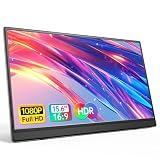
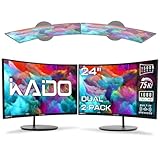
The combination of 240Hz refresh and OLED panel technology represents the current pinnacle of gaming displays. You get the buttery-smooth motion competitive players crave alongside the perfect blacks, instant response, and dazzling color that only OLED delivers. For anyone building a high-end battlestation, a 240Hz OLED monitor is the centerpiece that ties the whole setup together.
This review breaks down what makes these panels special, how the leading QD-OLED and WOLED options perform, and which model suits your priorities. From LG’s UltraGear to Samsung’s Odyssey and AOC’s high-refresh AGON line, the field is stronger than ever, and we’ll help you pick the right one.
As an Amazon Associate we earn from qualifying purchases.




Design & Build
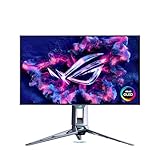
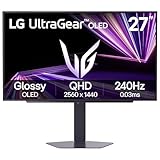
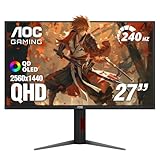
These monitors are as premium in construction as they are in performance. The LG UltraGear 27GX704A wraps its 27-inch QHD OLED panel in a sleek, gamer-focused chassis with slim bezels and a sturdy adjustable stand. The Samsung Odyssey OLED G6 brings QD-OLED brilliance in a similarly refined package, while the AOC AGON Pro AG276QZD2 and Q27GAZD models offer robust builds with practical ergonomics. The ASUS ROG XG27AQDMGR opts for a glossy coating that deepens perceived contrast. All feature the thin profiles OLED enables, along with proper VESA mounting and cable management.
Performance
This is elite territory. Running at 240Hz with a near-instant 0.03ms response time, panels like the LG UltraGear and Samsung Odyssey OLED G6 render fast motion with zero perceptible smearing, a genuine advantage in shooters and racing games. The AOC AGON Pro AG276QZD2 pushes even further to 280Hz for the most demanding competitors. QD-OLED color is spectacular, with wide gamut coverage and HDR that leverages per-pixel light control for stunning contrast. G-Sync and FreeSync compatibility across these models eliminates tearing, and QHD resolution keeps frame rates attainable on high-end GPUs while staying razor-sharp at 27 inches.
Pros & Cons
- Pro: 240Hz-plus refresh with 0.03ms response for flawless motion clarity.
- Pro: Perfect OLED blacks and wide-gamut QD-OLED color.
- Pro: HDR with per-pixel light control looks genuinely stunning.
- Pro: G-Sync and FreeSync support across the lineup.
- Con: Premium pricing reflects the cutting-edge panel tech.
- Con: Driving 240Hz at QHD demands a powerful graphics card.
- Con: OLED burn-in care is required, though modern safeguards help.
Alternatives to Consider
If you want the absolute highest refresh, the AOC AGON Pro AG276QZD2 at up to 280Hz edges out the field for pure competitive play. The LG UltraGear 27GX704A is the all-around pick for its balance of speed, color, and build, while the Samsung Odyssey OLED G6 leads on QD-OLED color vibrancy. Budget-conscious buyers who still want QD-OLED should look at the AOC Q27GAZD, and glossy-panel fans will appreciate the ASUS ROG XG27AQDMGR’s deeper perceived contrast.
Frequently Asked Questions
Is 240Hz OLED worth it over a faster LCD?
For most gamers, yes. OLED’s 0.03ms response and perfect blacks deliver motion clarity and image quality that even fast LCDs can’t match, and 240Hz keeps everything smooth for competitive play.
What GPU do I need for 240Hz at QHD?
To consistently hit high frame rates at QHD, a modern high-end graphics card is recommended. Esports titles will reach 240fps easily, while demanding AAA games may need DLSS or FSR to approach it.
QD-OLED or WOLED, what’s the difference?
QD-OLED, used in the Samsung Odyssey, adds a quantum-dot layer for brighter, more saturated color. WOLED panels also look excellent. Both deliver perfect blacks; the choice comes down to color preference and glossy versus matte finishes.
Should I worry about burn-in?
Modern OLED gaming monitors include pixel shifting, logo dimming, and automatic maintenance cycles. With normal mixed use, burn-in is unlikely within a typical ownership period.
Verdict
A 240Hz OLED monitor is the dream display for high-end gaming, combining elite speed with unmatched image quality. The LG UltraGear 27GX704A is our overall top pick for its well-rounded excellence, with the Samsung Odyssey OLED G6 leading on color and the 280Hz AOC AGON Pro as the choice for pure competitive edge.