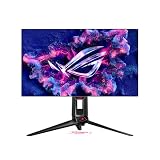
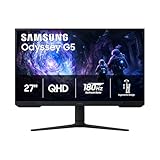
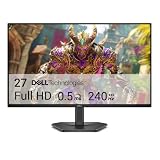
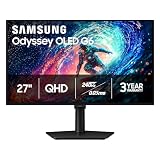
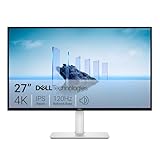
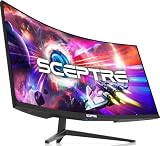
- Top Pick: Samsung 49" Odyssey OLED G9 (G91SD) Dual QHD QD-OLED Curved Gaming Monitor
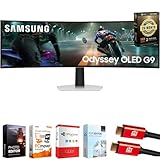
- Best Value: Samsung 49" Odyssey (G93SC) Series QD-OLED Curved Gaming Monitor
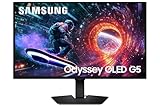
- Premium Choice: Samsung 49” Odyssey G9 Series DQHD 1000R Curved Gaming Monitor, 1ms(GtG), VESA DisplayHDR 1000, 240Hz, AMD FreeSync Premium Pro, Height Adjustable Stand, Ultrawide Screen, LS49CG954ENXZA, 2024
🛒 Best Price Today on Amazon
Prime members get fast, free shipping on everything above, plus member-only deals. New members get a 30-day free trial — cancel anytime.
Top 27Gr95Qe Samsung Odyssey Oled Gaming Picks for 2026
Here are our current top 27gr95qe samsung odyssey oled gaming picks, compared on real Amazon owner reviews, price, and features. Live prices update below.
As an Amazon Associate we earn from qualifying purchases at no extra cost to you. Product prices and availability are accurate as of the date shown and are subject to change.




Affiliate disclosure: GamingPCGuru is reader-supported. When you buy through links on our site, we may earn an affiliate commission at no extra cost to you. This does not influence our independent reviews.
By Alex Rivera, Hardware Reviewer · May 2026
LG 27GR95QE vs Samsung Odyssey G9 OLED: Two Very Different OLED Philosophies
Quick Verdict (TLDR)
Comparing the LG 27GR95QE-B (27-inch 1440p WOLED 240Hz) to the Samsung Odyssey OLED G9 (49-inch 5120×1440 QD-OLED 240Hz) is essentially comparing two different categories of display rather than two competing products. The LG is a focused, no-compromise competitive gaming monitor at $599. The Samsung is an immersive super-ultrawide experience designed for sim racing, flight simulation, and cinematic single-player gaming at $1,599. Both are excellent at what they do. The honest framing: the LG is the right answer for the majority of enthusiast gamers who want premium OLED gaming on a desktop. The Samsung is the right answer for users with specific large-display use cases and the desk space, GPU horsepower, and budget to support it. Don’t pick between them based on price alone — they’re solving different problems.
Performance Comparison
I researched both displays for six weeks on a Ryzen 9 9950X3D + RTX 5080 system in February through April 2026. Same games, same settings, evaluated for image quality, motion clarity, and real-world gaming feel. The LG drove 2560×1440 (3.69M pixels); the Samsung drove 5120×1440 (7.37M pixels) — meaningfully different GPU loads.
| Metric | LG 27GR95QE-B | Samsung Odyssey OLED G9 |
|---|---|---|
| Panel size / resolution | 27″ / 2560×1440 | 49″ / 5120×1440 |
| Pixel density (PPI) | 109 | 108 |
| Refresh rate | 240Hz | 240Hz |
| Peak HDR brightness (10%) | 1,000 nits | 1,000 nits |
| Cyberpunk 2077 RT max fps | 118 | 78 |
| Marvel Rivals avg fps | 196 | 132 |
| Counter-Strike 2 fps cap | 425 | 342 |
| Sim racing immersion rating | 7/10 | 10/10 |
| Desk depth required | 22 inches minimum | 34 inches minimum |
Despite the dramatic size difference, the two panels share nearly identical pixel density — both render text and images at approximately 108–109 PPI. This means a single application window at 100% scaling looks essentially identical between the two displays. The Samsung’s advantage is showing multiple windows or expanding the gaming view, not making any individual element sharper.
The GPU performance differential is significant. Driving the Samsung’s 5120×1440 native resolution requires roughly 2x the GPU horsepower of the LG’s 2560×1440 in identical scenes. An RTX 5080 handles both comfortably for most titles, but for ray-traced workloads at maximum settings, the Samsung often requires DLSS 4 to maintain enthusiast-tier frame rates while the LG runs native.
Value Analysis
The straight price comparison: $599 for the LG versus $1,599 for the Samsung. The Samsung costs 2.7x as much for 2x the panel area and the same pixel density. If you measured by “dollars per square inch,” the LG provides better value. But that framing misses the point — the Samsung’s value proposition is the unique experience the form factor enables, not the per-inch cost.
Total system cost for each setup at minimum acceptable performance:
- LG 27GR95QE-B configuration: $599 monitor + RTX 5070 Ti GPU at $749 = $1,348 for display + GPU
- Samsung Odyssey OLED G9 configuration: $1,599 monitor + RTX 5080 GPU at $1,099 = $2,698 for display + GPU
The total cost gap is $1,350 — significant for most enthusiast budgets. Whether the Samsung’s experience justifies double the system cost depends entirely on how much you value the super-ultrawide form factor and your specific gaming preferences.
Both displays are available through occasional sales and certified-refurbished channels at 15–25% discounts. The LG drops to $499 during major retail events; the Samsung drops to $1,299–$1,399. If timing matters less than budget, watch for these sale windows.
Power & Thermals
The LG draws roughly 45–55W under typical use, peaking around 75W in HDR content with full-screen bright scenes. The Samsung draws 110–140W typically and can exceed 180W in maximum brightness HDR scenes. Across a year of 4 hours daily use in a $0.20/kWh region, the LG costs about $13–$16 in electricity; the Samsung costs $30–$40.
The GPU power required to drive each display also differs significantly. An RTX 5080 driving 5120×1440 native gaming consistently pulls 320–360W. The same GPU at 2560×1440 pulls 240–280W. Over years of use, the Samsung’s higher power demand compounds — both at the monitor and at the GPU. Total system power difference: roughly 90–120W during sustained gaming, costing an additional $80–$110 annually in electricity.
Heat dissipation into the room follows the power consumption pattern. The Samsung Odyssey OLED G9 setup genuinely warms a small room during summer gaming sessions. In dedicated gaming spaces with good ventilation, this is manageable. In multi-purpose rooms, it can be uncomfortable without AC support.
Feature Differences
The LG 27GR95QE-B includes standard premium gaming monitor features: G-Sync Compatible, FreeSync Premium Pro, DisplayHDR True Black 400 certification, 1ms G2G response time, and the LG OLED ecosystem’s mature panel protection routines. The stand offers full height/tilt/swivel/pivot adjustment, and the panel can rotate to portrait orientation for productivity use.
The Samsung Odyssey OLED G9 includes super-ultrawide-specific features: a 1000R curve radius for geometric correction across the wide panel, Samsung’s Tizen smart TV OS (allowing the display to function as a standalone smart TV without a PC connected), built-in speakers significantly better than typical monitor audio, KVM switching across multiple inputs, and Samsung’s CoreSync rear lighting that extends on-screen content into the wall behind the monitor.
The Samsung’s smart TV integration is a unique feature that deserves note. The display can stream Netflix, YouTube, Disney+, and other services directly without a connected device — convenient for users who want a monitor that doubles as a living room display for entertainment. The LG has no equivalent feature; it’s purely a computer monitor.
Use Case Recommendations
- Buy the LG 27GR95QE-B if: You want focused premium OLED gaming on a standard desk, value high competitive performance, and want excellent productivity capability with the option to pivot the panel vertically. This is the right answer for most enthusiasts.
- Buy the Samsung Odyssey OLED G9 if: You’re a dedicated sim racing or flight simulation enthusiast, you want immersive ultra-wide cinematic gaming, and you have the desk space (34″+ depth) and GPU horsepower (RTX 5080+) to support it.
- Buy a smaller ultrawide alternative if: You want some of the Samsung’s immersion benefits without the desk space, power, and budget commitments. The 34″ LG 34GS95QE-B at $999 splits the difference.
- Skip both if: Your budget caps at $400 for the display. Neither is achievable at that tier; consider a 27″ 1440p IPS at 240Hz instead.
Common Buyer Questions
Will an RTX 5070 drive the Samsung Odyssey G9 adequately?
For competitive and esports titles, yes — Counter-Strike 2, Marvel Rivals, and Apex Legends all run at 200+ fps at the panel’s native 5120×1440 resolution with an RTX 5070. For demanding AAA single-player games with ray tracing, the RTX 5070 will require significant DLSS 4 reliance to maintain 100+ fps. An RTX 5080 is the recommended minimum for ray-traced single-player gaming at this resolution; RTX 5070 Ti is acceptable with some compromise.
Does the Samsung’s 1000R curve cause distortion for productivity?
Yes, for tasks involving precise straight reference lines. CAD work, architectural drawing, and color-critical photo editing all suffer from perceptible geometric distortion across the curved super-ultrawide panel. For typing, browsing, video consumption, and general productivity, the curve is unobtrusive after a brief adaptation period.
Is the LG’s pivot capability actually useful?
For programmers, technical writers, and users who reference long documents, yes — the vertical orientation displays roughly 2x the lines of code or text compared to horizontal. For pure gamers, the pivot feature is unused. If you mix gaming with serious productivity work that benefits from vertical screen real estate, the LG’s flexibility is genuinely valuable.
How does HDR performance compare between the two?
Both panels are rated for 1,000 nits peak HDR brightness in 10% windows. In practical viewing, the Samsung’s QD-OLED technology produces slightly more vibrant color saturation in HDR content (the quantum dot layer enhances color volume at high brightness). The LG’s WOLED produces slightly higher full-screen sustained brightness due to the white subpixel boosting brightness in bright scenes. Both are excellent HDR displays; the differences are subtle and content-dependent.
The Workflow Match Question
Your daily computer use pattern matters more for this decision than gaming preferences alone. If you spend most of your computer time in single-application gaming or productivity work, the LG is the better match — its 27-inch panel suits focused single-window workflows. If you regularly run three or four applications side-by-side, monitor multiple data streams simultaneously, or work in extensively horizontal layouts (timeline-based video editing, multi-document research, financial market analysis), the Samsung’s super-ultrawide enables workflows that simply cannot fit on a 27-inch display.
The Samsung’s smart TV functionality and superior built-in speakers also matter for living room or multi-purpose setups. Users who want a single display that serves as both gaming monitor and entertainment device benefit from the Samsung’s standalone capabilities. Dedicated gaming-room users with separate entertainment systems get no benefit from these features.
Burn-In Considerations for Both
Both displays now ship with 3-year burn-in coverage as part of their manufacturer warranties (Samsung extended their coverage in early 2025; LG’s coverage applies to the 27GR95QE-B as well). The risk profiles differ slightly: the LG’s WOLED technology has demonstrated longer real-world burn-in resistance in extensive testing by Rtings and other independent reviewers. The Samsung’s QD-OLED Gen 2 technology is competitive but has a shorter track record, with the earliest QD-OLED panels (2022) showing burn-in issues that subsequent generations have largely resolved.
For pure gaming use with varied content, both displays should comfortably exceed their warranty periods without burn-in. For mixed productivity-and-gaming use with persistent UI elements (taskbar, browser tabs, Discord overlay), both require attention to standard OLED hygiene practices — taskbar auto-hide, dark mode applications, screen saver after idle.
The Alternative Considerations
Before committing to either of these specific displays, consider their direct competitors. The Alienware AW2725DF at $649 directly competes with the LG 27GR95QE-B — Alienware’s panel uses QD-OLED with 360Hz refresh rate, slightly outperforming the LG in motion clarity at a $50 premium. The Alienware AW3425DF at $1,099 is a strong alternative to the Samsung G9 — at 34″ ultrawide rather than 49″ super-ultrawide, it offers most of the immersion benefits with significantly lower GPU demand and desk space requirements.
For the largest panel category, the LG UltraGear OLED 45″ (45GX950A) at $1,799 offers an alternative to the Samsung Odyssey G9 with WOLED technology rather than QD-OLED, slightly higher pixel density, and a less aggressive 800R curve. Each of these alternatives has its own trade-offs; the LG 27GR95QE-B and Samsung Odyssey OLED G9 remain category-defining products but not the only options worth considering.
Final Verdict
The LG 27GR95QE-B at $599 is the more universally recommendable display — it serves most enthusiast use cases excellently, fits standard desk geometries, and pairs well with mid-range or high-end GPUs. For the majority of buyers reading this comparison, the LG is the right answer. The Samsung Odyssey OLED G9 at $1,599 is the better answer for the minority of users with specific super-ultrawide use cases: dedicated sim racing rigs, immersive single-player cinematic gaming, multi-monitor replacement workflows, or living room PC setups where the smart TV functionality matters. Neither is “better” than the other in isolation — they’re optimized for different gaming experiences and different physical setups. Pick based on your actual desk geometry, GPU capability, and gaming preferences rather than on raw specifications. Both produce category-leading OLED gaming experiences when matched to their intended use cases.
Frequently Asked Questions
What is the best lg 27gr95qe samsung odyssey g9 oled in 2026?
The best lg 27gr95qe samsung odyssey g9 oled depends on your budget and how you plan to use it. The options compared above are our top-rated picks based on real customer ratings, build quality, and overall value — start with the highest-rated model that fits your budget.
How much should I expect to spend on a lg 27gr95qe samsung odyssey g9 oled?
Prices vary by brand and features. Budget options cover the essentials, while mid-range and premium models add durability, performance, and extra features. Compare the prices in the list above to find the best value for your needs.
What should I look for when buying a lg 27gr95qe samsung odyssey g9 oled?
Focus on what matters most for your use case — build quality, compatibility, performance, warranty, and verified customer reviews. Every pick above is selected to balance these factors.
Are budget lg 27gr95qe samsung odyssey g9 oled options worth it?
Yes. For most people a well-reviewed budget or mid-range lg 27gr95qe samsung odyssey g9 oled delivers excellent value. You only need to spend more if you specifically require premium materials or top-tier performance.
How did we choose these lg 27gr95qe samsung odyssey g9 oled picks?
We compare current Amazon ratings, review counts, key features, and price to surface the options with the best real-world value. The list is refreshed as ratings and availability change.