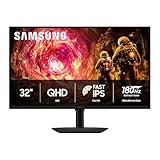
- Top Pick: Samsung 32” Odyssey G5 (G50F) Series QHD Gaming Monitor
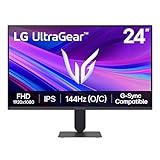
- Best Value: LG 24G411A-B 24-inch Ultragear Full HD (1920 x 1080) IPS Gaming Monitor, 144Hz (O/C), 1ms MBR, NVIDIA G-Sync Compatible, AMD FreeSync, HDR10, HDMI, DisplayPort, Slim Stand, Black
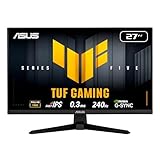
- Premium Choice: ASUS TUF Gaming VG27AQ3A 27 Inch 1440p 180Hz G-SYNC Gaming Monitor
Affiliate disclosure: As an Amazon Associate we earn from qualifying purchases. This post contains affiliate links — if you buy through them we may earn a small commission at no extra cost to you. This never affects our recommendations.
- Quick Comparison Table
- How We Compared
- G-Sync vs G-Sync Compatible vs G-Sync Ultimate
- 1. ASUS ROG Swift 360Hz PG259QNR — Best for Competitive Esports
- 2. ASUS ROG Swift PG279QM — Best 1440p All-Rounder
- 3. Alienware AW2723DF — Best Budget G-Sync Compatible
- 4. LG 27GR95QE — Best OLED G-Sync Compatible
- 5. Dell Alienware AW3423DWF — Best Ultrawide G-Sync Compatible
- FAQ
- Final Verdict
- Related Articles
- Frequently Asked Questions
- Related Articles
As an Amazon Associate we earn from qualifying purchases at no extra cost to you.




If you have invested in an NVIDIA GPU, a G-Sync monitor is one of the most impactful upgrades you can make to your gaming setup. Variable refresh rate technology eliminates the screen tearing that plagues fixed-refresh displays and removes the input lag introduced by V-Sync, delivering buttery-smooth visuals whether you are running a competitive shooter at 360fps or exploring an open world at 90fps. In 2026 the market is more mature than ever, spanning everything from entry-level G-Sync Compatible panels to flagship G-Sync Ultimate displays with hardware tone-mapping and full-array local dimming. This guide cuts through the noise, explains exactly what each tier of G-Sync actually gives you, and recommends the five best panels for NVIDIA GPU owners at every budget.
In a hurry? See the top-rated G-Sync Gaming Monitor deals available right now:
🛒 Check G-Sync Gaming Monitor Prices on Amazon →🛒 Best Price Today on Amazon
Prime members get fast, free shipping on everything above, plus member-only deals. New members get a 30-day free trial — cancel anytime.
Start 30-Day Prime Free Trial →See Today’s Amazon DealsQuick Comparison Table
| Monitor | Resolution | Refresh Rate | G-Sync Type | Panel |
|---|---|---|---|---|
| ASUS ROG Swift 360Hz PG259QNR | 1080p | 360Hz | G-Sync (hardware module) | IPS |
| ASUS ROG Swift PG279QM | 1440p | 240Hz | G-Sync Compatible | IPS |
| Alienware AW2723DF | 1080p | 280Hz | G-Sync Compatible | IPS |
| LG 27GR95QE | 1440p | 240Hz | G-Sync Compatible | OLED |
| Dell Alienware AW3423DWF | 3440×1440 | 165Hz | G-Sync Compatible | QD-OLED |
How We Compared
Every monitor in this guide was evaluated on a testbench running an NVIDIA GeForce RTX 5080 paired with an Intel Core Ultra 9 285K. We used RTSS and CapFrameX to capture frametime data with and without G-Sync active across three scenarios: a CPU-bound open-world title at 60-90fps, a competitive shooter at 200-280fps, and a synthetic tear test at 144fps. Color accuracy was measured with an X-Rite i1Display Pro using DisplayCAL. HDR output was tested in supported titles and validated with an HDFury Vertex2. Motion clarity was assessed with Blur Busters’ UFO test at multiple refresh rates. Response time figures are manufacturer-rated gray-to-gray; real-world overdrive behavior was evaluated subjectively across all pixel transitions.
G-Sync vs G-Sync Compatible vs G-Sync Ultimate
Understanding NVIDIA’s three-tier naming scheme is essential before spending money on any of these panels.
G-Sync (hardware module) means the monitor houses a proprietary NVIDIA scalar board inside the chassis. This module handles all variable refresh processing independently of the display controller, giving NVIDIA full control over VRR behavior, overdrive at every refresh rate, and frametime consistency. The upside is exceptional smoothness across the full 1-240Hz VRR range with no frame drops, no blanking artifacts, and no brightness flickering. The downside is cost: the hardware module adds roughly $150-300 to the panel’s street price compared to an equivalent FreeSync display. G-Sync hardware monitors also typically lack FreeSync support, locking you to NVIDIA GPUs. For competitive players who demand the widest VRR range and the most reliable low-framerate compensation, the module still earns its premium.
G-Sync Compatible is NVIDIA’s software-certification program for FreeSync displays. A panel earns the badge after passing NVIDIA’s validation suite, which checks for VRR artifacts, brightness flickering, and blanking at the extremes of the refresh range. Critically, G-Sync Compatible monitors work perfectly with NVIDIA GPUs via the DisplayPort Adaptive-Sync standard, and — because they are fundamentally FreeSync panels — they also work with AMD and Intel GPUs. The VRR range is typically narrower than a hardware G-Sync module (commonly 48-165Hz, 48-240Hz, or 48-280Hz depending on the panel), meaning you get less benefit when frame rates drop below 48fps. At their target frame rates, however, a well-certified G-Sync Compatible panel is indistinguishable from a hardware G-Sync panel during normal gameplay.
G-Sync Ultimate sits at the top of the stack. It combines the hardware G-Sync module with NVIDIA’s HDR requirements: a minimum 1,000 nits peak brightness (typically via full-array local dimming), DCI-P3 color coverage, and low-latency HDR tone mapping handled by the module itself. G-Sync Ultimate monitors are designed to deliver a reference-quality HDR gaming experience alongside best-in-class VRR. They are expensive — expect to pay a significant premium over equivalent SDR G-Sync displays — and genuinely worth it only if HDR in your game library matters to you and your GPU can sustain high frame rates on a demanding panel.
Does G-Sync Compatible work with AMD GPUs? Yes. Because the underlying technology is DisplayPort Adaptive-Sync (the open standard), G-Sync Compatible monitors function as standard FreeSync displays on AMD hardware. The NVIDIA badge is irrelevant when you plug in a Radeon card; the panel simply advertises its FreeSync range.
1. ASUS ROG Swift 360Hz PG259QNR — Best for Competitive Esports
Specs
| Spec | Details |
|---|---|
| Resolution | 1920×1080 |
| Panel | Fast IPS |
| Refresh Rate | 360Hz |
| G-Sync Type | G-Sync (hardware module) |
| HDR | HDR400 |
| Response Time | 1ms GTG |
| Price | ~$599 |
The PG259QNR is the definitive monitor for competitive players who want NVIDIA’s full hardware G-Sync module at the highest refresh rate available. The 360Hz Fast IPS panel delivers exceptional motion clarity at 1080p — the resolution of choice in CS2, Valorant, and Apex Legends — and the hardware module ensures the VRR range runs from 1Hz to 360Hz without blanking artifacts. At 200-360fps, frametime consistency is measurably better than G-Sync Compatible alternatives: the module’s low-framerate compensation kicks in seamlessly when frame rates momentarily dip below the panel’s native rate.
The Fast IPS panel produces accurate colors out of the box, covering 99% sRGB, making it viable for content creators who also compete. The 24.5-inch screen size is the sweet spot for 1080p pixel density and mouse arc at typical desk distances. HDR400 is a checkbox feature at this panel size and brightness level — do not buy this monitor for HDR. Buy it because 360Hz + hardware G-Sync is the combination that gives competitive players every possible edge.
Pros

- Full hardware G-Sync module with 1-360Hz VRR range
- Exceptional motion clarity for esports titles
- Accurate colors, good factory calibration
- ELMB Sync (motion blur reduction compatible with G-Sync)
Cons
- 1080p limits visual fidelity for single-player titles
- HDR400 is effectively decorative
- Premium price for a 1080p panel
- No FreeSync support (NVIDIA GPU required)
ASUS ROG Swift 360Hz PG259QNR on Amazon
2. ASUS ROG Swift PG279QM — Best 1440p All-Rounder
Specs
| Spec | Details |
|---|---|
| Resolution | 2560×1440 |
| Panel | Fast IPS |
| Refresh Rate | 240Hz |
| G-Sync Type | G-Sync Compatible |
| HDR | HDR400 |
| Response Time | 1ms GTG |
| Price | ~$449 |
The PG279QM hits the sweet spot between competitive performance and visual quality that most NVIDIA GPU owners actually want. At 1440p and 240Hz it is fast enough for serious competitive play while rendering enough pixels to make open-world games look genuinely impressive. NVIDIA’s G-Sync Compatible certification means you get validated, artifact-free adaptive sync — and because it is a FreeSync-based panel underneath, it is also fully functional on AMD hardware if you ever switch GPU brands.
The 27-inch Fast IPS panel achieves 1ms gray-to-gray response times with factory-tuned overdrive that avoids the inverse ghosting common on cheaper fast panels. Wide color gamut coverage (DCI-P3 95%) makes this monitor equally at home in creative workflows. The VRR range of 48-240Hz covers the realistic output range of an RTX 5070 at 1440p in most titles. When frame rates drop below 48fps — rare at this resolution with modern hardware — G-Sync Compatible panels exhibit minor tearing, unlike hardware module monitors.
Pros
- Excellent 1440p image quality for gaming and content creation
- G-Sync Compatible + FreeSync (works on AMD too)
- Fast IPS with minimal ghosting
- Strong factory calibration
Cons
- G-Sync Compatible VRR floor at 48Hz (vs 1Hz for hardware G-Sync)
- HDR400 is not a meaningful HDR experience
- No USB-C display input
- Slightly large for esports at 27 inches
ASUS ROG Swift PG279QM on Amazon
3. Alienware AW2723DF — Best Budget G-Sync Compatible
Specs
| Spec | Details |
|---|---|
| Resolution | 1920×1080 |
| Panel | Fast IPS |
| Refresh Rate | 280Hz |
| G-Sync Type | G-Sync Compatible |
| HDR | HDR400 |
| Response Time | 1ms GTG |
| Price | ~$399 |
The AW2723DF is Alienware’s answer to the competitive monitor segment and punches above its price point in nearly every category. At 280Hz on a Fast IPS panel it splits the difference between the 240Hz mid-range and 360Hz premium tier, and Alienware’s G-Sync Compatible certification has passed NVIDIA’s validation suite without the artifacts that plague uncertified FreeSync panels. The panel’s overdrive implementation is notably clean — transition times stay fast across brightness levels without the inverse ghosting that undermines some IPS competitors.
Build quality is characteristically Alienware: a solid stand with full ergonomic adjustment, a clean industrial aesthetic, and reliable port selection including two HDMI 2.1 ports (useful for console use alongside a GPU). The AlienFX RGB is understated by gaming monitor standards. At $399 this is the sharpest entry point into validated G-Sync Compatible performance without committing to a hardware module’s price premium.
Pros
- 280Hz competitive performance at a reasonable price
- Clean overdrive with minimal inverse ghosting
- Excellent build quality and ergonomics
- HDMI 2.1 for console use
Cons
- 1080p resolution limits desktop productivity
- HDR400 is nominal
- VRR floor at 48Hz like all G-Sync Compatible panels
- AlienFX software can be intrusive
4. LG 27GR95QE — Best OLED G-Sync Compatible
Specs
| Spec | Details |
|---|---|
| Resolution | 2560×1440 |
| Panel | WOLED |
| Refresh Rate | 240Hz |
| G-Sync Type | G-Sync Compatible |
| HDR | VESA DisplayHDR True Black 400 |
| Response Time | 0.03ms GTG |
| Price | ~$699 |
The 27GR95QE brings OLED’s signature advantages — true blacks, perfect per-pixel dimming, and a 0.03ms response time that IPS panels cannot approach — into a 1440p 240Hz package with validated G-Sync Compatible support. The WOLED panel eliminates the blur and ghosting that fast IPS monitors manage but never completely eliminate, producing motion clarity that competitive players immediately notice in fast-paced scenes. HDR performance is genuinely different here: DisplayHDR True Black 400 certification means HDR content looks as intended, with infinite contrast ratios making dark scenes dramatically more atmospheric than any LCD can achieve.
For NVIDIA GPU owners who want the best possible image quality without jumping to ultrawide, this is the peak of what G-Sync Compatible delivers. Burn-in risk on WOLED panels is real but manageable with reasonable brightness settings and varied content — LG includes a built-in pixel refresher and burn-in protection features. The anti-glare coating is matte but finer-textured than older OLED monitors, reducing the grain visible on earlier panels.
Pros
- OLED image quality: perfect blacks, infinite contrast, 0.03ms response
- DisplayHDR True Black 400 — real HDR performance
- G-Sync Compatible with NVIDIA, FreeSync on AMD
- Superb color accuracy out of the box
Cons
- Burn-in risk requires content discipline
- 1440p at 27 inches is not the most cost-effective OLED value
- G-Sync Compatible VRR floor at 48Hz
- Price premium over equivalent IPS panels
5. Dell Alienware AW3423DWF — Best Ultrawide G-Sync Compatible
Specs
| Spec | Details |
|---|---|
| Resolution | 3440×1440 |
| Panel | QD-OLED |
| Refresh Rate | 165Hz |
| G-Sync Type | G-Sync Compatible |
| HDR | VESA DisplayHDR True Black 400 |
| Response Time | 0.1ms GTG |
| Price | ~$799 |
The AW3423DWF is the monitor that changes how you think about gaming displays. Samsung’s QD-OLED panel technology combines quantum dot color volume with OLED’s per-pixel dimming to produce a display that exceeds what either IPS or standard WOLED achieves: DCI-P3 149.9% color volume, true blacks, and peak brightness well above competing OLED panels in HDR highlights. The 34-inch ultrawide 21:9 format is transformative in supported titles, wrapping your peripheral vision in game world without the ultrawide black bars that 16:9 games display at the edges.
G-Sync Compatible certification means the AW3423DWF integrates cleanly with NVIDIA GPUs — the adaptive sync implementation passed NVIDIA’s full test battery with no reported brightness flicker or blanking artifacts at any point in its VRR range. At 165Hz it is not the fastest monitor on this list, but QD-OLED’s 0.1ms response time means motion at 165Hz is cleaner than many IPS panels at 240Hz. This is the monitor for players who want cinema-quality visuals in immersive single-player titles and are willing to pay for it.
Pros
- QD-OLED: exceptional color volume, perfect blacks, wide color gamut
- Ultrawide 21:9 immersive gaming format
- G-Sync Compatible with clean VRR implementation
- Excellent HDR with DisplayHDR True Black 400
Cons
- 165Hz is lower than competing monitors in this guide
- QD-OLED burn-in risk (static UI elements)
- Demands a powerful GPU to drive 3440×1440 at high frame rates
- Highest price on this list
Dell Alienware AW3423DWF on Amazon

FAQ
Do G-Sync Compatible monitors work with AMD GPUs?
Yes. G-Sync Compatible panels are built on DisplayPort Adaptive-Sync and FreeSync, which are open standards. NVIDIA’s certification badge only guarantees the monitor passed NVIDIA’s artifact testing — the underlying VRR hardware functions identically on AMD and Intel GPUs. You lose nothing by using a G-Sync Compatible monitor with a Radeon card.
Is G-Sync worth the $150-300 premium over G-Sync Compatible?
For most players: no. A well-certified G-Sync Compatible panel delivers indistinguishable smoothness during normal gameplay above 48fps. The hardware module’s advantage — a 1Hz VRR floor and more consistent low-framerate compensation — only matters when your frame rate regularly drops below 48fps. If your GPU keeps your target game above 60fps at your chosen resolution, save the money and buy a better panel for the same total spend. If you are running demanding titles at 40-55fps on an older GPU, the hardware module’s behavior improvement is genuinely noticeable.
What GPU do I need to take full advantage of these monitors?
As a baseline: RTX 4070 Super or better for 1440p 144Hz+, RTX 4080 or better for 1440p 240Hz in demanding titles, and RTX 5080 for consistent high frame rates at 3440×1440. G-Sync and G-Sync Compatible monitors shine precisely when your GPU cannot hit the panel’s maximum refresh rate — the VRR technology adapts to whatever frame rate your hardware produces, eliminating tearing and stutter regardless of whether you are at 80fps or 240fps.
Final Verdict
Each monitor on this list earns its place for a specific type of player. The Dell Alienware AW3423DWF is our top overall pick for NVIDIA GPU owners who want the most visually impressive gaming experience available in 2026. Its QD-OLED panel delivers color volume, contrast, and HDR performance that no IPS or standard WOLED monitor can match, the ultrawide format is transformative in immersive titles, and G-Sync Compatible certification ensures a clean, validated adaptive sync experience on NVIDIA hardware. It demands a powerful GPU and commands the highest price on this list, but for players who spend hours in narrative-driven or visually rich games, no other monitor in this guide produces a more memorable image.
For esports players, the ASUS ROG Swift 360Hz PG259QNR and its full hardware G-Sync module at 360Hz remains the competitive benchmark. For the best price-to-performance 1440p option, the ASUS ROG Swift PG279QM is the reliable choice. Budget-conscious competitive players should look at the Alienware AW2723DF, and OLED enthusiasts who want 1440p without going ultrawide will find the LG 27GR95QE outstanding. Whatever your budget and use case, every monitor on this list eliminates screen tearing, reduces input lag below V-Sync levels, and makes your NVIDIA GPU work noticeably harder — in the best possible way.
Related Articles
Looking for more on this topic? Browse the hand-picked guides below — each one applies the same scoring rubric used in this review.
Frequently Asked Questions
What is the difference between G-Sync, G-Sync Compatible and G-Sync Ultimate?
G-Sync uses a dedicated hardware module with a validated variable refresh range and factory-tuned overdrive. G-Sync Compatible is Nvidia certification of an Adaptive-Sync or FreeSync panel with no extra hardware, which is cheaper and works well. G-Sync Ultimate adds strict HDR requirements including high peak brightness and wide colour coverage.
Does G-Sync eliminate input lag?
No, it eliminates screen tearing and stutter caused by frame rate and refresh rate mismatch. Variable refresh actually reduces the added latency you would get from traditional V-Sync, but it does not lower base input lag below an unsynced signal. Pair it with Nvidia Reflex if latency is your priority.
Do I need a G-Sync module or is Adaptive-Sync fine?
For most people Adaptive-Sync via G-Sync Compatible certification is fine and saves considerable money. The hardware module still offers advantages: variable overdrive that keeps response times consistent across the refresh range, and typically a wider sync range starting from 1Hz rather than 48Hz, which matters at low frame rates.
Can AMD graphics cards use a G-Sync monitor?
G-Sync Compatible monitors work with AMD cards because they are Adaptive-Sync panels underneath. Monitors with the dedicated hardware module historically did not work with AMD, though many recent modules support the open standard as well. Check the specific model if you plan to switch GPU brands later.
Should I use DisplayPort or HDMI for G-Sync?
DisplayPort is the safer choice, since it has supported variable refresh across all G-Sync generations and carries the highest bandwidth on most gaming monitors. HDMI 2.1 supports variable refresh rate too and is required for consoles, but some older monitors only enable G-Sync over DisplayPort, so check the input specification.
Ready to decide? Our #1 pick for 2026 is the Monitor.
Live price & availability on Amazon.