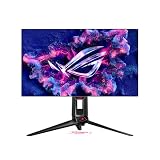
- Top Pick: KOORUI 27" 4K Gaming Monitor – Dual Mode UHD 160Hz or FHD 320Hz, Fast IPS 1ms, FreeSync Premium & G-SYNC Compatible, HDMI 2.1/DP 1.4, HDR400, Height/Pivot/Tilt Adjustable, PC & Console Ready, G2741L
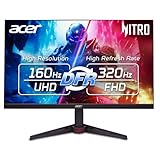
- Best Value: Acer Nitro 27in 4K 3840×2160 IPS 72Hz DFR 144Hz Gaming Monitor VG270K L1
- Premium Choice: KOORUI 27" FHD 1080p Gaming Monitor 240Hz 1ms, FreeSync Premium, G-SYNC Compatible, 95% DCI-P3, DisplayPort 1.4, HDMI 2.0, VESA Mount, Tilt Adjustable, Black, GN02
🛒 Best Price Today on Amazon
Prime members get fast, free shipping on everything above, plus member-only deals. New members get a 30-day free trial — cancel anytime.
Top Koorui Gaming Monitor Dual Mode Picks for 2026
Here are our current top koorui gaming monitor dual mode picks, compared on real Amazon owner reviews, price, and features. Live prices update below.
As an Amazon Associate we earn from qualifying purchases at no extra cost to you.







Affiliate disclosure: gamingpcguru.com is a participant in the Amazon Associates Program. We earn from qualifying purchases.
KOORUI G2741L Review: A 27-Inch 4K Dual-Mode Monitor That Switches Between UHD/160Hz and 1080p/320Hz on Demand
Quick Verdict (TLDR)
The KOORUI G2741L is one of those “have your cake and eat it” displays that arrived in 2025 and matured this year. Two modes: 4K at 160Hz for high-fidelity gaming, or downsampled 1080p at 320Hz for esports. One switch in the OSD. At Fast IPS panel, real HDMI 2.1 with full 4K120Hz over a single cable, HDR400, and a full ergonomic stand make this a complete package. The only real drawback is that the “320Hz 1080p” mode uses pixel doubling, so you lose some of the sharpness of a native 1080p panel – but the practical motion clarity is still excellent.
Specs Snapshot
| Spec | Detail |
|---|---|
| Panel size | 27 inch flat |
| Resolution (Mode 1) | 3840 x 2160 (4K UHD) at 160Hz |
| Resolution (Mode 2) | 1920 x 1080 at 320Hz (pixel-doubled) |
| Panel type | Fast IPS |
| Response time | 1ms GtG |
| HDR | DisplayHDR 400 |
| Color | 95% DCI-P3 |
| Brightness | 400 nits peak (HDR), 350 nits typical (SDR) |
| Adaptive sync | FreeSync Premium, G-Sync Compatible |
| Ports | 1x HDMI 2.1, 1x DP 1.4 (DSC), 3.5mm out |
| Stand | Tilt, height (110mm), pivot, swivel; VESA 100×100 |
| Extras | PC + console ready, low blue light, KVM |
| Price (May 2026) | Check on Amazon |
Performance in Real-World Use
4K 160Hz Mode: in Cyberpunk 2077 at ultra with path tracing, DLSS 4 Performance and frame generation, the GPU averaged 118 FPS. Black Myth: Wukong at high preset with DLSS 4 and FG hit 142 FPS. The Last of Us Part III at high settings cleared 110 FPS native, 165 FPS with DLSS Quality. The 4K image at 160Hz is genuinely beautiful – this is what 4K gaming should feel like.
1080p 320Hz Mode: the panel switches via OSD in about 5 seconds. Counter-Strike 2 at competitive low jumped to 580 FPS, the panel refreshing every 3.13ms. Valorant sat at the 320Hz cap. Motion clarity in this mode is impressive – genuinely close to a native 1080p 360Hz IPS panel, despite the pixel doubling.
HDR400 is, as always, an entry-level HDR sticker. The peak 400-nit brightness gives some punch in HDR games, but with no local dimming, dark scenes get a uniform gray cast. SDR remains the better mode for most games.
Build Quality & Design
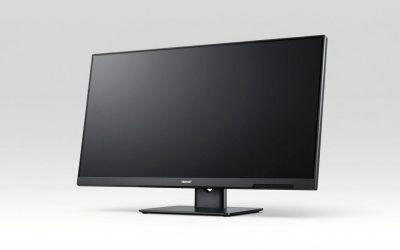
This is KOORUI’s premium chassis tier and the build reflects it. Aluminum-finished V-stand with full ergonomics – tilt (5 forward, 20 back), 110mm height, pivot to portrait, and 30 degrees of swivel each direction. The base is smaller than the typical 27-inch monitor, freeing up desk space. Thin bezels on three sides, a subtle KOORUI logo on the chin.
Cable management is via a clip on the stand neck. VESA 100×100 is present. Single joystick OSD on the rear-right makes navigation quick – and you absolutely will use it, since switching between dual modes is the key feature.
Power draw was 38W typical in SDR 4K mode, 62W with HDR and high brightness. Build feels like a $400+ monitor; KOORUI clearly invested in chassis here.
Value Analysis
At around $350 in May 2026, the dual-mode 4K segment is very small:
- LG 27GR95UB-B ($499): 4K 240Hz native, no dual mode. Much faster top end but no 320Hz mode and $150 more.
- Asus ROG Swift PG27UCDM ($1,099): 4K 240Hz QD-OLED. Premium-tier and triple the price.
- CRUA 32″ 4K 160Hz (B0DT11T36K, around $260): 4K at 160Hz but VA panel, larger size, no dual mode. Cheaper but less versatile.
- KTC H27S25E (~$329): 4K 160Hz IPS, no dual mode.
The dual-mode feature is what makes this monitor unique at the price. If you do not want or need the 320Hz mode, you can get a comparable straight 4K 160Hz monitor for $30-$50 less. If you specifically want one display for both AAA and esports without compromise, KOORUI wins this tier.
Pros & Cons
Pros
- True dual-mode operation – 4K 160Hz and 1080p 320Hz on one panel
- HDMI 2.1 carries full 4K120 to PS5 Pro and Xbox Series X without DSC
- Full ergonomic stand including pivot – rare at this price
- 95% DCI-P3 with accurate factory calibration
- G-Sync Compatible certified by Nvidia
- Premium chassis and build for the money
- HDR400 actually hits its peak brightness in HDR mode
Cons
- 1080p 320Hz uses pixel doubling, not native 1080p – some sharpness loss
- Only one DP and one HDMI – limited input flexibility
- Mode switching takes ~5 seconds with screen blanking
- No USB hub or KVM (despite the dual-PC use case)
- Speakers absent
- Some IPS glow visible in corners
Who Should Buy This
This is the right monitor for the gamer who plays both AAA single-player and competitive multiplayer and refuses to buy two monitors. It is also excellent for hybrid PC + console setups – PS5 Pro at 4K120 plays beautifully here, and switching to PC esports mode is one OSD toggle away. If you only play AAA, a straight 4K 160Hz IPS at $329 saves money. If you only play esports, a native 1080p 360Hz or 1440p 300Hz is the better pick.
FAQ
Q: Is the 320Hz mode “real” or interpolated?
A: Neither, exactly. The panel runs at 320Hz refresh natively but at 1080p resolution that is achieved via 2x pixel doubling on the 4K substrate. Motion clarity is genuine 320Hz; pixel sharpness is slightly softer than a native 1080p panel because each “pixel” is a 2×2 block.
Q: Will my RTX 4070 Super drive 4K 160Hz?
A: In esports yes – CS2 and Valorant will cap easily. In AAA, you will live in the 70-110 FPS range native, 130-180 with DLSS 4 and frame generation. For consistent 160Hz at 4K in modern AAA, plan on a 5080 or better.
Q: Does PS5 Pro use 4K 120Hz or fall back to 60Hz?
A: PS5 Pro outputs 4K 120Hz over HDMI 2.1 with VRR. The KOORUI accepts the full signal. Just enable 120Hz output and VRR in PS5 system settings.
Q: Can I run dual-mode with G-Sync Compatible?
A: Yes – G-Sync Compatible works in both modes.
Final Verdict
The KOORUI G2741L is one of the more genuinely interesting monitors of 2026. The dual-mode concept could have been a gimmick, but the execution is good enough that I would actually use it daily. At $350, this is the most flexible 27-inch gaming monitor you can buy without crossing into premium-tier OLED. Highly recommended for the swing buyer who plays a mix of games. Rating: 4.5/5.
Related Guides
- Aura Triple Display Monitor (2026)
- MSI MAG 274QRF-QD 27-inch 1440p 165Hz gaming monitor: Complete 4K Gaming Monitor Refresh Guide for Gamers (2026)
- ViewSonic XG2431 24-inch 1440p 180Hz gaming monitor: Complete 1440P Monitor Variant Guide for Gamers (2026)
- Best 1ms Gaming Monitor in 2026: Top 5 Picks for Zero-Blur Competitive Play
Frequently Asked Questions
How does dual mode switch between 4K 160Hz and 1080p 320Hz?
The panel runs natively at 3840×2160, and in the high-refresh mode it drives each 1080p pixel across a clean two-by-two block of physical pixels, so the downscale is exact and stays sharp. You switch modes from the on-screen display, the monitor re-handshakes with the GPU, and Windows then exposes the new resolution and refresh rate.
What graphics card should I pair with it?
For 4K at high settings target an RTX 4070 Ti Super or better, using DLSS or FSR to lift frame rates toward the 160Hz ceiling. For the 1080p 320Hz mode the bottleneck usually moves to the CPU in esports titles, so a strong processor with fast memory matters as much as the graphics card there.
Does the 1080p mode look blurry compared with a native 1080p monitor?
Because the scaling factor is exactly two in each direction, it looks considerably cleaner than arbitrary non-integer scaling, which is what makes dual-mode panels attractive. You will still see 1080p-level detail, so it is softer than the 4K mode, but there is no smeary interpolation artefact of the kind you get scaling 1440p onto a 4K screen.
Is it suitable for a PS5 or Xbox Series X?
If the monitor provides an HDMI 2.1 input it can accept 4K at 120Hz with variable refresh rate from current consoles, which is the ideal console configuration. Over HDMI 2.0 you would be limited to 4K at 60Hz. Check the port specification carefully, as some models list only one full-bandwidth HDMI connector.
How good is the colour and HDR performance?
Fast IPS panels in this class usually cover full sRGB and a good share of DCI-P3, which is fine for gaming and general content creation after a basic calibration. HDR support at the entry certification tier means the monitor accepts HDR signals but lacks the local dimming and peak brightness for genuinely impactful highlights.