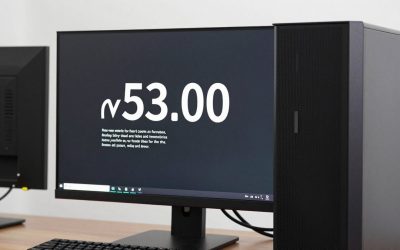
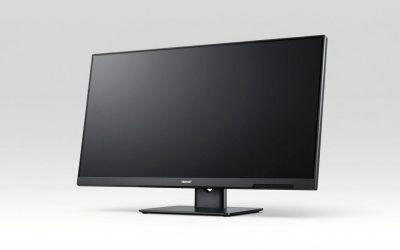
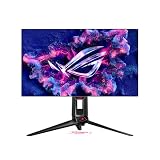
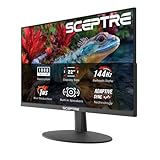
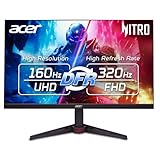
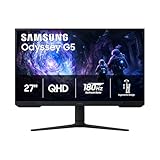
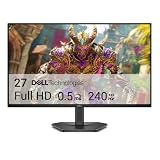
- Top Pick: Dell 27 240Hz Gaming Monitor – SE2726HG – 27-inch FHD (1920×1080) 240Hz Display, in-Plane Switching (IPS) Technology, AMD FreeSync Premium, TÜV 3-Star, 2X HDMI, DisplayPort 1.4, Tilt
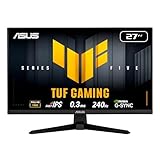
- Best Value: Dell 24 240Hz Gaming Monitor – SE2426HG – 23.8-inch FHD (1920×1080) 240Hz Display, in-Plane Switching (IPS) Technology, AMD FreeSync™ Premium, TÜV 3-Star, 2X HDMI, DisplayPort 1.4, Tilt
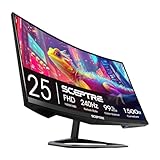
- Premium Choice: ArcticPro 24 Inch 240Hz Gaming Monitor, FHD 1080p Monitor, Adaptive Sync
Affiliate disclosure: As an Amazon Associate we earn from qualifying purchases. This post contains affiliate links — if you buy through them we may earn a small commission at no extra cost to you. This never affects our recommendations.
As an Amazon Associate we earn from qualifying purchases at no extra cost to you.





If you play competitive FPS games — CS2, Valorant, Apex Legends, Overwatch 2 — the monitor you use is not a luxury decision, it is a performance decision. In 2026, 240Hz at 1080p has become the clear sweet spot for serious players: high enough refresh rates to eliminate motion blur and input lag that matters in gunfights, at a resolution that even mid-range GPUs can push past 240 frames per second consistently.
Why 1080p instead of 1440p or 4K? Simple: frame rate wins firefights. A 240fps feed at 1080p gives you smoother, more predictable motion than a 100fps feed at 1440p. Pro players overwhelmingly use 1080p for this reason. The frame data is faster, the GPU headroom is larger, and you get more competitive margin when every millisecond counts.
This guide covers the five best 240Hz 1080p gaming monitors you can buy in 2026, from a flagship 540Hz beast to budget-friendly daily drivers under $200. We break down panel type, response time, sync technology, and real-world performance so you can pick the right screen for your setup and budget.
In a hurry? See the top-rated 240Hz 1080p Gaming Monitor deals available right now:
🛒 Check 240Hz 1080P Gaming Monitor Prices on Amazon →🛒 Best Price Today on Amazon
Prime members get fast, free shipping on everything above, plus member-only deals. New members get a 30-day free trial — cancel anytime.
Start 30-Day Prime Free Trial →See Today’s Amazon DealsQuick Comparison Table
| Monitor | Size | Panel | Refresh Rate | Response Time | HDR |
|---|---|---|---|---|---|
| ASUS ROG Swift Pro PG248QP | 24.1″ | IPS | 540Hz (native 240Hz+) | 0.2ms GtG | No |
| LG 24GS65F-B | 24″ | IPS | 240Hz | 1ms GtG | No |
| Acer Nitro XV240 Y3biphx | 24″ | IPS | 280Hz | 0.5ms GtG | No |
| AOC 24G2ZE | 24″ | IPS | 240Hz | 0.5ms GtG | No |
| ViewSonic XG2431 | 24″ | IPS | 240Hz | 1ms GtG | DisplayHDR 400 |
Top 5 Best 240Hz 1080p Gaming Monitors Reviewed
1. ASUS ROG Swift Pro PG248QP — The Flagship Overkill Option
ASUS ROG Swift Pro PG248QP
Specs at a glance:
- Panel: IPS
- Size: 24.1 inches
- Resolution: 1920×1080
- Refresh Rate: 540Hz (NVIDIA Reflex-boosted; native IPS at 240Hz+ with overdrive)
- Response Time: 0.2ms GtG
- Sync: NVIDIA G-Sync
- Price: ~$700
The PG248QP is ASUS’s statement product — proof that the ceiling on refresh rate is still being pushed. Its 540Hz mode uses NVIDIA Reflex technology to boost the effective refresh rate well beyond what the IPS panel achieves natively. The result is the smoothest motion rendering you will find on any consumer monitor in 2026. At 0.2ms GtG, ghosting is essentially nonexistent even in the most chaotic scenes.
The 24.1-inch 1080p panel is intentional: sharper pixel density is not the point here. Speed is. ASUS uses an IPS-level panel that delivers accurate colors and wide viewing angles, unlike older TN panels that sacrificed image quality for speed. The G-Sync module ensures tear-free frames even when your GPU dips below the peak refresh rate.
Pros:
- 540Hz delivers objectively the smoothest motion available on any retail monitor
- 0.2ms GtG response time — industry-leading
- Wide viewing angles and accurate color for an IPS panel tuned for esports
- NVIDIA G-Sync (hardware module, not just compatible) for premium adaptive sync
Cons:
- $700 price point is hard to justify for casual players
- Requires a very powerful GPU (RTX 4080 or better) to actually hit 540fps in demanding games
- No HDR support — purely a competitive, not cinematic, monitor
- Overkill for anyone not competing at a high level
Who it’s for: Dedicated CS2, Valorant, or Apex Legends players who want every possible edge and have the GPU to match. Tournament-level or aspiring pro players for whom a few hundred dollars is worth the measurable latency advantage.
2. LG 24GS65F-B — Best Value 240Hz IPS Under $200
LG 24GS65F-B
Specs at a glance:
- Panel: IPS
- Size: 24 inches
- Resolution: 1920×1080
- Refresh Rate: 240Hz
- Response Time: 1ms GtG
- Sync: AMD FreeSync Premium
- Price: ~$200
LG’s 24GS65F-B is the monitor that made high-refresh IPS accessible. For $200, you get a genuine 240Hz IPS panel with 1ms GtG response — numbers that cost $400+ just two years ago. The image quality punches well above its price: IPS delivers accurate colors, solid 178-degree viewing angles, and noticeably better contrast than budget TN alternatives.
The 1ms GtG response time means motion clarity is tight and ghosting is controlled. In fast-paced FPS games, the panel transitions cleanly without the trailing smear that plagues slower VA panels. FreeSync Premium support gives you adaptive sync across a wide range, and the monitor is also G-Sync Compatible certified — meaning it works with NVIDIA GPUs running FreeSync mode without tearing.
The 24GS65F-B does not have fancy extras: no HDR, no USB-C, minimal OSD features. But the core performance — fast IPS at 240Hz — is what competitive players pay for, and LG delivers it without padding the price with marketing fluff.

Pros:
- Exceptional price-to-performance ratio for 240Hz IPS
- Accurate IPS color and wide viewing angles
- G-Sync Compatible despite AMD FreeSync Premium branding
- Clean, minimal design with slim bezels
Cons:
- 1ms GtG is solid but not class-leading (ASUS hits 0.2ms)
- No HDR or advanced display features
- Stand adjustability is limited — tilt only, no height adjustment
- Speakers are weak; use external audio
Who it’s for: Budget-conscious competitive players who want genuine 240Hz IPS performance without overspending. First-time 240Hz upgrade from a 60Hz or 144Hz monitor. Anyone who needs G-Sync and AMD FreeSync flexibility without paying G-Sync module prices.
3. Acer Nitro XV240 Y3biphx — 280Hz Overachiever at Mid-Range Price
Acer Nitro XV240 Y3biphx
Specs at a glance:
- Panel: IPS
- Size: 24 inches
- Resolution: 1920×1080
- Refresh Rate: 280Hz
- Response Time: 0.5ms GtG
- Sync: AMD FreeSync Premium + G-Sync Compatible
- Price: ~$220
Acer’s Nitro XV240 sneaks past the 240Hz baseline with a native 280Hz refresh rate — a genuine differentiator at this price. The 0.5ms GtG response time splits the gap between the LG’s 1ms and ASUS’s flagship 0.2ms, putting motion clarity firmly in the “excellent” tier for most competitive players.
The XV240 supports both FreeSync Premium and G-Sync Compatible, making it one of the most GPU-agnostic options in this list. Whether you run a Radeon RX 7800 XT or an RTX 4070, you get adaptive sync without tearing. The IPS panel offers the expected color accuracy and viewing angle advantages, and Acer includes a decent stand with tilt and height adjustment — a practical win that some competing monitors skip.
At $220, the XV240 offers a compelling argument: 40Hz more than a baseline 240Hz monitor (280Hz), faster 0.5ms GtG response, and dual-platform sync support, for only $20 more than the LG. The performance difference in game is subtle but real in fast-moving scenes.
Pros:
- 280Hz native refresh — the highest in this price range
- 0.5ms GtG response time — faster than most $200 competitors
- Full FreeSync Premium + G-Sync Compatible dual support
- Ergonomic stand with height and tilt adjustment
Cons:
- No HDR support
- 280Hz over 240Hz is a marginal real-world difference for most players
- Acer’s OSD software (OverDrive tuning) requires manual calibration for optimal response
- Build quality feels plasticky at this price point
Who it’s for: Competitive players who want to push past 240Hz without paying flagship prices. Great for players who switch between AMD and NVIDIA GPU upgrades and want adaptive sync coverage for both. Solid middle-ground pick between budget 240Hz and the $700 ASUS flagship.
4. AOC 24G2ZE — 240Hz IPS at Budget Price with Strong Specs
Specs at a glance:
- Panel: IPS
- Size: 24 inches
- Resolution: 1920×1080
- Refresh Rate: 240Hz
- Response Time: 0.5ms GtG
- Sync: AMD FreeSync
- Price: ~$200
AOC’s 24G2ZE is a no-frills workhorse that competes directly with the LG 24GS65F-B at the $200 price point, edging ahead in response time with a 0.5ms GtG figure. The IPS panel delivers solid color accuracy and wide viewing angles consistent with the category, and 240Hz is smooth and consistent in testing.
Where AOC has historically excelled is in build quality at price — the 24G2ZE includes a sturdy stand with height, tilt, and swivel adjustment, a feature set that more expensive monitors sometimes omit. The OSD is functional and straightforward, with useful preset modes for FPS, RTS, and standard desktop use.
FreeSync support (standard, not Premium tier) means the variable refresh range is narrower than some competitors, but for players running stable 240fps, the VRR range matters less. If you are consistently hitting your max refresh rate, adaptive sync is primarily there to smooth out the occasional dip.

Pros:
- 0.5ms GtG response — faster than competitors at this price
- Full ergonomic stand (height, tilt, swivel) — rare at $200
- Solid IPS color accuracy and viewing angles
- Clean, professional design without excessive gamer aesthetics
Cons:
- FreeSync (not Premium) — narrower adaptive sync range
- No G-Sync Compatible certification listed (check latest firmware)
- Panel uniformity can vary between units; some reports of slight backlight bleed
- Limited brand recognition compared to LG/ASUS/Acer for some buyers
Who it’s for: Players who want 240Hz IPS at $200 but need a better ergonomic stand than LG offers. A solid pick for home office setups that double as gaming stations where monitor adjustability matters. Good value alternative to the LG 24GS65F-B if you prioritize stand flexibility over brand familiarity.
5. ViewSonic XG2431 — Best All-Rounder with DisplayHDR 400
ViewSonic XG2431
Specs at a glance:
- Panel: IPS
- Size: 24 inches
- Resolution: 1920×1080
- Refresh Rate: 240Hz
- Response Time: 1ms GtG
- Sync: AMD FreeSync Premium
- HDR: VESA Certified DisplayHDR 400
- Price: ~$250
The ViewSonic XG2431 is the most versatile monitor in this roundup. At $250, it is the only option here with VESA DisplayHDR 400 certification — not transformative HDR by any measure (true HDR requires local dimming and much higher peak brightness), but meaningful for games and media that use HDR metadata well. Colors pop slightly more in HDR-enabled titles, and the IPS panel’s 400-nit peak brightness is the highest in this group.
The 240Hz IPS panel with 1ms GtG delivers competitive performance on par with the LG 24GS65F-B. FreeSync Premium support covers a wide VRR range, and ViewSonic has solid driver stability and OSD software. The XG2431 includes a full ergonomic stand, a built-in headphone hook, and two USB 3.2 downstream ports — small but useful additions for a desk setup.
For players who split time between competitive gaming and watching content, the XG2431 is the most balanced option. You get the 240Hz competitive advantage without fully sacrificing the visual experience when you’re not in a match.
Pros:
- Only monitor in this list with DisplayHDR 400 certification
- IPS panel with strong 400-nit peak brightness
- Full ergonomic stand plus USB hub and headphone hook
- FreeSync Premium with wide VRR range
Cons:
- $250 price premium over the $200 LG and AOC options
- 1ms GtG is the same as LG 24GS65F-B — no response time advantage for the extra cost
- DisplayHDR 400 is entry-level HDR; do not expect OLED or mini-LED HDR quality
- Some users report the OSD menu navigation is less intuitive than LG or ASUS
Who it’s for: Players who want 240Hz competitive performance but also value HDR support for single-player games and streaming. The best pick for dual-purpose setups where the monitor serves both competitive gaming and content consumption. A strong choice if USB pass-through and headphone management matter for your desk setup.
How to Choose a 240Hz 1080p Gaming Monitor
Panel Type: IPS is the Right Choice in 2026
TN panels dominated high-refresh gaming for years because they were the only technology that could reach 240Hz affordably. That era is over. IPS panels now match TN on response time (0.5ms–1ms) while offering vastly better color accuracy, contrast, and viewing angles. Every monitor on this list uses IPS. Avoid TN at 240Hz in 2026 — there is no reason to trade image quality for a speed advantage that IPS has already matched.
VA panels offer better contrast than IPS but suffer from slower pixel response times that create motion smear — a critical problem in competitive FPS. Avoid VA for 240Hz competitive use.
Response Time: What GtG Numbers Actually Mean
Gray-to-Gray (GtG) response time measures how fast a pixel transitions between shades of gray. Lower is better for motion clarity. Here is the practical breakdown for 240Hz monitors:
- 0.2ms GtG (ASUS PG248QP): No visible ghosting in any scenario. Overkill for most players, genuinely noticeable at elite level.
- 0.5ms GtG (Acer XV240, AOC 24G2ZE): Excellent. Clean transitions in all competitive games. The sweet spot for 240Hz.
- 1ms GtG (LG 24GS65F-B, ViewSonic XG2431): Good. Visible improvement over 4ms+ monitors. Occasional slight ghosting in extreme fast-moving scenes, not a practical issue in gameplay.
Manufacturers sometimes advertise MPRT (Moving Picture Response Time), which is different from GtG and often an optimistic figure. Focus on GtG when comparing monitors.

Sync Technology: G-Sync vs FreeSync
G-Sync (hardware module): NVIDIA’s proprietary adaptive sync requires a dedicated chip in the monitor. More expensive ($100+ premium) but delivers rock-solid VRR performance with NVIDIA GPUs. Only the ASUS PG248QP in this list uses a full G-Sync module.
G-Sync Compatible: NVIDIA’s certification for FreeSync monitors that pass NVIDIA’s quality test. Works with NVIDIA GPUs using their built-in FreeSync support. Good enough for most players. The LG, Acer, AOC, and ViewSonic options are either G-Sync Compatible or work well with NVIDIA GPUs in practice.
FreeSync Premium: AMD’s higher tier of FreeSync requires a minimum 120Hz refresh rate and Low Framerate Compensation (LFC) — the monitor can repeat frames if your GPU drops below the VRR range to prevent tearing. Better than standard FreeSync for variable frame rate scenarios.
Bottom line: If you use an NVIDIA GPU and don’t want to pay for a full G-Sync module, any G-Sync Compatible monitor in this list works well. If you use AMD, FreeSync Premium covers you completely.
Refresh Rate: Is 280Hz or 540Hz Worth It Over 240Hz?
The perceptual difference between refresh rates follows a curve of diminishing returns. The jump from 60Hz to 144Hz is dramatic and obvious. From 144Hz to 240Hz is clearly noticeable in competitive play. From 240Hz to 280Hz is subtle — most players cannot tell in gameplay, though tracking feel improves slightly. From 280Hz to 540Hz is measurable in latency testing but beyond most players’ perceptual threshold.
For most competitive players, 240Hz is the effective performance ceiling where additional refresh rate provides minimal practical benefit. The ASUS 540Hz monitor is meaningful for the top fraction of players where hardware latency matters at the margin of skill.
Input Lag: Display Latency Beyond Refresh Rate
Separate from response time and refresh rate, input lag measures the delay between a GPU rendering a frame and it appearing on screen. At 240Hz, most good IPS monitors sit around 1ms of display input lag. The ASUS PG248QP’s combination of 540Hz and NVIDIA Reflex pushes effective system latency measurably lower. For the other four monitors, input lag differences are negligible and well within the range of human variation.
Final Verdict
Best overall: LG 24GS65F-B. At $200, it delivers genuine 240Hz IPS performance with G-Sync compatibility and a competitive 1ms response time. For the vast majority of competitive players, this is the correct answer.
Best for maximum performance: ASUS ROG Swift Pro PG248QP. Nothing on the market in 2026 matches 540Hz + 0.2ms GtG for pure competitive latency. If you play at a high level and have the GPU to match, this is the monitor.
Best mid-range: Acer Nitro XV240 Y3biphx. The 280Hz native refresh and 0.5ms GtG response make it the strongest pure-spec monitor for $220. Worth the extra $20 over the LG if response time and headroom above 240Hz matter to you.
Best for all-around use: ViewSonic XG2431. The only option with DisplayHDR 400, a USB hub, and a headphone hook — practical additions for players who use their monitor for more than ranked matches.
Best ergonomics on a budget: AOC 24G2ZE. Full height, tilt, and swivel adjustment at $200 is the best stand package in this price range.
Whatever your GPU and budget, 240Hz 1080p in 2026 is the competitive standard — and every monitor on this list delivers it without compromise.
Related Articles
Looking for more on this topic? Browse the hand-picked guides below — each one applies the same scoring rubric used in this review.
Frequently Asked Questions
What is the best gaming monitor 240hz 1080p in 2026?
The best gaming monitor 240hz 1080p depends on your budget and how you plan to use it. The options compared above are our top-rated picks based on real customer ratings, build quality, and overall value — start with the highest-rated model that fits your budget.
How much should I expect to spend on a gaming monitor 240hz 1080p?
Prices vary by brand and features. Budget options cover the essentials, while mid-range and premium models add durability, performance, and extra features. Compare the prices in the list above to find the best value for your needs.
What should I look for when buying a gaming monitor 240hz 1080p?
Focus on what matters most for your use case — build quality, compatibility, performance, warranty, and verified customer reviews. Every pick above is selected to balance these factors.
Are budget gaming monitor 240hz 1080p options worth it?
Yes. For most people a well-reviewed budget or mid-range gaming monitor 240hz 1080p delivers excellent value. You only need to spend more if you specifically require premium materials or top-tier performance.
How did we choose these gaming monitor 240hz 1080p picks?
We compare current Amazon ratings, review counts, key features, and price to surface the options with the best real-world value. The list is refreshed as ratings and availability change.
Want the full picture? See our complete guide on how to choose a gaming monitor.