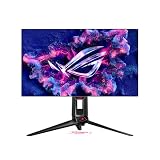
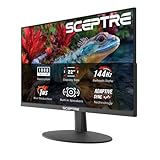
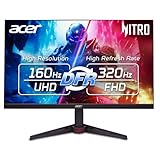
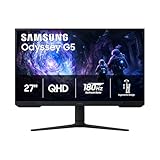
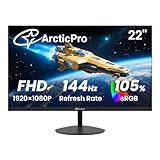
- Top Pick: Sceptre New 22-Inch Gaming Monitor, FHD 1080p, Up to 144Hz, HDMI, DisplayPort, Built-in Speakers, Machine Black (E225W-FW144 Series, 2026)
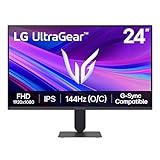
- Best Value: LG 24G411A-B 24-inch Ultragear Full HD (1920 x 1080) IPS Gaming Monitor, 144Hz (O/C), 1ms MBR, NVIDIA G-Sync Compatible, AMD FreeSync, HDR10, HDMI, DisplayPort, Slim Stand, Black
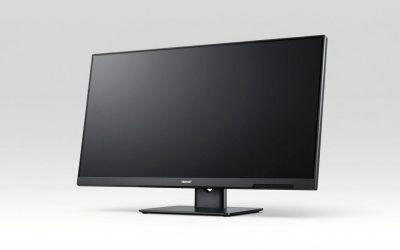
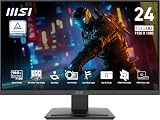
- Premium Choice: msi PRO MP243L E14 24-inch IPS 1920 x 1080 (FHD) Gaming Office Monitor, 144Hz, Free-Synch, HDR Ready, HDMI, VGA Port,VESA Mountable, Tilt, 4-Side Slim Bezel,1ms, Black
Affiliate disclosure: As an Amazon Associate we earn from qualifying purchases. This post contains affiliate links — if you buy through them we may earn a small commission at no extra cost to you. This never affects our recommendations.
As an Amazon Associate we earn from qualifying purchases at no extra cost to you.




You don’t need to spend $600 on a monitor to get a competitive edge in 2026. The 144Hz sweet spot — smooth motion, sharp visuals, reasonable price — is more crowded than ever, and the brands have been pushing panel tech hard. Nano IPS, Quantum Dot IPS, Fast IPS, and VA panels all compete for your desk space, each with real tradeoffs.
We put five of the most recommended 144Hz monitors through their paces across competitive shooters, open-world RPGs, and fast-paced racing titles. Whether you’re building a budget 1080p rig or upgrading to 1440p for the first time, one of these will fit your setup.
In a hurry? See the top-rated 144Hz Gaming Monitor deals available right now:
🛒 Check 144Hz Gaming Monitor Prices on Amazon →🛒 Best Price Today on Amazon
Prime members get fast, free shipping on everything above, plus member-only deals. New members get a 30-day free trial — cancel anytime.
Start 30-Day Prime Free Trial →See Today’s Amazon DealsQuick Comparison Table
| Monitor | Resolution | Panel | Response Time |
|---|---|---|---|
| LG 27GP850-B | 1440p | Nano IPS | 1ms GtG |
| ASUS VG248QG | 1080p | TN | 0.5ms GtG |
| MSI Optix MAG274QRF-QD | 1440p | QD-IPS | 1ms GtG |
| ViewSonic XG2431 | 1080p | Fast IPS | 0.5ms GtG |
| AOC CQ27G3S | 1440p | VA | 1ms MPRT |
Our Top 5 Best 144Hz Gaming Monitors in 2026
1. LG 27GP850-B — Best Overall 144Hz Gaming Monitor
The LG 27GP850-B has held its ground as one of the most balanced 27-inch gaming monitors money can buy, and in 2026 it remains a benchmark-setter for the 1440p Nano IPS category. It refreshes at 165Hz natively (well within the 144Hz+ tier) and pairs that speed with genuinely accurate color reproduction that content creators won’t scoff at.
Specs Overview
- Size: 27 inches
- Resolution: 2560 x 1440 (QHD)
- Panel: Nano IPS
- Refresh Rate: 165Hz (overclockable)
- Response Time: 1ms GtG
- Sync: NVIDIA G-Sync Compatible, AMD FreeSync Premium
- HDR: VESA DisplayHDR 400
- Ports: 2x HDMI 2.0, 1x DisplayPort 1.4, 3x USB-A
Color coverage sits at 98% DCI-P3, which puts it ahead of most gaming monitors in this price range. In practice, that means games like Cyberpunk 2077 and Elden Ring look vivid without the oversaturation you get from cheaper panels. Pixel response is quick enough that ghosting is a non-issue in competitive titles, though you may catch faint inverse ghosting on the Extreme overdrive mode — Medium is the right setting for most games.
The stand is fully ergonomic: height, tilt, pivot, and swivel are all adjustable, a detail that budget monitors often skip. Build quality is solid without being heavy.
Pros:
- Exceptional color accuracy for a gaming panel
- Dual sync support (G-Sync Compatible + FreeSync Premium)
- Ergonomic stand with full range of adjustment
- Excellent out-of-box calibration
Cons:
- HDR 400 certification is functional but not transformative
- No USB-C
- Premium pricing versus VA alternatives at the same size
Who it’s for: Gamers who split time between competitive titles and single-player games and want color quality without sacrificing speed. It’s the monitor we’d recommend if you only plan to buy once in the next three years.
2. ASUS VG248QG — Best Budget 144Hz Gaming Monitor
ASUS VG248QG
If your GPU is a mid-range card and your budget is tight, the ASUS VG248QG gives you fast pixels at a price that won’t make you regret the purchase. It runs at 165Hz and uses a TN panel with a 0.5ms GtG response — the fastest panel technology available at this price point.
Specs Overview
- Size: 24 inches
- Resolution: 1920 x 1080 (FHD)
- Panel: TN
- Refresh Rate: 165Hz
- Response Time: 0.5ms GtG
- Sync: NVIDIA G-Sync Compatible, AMD FreeSync
- HDR: No
- Ports: 2x HDMI, 1x DisplayPort 1.2, 1x DVI-D
The tradeoff is the panel itself. TN technology in 2026 is mature and fast, but the viewing angles are narrow and colors look washed out when viewed from anywhere but straight-on. At 24 inches this matters less — you’re seated close and centered. Running 1080p on a 24-inch screen also keeps pixel density high enough that text and UI elements look sharp.
This is a monitor built for competitive gaming, full stop. Response times are among the lowest you can buy without going into triple-digit pricing territory. Input lag is negligible. If you’re grinding ranked matches and care more about reaction windows than cinematic color, the VG248QG delivers where it counts.

Pros:
- Extremely low 0.5ms GtG response — best-in-class for competitive play
- Low street price, frequently discounted
- Reliable ASUS build quality
- G-Sync Compatible and FreeSync support
Cons:
- TN panel: narrow viewing angles, weaker colors
- No HDR support
- 1080p resolution limits longevity as a primary display
- Stand is basic — tilt only, no height adjustment without the base
Who it’s for: Competitive FPS and battle royale players on a budget who prioritize reaction time and frame rate over visual fidelity. CS2, Valorant, Apex Legends players will feel right at home.
3. MSI Optix MAG274QRF-QD — Best Color Performance at 1440p
MSI’s Quantum Dot IPS panel is where display technology at the $300 price point gets genuinely exciting. The MAG274QRF-QD combines QD-IPS color volume with a 165Hz refresh rate and 1ms GtG response, landing it squarely in the premium 1440p tier.
Specs Overview
- Size: 27 inches
- Resolution: 2560 x 1440 (QHD)
- Panel: Quantum Dot IPS (QD-IPS)
- Refresh Rate: 165Hz
- Response Time: 1ms GtG
- Sync: AMD FreeSync Premium Pro, G-Sync Compatible
- HDR: DisplayHDR 400
- Ports: 2x HDMI 2.1, 1x DisplayPort 1.4, 1x USB-C, 4x USB-A hub
Quantum Dot technology pushes the color gamut well beyond standard IPS, hitting approximately 95% DCI-P3 with deeper, more saturated colors than a conventional IPS panel. Games with rich environments — open worlds, horror titles, anything with dramatic lighting — look noticeably better than on the LG Nano IPS at equivalent settings.
The USB-C port is a practical addition if you’re routing a laptop through the monitor for productivity tasks, and the four-port USB hub turns the monitor into a desk hub. The stand is fully adjustable and the OSD is well-organized. Panel uniformity is strong across the units we compared, with minimal backlight bleed in the corners.
Pros:
- QD-IPS color volume surpasses standard IPS — outstanding saturation
- USB-C connectivity and USB hub
- FreeSync Premium Pro enables HDR with VRR simultaneously
- Strong build and ergonomics
Cons:
- Slight haloing around bright objects on dark backgrounds (typical IPS glow)
- Priced slightly higher than the LG GP850
- HDR impact limited by 400-nit brightness ceiling
Who it’s for: Gamers and part-time creators who want the most visually impressive 1440p panel at the 144Hz+ tier. The QD-IPS color advantage is immediately visible in content-heavy titles.
4. ViewSonic XG2431 — Best 24-Inch IPS for Competitive Play
ViewSonic XG2431
The ViewSonic XG2431 is technically rated at 240Hz, but its reputation in competitive gaming communities was built at 144Hz with ELMB Sync enabled — a combination that makes motion clarity exceptional without demanding the GPU headroom of a true 240Hz workflow. It’s become one of the most-recommended 24-inch monitors for players who want IPS colors at TN speeds.
Specs Overview
- Size: 24 inches
- Resolution: 1920 x 1080 (FHD)
- Panel: Fast IPS
- Refresh Rate: 240Hz (widely used at 144Hz)
- Response Time: 0.5ms GtG
- Sync: AMD FreeSync Premium, G-Sync Compatible
- HDR: DisplayHDR 400
- Ports: 2x HDMI 2.0, 1x DisplayPort 1.4, 4x USB-A
Fast IPS is the key differentiator here. Unlike standard IPS, Fast IPS reduces pixel transition time to near-TN levels while retaining far better viewing angles and color accuracy. The result is a 24-inch 1080p screen that looks punchy from the front, remains readable off-axis, and responds to fast motion without trails.

ELMB Sync (Extreme Low Motion Blur Sync) can be used simultaneously with FreeSync to get backlight strobing and adaptive sync working together — a feature most monitors don’t offer. When tuned correctly, it reduces perceived blur during rapid camera movement in a way that stock 144Hz panels can’t match.
Pros:
- Fast IPS: TN speed with IPS color and viewing angles
- ELMB Sync works simultaneously with FreeSync
- Runs comfortably at 144Hz, headroom to grow into 240Hz later
- Solid build with height-adjustable stand
Cons:
- 1080p resolution limits visual fidelity in single-player titles
- HDR 400 is present but adds little at this brightness level
- Higher price than budget TN options for similar resolution
Who it’s for: Competitive players who’ve outgrown TN panels but aren’t ready to commit to 1440p. The Fast IPS panel delivers noticeable color and clarity improvements over TN without giving up response speed.
5. AOC CQ27G3S — Best Value 1440p with Deep Blacks
AOC CQ27G3S
VA panels have always divided opinion in gaming circles, but the AOC CQ27G3S makes a compelling case for the technology in 2026. At 180Hz with a 1ms MPRT rating and a native contrast ratio that IPS panels can’t touch, it’s the monitor that makes dark games look genuinely dark.
Specs Overview
- Size: 27 inches
- Resolution: 2560 x 1440 (QHD)
- Panel: VA
- Refresh Rate: 180Hz
- Response Time: 1ms MPRT (4ms GtG)
- Sync: AMD FreeSync Premium
- HDR: DisplayHDR 600 Ready
- Ports: 2x HDMI 2.0, 1x DisplayPort 1.4
The contrast ratio is the headline: VA panels routinely hit 3000:1 to 4000:1 native contrast, compared to the 1000:1 typical on IPS. In a dark room, that difference is immediately visible — black areas in horror games, night scenes, and space environments look genuinely black rather than dark gray. HDR impact is also more convincing on a high-contrast panel, even at 600-nit peaks.
The tradeoff is pixel response. That 4ms GtG figure is real, and in fast competitive play you may catch some trailing on white elements against dark backgrounds — the classic VA smearing issue. AOC has improved overdrive tuning, but it doesn’t eliminate the characteristic entirely at the fastest settings. At 144Hz or 165Hz, the smearing is less pronounced than at lower refresh rates.
At its street price (~$229), this is the most affordable 1440p 27-inch option on this list, and for gamers who lean toward single-player and story-driven titles, the visual payoff of VA contrast is worth the competitive tradeoff.
Pros:
- Outstanding native contrast ratio — blacks look black
- Most affordable 1440p 27-inch on the list
- 180Hz headroom provides future flexibility
- DisplayHDR 600 Ready brightens HDR scenes meaningfully
Cons:
- VA pixel response (4ms GtG) produces visible trailing in fast scenes
- Color accuracy out of box requires calibration
- FreeSync only — no G-Sync compatibility certification
Who it’s for: Single-player and story-driven gamers, horror fans, and anyone who games primarily in a dim or dark room. The contrast advantage makes atmospheric games feel dramatically different than on an IPS panel.
How to Choose the Best 144Hz Gaming Monitor
Resolution: 1080p vs 1440p
1080p (Full HD) works best on 24-inch screens and pairs well with mid-range GPUs. At 27 inches, pixel density drops enough that individual pixels become visible at normal seating distance. If your GPU is an RTX 3060 or RX 6600 class card, 1080p at high refresh rates is the sweet spot.

1440p (QHD) at 27 inches hits the density sweet spot where everything looks sharp without requiring a high-end GPU to maintain 144+ fps. Cards in the RTX 3070/4060 Ti range and above handle 1440p at 165Hz well in most titles.
Panel Type: IPS vs VA vs TN
- IPS / Nano IPS / QD-IPS: Best color accuracy and viewing angles. Slight IPS glow in dark scenes. Best all-rounder for most gamers.
- VA: Best contrast and black depth. Can produce smearing in fast motion. Best for dark-room, single-player gaming.
- TN: Fastest response times, weakest colors and angles. Best for pure competitive play where every millisecond counts.
- Fast IPS: Newer variant that closes the gap with TN on response speed while keeping IPS color advantages. Strong choice for competitive players who want both.
Response Time: GtG vs MPRT
GtG (Gray-to-Gray) measures how fast a pixel transitions between gray shades — the most relevant metric for gaming ghosting. Lower is better; 1ms GtG is the current benchmark for fast panels.
MPRT (Moving Picture Response Time) measures perceived blur and is often used by VA panel manufacturers. An MPRT rating can be achieved via backlight strobing and does not equal GtG speed. Always check the GtG figure when comparing monitors.
Sync Technology: G-Sync vs FreeSync
Both adaptive sync technologies eliminate screen tearing by matching the monitor’s refresh rate to your GPU’s output. G-Sync Compatible certification means NVIDIA has validated the monitor’s FreeSync implementation. If you have an NVIDIA GPU, look for G-Sync Compatible certification; AMD GPU owners can rely on any FreeSync Premium or FreeSync Premium Pro monitor.
Size and Ergonomics
27 inches is the standard for desktop gaming setups at a typical seating distance of 60–80 cm. If you sit closer or prefer focused peripheral vision in competitive play, 24 inches reduces head movement. Always check whether the stand offers height adjustment — fixed-height stands force poor ergonomics on anyone not sitting at the exact right desk height.
Final Verdict
Best overall: The LG 27GP850-B is the most balanced choice — fast, accurate, well-built, and priced fairly for what it delivers. If you want one monitor that excels across competitive and single-player gaming, this is it.
Best on a budget: The ASUS VG248QG remains the fastest affordable panel you can buy. TN limitations are real, but at 24 inches and $159, the competitive performance-per-dollar is unmatched.
Best color performance: The MSI Optix MAG274QRF-QD edges out the LG on raw color volume thanks to Quantum Dot, plus it adds USB-C and a hub. If visual richness is your priority, spend the extra $20.
Best competitive IPS: The ViewSonic XG2431 brings Fast IPS technology to the 24-inch competitive tier — a meaningful upgrade over TN without the resolution jump to 1440p. The ELMB Sync implementation is genuinely useful.
Best for dark-room gaming: The AOC CQ27G3S wins on contrast, and at $229 for a 1440p 27-inch VA panel it’s the best value on this list for single-player players who game in dim environments.
Whichever monitor you choose, you’re entering the 144Hz tier — the point where motion smoothness becomes immediately obvious and going back to 60Hz feels like watching a slideshow. Any of these five will make that step worthwhile.
Frequently Asked Questions
Is 144Hz worth it for gaming?
Absolutely. The jump from 60Hz to 144Hz is dramatic, with much smoother motion and better responsiveness. It is the most noticeable upgrade most gamers can make and the current mainstream standard.
Do I need a powerful GPU for a 144Hz monitor?
Hitting 144fps in demanding games helps, but even when frame rates dip a 144Hz monitor still displays motion more smoothly than 60Hz. Esports titles easily reach 144fps on modest hardware.
144Hz or 240Hz for gaming?
144Hz is the sweet spot for most gamers, balancing smoothness and cost. 240Hz mainly benefits competitive esports players who can drive those frame rates and notice the finer difference.
Does 144Hz help if my game runs below 144fps?
Yes. A 144Hz monitor displays whatever frame rate you achieve more smoothly than 60Hz, and with VRR it stays tear-free. You benefit even without a constant 144fps.
Related Articles
Looking for more on this topic? Browse the hand-picked guides below — each one applies the same scoring rubric used in this review.