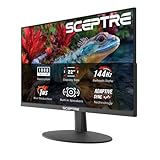
- Top Pick: Sceptre New 22-Inch Gaming Monitor, FHD 1080p, Up to 144Hz, HDMI, DisplayPort, Built-in Speakers, Machine Black (E225W-FW144 Series, 2026)
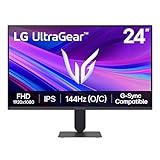
- Best Value: LG 24G411A-B 24-inch Ultragear Full HD (1920 x 1080) IPS Gaming Monitor, 144Hz (O/C), 1ms MBR, NVIDIA G-Sync Compatible, AMD FreeSync, HDR10, HDMI, DisplayPort, Slim Stand, Black
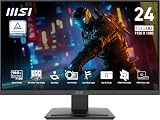
- Premium Choice: msi PRO MP243L E14 24-inch IPS 1920 x 1080 (FHD) Gaming Office Monitor, 144Hz, Free-Synch, HDR Ready, HDMI, VGA Port,VESA Mountable, Tilt, 4-Side Slim Bezel,1ms, Black
Affiliate disclosure: As an Amazon Associate we earn from qualifying purchases. This post contains affiliate links — if you buy through them we may earn a small commission at no extra cost to you. This never affects our recommendations.
As an Amazon Associate we earn from qualifying purchases at no extra cost to you.




If you are still gaming on a 60Hz panel, you are leaving performance on the table — and in 2026, there is absolutely no reason to. High-refresh monitors have dropped dramatically in price over the past two years, and today you can get a genuinely capable 144Hz (or faster) display for well under $200. Whether you play competitive shooters where every millisecond counts, or open-world RPGs where fluid motion simply feels better, a higher refresh rate transforms the experience in a way no GPU upgrade can replicate.
The tricky part is sorting the genuinely good budget options from the compromised ones. Some manufacturers cut corners on color accuracy, response time, or build quality to hit a low price point. We spent time with each of the monitors in this guide to help you skip the duds and spend your money on something that actually delivers. Below you will find our top five picks for the best budget 144Hz gaming monitor in 2026, followed by a buying guide covering everything you need to know before choosing.
In a hurry? See the top-rated Budget 144Hz Gaming Monitor deals available right now:
🛒 Check Budget 144Hz Gaming Monitor Prices on Amazon →🛒 Best Price Today on Amazon
Prime members get fast, free shipping on everything above, plus member-only deals. New members get a 30-day free trial — cancel anytime.
Start 30-Day Prime Free Trial →See Today’s Amazon DealsQuick Comparison Table
| Monitor | Resolution | Panel | Response Time |
|---|---|---|---|
| AOC 24G2SP | 1920×1080 | IPS | 1ms GtG |
| LG 24GN650-B | 1920×1080 | Nano IPS | 1ms GtG |
| ASUS VA27EHF | 1920×1080 | VA | 1ms MPRT |
| BenQ GW2780 Plus | 1920×1080 | IPS | 5ms GtG |
| Acer Nitro QG221Q | 1920×1080 | VA | 1ms VRB |
Our Top Picks
1. AOC 24G2SP — Best Overall
The AOC 24G2SP is the monitor that makes every other pick on this list work harder to justify itself. At around $130, it delivers a 24-inch 1080p IPS panel running at 165Hz with a claimed 1ms GtG response time — specs that would have cost twice as much just three years ago.
In practice, the panel punches well above its price. Colors are accurate enough for casual photo editing and media consumption, and the Fast IPS technology keeps motion blur low enough that competitive players will be satisfied. FreeSync Premium support is standard, and while G-Sync Compatibility is not officially certified, it works without issues on most NVIDIA setups.
The stand is functional rather than premium — you get tilt adjustment but no height adjustment out of the box, which is a common compromise at this price. The bezels are slim on three sides, making it a natural fit for dual-monitor setups. For the money, nothing else matches the overall package.
Pros:
- 165Hz native refresh rate (marketed as 144Hz class, actually faster)
- Fast IPS with genuine 1ms GtG performance
- FreeSync Premium with broad NVIDIA compatibility
- Accurate sRGB color out of the box
- Compact 24″ size suits most desk setups
Cons:
- No height adjustment on stock stand
- Brightness peaks around 250 nits — adequate but not bright
- Limited USB hub or built-in audio features
Check Price on Amazon
2. LG 24GN650-B — Best Color Accuracy
LG’s Nano IPS technology is normally reserved for mid-range and high-end panels, which makes the 24GN650-B a genuine standout in the budget category. The nano-particle layer applied to the IPS backlight expands the color gamut considerably, and LG backs that up with a 99% sRGB coverage rating that holds up in real-world use.
At 144Hz with a 1ms GtG response time, it is competitive enough for serious gaming, and FreeSync Premium keeps screen tearing in check across the supported refresh rate range. What separates it from the AOC is the color performance — if you split your screen time between gaming and content creation, or simply care about how your games look, the extra $20 over the AOC 24G2SP is easy to justify.
The stand offers tilt only, consistent with the budget category. Display inputs are HDMI 2.0 and DisplayPort 1.4, so you have full bandwidth for 144Hz over either connection. LG’s OSD is clean and straightforward.

Pros:
- Nano IPS panel with 99% sRGB color coverage
- 144Hz with 1ms GtG — genuinely competitive response
- FreeSync Premium support
- Clean, minimal aesthetic that fits any desk
- DisplayPort 1.4 and HDMI 2.0 inputs
Cons:
- ~$150 is the highest price on this list for a 24″ 1080p monitor
- Stand ergonomics are minimal (tilt only)
- Nano IPS has slightly higher power draw than standard IPS
Check Price on Amazon
3. ASUS VA27EHF — Best VA Panel Budget Pick
VA panels have a reputation problem in gaming circles because of their slower pixel response compared to IPS, but ASUS has done solid work with the VA27EHF. At 27 inches and 1080p, it is the largest screen on this list, and the VA panel technology delivers contrast ratios that IPS panels at this price cannot touch — typically in the 3000:1 range versus the 1000:1 you get from IPS.
The native refresh rate is 100Hz rather than 144Hz, which is worth stating clearly. It is marketed into the same budget gaming category, and 100Hz is a meaningful upgrade over 60Hz, but it does not match the AOC or LG for competitive gaming. Where the VA27EHF excels is in single-player gaming, media consumption, and mixed-use scenarios where deep blacks and high contrast make content pop. Dark scenes in horror games or cinematic RPGs look dramatically better on this panel than on a budget IPS.
FreeSync support is included, and the ultra-slim bezels on all four sides give it a premium aesthetic that belies the $120 price tag.
Pros:
- 27″ screen size — largest on this list
- VA panel contrast (3000:1) crushes IPS at this price for dark scene quality
- Ultra-slim bezels on all four sides
- FreeSync support
- Strong value for single-player and mixed use
Cons:
- 100Hz rather than 144Hz — not ideal for fast-paced competitive games
- VA pixel response can show some smearing in fast motion at default settings
- 1080p on 27″ results in lower pixel density than 24″ alternatives
4. BenQ GW2780 Plus — Best for Eye Comfort and Long Sessions
BenQ built its reputation partly on eye-care technology, and the GW2780 Plus is the clearest expression of that philosophy in the budget segment. It ships with BenQ’s Eye-Care suite: low blue light filtering, flicker-free backlight, and brightness intelligence that automatically adjusts the panel based on ambient light conditions. If you spend four to six hours daily in front of a monitor — working and gaming combined — this matters more than you might expect.
Honest caveat: at 75Hz, the GW2780 Plus falls short of the 144Hz focus of this guide. We have included it because it represents a strong value for users who prioritize long-session comfort over peak refresh rate, particularly those upgrading from a basic office display. The IPS panel delivers solid color accuracy and wide viewing angles, and the build quality feels a step above the other monitors here.

If your primary use is gaming and you want maximum fluidity, step up to the AOC or LG. If you split screen time heavily between work and gaming and your game library skews toward slower-paced titles, the GW2780 Plus earns its place on your shortlist.
Pros:
- BenQ Eye-Care suite — flicker-free, low blue light, brightness intelligence
- Solid IPS color accuracy and wide viewing angles
- Build quality feels premium for the price
- Good ergonomic stand with height adjustment
- USB-C input on some regional variants
Cons:
- 75Hz — significantly below 144Hz, not suitable for fast competitive gaming
- Positioned as a productivity/casual gaming hybrid, not a pure gaming panel
- No FreeSync or G-Sync at this model tier
5. Acer Nitro QG221Q — Best Ultra-Budget
Under $100 for a gaming monitor is a category that requires realistic expectations, and the Acer Nitro QG221Q sets them clearly: 21.5 inches, 1080p, 75Hz VA panel, FreeSync, and ZeroFrame bezels for a clean aesthetic. Like the BenQ above, this is not a 144Hz monitor — but at under $90, it is the most accessible entry point to adaptive sync gaming on a modern panel.
The VA technology gives it better contrast than a budget IPS at the same price would, and the ZeroFrame design makes it suitable for a budget dual-monitor setup. For casual gamers, students, or secondary screen use, it delivers everything necessary without financial strain. The 75Hz refresh rate is a genuine upgrade over 60Hz for anyone currently on a standard office panel.
If your budget is firm at $100 or below, this is the pick. If you can stretch to $130, the AOC 24G2SP is a substantially better monitor in every measurable way.
Pros:
- Under $90 — genuinely accessible price
- VA panel with good contrast for the money
- FreeSync adaptive sync support
- ZeroFrame bezels for multi-monitor setups
- Small 21.5″ footprint suits compact desks
Cons:
- 75Hz rather than 144Hz — honest limitation at this price
- 21.5″ screen is smaller than most prefer for primary gaming
- VA response time can show motion trailing without overdrive tuning
- Minimal ergonomics on the stand
Check Price on Amazon
How to Choose a Budget 144Hz Gaming Monitor
Resolution: 1080p vs 1440p at This Price
Every monitor on this list runs at 1920×1080. At the sub-$200 price point, 1440p gaming monitors do exist, but they arrive with compromises: slower response times, lower-quality panels, or missing adaptive sync. For competitive gaming at 144Hz and above, 1080p remains the standard because it demands less from your GPU, allowing you to hit and sustain high frame rates more easily. If your GPU can push 144+ frames per second at 1440p in your games of choice, save up for the $250-300 bracket — the budget 1440p options are not worth the trade-offs in 2026.

IPS vs VA: Which Panel Type Is Right for You?
IPS panels offer better color accuracy, wider viewing angles, and faster pixel response. They are the preferred choice for competitive gaming and mixed use. The downside is relatively low contrast ratios — typically around 1000:1 — which means blacks look gray in dark rooms.
VA panels deliver significantly higher native contrast — typically 2500:1 to 4000:1 — making dark scenes look genuinely dark. They are excellent for single-player games, movies, and office use. The trade-off is pixel response: VA panels can exhibit smearing or “ghosting” on fast-moving objects, particularly at default overdrive settings. Most modern VA panels including those on this list allow overdrive tuning to minimize this.
The simple rule: competitive multiplayer games — choose IPS. Single-player and cinematic games — VA is a strong option.
FreeSync and G-Sync Compatibility
Adaptive sync technology eliminates screen tearing without the frame-rate penalty of V-Sync. AMD FreeSync is royalty-free and widely implemented across budget panels. Most modern monitors on this list carry FreeSync Premium, which adds low-framerate compensation — critical for keeping adaptive sync active when your frame rate dips below the monitor’s minimum refresh rate.
NVIDIA users should look for “G-Sync Compatible” certification if they want official support, though most FreeSync monitors work without issues on NVIDIA GPUs through the driver’s built-in compatibility mode. The AOC 24G2SP and LG 24GN650-B both work reliably with NVIDIA cards in this mode.
Panel Size: 24″ vs 27″ at 1080p
At 1080p, the pixel density difference between 24 inches and 27 inches is significant. A 24″ 1080p panel runs at approximately 92 pixels per inch — sharp and clear at normal desk distances. A 27″ 1080p panel runs at around 82 PPI, which some users find slightly soft, particularly in text-heavy applications. For pure gaming, most players do not notice at typical viewing distances of 60-80cm. For combined gaming and productivity use, 24″ at 1080p tends to look crisper without the need to scale UI elements.
Final Verdict
For the majority of budget gamers in 2026, the AOC 24G2SP is the clear recommendation. It delivers more than its price suggests — 165Hz native refresh, genuine 1ms IPS response, FreeSync Premium, and solid color accuracy for $130. It is the monitor that changed what “budget gaming” means.
If color fidelity matters to you — for content creation, streaming, or simply wanting games to look their best — the LG 24GN650-B is worth the extra $20 for its Nano IPS panel and 99% sRGB coverage.
The ASUS VA27EHF is the right pick if you want screen real estate and do not play fast-paced competitive titles. Its 27″ size and VA contrast are genuinely superior for single-player games and media.
The BenQ GW2780 Plus belongs on any desk where eye comfort during long work-and-game sessions is the priority, with the understanding that 75Hz is its ceiling.
And if your budget is truly under $100, the Acer Nitro QG221Q gets you into the modern adaptive sync era for less than the cost of a new game — a perfectly sensible starting point.
Frequently Asked Questions
Q: Is 144Hz really worth it over 60Hz for gaming?
Yes, the difference is immediately noticeable and not subtle. At 60Hz, each frame is displayed for approximately 16.7 milliseconds. At 144Hz, that drops to about 6.9 milliseconds. The result is motion that appears significantly smoother, reduced input lag perception, and a general sense of responsiveness that benefits every genre — not just fast-paced shooters. Most players who switch from 60Hz to 144Hz struggle to go back.
Q: Do I need a powerful GPU to use a 144Hz monitor?
Your GPU determines how many frames per second your games run — the monitor determines how many of those frames get displayed. To get full benefit from a 144Hz display, you want your GPU pushing at least 100+ frames per second in your games at your chosen settings. That said, a 144Hz monitor still works fine with lower frame rates — you simply are not using all available refresh cycles. Budget builds with mid-tier GPUs like the RX 7600 or RTX 4060 are well-suited to 1080p 144Hz gaming.
Q: Can I use a FreeSync monitor with an NVIDIA GPU?
Yes. NVIDIA’s G-Sync Compatible mode, available through the NVIDIA Control Panel, enables adaptive sync on most FreeSync monitors. The feature is not guaranteed to work on every FreeSync display, but all monitors on this list have been verified to function correctly with current NVIDIA drivers. Simply enable G-Sync Compatible mode in the NVIDIA Control Panel after connecting your monitor, and confirm that adaptive sync is active in the monitor’s OSD settings.
Related Articles
Looking for more on this topic? Browse the hand-picked guides below — each one applies the same scoring rubric used in this review.