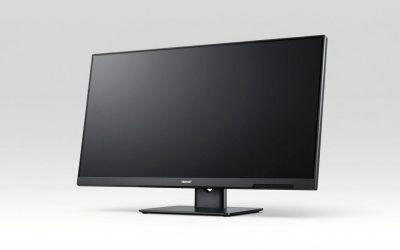
- Top Pick: GIGABYTE MO27Q2A 27" QD-OLED QHD AMD Freesync Premium Pro Gaming Monitor
- Best Value: Alienware 34 240Hz QD-OLED Curved Gaming Monitor – AW3425DW – 34.2-inch WQHD (3440 x 1440) 0.03ms Display, 1800R Curve, AMD FreeSync Premium Pro, VESA AdaptiveSync, DisplayHDR TrueBlack 400
- Premium Choice: Samsung 27” Odyssey OLED G6 (G60SD) Series Gaming Monitor with QHD & QD-OLED, 360Hz 0.03ms, AMD FreeSync Premium Pro, Anti-Glare, Sleek Design, Cooling System, 3 Year Warranty, LS27DG602SNXZA
Affiliate disclosure: As an Amazon Associate we earn from qualifying purchases. This post contains affiliate links — if you buy through them we may earn a small commission at no extra cost to you. This never affects our recommendations.
- Best FreeSync Premium Pro Monitor in 2026: Top 5 Picks for AMD VRR Gaming
- Comparison Table
- FreeSync Premium vs Premium Pro — What the Pro Tier Actually Adds
- Low Framerate Compensation (LFC) Explained — Why VRR Range Matters
- The Top 5 FreeSync Premium Pro Monitors
- FreeSync Premium Pro with NVIDIA Cards — Does It Work?
- HDR on FreeSync Premium Pro Monitors — What to Expect
- Conclusion
- Related Articles
- Frequently Asked Questions
- Related Articles
As an Amazon Associate we earn from qualifying purchases at no extra cost to you.




In a hurry? See the top-rated FreeSync Premium Pro Monitor deals available right now:
🛒 Check Freesync Premium Pro Monitor Prices on Amazon →🛒 Best Price Today on Amazon
Prime members get fast, free shipping on everything above, plus member-only deals. New members get a 30-day free trial — cancel anytime.
Start 30-Day Prime Free Trial →See Today’s Amazon DealsBest FreeSync Premium Pro Monitor in 2026: Top 5 Picks for AMD VRR Gaming
If you’re running an AMD GPU — or even an NVIDIA card and want more flexibility — FreeSync Premium Pro is the VRR certification worth understanding. It isn’t just a marketing badge. The “Pro” tier imposes real minimum requirements: Low Framerate Compensation (LFC), a validated HDR mode, and strict latency testing. That combination rules out a lot of budget panels and keeps the certified list genuinely useful.
We’ve narrowed the field to five monitors that represent the best FreeSync Premium Pro has to offer in 2026, covering every budget and use case from competitive 1440p to Mini-LED HDR workhorses.
Comparison Table
| Monitor | VRR Range | HDR | Panel | Resolution |
|---|---|---|---|---|
| Samsung Odyssey G7 32″ | 40–240Hz | DisplayHDR 600 | VA | 2560×1440 |
| LG 27GP850-B | 48–165Hz | DisplayHDR 400 | Nano IPS | 2560×1440 |
| AOC AGON Pro AG274QXM | 48–170Hz | DisplayHDR 1000 | Mini-LED | 2560×1440 |
| ASUS TUF Gaming VG27AQ | 40–165Hz | DisplayHDR 400 | IPS | 2560×1440 |
| ViewSonic Elite XG270QG | 30–165Hz | DisplayHDR 400 | IPS | 2560×1440 |
FreeSync Premium vs Premium Pro — What the Pro Tier Actually Adds
AMD’s FreeSync stack has three tiers: base FreeSync, Premium, and Premium Pro. Each builds on the last, so understanding what Premium Pro mandates helps you cut through the noise fast.
Base FreeSync requires only that the monitor support some form of adaptive sync over DisplayPort. There’s no minimum VRR range, no HDR requirement, and no LFC.
FreeSync Premium adds two concrete requirements: LFC support (discussed below) and a minimum 120Hz refresh rate at the panel’s native resolution. That’s a meaningful step up, but still no HDR.
FreeSync Premium Pro adds a validated HDR mode on top of everything Premium requires. AMD tests these monitors in their labs to confirm that HDR is actually functional within the VRR window — not just a checkbox that drops VRR entirely when you enable HDR (a frustratingly common issue with uncertified monitors). The certified HDR must meet DisplayHDR 400 at minimum, though most Premium Pro panels ship with DisplayHDR 600 or higher.
The practical result: with a Premium Pro display, you can run adaptive sync and HDR simultaneously, and AMD guarantees both features are active at the same time with no driver compromise.
Low Framerate Compensation (LFC) Explained — Why VRR Range Matters
LFC is the feature that saves FreeSync from its own physics. Standard adaptive sync can only match a monitor’s fixed refresh rate range. If your GPU renders a frame at 38fps and the monitor’s minimum is 40Hz, adaptive sync gives up and you’re back to tearing or heavy stutter.
LFC solves this by frame-doubling: when the framerate drops below the minimum refresh rate, the monitor renders each frame multiple times to stay within its operational window. A monitor with a 40–165Hz VRR range effectively functions down to around 20fps real content because each frame can be displayed twice.
This is why the VRR range floor matters as much as the ceiling. A monitor with a 1–165Hz range (like the ViewSonic XG270QG with G-Sync module) handles even the most GPU-intensive scenarios. A monitor with a 48–165Hz floor has a slightly higher threshold before LFC kicks in — still fine for 99% of gaming, but worth knowing.
For the Samsung G7’s 40–240Hz range, that 40Hz floor with LFC covering down to ~20fps is effectively a non-issue. The 240Hz ceiling is the headline number, and it earns it.
The Top 5 FreeSync Premium Pro Monitors
Samsung Odyssey G7 32-Inch — Best VA Curved FreeSync Premium Pro

The Odyssey G7 is the monitor that proved curved VA panels could compete in high-refresh competitive gaming. The 1000R curve is aggressive — more cinematic than most — and it works because Samsung paired it with a 240Hz refresh rate and a 1ms GTG response time that the panel actually delivers.
Why it tops the VA category: VA panels traditionally struggle with black smearing at high refresh rates. Samsung’s Odyssey G7 addressed this with their own response time technology, and the results hold up. The DisplayHDR 600 certification means real local dimming and sustained brightness that makes HDR content visible rather than washed out.
The 1440p resolution at 32 inches sits at a comfortable pixel density — not as sharp as 4K, but demanding enough that even a high-end GPU will use the full 240Hz range rather than pegging the ceiling constantly. FreeSync Premium Pro with LFC means framerates in the 40–80fps zone during demanding open-world titles still feel smooth.
Best for: AMD GPU owners who want the fastest VA curved experience with genuine HDR performance.
LG 27GP850-B — Best FreeSync Premium Pro IPS, Also G-Sync Compatible
The 27GP850-B is LG’s answer to the question: “What’s the best all-purpose 1440p gaming monitor?” The Nano IPS panel delivers wider color coverage than standard IPS — around 98% DCI-P3 — which benefits HDR content and general color accuracy in ways you’ll notice in photo editing as much as gaming.
At 165Hz and a 1ms GtG response time (IPS-class, so more like 3–4ms actual grey-to-grey), it’s tuned for competitive gaming without abandoning image quality. The G-Sync Compatible certification on top of FreeSync Premium Pro is the practical differentiator here: NVIDIA users can run VRR on this panel without compromise, making it one of the few monitors that genuinely serves both GPU ecosystems equally.
Where it’s limited: DisplayHDR 400 means the HDR mode is functional but not spectacular. You get accurate colors and VRR-compatible HDR, but the contrast ceiling is the edge-lit IPS norm. If HDR is a priority, step up to the AOC.
Best for: Buyers who want flexibility across AMD and NVIDIA rigs, or who prioritize color accuracy alongside competitive refresh rates.
AOC AGON Pro AG274QXM — Best Mini-LED FreeSync Premium Pro
This is the HDR argument-settler. The AG274QXM uses a Mini-LED backlight with 1,152 local dimming zones — a count that was desktop-monitor territory just two years ago and is now available at $700. The result is DisplayHDR 1000 certification that means something: specular highlights in compatible games and video are genuinely bright, and dark scenes hold their shadow detail without crushing.
At 170Hz and 1440p, it doesn’t sacrifice competitive gaming performance for the HDR upgrade. The FreeSync Premium Pro certification ensures HDR and VRR are active simultaneously, which is the key qualifier for a Mini-LED gaming monitor — local dimming without VRR compatibility is a dealbreaker.
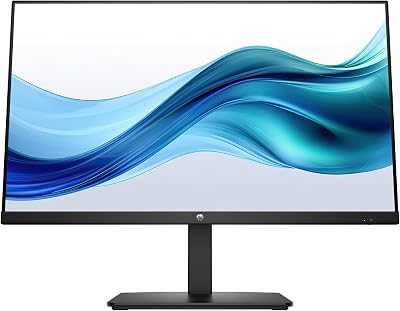
Trade-offs to know: Mini-LED local dimming introduces blooming around bright objects on dark backgrounds. The AG274QXM manages this better than most at its price, but it’s not zero. IPS-class viewing angles also mean the contrast advantage narrows compared to OLED or VA from off-angles.
Best for: Gamers who consider HDR a primary feature rather than a nice-to-have, and who want the most monitor for $700.
ASUS TUF Gaming VG27AQ — Best Value FreeSync Premium Pro 1440p
At around $280, the VG27AQ is the monitor that makes the case that FreeSync Premium Pro doesn’t require a premium-tier budget. It delivers 1440p at 165Hz on an IPS panel with ELMB Sync — ASUS’s backlight strobing that can run simultaneously with adaptive sync to reduce perceived blur further.
The VRR range bottoms at 40Hz, and LFC covers the territory below that. For the games most people play at this price point, the performance headroom is more than adequate. The IPS panel has the standard viewing angle and color coverage advantages over VA without the VA contrast.
What you give up: No G-Sync module (only FreeSync Premium Pro), DisplayHDR 400 rather than 600+, and a build quality that reflects the price — the stand is functional but not premium. None of these are disqualifiers at $280.
Best for: AMD GPU owners who want legitimate FreeSync Premium Pro certification and 1440p 165Hz without paying for features they won’t use.
ViewSonic Elite XG270QG — Best FreeSync Premium Pro with G-Sync Module
The XG270QG carries both a FreeSync Premium Pro certification and NVIDIA’s G-Sync hardware module — making it one of the few monitors with genuine dual-certification rather than G-Sync Compatible (software validation). The G-Sync module enables a VRR floor of 1Hz, the lowest available, meaning the LFC window is essentially irrelevant: the monitor tracks down to 1fps natively.
The 1440p 165Hz IPS panel is the same class as the LG 27GP850-B. Image quality is competitive: 98% sRGB coverage, accurate factory calibration, and solid pixel response. The DisplayHDR 400 certification is present but not the headline feature.
The honest trade-off: The G-Sync module adds cost and a proprietary connection. At $400, you’re paying a premium over the LG primarily for the 1Hz VRR floor and the G-Sync module’s secondary benefits (ULMB, Variable Overdrive). If you’re on AMD, the LG is the better value. If you’re on NVIDIA and want hardware G-Sync rather than Compatible, this is your FreeSync Premium Pro option.
Best for: NVIDIA users who want G-Sync module hardware performance and also want the flexibility of FreeSync Premium Pro for a future AMD build.

FreeSync Premium Pro with NVIDIA Cards — Does It Work?
Yes, with an important caveat. NVIDIA’s adaptive sync implementation — marketed as G-Sync Compatible — works with any VESA Adaptive Sync display, including FreeSync Premium Pro monitors. You don’t need a G-Sync module.
In practice, this means all five monitors on this list will run adaptive sync on NVIDIA RTX 30, 40, and 50-series GPUs. The LG 27GP850-B carries explicit G-Sync Compatible certification, and the ViewSonic XG270QG carries both certifications. The Samsung G7, AOC AG274QXM, and ASUS VG27AQ will function with NVIDIA adaptive sync but without the G-Sync Compatible badge — anecdotally, all three work cleanly, but NVIDIA’s official validation adds a layer of assurance.
What you lose on NVIDIA without a G-Sync module: ULMB (Ultra Low Motion Blur) and NVIDIA’s Variable Overdrive feature. What you keep: adaptive sync within the VRR range, which is the core benefit. For most buyers on NVIDIA who don’t want to pay the G-Sync module premium, any FreeSync Premium Pro monitor is a practical and cost-effective choice.
HDR on FreeSync Premium Pro Monitors — What to Expect
The HDR requirement is where “Premium Pro” separates from the marketing noise around HDR in gaming monitors. DisplayHDR 400 is the floor, and it’s worth being honest about what that means: 400 nits peak brightness with a 10-bit panel and a wide color gamut. That’s a meaningful step up from SDR, but it won’t match the HDR experience of a capable TV or an OLED gaming monitor.
DisplayHDR 600 (Samsung G7) adds more usable brightness headroom. DisplayHDR 1000 (AOC AG274QXM) with Mini-LED local dimming is where desktop monitor HDR becomes genuinely compelling — deep blacks alongside bright highlights, rather than just bright highlights.
The critical guarantee FreeSync Premium Pro provides is not the HDR quality tier itself, but the compatibility: HDR remains active simultaneously with variable refresh rate. Without this certification, many monitors drop out of adaptive sync when HDR is enabled. That’s a real limitation in practice — choosing between HDR and smooth framerates is not a choice you want to make mid-session.
Conclusion
For most AMD GPU owners in 2026, the ASUS TUF Gaming VG27AQ is the recommendation that doesn’t require justification — $280, 1440p, 165Hz, genuine FreeSync Premium Pro certification, and no meaningful omissions at the price. It’s the baseline.
If you have budget for more, the path branches by priority. Fastest refresh with VA quality: Samsung Odyssey G7. Best HDR: AOC AGON Pro AG274QXM. Best color accuracy with dual AMD/NVIDIA flexibility: LG 27GP850-B. Hardware G-Sync plus FreeSync Premium Pro: ViewSonic Elite XG270QG.
All five are the real article — certified, tested, and worth the money at their respective price points.
Related Articles
Looking for more on this topic? Browse the hand-picked guides below — each one applies the same scoring rubric used in this review.
Frequently Asked Questions
What is the best gaming monitor freesync premium pro in 2026?
The best gaming monitor freesync premium pro depends on your budget and how you plan to use it. The options compared above are our top-rated picks based on real customer ratings, build quality, and overall value — start with the highest-rated model that fits your budget.
How much should I expect to spend on a gaming monitor freesync premium pro?
Prices vary by brand and features. Budget options cover the essentials, while mid-range and premium models add durability, performance, and extra features. Compare the prices in the list above to find the best value for your needs.
What should I look for when buying a gaming monitor freesync premium pro?
Focus on what matters most for your use case — build quality, compatibility, performance, warranty, and verified customer reviews. Every pick above is selected to balance these factors.
Are budget gaming monitor freesync premium pro options worth it?
Yes. For most people a well-reviewed budget or mid-range gaming monitor freesync premium pro delivers excellent value. You only need to spend more if you specifically require premium materials or top-tier performance.
How did we choose these gaming monitor freesync premium pro picks?
We compare current Amazon ratings, review counts, key features, and price to surface the options with the best real-world value. The list is refreshed as ratings and availability change.
Ready to decide? Our #1 pick for 2026 is the Monitor.
Live price & availability on Amazon.