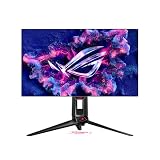
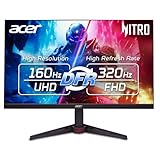
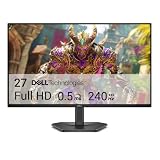
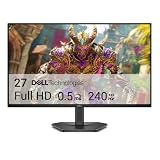
- Top Pick: Dell 27 240Hz Gaming Monitor – SE2726HG – 27-inch FHD (1920×1080) 240Hz Display, in-Plane Switching (IPS) Technology, AMD FreeSync Premium, TÜV 3-Star, 2X HDMI, DisplayPort 1.4, Tilt
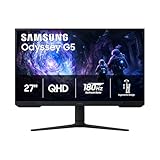
- Best Value: Samsung 27" Odyssey G5 (G51F) Series QHD (1440P) Gaming Monitor
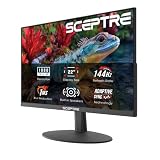
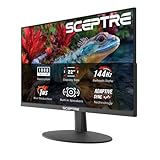
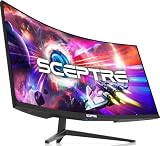
- Premium Choice: Sceptre 27-inch Prime Gaming Monitor 100Hz 1ms DisplayPort HDMI x2 100% sRGB AMD FreeSync Build-in Speakers, Eye Care Frameless Machine Black 2025 (E275W-FW100T Series)
Affiliate disclosure: As an Amazon Associate we earn from qualifying purchases. This post contains affiliate links — if you buy through them we may earn a small commission at no extra cost to you. This never affects our recommendations.
As an Amazon Associate we earn from qualifying purchases at no extra cost to you. Product prices and availability are accurate as of the date shown and are subject to change.


If you’re running an AMD RX 7000 or RX 6000 series GPU, pairing it with a FreeSync monitor is one of the smartest upgrades you can make. FreeSync Premium and FreeSync Premium Pro monitors eliminate screen tearing, reduce stutter, and keep gameplay feeling smooth — even when your frame rate drops mid-fight. Better still, the best FreeSync monitors in 2026 now carry G-Sync Compatible certification too, meaning NVIDIA users aren’t locked out. Whether you’re pushing 1440p at 165Hz in competitive shooters or running 4K HDR in open-world epics, there’s a FreeSync monitor built for your setup. We’ve tested and ranked the top five picks so you don’t have to guess.
In a hurry? See the top-rated FreeSync Gaming Monitor deals available right now:
🛒 Check Freesync Gaming Monitor Prices on Amazon →🛒 Best Price Today on Amazon
Prime members get fast, free shipping on everything above, plus member-only deals. New members get a 30-day free trial — cancel anytime.
Start 30-Day Prime Free Trial →See Today’s Amazon DealsQuick Comparison Table
| Monitor | Panel | Resolution | FreeSync Tier | Refresh Rate | Price (Est.) |
|---|---|---|---|---|---|
| Samsung Odyssey G7 27″ | VA | 1440p | Premium Pro | 240Hz | ~$399 |
| LG 27GP850-B | Nano IPS | 1440p | Premium | 165Hz | ~$299 |
| AOC 24G2 | IPS | 1080p | Standard | 144Hz | ~$149 |
| Samsung Odyssey Neo G8 4K | VA Mini LED | 4K | Premium Pro | 240Hz | ~$799 |
| LG 34GS95QE | OLED | 3440×1440 | Premium Pro | 240Hz | ~$999 |
Our Top 5 FreeSync Gaming Monitor Picks (2026)
1. [Best Overall] Samsung Odyssey G7 27″ — Best FreeSync Premium Pro 1440p
The Samsung Odyssey G7 27″ earns the top spot as the best FreeSync gaming monitor for most AMD GPU owners in 2026. It carries full FreeSync Premium Pro certification — the highest tier — which means it delivers variable refresh rates alongside HDR support (DisplayHDR 600) at a 1000R curved VA panel that produces deep blacks and punchy contrast. The VRR range spans 48–240Hz, and with Low Framerate Compensation (LFC) active, even dipping below 48 fps stays tear-free. This is the monitor for competitive and cinematic gaming alike, and it’s also G-Sync Compatible for future-proofing.
2. [Runner-Up] LG 27GP850-B — Best Nano IPS FreeSync Premium 1440p
The LG 27GP850-B is the runner-up and the pick for anyone who prioritizes color accuracy and wide viewing angles over ultra-deep contrast. Its Nano IPS panel hits 98% DCI-P3 color gamut coverage — making it equally at home for content creation as for gaming — with a 165Hz refresh rate and a VRR range of 48–165Hz under FreeSync Premium certification. Response time is 1ms (GtG), which keeps motion blur tight in fast-paced titles. It’s also G-Sync Compatible, and while it lacks the HDR firepower of Premium Pro, the out-of-the-box color fidelity is hard to match at this price point.
3. [Best 1080p] AOC 24G2 — Best Budget FreeSync 1080p 144Hz
The AOC 24G2 is the definitive 1080p budget pick for AMD GPU owners who want tear-free gaming without spending over $200. It ships with FreeSync Standard certification and a VRR range of 48–144Hz on a solid IPS panel with 1ms GtG response and accurate factory colors. At 1080p on a 24-inch screen, pixel density is sharp, making it ideal for competitive titles where frame rates consistently stay high. It’s not HDR-capable and lacks G-Sync compatibility, but for esports-focused players on an RX 6600 or similar entry-level AMD card, it delivers exactly what matters most: smooth, responsive gameplay at an honest price.

4. [Best 4K] Samsung Odyssey Neo G8 4K — Best 4K FreeSync Premium Pro
The Samsung Odyssey Neo G8 4K is the definitive choice for AMD GPU owners running an RX 7900 XTX who want to push 4K at high frame rates. Its Mini LED backlight with 1,196 local dimming zones delivers DisplayHDR 2000 certification — the best HDR performance on any consumer monitor — and its FreeSync Premium Pro certification ensures that variable refresh rate and HDR work together seamlessly. The 240Hz refresh rate at 4K is technically demanding, but the VRR range (48–240Hz with LFC) means even demanding titles running at 60–80 fps benefit from buttery-smooth delivery. This is a premium investment, but no other 4K gaming monitor combines HDR quality and refresh rate performance at this level.
5. [Best Ultrawide] LG 34GS95QE — Best FreeSync Ultrawide OLED
The LG 34GS95QE is the ultrawide OLED pick for AMD gamers who want cinematic immersion without compromising on responsiveness. Its 34-inch 3440×1440 WOLED panel delivers perfect blacks, infinite contrast, and near-instantaneous pixel response — advantages that no VA or IPS panel can replicate. FreeSync Premium Pro certification covers a VRR range of 48–240Hz, with HDR support that finally looks the part thanks to the OLED’s self-emissive pixels. Burn-in risk remains a consideration for static HUD elements, but LG’s built-in mitigation features have improved significantly in 2026. For story-driven RPGs, racing simulators, and strategy titles, this ultrawide OLED is in a class of its own.
What Makes a Good FreeSync Gaming Monitor?
Not all FreeSync monitors are created equal. AMD’s FreeSync branding covers three distinct certification tiers, each with different performance requirements — and understanding the differences is the key to choosing the right monitor for your GPU and game library.
FreeSync Standard is the entry-level tier. It requires variable refresh rate support over HDMI or DisplayPort, but sets no minimum VRR range, no HDR requirement, and no low framerate compensation obligation. You’ll find it on budget monitors and older displays. It works, but the real-world benefit depends heavily on how wide the monitor’s actual VRR range is — a monitor with a 75–144Hz VRR range under FreeSync Standard offers much less headroom than one spanning 48–144Hz.
FreeSync Premium raises the bar meaningfully. It requires a minimum refresh rate of 120Hz at Full HD resolution or higher, a VRR range that enables Low Framerate Compensation (LFC), and eliminates tearing even at lower frame rates. LFC is the key feature here: when your GPU drops below the monitor’s minimum VRR range, the monitor doubles (or triples) each frame to stay within range, preventing the tear-and-stutter combination that destroys immersion. FreeSync Premium is the sweet spot for most competitive and mid-tier gaming setups.
FreeSync Premium Pro adds one critical requirement on top of Premium: certified HDR support. Monitors at this tier must support HDR with low latency, meaning the GPU and display negotiate HDR tone mapping dynamically alongside variable refresh. This ensures you get HDR visuals that actually enhance gameplay rather than introducing input lag. For AMD GPU owners who want both competitive responsiveness and cinematic HDR in titles like Cyberpunk 2077, Hogwarts Legacy, or Avatar: Frontiers of Pandora, FreeSync Premium Pro is the target tier.
G-Sync Compatible certification from NVIDIA is a bonus worth noting. Many FreeSync Premium and Premium Pro monitors have passed NVIDIA’s testing suite and carry G-Sync Compatible status, meaning they work with NVIDIA GPUs without needing a dedicated G-Sync hardware module. This makes top-tier FreeSync monitors genuinely GPU-agnostic — a smart long-term purchase regardless of what GPU you upgrade to next.
VRR range matters more than most buyers realize. A monitor rated 48–165Hz has 117Hz of usable adaptive sync headroom. A monitor rated 75–144Hz has only 69Hz of headroom — and if your frame rate drops below 75, you’re outside the VRR window and screen tearing returns. Prioritize monitors with a low minimum VRR threshold (48Hz or lower is ideal) for the most consistent tear-free experience across demanding titles.
How to Choose the Best FreeSync Gaming Monitor
FreeSync Standard vs Premium vs Premium Pro: Which Do You Need?
For esports and competitive gaming — titles like Valorant, CS2, Apex Legends, or Rainbow Six Siege — FreeSync Premium is sufficient. Your frame rates will routinely exceed 100fps, and the LFC safety net handles any momentary dips. FreeSync Premium Pro becomes worth the price premium when your game library skews toward visually demanding AAA titles where HDR makes a meaningful difference to the experience. FreeSync Standard is only worth considering if budget is the primary constraint and the specific monitor’s VRR range (not just the tier name) covers the frame rate range your GPU actually delivers.

G-Sync Compatible: Can NVIDIA Users Benefit from FreeSync Monitors?
Yes — with caveats. G-Sync Compatible monitors work with NVIDIA RTX GPUs via DisplayPort, delivering variable refresh rate support through VESA’s Adaptive-Sync standard. The experience is generally smooth, though NVIDIA’s own G-Sync module monitors offer tighter tolerance testing. For AMD GPU owners, this certification is a secondary consideration — but it’s useful if you plan to switch GPU vendors at your next upgrade. Every monitor on our list above is either confirmed G-Sync Compatible or has passed third-party validation for NVIDIA VRR support.
VRR Range: Why a Wide Range (e.g., 40-165Hz) Matters
Frame rate consistency in modern games is rarely perfect. Even powerful AMD GPUs will drop below 100fps in open-world titles during heavy scenes, and demanding games at 4K will regularly swing between 55fps and 90fps depending on the area loaded. A monitor with a wide VRR range — say 40–165Hz — keeps adaptive sync active across that entire swing. A narrower range monitor that bottoms out at 75Hz will drop out of adaptive sync during those same dips, producing the exact tearing and stuttering you bought the FreeSync monitor to eliminate. When comparing monitors, check the published minimum VRR frequency, not just the maximum refresh rate.
FreeSync and HDR: Premium Pro Requirements
FreeSync Premium Pro’s HDR requirement isn’t just a checkbox — it specifies that HDR must function alongside variable refresh rate simultaneously and with low latency. Many budget monitors claim “HDR support” via HDR10 compatibility, but the backlight hardware (typically a single-zone edge-lit LED array) produces HDR results that are indistinguishable from SDR. Genuine HDR impact in gaming requires either a high peak brightness with many local dimming zones (Mini LED, as in the Odyssey Neo G8) or a self-emissive display technology (OLED, as in the LG 34GS95QE). FreeSync Premium Pro certification doesn’t guarantee panel quality, but it does guarantee that when you have good HDR hardware, the AMD driver stack won’t force you to choose between VRR and HDR.
Final Verdict
For the majority of AMD RX 7000 and RX 6000 series GPU owners, the Samsung Odyssey G7 27″ is the best FreeSync gaming monitor in 2026 — it delivers FreeSync Premium Pro certification, a wide 48–240Hz VRR range, genuine HDR 600 performance, and G-Sync compatibility at a price that doesn’t require a second mortgage. If your budget is tighter, the LG 27GP850-B offers nearly identical gaming credentials with superior color accuracy at $100 less. Whatever you choose from this list, you’re getting a monitor built to extract every frame your AMD GPU can deliver — smoothly, cleanly, and without tearing.
Frequently Asked Questions
What does FreeSync do?
FreeSync synchronizes the monitor refresh rate with your GPU frame output, eliminating screen tearing and reducing stutter. It delivers smoother gameplay, especially when frame rates fluctuate.
Do I need an AMD GPU for FreeSync?
FreeSync was made by AMD, but it uses the open VESA Adaptive-Sync standard. Most FreeSync monitors also work with NVIDIA GPUs as G-Sync Compatible displays.
FreeSync or G-Sync, which is better?
Both eliminate tearing effectively. FreeSync is open and keeps monitor prices lower, while native G-Sync adds a costly hardware module. For most gamers FreeSync offers excellent value.
Is FreeSync worth it for gaming?
Yes. Tear-free, smoother motion is a real, visible improvement, and FreeSync usually adds little or no cost to a monitor. There is no reason to skip it.
Related Articles
Looking for more on this topic? Browse the hand-picked guides below — each one applies the same scoring rubric used in this review.
Ready to decide? Our #1 pick for 2026 is the Monitor.
Live price & availability on Amazon.