Affiliate disclosure: As an Amazon Associate we earn from qualifying purchases. This post contains affiliate links — if you buy through them we may earn a small commission at no extra cost to you. This never affects our recommendations.
- 4K Resolution at 144Hz: The Best of Both Worlds
- GPU Power Requirements and Performance
- Gaming Experience and Immersion
- Specifications Comparison Table
- Advantages and Disadvantages
- Who Should Buy the Samsung Odyssey G7 4K 144Hz?
- Frequently Asked Questions
- Conclusion
- More Gaming Gear Guides
- Related Articles
- Related Articles
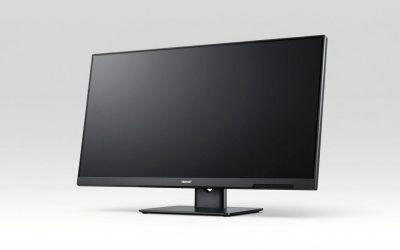
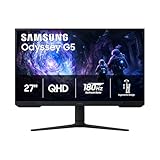
The Samsung Odyssey G7 delivers cutting-edge 4K gaming performance at a genuinely high refresh rate—a rare combination that bridges visual fidelity with responsiveness. At 144Hz with 4K resolution, this monitor targets serious gamers with premium GPU hardware who refuse to compromise between immersive 4K clarity and gaming responsiveness. The VA panel technology provides exceptional contrast and color depth, making every gaming moment visually stunning while maintaining the responsiveness competitive players demand.
With native 3840×2160 resolution at 144Hz refresh rate, the Odyssey G7 achieves what few 4K monitors accomplish: practical gaming responsiveness at true 4K quality. The VA panel delivers superior contrast compared to IPS alternatives, making blacks deeper and colors more vibrant. For immersive games where visual impact matters alongside responsiveness, the Odyssey G7 represents an exceptional choice accessible to players with RTX 4080 or better GPU hardware.
As an Amazon Associate we earn from qualifying purchases at no extra cost to you.


In a hurry? See the top-rated Samsung Odyssey G7 4K Gaming Monitor 144Hz deals available right now:
🛒 Check Samsung Odyssey G7 4K Gaming Monitor 144Hz Prices on Amazon →🛒 Best Price Today on Amazon
Prime members get fast, free shipping on everything above, plus member-only deals. New members get a 30-day free trial — cancel anytime.
Start 30-Day Prime Free Trial →See Today’s Amazon Deals4K Resolution at 144Hz: The Best of Both Worlds
The Odyssey G7’s 3840×2160 resolution at 144Hz is genuinely rare—most 4K monitors cap at 60Hz or 75Hz, while 144Hz monitors typically max at 1440p. Samsung achieved this through advanced engineering and DisplayPort 2.1 UHBR20 technology enabling full bandwidth for 4K 144Hz operation. The result is a monitor that delivers 4K clarity—3840 horizontal pixels providing exceptional detail—while maintaining 144Hz responsiveness necessary for competitive gaming.
At 144Hz, each frame occurs every 6.94 milliseconds. The monitor’s rapid refresh ensures smooth visuals throughout gameplay. Compared to 60Hz 4K displays, the responsiveness advantage is dramatic. For 4K gaming monitor buyers seeking high refresh rates, the Odyssey G7 is the reference choice.
VA Panel Technology and Contrast
The VA panel provides superior contrast compared to IPS or TN alternatives. The contrast ratio reaches approximately 3000:1, creating deeper blacks and more vibrant colors. In dark gaming scenes like horror titles or night sequences, the VA panel reveals detail in shadows while maintaining punch in bright highlights. The color saturation is exceptional, making every game environment visually engaging.
The VA panel trade-off is viewing angle; colors shift if viewed from extreme angles. For centered desk gaming, this is irrelevant. The responsiveness of VA (approximately 1ms) remains excellent for gaming, eliminating the traditional VA slowness complaint.
GPU Power Requirements and Performance
Achieving 144Hz at 4K demands substantial GPU power. RTX 4080 can achieve 144Hz at high settings in most games. RTX 4090 enables maximum detail at stable 144Hz. RTX 5090 provides headroom for future titles. For less demanding games, even RTX 4070 Ti can approach 100-120 FPS at 4K. The GPU requirement is significant but practical for high-end builders.
For competitive titles, the GPU requirement is lower. Valorant and CS2 can exceed 144Hz even on RTX 4070 Ti at 4K maximum settings. For immersive AAA games, expect 80-120 FPS at high settings with RTX 4080.
Gaming Experience and Immersion
The combination of 4K clarity and 144Hz responsiveness creates exceptional gaming experiences across all genres. In competitive shooters, the high refresh rate ensures smooth aiming while 4K clarity helps distant target visibility. In immersive open-world games, the 4K resolution reveals environmental detail while 144Hz prevents stuttering during camera pans.
Racing games benefit tremendously from the combination. The 144Hz smoothness combined with 4K clarity creates phenomenal immersion, with track detail visible while maintaining responsiveness for cornering precision. For 4K gaming PC experiences, the Odyssey G7 delivers the complete package.
Specifications Comparison Table
| Feature | Samsung Odyssey G7 4K | LG 32GS95UE | ASUS TUF VG289Q |
|---|---|---|---|
| Screen Size | Varies (typically 28-32″) | 32 inches | 28 inches |
| Resolution | 3840×2160 (4K) | 3840×2160 (4K) | 3840×2160 (4K) |
| Refresh Rate | 144Hz | 240Hz | 60Hz |
| Panel Type | VA | OLED QD | IPS |
| Response Time | 1ms | 0.3ms | 1ms |
| Contrast Ratio | ~3000:1 (Excellent) | Infinite (OLED) | ~1000:1 (IPS) |
| Price Range | $800-$1,100 | $1,500-$1,800 | $400-$500 |
Advantages and Disadvantages
Strengths
The Odyssey G7’s 144Hz at 4K is genuinely rare, delivering responsiveness most 4K monitors lack. The VA panel’s superior contrast creates visually stunning experiences. The color saturation makes gaming environments more engaging. The 1ms response time ensures competitive responsiveness. For gamers with premium GPU hardware seeking to maximize visual impact, the Odyssey G7 delivers exceptional value compared to OLED alternatives.
Limitations
The 144Hz is lower than newer 240Hz 4K OLED options. VA panels have viewing angle limitations compared to IPS/OLED. No HDR support limits visual dynamism in optimized titles. The GPU power requirements are substantial. The monitor lacks USB-C power delivery found on premium alternatives. The 144Hz at 4K requires significant GPU investment to achieve practical frame rates.
Who Should Buy the Samsung Odyssey G7 4K 144Hz?
Gamers with RTX 4080 or better GPU hardware seeking 4K gaming responsiveness should consider the Odyssey G7. If your priority is combining 4K clarity with practical refresh rates, this monitor delivers. The VA panel’s superior contrast appeals to gamers prioritizing visual impact. For builders wanting 4K 144Hz gaming at reasonable pricing compared to premium OLED alternatives, the Odyssey G7 is compelling. Competitive players with powerful GPUs appreciate the responsiveness at 4K.
The Odyssey G7 is less suitable for those requiring 240Hz+ responsiveness or OLED’s ultimate visual quality. For those priorities, premium alternatives deserve consideration.
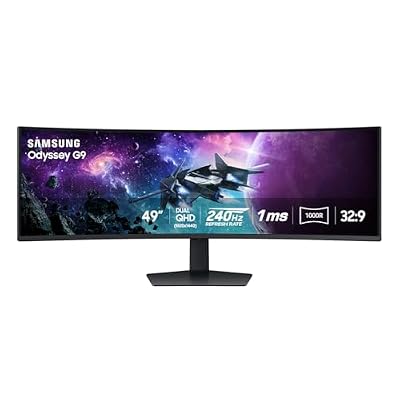
SAMSUNG 49" Odyssey G9 (G95C) Series DQHD 1000R Curved Gaming Monitor, 240Hz, 1ms(GtG), DisplayHDR 1000, AMD FreeSync Premium Pro, Eye Saver Mode, Auto Source Switch+, LS49CG950ENXZA, 2024




As an Amazon Associate we earn from qualifying purchases. Product prices and availability are accurate as of the date/time indicated.
Frequently Asked Questions
Is 144Hz at 4K practical?
Yes, with RTX 4080 or better. In competitive titles and less demanding games, 144Hz at 4K is achievable. In demanding AAA games, expect 80-120 FPS at high settings. For immersive gaming where visual quality matters more than absolute frame rate, 144Hz is sufficient.
How does VA contrast compare to OLED?
VA panels achieve ~3000:1 contrast, excellent for LCD, but OLED’s infinite contrast is technically superior. Practically, VA’s deep blacks and vibrant colors create visually stunning experiences comparable to OLED for gaming. The difference becomes apparent in dark scenes.
What’s the advantage of 144Hz 4K over 60Hz 4K?
The responsiveness improvement is dramatic. 144Hz at 4K provides silky-smooth visuals throughout gaming. 60Hz 4K feels sluggish in comparison. The 144Hz responsiveness combined with 4K clarity delivers the best of both.
Can I use the Odyssey G7 for professional work?
The VA panel’s color saturation is good for gaming but not ideal for professional color work. The lack of HDR and professional color certification limits creative application compared to dedicated professional monitors.
Is the Odyssey G7 better than OLED 4K monitors?
The Odyssey G7’s 144Hz at 4K is practical, while OLED 4K options offer superior visual quality but lower refresh rates. The choice depends on GPU power: if you can drive 240Hz at 4K, OLED is better; if 144Hz is your practical ceiling, the Odyssey G7 delivers great value.

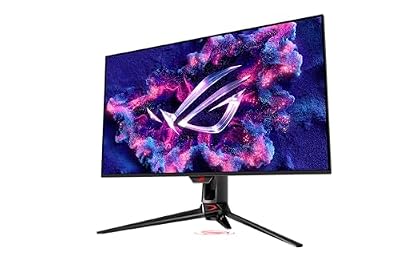
ASUS ROG PG32UCDM 32 Inch 4K 240Hz OLED Gaming Monitor QD-OLED | UHD, Custom Heatsink, 0.03ms, G-SYNC Compatible, USB-C 90W, True 10-bit, Graphene Film, 99% DCI-P3, for PS5 and Xbox




As an Amazon Associate we earn from qualifying purchases. Product prices and availability are accurate as of the date/time indicated.
Conclusion
The Samsung Odyssey G7 4K 144Hz gaming monitor is a powerful choice for gamers seeking to maximize visual fidelity without sacrificing gaming responsiveness. By achieving 144Hz at true 4K resolution—a combination most monitors avoid—Samsung created a display that delivers 4K immersion with practical frame rates. The VA panel’s superior contrast makes gaming visually engaging, while the 144Hz ensures smooth responsiveness.
For builders with cutting-edge GPU hardware prioritizing immersive 4K gaming responsiveness, the Odyssey G7 is an excellent choice. The 4K clarity combined with practical 144Hz refresh rates creates gaming experiences that neither 60Hz 4K displays nor 1440p 144Hz monitors can match. This is the monitor for serious 4K gamers who understand the value of balanced specifications.
More Gaming Gear Guides
- Best 1440P Monitors For Gaming
- Best 4K Gaming Monitors
- Best Ultrawide Monitors Gaming
- Best Oled Gaming Monitors
- Best 144Hz Monitors Gaming
- 240Hz Gaming Monitors Worth It
Related Articles
Looking for more on this topic? Browse the hand-picked guides below — each one applies the same scoring rubric used in this review.