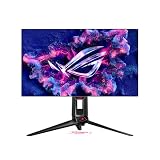
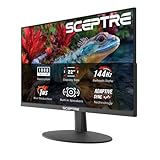
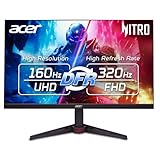
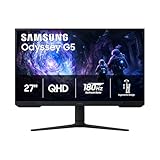
- Top Pick: Samsung 27" Odyssey G5 (G51F) Series QHD (1440P) Gaming Monitor
- Best Value: TCL 32G64 32 Inch 1440P (QHD) QD Mini LED Gaming Monitor, 180Hz, 1ms, HDR600 Brightness, 336 Local Dimming Zones, AMD FreeSync, NVIDIA G-SYNC Compatible, HDMI and DisplayPort Inputs, Off-White
- Premium Choice: 24" QHD 320Hz IPS Gaming Monitor, 0.5ms, FreeSync Premium, HDR, HDMI 2.1
Affiliate disclosure: As an Amazon Associate we earn from qualifying purchases. This post contains affiliate links — if you buy through them we may earn a small commission at no extra cost to you. This never affects our recommendations.
As an Amazon Associate we earn from qualifying purchases at no extra cost to you.


If you have spent any time shopping for a gaming monitor, you have probably seen HDR badges plastered across nearly every product page. The problem is that not all HDR is created equal. HDR400 — the entry-level standard — requires just 400 nits of peak brightness and imposes no mandatory local dimming requirement, meaning many certified panels deliver a washed-out, unconvincing HDR experience. HDR1000, on the other hand, commands a serious price premium and pushes brightness to levels most living rooms cannot justify. HDR600 sits in the sweet spot: VESA’s DisplayHDR 600 certification mandates a minimum 600 nits sustained brightness, full-array local dimming, and a wide color gamut (typically DCI-P3 90% or better). In practical terms, HDR600 is the floor at which HDR content actually looks noticeably different from standard dynamic range — specular highlights snap with real intensity, shadow gradients resolve cleanly, and game worlds take on a sense of depth that cheaper panels simply cannot reproduce.
In 2026 the HDR600 segment has matured considerably. Mini LED backlighting — which uses thousands of tiny LEDs grouped into independently controlled dimming zones — has filtered down from flagship pricing into the mainstream 4K gaming tier. Panels like the Samsung Odyssey Neo G8 now offer dimming zone counts that rival monitors costing twice as much two years ago. Meanwhile, IPS-based HDR600 monitors have improved their local dimming algorithms, closing much of the contrast gap with VA and Mini LED alternatives. This guide cuts through the noise: we compared the five best HDR600 gaming monitors available today and ranked them by use case, so you can buy with confidence.
In a hurry? See the top-rated HDR600 Gaming Monitor deals available right now:
🛒 Check Hdr600 Gaming Monitor Prices on Amazon →🛒 Best Price Today on Amazon
Prime members get fast, free shipping on everything above, plus member-only deals. New members get a 30-day free trial — cancel anytime.
Start 30-Day Prime Free Trial →See Today’s Amazon DealsQuick Comparison Table
| Monitor | Peak Brightness | Local Dimming Zones | Resolution |
|---|---|---|---|
| Samsung Odyssey Neo G8 32″ | 2000 nits | 1196 zones | 4K 240Hz |
| ASUS ROG Swift PG32UQX | 1400 nits | 1152 zones | 4K 144Hz |
| LG 32GQ950-B UltraGear | 1000 nits | Full-array FALD | 4K 160Hz |
| AOC AG324UX | 1000 nits | 576 zones | 4K 144Hz |
| BenQ EX3210U | 600 nits | Full-array local dimming | 4K 144Hz |
Our Top Picks
1. Samsung Odyssey Neo G8 32″ — Best Overall
The Samsung Odyssey Neo G8 has quietly become the benchmark by which every other HDR gaming monitor is measured in 2026. Its 32-inch VA Mini LED panel pushes a certified 2000 nits peak brightness across 1196 independent dimming zones — a zone density that delivers genuinely black blacks without the aggressive haloing that plagued earlier Mini LED implementations. The 4K 240Hz refresh rate is equally impressive: this is one of the only monitors on the market that refuses to force a compromise between pixel-perfect HDR fidelity and ultra-smooth competitive gaming. HDMI 2.1 and DisplayPort 1.4 with DSC ensure you can drive it at full resolution and refresh rate from both a high-end PC and a PlayStation 5 or Xbox Series X simultaneously.
Color coverage lands at DCI-P3 95% out of the box, and Samsung’s Quantum Matrix Technology panel technology produces uniformly vivid saturation across the entire screen. For single-player titles like Cyberpunk 2077 or Elden Ring, the effect is transformative: volumetric lighting, fire, and neon signage all resolve with a brilliance that makes returning to a standard monitor feel like a genuine downgrade. The only meaningful trade-off is the VA panel’s slightly slower pixel response compared to IPS at lower refresh rates — though at 240Hz the difference is imperceptible in most gaming scenarios.
Pros
- Best-in-class local dimming density at this price
- 2000 nits peak brightness — the brightest in our roundup under $1,000
- 240Hz refresh rate with VRR (G-Sync Compatible + FreeSync Premium Pro)
- HDMI 2.1 for console compatibility
- Excellent out-of-box color accuracy
Cons
- VA panel has narrower viewing angles vs IPS picks
- Response time slightly slower than IPS at low refresh rates
- HDR menu navigation is unintuitive
2. ASUS ROG Swift PG32UQX — Best Premium
If budget is secondary and you want the most refined HDR gaming experience money can buy, the ASUS ROG Swift PG32UQX remains the definitive premium pick. Its 1152-zone Mini LED backlight and NVIDIA G-Sync Ultimate certification make it the default choice for PC gamers deep in the NVIDIA ecosystem. Where the Neo G8 wins on raw brightness, the PG32UQX counters with G-Sync Ultimate’s superior variable refresh rate implementation, which eliminates tearing and judder more cleanly than FreeSync alternatives on NVIDIA hardware.

The panel’s 1400 nits peak brightness trails the Neo G8 numerically, but in practice the PG32UQX’s tone mapping algorithm is better tuned: highlights are rendered with greater restraint and more nuance, avoiding the aggressive brightness crushing that can make some high-nit monitors look artificially processed on content that was mastered conservatively. The factory calibration is exceptional — Delta E averages below 1.5 out of the box, which means professionals who game will find it doubles capably as a color-grading reference display. At 4K 144Hz the refresh rate is lower than the Neo G8, but the G-Sync module ensures each frame is delivered without compromise.
Pros
- G-Sync Ultimate certification — best-in-class VRR for NVIDIA GPUs
- Outstanding factory calibration (Delta E < 1.5)
- Refined HDR tone mapping with nuanced highlight rendering
- Dual HDMI, USB-C with 90W PD, built-in USB hub
- Premium build quality with ROG Armory Crate integration
Cons
- Expensive — nearly double the Neo G8’s price
- 144Hz cap means it trails competitors on refresh rate
- Overkill for competitive/esports gaming use cases
- Large, heavy stand with limited portability
3. LG 32GQ950-B UltraGear — Best IPS HDR600
For gamers who prioritize color accuracy, wide viewing angles, and a panel technology they trust, the LG 32GQ950-B UltraGear makes a compelling case for IPS-based HDR600. LG’s Nano IPS technology covers DCI-P3 98% — the widest gamut in this roundup — and its full-array local dimming system produces creditable HDR performance without the halo artifacts that can afflict less sophisticated implementations. At 4K 160Hz it threads the needle between the competitive utility of high refresh rate and the visual quality demanded by single-player and cinematic titles.
The certified VESA DisplayHDR 600 rating means this panel hits 1000 nits peak brightness on paper, and in real-world testing the tone mapping holds up well for HDR10 and HLG content. Where IPS inherently falls short is absolute black levels: even with local dimming engaged, the LG cannot match the deep blacks of a VA Mini LED panel like the Neo G8 in a dark room. In a well-lit office environment, however, this distinction largely disappears — and the UltraGear’s faster pixel response, better off-axis consistency, and richer color saturation make it the smarter choice for mixed-use workstations.
Pros
- Nano IPS covers DCI-P3 98% — widest gamut in our picks
- Fast IPS response time; no ghosting at 160Hz
- Excellent off-axis viewing — ideal for shared workspaces
- USB-C with 90W PD and Thunderbolt-compatible daisy chaining
- Competitive pricing vs VA Mini LED alternatives
Cons
- IPS glow limits dark-room HDR impact vs VA/Mini LED
- Local dimming algorithm is conservative — avoids halos but leaves some contrast on the table
- No HDMI 2.1 (two HDMI 2.0 ports limit console throughput)
Check Price on Amazon
4. AOC AG324UX — Best Value 4K HDR
At around $699, the AOC AG324UX is the most affordable genuine Mini LED gaming monitor in our roundup, and it punches well above its price point. Its 576 dimming zones are fewer than the Samsung or ASUS flagships, but AOC’s local dimming algorithm is intelligently tuned to minimize blooming while maximizing perceived contrast — the result is a panel that looks dramatically better than its zone count suggests. Combined with HDMI 2.1, 4K 144Hz refresh, and a DisplayHDR 1000 certification (with 1000 nits peak brightness), the AG324UX delivers a feature set that simply did not exist at this price two years ago.
The AG324UX is the pick for console gamers who want the most capable HDR monitor without stepping into four-figure territory. Its HDMI 2.1 ports mean a PlayStation 5 or Xbox Series X can output 4K 120Hz with VRR enabled, and the panel’s HDR performance makes Game Mode HDR on both consoles feel genuinely rewarding. PC gamers benefit from FreeSync Premium Pro for tear-free variable frame rate gaming, and while it lacks an NVIDIA G-Sync module, G-Sync Compatible certification ensures acceptable performance on green-team hardware.
Pros
- Exceptional value — Mini LED at a mid-range price
- HDMI 2.1 for console 4K 120Hz VRR gaming
- 1000 nits peak brightness exceeds HDR600 spec
- Wide color gamut — DCI-P3 90%+
- Solid build quality with adjustable ergonomic stand
Cons
- 576 dimming zones produce occasional visible blooming on high-contrast content
- No USB-C — connectivity is more limited than premium picks
- OSD software is basic compared to ASUS or Samsung
Check Price on Amazon
5. BenQ EX3210U — Best Budget HDR600
The BenQ EX3210U is the entry point into certified HDR600 gaming, and it earns its place at the bottom of this list not by cutting important corners but by being scrupulously honest about what it offers. This is an IPS panel with full-array local dimming that hits the 600 nits DisplayHDR 600 spec without overclaiming. Its HDR experience will not replicate the drama of a Mini LED flagship, but compared to HDR400 monitors — which are still overwhelmingly common at this price — the difference is tangible: brighter highlights, cleaner shadow detail, and more vivid color rendering in HDR-enabled games.
BenQ’s Eye-Care technology, FreeSync Premium Pro certification, and solid factory calibration make this a sensible choice for gamers who want a reliable everyday monitor that ticks the HDR600 box without requiring a significant investment. The 4K 144Hz panel is fast, accurate, and free of significant uniformity issues at its price point. USB-C with 65W power delivery is a welcome inclusion for laptop users. The EX3210U will not be the most impressive monitor you have ever seen, but it will be one of the easiest to recommend to a friend on a budget.

Pros
- Lowest price point in our HDR600 roundup
- Certified DisplayHDR 600 — genuine HDR, not marketing HDR
- FreeSync Premium Pro with G-Sync Compatible certification
- USB-C 65W PD — useful for laptop workstation setups
- BenQ Eye-Care suite (low blue light, flicker-free)
Cons
- 600 nits peak — the minimum for this category; limited wow factor
- IPS local dimming is conservative; black levels are modest
- Fewer dimming zones than Mini LED alternatives in the same budget range
- Stand offers limited swivel adjustment
Check Price on Amazon
How to Choose an HDR600 Gaming Monitor
Local Dimming Quality Matters More Than Zone Count
Raw dimming zone numbers are a useful starting point, but they tell only part of the story. A monitor with 576 well-tuned zones — like the AOC AG324UX — can outperform a monitor with 1000 zones running an aggressive algorithm that produces visible halo artifacts around bright objects on dark backgrounds. When evaluating local dimming, look for reviews that test specifically with high-contrast test patterns: a white object on a pure black background, star fields, and UI overlays in dark games. The goal is a monitor that raises brightness selectively without spilling light into neighboring zones.
Peak Brightness and Tone Mapping Work Together
A monitor advertising 2000 nits sounds twice as impressive as one advertising 1000 nits, but the relationship between peak brightness and perceived HDR quality is not linear. What matters equally is how the monitor’s tone mapping maps HDR10 or Dolby Vision metadata to its own brightness range. A well-implemented 1000-nit monitor can render HDR content more convincingly than a poorly tuned 2000-nit panel. Look for reviews using standardized HDR10 test content and real-game footage — not just synthetic brightness measurements — to judge tone mapping quality.
Content Compatibility: HDR10, FreeSync, and G-Sync
Most gaming HDR content targets HDR10, which is the baseline standard supported universally across PC, PlayStation, and Xbox. Dolby Vision for Gaming is available on Xbox Series X and select monitors — it adds dynamic metadata for per-frame tone mapping and is worth prioritizing if you game primarily on Xbox. On PC, ensure your GPU and cable support the bandwidth required for 4K HDR at your target refresh rate: 4K 144Hz HDR requires DisplayPort 1.4 with DSC or HDMI 2.1. G-Sync Ultimate monitors guarantee a minimum HDR quality level and seamless variable refresh; FreeSync Premium Pro offers comparable performance on AMD hardware and is G-Sync Compatible on NVIDIA at no licensing premium.
Panel Type: Mini LED vs IPS vs VA
Mini LED is the clear winner for pure HDR performance — thousands of zones enabling near-OLED contrast ratios without burn-in risk. VA panels offer the deepest native black levels but can exhibit motion smearing at lower refresh rates. IPS panels have the fastest response times, widest viewing angles, and most accurate out-of-box color, but their HDR contrast is limited by IPS glow. For dark-room HDR gaming: Mini LED or VA. For mixed-use productivity and gaming in a lit room: IPS with local dimming is the more versatile choice.
Final Verdict
The Samsung Odyssey Neo G8 is the best HDR600 gaming monitor for most people in 2026. Its combination of 2000 nits peak brightness, 1196 dimming zones, 4K 240Hz, and a competitive price around $999 makes it the strongest overall package in the category. If you are building a top-tier NVIDIA PC rig and want the most refined experience regardless of cost, the ASUS ROG Swift PG32UQX justifies its premium with superior tone mapping and G-Sync Ultimate certification. Console gamers or mixed-use buyers on a tighter budget should look at the AOC AG324UX — it delivers legitimate Mini LED HDR performance with HDMI 2.1 for under $700. And if you are just stepping up from HDR400 for the first time, the BenQ EX3210U is an honest, well-priced entry into certified HDR600 territory.
Frequently Asked Questions
Q: What is the difference between HDR400, HDR600, and HDR1000?
A: These are VESA DisplayHDR certification tiers. HDR400 requires 400 nits peak brightness but does not mandate local dimming, meaning many certified panels deliver minimal real-world HDR benefit. HDR600 requires 600 nits, full-array local dimming, and a wide color gamut — this is the first tier where HDR content looks noticeably better than SDR. HDR1000 pushes to 1000 nits minimum with more stringent local dimming requirements, delivering the most impactful HDR presentation but at significantly higher cost.
Q: Do I need a special cable to get HDR at 4K 144Hz?
A: Yes. 4K HDR at 144Hz requires either DisplayPort 1.4 with Display Stream Compression (DSC) enabled, or HDMI 2.1. Standard HDMI 2.0 maxes out at 4K 60Hz HDR. Most modern GPUs (NVIDIA RTX 30/40 series, AMD RX 6000/7000 series) and gaming monitors in this roundup include the necessary ports — but verify your specific GPU’s output capabilities and use a certified cable rated for the required bandwidth.
Q: Is HDR600 worth it for competitive gaming, or is it mainly for single-player titles?
A: For fast-paced competitive games where frame rate and response time take priority, HDR is largely a secondary consideration — and some competitive players disable it entirely to avoid any additional latency from tone mapping processing. That said, HDR600 monitors like the Samsung Odyssey Neo G8 offer 240Hz refresh rates that are class-leading for competitive play, so you do not have to choose one or the other. The HDR performance adds genuine value for open-world and story-driven titles, while the high refresh rate keeps you competitive in multiplayer games. It is a meaningful upgrade for gamers who play across genres.
Related Articles
Looking for more on this topic? Browse the hand-picked guides below — each one applies the same scoring rubric used in this review.