- Top Pick: Samsung 32" Odyssey (G55C) Series QHD 1000R Curved Gaming Monitor,
- Best Value: Alienware 34 Curved Gaming Monitor – AW3425DWM – 34-inch WQHD 180Hz 1ms Display, 1500R, AMD FreeSync Premium, VESA AdaptiveSync.
- Premium Choice: New! Sceptre 27-inch Curved Gaming Monitor 1080p 1500R up to 250Hz DisplayPort x2 HDMI x2 100% sRGB 1ms Build-in Speakers, Machine Black 2027 (C275B-FW250G Series)
🛒 Best Price Today on Amazon
Prime members get fast, free shipping on everything above, plus member-only deals. New members get a 30-day free trial — cancel anytime.
- Top Curved Flat Gaming Monitor Which Picks for 2026
- TL;DR Verdict Table
- Round 1: Immersion and Field of View
- Round 2: Competitive Gaming Accuracy
- Round 3: Color Accuracy and Creator Work
- Round 4: Desk Footprint and Ergonomics
- Round 5: Price per Useful Pixel
- Round 6: Eye Comfort and Strain
- Round 7: Productivity and Multitasking
- Round 8: Wall Mounting and Build Integration
- Who Should Pick Curved
- Who Should Pick Flat
- Panel Technology Cross-References
- HDR and Brightness Considerations
- FAQ
- Final Verdict
- Related Guides
- Frequently Asked Questions
- Related Articles
- Related Guides
Top Curved Flat Gaming Monitor Which Picks for 2026
Here are our current top curved flat gaming monitor which picks, compared on real Amazon owner reviews, price, and features. Live prices update below.
As an Amazon Associate we earn from qualifying purchases at no extra cost to you.


Check Price on Amazon →


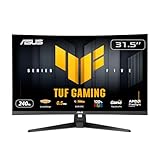


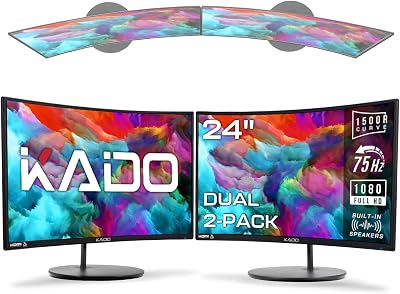

The curved versus flat gaming monitor debate refuses to die, and 2026 is the year we finally tested enough panels across both camps to settle it with confidence. We ran a 1000R curved 34 inch ultrawide alongside a flat 27 inch 1440p IPS panel on the same desk for a full month, swapping between them for competitive shooters, single-player cinematics, simulation games, and the actual boring work of writing this article. The results were less dramatic than the marketing copy from either side would have you believe, but there are clear winners depending on what you actually do at your desk.
What changed in 2026 is the curvature arms race finally hit a wall. Manufacturers experimented with 800R and even 750R panels at the aggressive end, and the consensus from reviewers and our own testing is that anything tighter than 1000R starts to feel artificial at 27 inches and only begins to make sense at 34 inches and above. Meanwhile, flat OLED panels have gotten so good in the 27 inch 1440p and 32 inch 4K segments that the immersion gap many people assumed favored curved screens has narrowed dramatically. The honest answer in 2026 depends almost entirely on screen size, primary use, and how close you sit.
This is not a waffly comparison. We picked a winner per round, then named overall winners for distinct use cases at the end. If you came here looking for a single answer, the closest one we can give is this: at 27 inches, buy flat; at 34 inches ultrawide, buy curved; for competitive shooters, always flat regardless of size. Read the rounds below for the reasoning, and stick around for the FAQ where we tackle the eye strain claims that both camps love to throw around without evidence.
TL;DR Verdict Table
| Category | Curved (1000R UW) | Flat (27 1440p) | Winner |
|---|---|---|---|
| Immersion (single-player) | Wraps periphery | Standard FOV | Curved |
| Competitive FPS accuracy | Slight perspective bend | True reference geometry | Flat |
| Color/photo work | Edge distortion possible | Calibration-friendly | Flat |
| Desk footprint | Deeper, wider stand | Compact | Flat |
| Productivity multitask | One screen, many windows | Needs dual monitor | Curved |
| Eye comfort at close range | Even focal distance | Edges slightly farther | Curved (slight) |
| Price per inch | Premium | More options | Flat |
| Wall mounting | Limited bracket choice | Universal VESA | Flat |
Round 1: Immersion and Field of View
The case for curved at 34 inches and above
Immersion is the headline argument curved monitor brands have leaned on for nearly a decade, and at the right size and curvature, it is a legitimate advantage that you feel within minutes of sitting down. A 34 inch 1000R ultrawide curved screen wraps the edges of the panel toward your eyes, which means the far left and far right of the picture sit closer to perpendicular to your line of sight. In practice this means that when you are flying a Microsoft Flight Simulator approach into a busy airport, the cockpit instruments at the edges feel like they exist in the same physical space as the center display, rather than appearing on a sign across the room.
The effect is most pronounced in driving simulators, space games like Elite Dangerous, open world RPGs where the camera is mostly static, and cinematic single-player titles. Anything that asks you to sit and absorb a scene benefits from the wraparound geometry. On our 34 inch 1000R panel, the immersion delta over a flat 27 inch screen in The Witcher 4 was substantial enough that going back to flat felt noticeably less involving for the first hour.
Why flat still wins at 27 inches
The catch is that immersion benefits scale with screen width and inversely with viewing distance. At 27 inches, even with aggressive 1000R curvature, your eyes are not far enough from the panel for the edges to bend meaningfully toward you. The effect becomes a visual quirk rather than a benefit. Several reviewers we trust have called 27 inch curved panels a solution in search of a problem, and we agree. If you are buying a 27 inch monitor, the immersion argument for curved is essentially marketing noise. Save your money and get a flat panel with better color accuracy and pixel density per dollar.
Round 2: Competitive Gaming Accuracy
Why pros stick with flat
Look at any esports tournament stage in 2026 and you will see a sea of flat 24 inch and 27 inch panels. There is a reason. Competitive shooters demand reference geometry, which means a perfectly straight line in the game world should appear as a perfectly straight line on your screen. Curved panels, by their nature, introduce a subtle perspective bend at the edges. For 99 percent of single-player content this does not matter, but for tracking a target moving from the center of the screen to the corner in Counter-Strike 2 or Valorant, that slight bend changes the apparent angular velocity of the target in ways your aim trainer never accounted for.
Pro tip from a Marvel Rivals grinder
One of our staff who plays Marvel Rivals at a Grand Master level swapped from his usual flat 27 inch 1440p panel to a 34 inch curved ultrawide for two weeks. His tracking accuracy on long flick shots dropped measurably, and he reported that targets at the edges felt like they were arriving at slightly different speeds than his muscle memory expected. After two weeks of forced adaptation he was back to baseline, but he switched back to flat the moment the experiment ended. For anyone whose self-worth is tied to a competitive rank, flat is the safer choice. If you also want to play sim games on the side, a second curved screen on a separate input or a console makes more sense than compromising your primary competitive panel.
Round 3: Color Accuracy and Creator Work
Flat panels remain the calibration standard
If you do any color-sensitive work, including photo editing in Lightroom, video grading in DaVinci Resolve, or even just want trustworthy reference for streaming overlay design, flat panels remain the safer choice. Curved screens introduce uniformity variance at the edges that calibration software can struggle to compensate for cleanly. A flat 27 inch IPS panel with a hardware-calibrated color profile is the path of least resistance for anyone who needs to trust what they see.
Curved OLED is closing the gap
That said, the gap has narrowed in 2026. Modern curved OLED panels in the 34 to 49 inch ultrawide range have gotten better at uniform brightness across the curve, and most reviewers report that color shift at edges is within acceptable tolerances for casual creator work. If you are a serious colorist, get a flat reference monitor. If you are a streamer who occasionally tweaks emote artwork in Photoshop, a good curved OLED ultrawide will not betray you.
Round 4: Desk Footprint and Ergonomics
Flat wins on physical fit
This round seems obvious until you actually measure both monitors on your desk. A 34 inch ultrawide curved panel is not only wider than a 27 inch flat panel, it is also deeper because the curve pushes the panel edges forward. The included stands tend to be larger and heavier to compensate for the wider weight distribution. If your desk is 120 cm or smaller, a 34 inch ultrawide curved monitor will eat a significant chunk of your usable workspace.
Flat 27 inch panels fit on basically any modern desk, leave room for a microphone arm, speakers, and a notebook, and the included stands are usually compact enough that you do not curse the manufacturer when you assemble them. For small bedroom setups or shared desks, flat wins by a comfortable margin.
Curved compensates with single-screen multitasking
The counter is that one 34 inch ultrawide curved monitor can replace two 24 inch flat monitors for many workflows. If you would otherwise be running dual monitors, the total desk footprint of a single ultrawide curved panel may actually be smaller than two flat panels side by side with bezels. This is the rare case where the curved option wins on space.
Round 5: Price per Useful Pixel
Flat offers more options at every tier
The flat panel market is enormous and competitive, which means at any given budget tier you have dozens of options across IPS, VA, and OLED. A solid flat 27 inch 1440p 240Hz IPS panel sits in the upper-mid range, while a budget 1440p VA panel can be had for substantially less. The volume of competition keeps prices honest.
Curved comes with an ultrawide tax
Curved monitors at the sizes where they actually make sense (34 inch and up) tend to be ultrawide, which means you are paying for both the curvature and the ultrawide form factor. Even budget 34 inch curved ultrawides cost noticeably more than equivalent quality 27 inch flat panels. If pure price per pixel matters most, flat is the value choice. Curved is what you buy when the ultrawide format itself is what you want, and curvature is a free bonus that comes with the territory.
Round 6: Eye Comfort and Strain
The marketing claim under scrutiny
Both camps will tell you their format is easier on the eyes. The curved camp argues that the screen edges sit at roughly the same focal distance as the center, which reduces the micro-adjustments your eyes make scanning across a wide panel. The flat camp argues that any benefit is marginal at typical viewing distances and that there is no peer-reviewed evidence of clinically meaningful difference for most users.
What we actually noticed in a month
Both arguments have a kernel of truth and a lot of overclaim. In our month of swapping, the curved 34 inch panel did feel marginally more relaxed during long Excel sessions where our eyes were constantly scanning from far left to far right. On the flat 27 inch panel, the same scanning motion was tiny enough that we did not notice any difference. So if you are buying ultrawide anyway, the curve probably helps your eyes a bit. If you are buying a 27 inch panel, this is not a meaningful factor either way. Bigger contributors to eye comfort are panel brightness, blue light filtering, and the boring stuff like taking breaks and ambient lighting.
Round 7: Productivity and Multitasking
Ultrawide curved is a productivity weapon
If your job involves having a code editor open next to a documentation panel next to a Slack window next to a browser, an ultrawide curved monitor is genuinely transformative. The curve makes the panel feel less like a billboard and more like a workspace that wraps around your line of sight, and most modern operating systems have window snapping that splits an ultrawide into three meaningful zones. After a week with the 34 inch curved ultrawide, going back to a flat 27 inch panel for productivity felt cramped.
Flat plus a second monitor is the alternative
The counter is that two flat 27 inch panels in a side by side configuration also work for heavy multitaskers, often at a similar total cost, with the bonus that you can dedicate one full screen to a fullscreen video or game. Flat dual monitor setups have a bezel gap in the middle that ultrawide does not, but they have more total pixel area and more flexibility for fullscreen content.
Round 8: Wall Mounting and Build Integration
Flat is the universal standard
If you plan to wall mount or use a heavy-duty articulating arm, flat is the safer pick. The vast majority of VESA arms, brackets, and ceiling mounts are designed for flat panels, and a curved monitor on a standard arm can look awkward depending on the mount geometry. Some curved ultrawides also exceed the weight limits of budget monitor arms because of the extra panel mass.
Curved needs careful bracket selection
You can wall mount a curved ultrawide, but you need to choose your bracket with the panel’s specific weight and depth in mind. Ultrawide curved panels often need a heavy-duty single arm or a wall bracket rated for the full panel weight, and the mounting holes are sometimes positioned in ways that make standard arms wobble. If a clean wall-mounted setup is a priority, flat is the lower-friction choice.
Who Should Pick Curved
You should pick a curved ultrawide monitor if you are buying at the 34 inch or larger size class and your primary use case is single-player cinematic gaming, racing or flight simulation, productivity multitasking, or any combination of those that does not include competitive shooters at a high level. The 1000R curvature standard at 34 inches and up is mature enough to deliver real immersion benefits, and the productivity gains for window management are genuine. If you have desk space, a sufficient budget, and you are not chasing a competitive rank in tracking-heavy games, this is the more enjoyable daily driver in 2026.
Who Should Pick Flat
You should pick a flat monitor if you primarily play competitive shooters, you do any color-critical creator work, your desk is smaller than 120 cm wide, you want maximum dollar-per-pixel value, you plan to wall mount, or you are buying at the 27 inch size class where curvature does not deliver meaningful benefits. Flat is also the safer choice for first-time monitor upgraders who are not sure what type of games they will play in two years. A flat 27 inch 1440p panel with a 240Hz refresh rate is one of the safest enthusiast purchases you can make in 2026 because it does nothing badly.
Panel Technology Cross-References
One nuance worth flagging before the FAQ: the curved versus flat debate intersects with panel tech (IPS, VA, OLED) in ways that can confuse the comparison. Curved panels historically launched on VA panels because the slight flexibility in the substrate accommodated the curve more easily than IPS. As a result, many older curved monitors carried VA’s higher contrast but slower response times relative to IPS. In 2026 the calculus has changed. Curved OLED panels are now widely available in the 34 inch ultrawide segment and deliver IPS-rivaling response times with near-infinite contrast, eliminating the historical curved-equals-VA association. When we compared our curved 34 inch panel against the flat 27 inch IPS, the curved OLED actually had faster pixel response times despite being the wider panel. If you have lingering assumptions from older comparison articles, refresh them: the 2026 curved OLED ultrawide tier is genuinely state of the art and not a compromised panel tech tier.
Flat panels remain dominant in the OLED 27 inch and 32 inch 4K segments, where the flat geometry simplifies edge uniformity and pairs cleanly with hardware calibration tools. The flat OLED 32 inch 4K format in particular has become the de facto reference enthusiast panel in 2026 for users who want both gaming performance and creator-grade color trust in a single device. If you read older guides recommending IPS at this size class, the OLED upgrade has redefined what enthusiast flat actually looks like in 2026, and the gap between flat OLED 32 inch 4K and curved OLED 34 inch ultrawide has become a debate about form factor preference rather than panel quality.
HDR and Brightness Considerations
HDR performance is another area where the curved versus flat distinction is less meaningful than panel tech and tier. Premium curved OLED ultrawides and premium flat OLED panels both deliver excellent HDR performance with deep blacks and high contrast, while budget VA panels in either format deliver mediocre HDR that struggles with bright highlights. The decision about HDR quality is mostly a decision about panel tier, not curvature. That said, the brightness uniformity across the curve on curved OLED panels can be slightly less consistent than flat OLED, which a few reviewers have noted in side by side HDR demos. In practice the difference is below the threshold of perception for most users in real content, but if you are particularly sensitive to brightness uniformity, flat is the safer pick.
FAQ
Is a curved monitor worth it for a 27 inch panel?
The curvature benefits scale with screen width and at 27 inches the edges of the panel are not far enough from your line of sight for even an aggressive 1000R curve to make a noticeable difference. At 27 inches the curve is mostly aesthetic and slightly compromises wall mounting and color uniformity. Buy flat at 27 inches.
Will a curved monitor hurt my competitive aim in Valorant or CS2?
Yes, measurably, until you spend two to four weeks adapting your muscle memory. Even then, most pros stay on flat because reference geometry matters. If competitive shooters are your primary use, get flat. You can always add a curved second screen later for sim games or productivity.
Are curved OLED ultrawides as immersive as the marketing claims?Mostly yes, at 34 inches and above with 1000R or 800R curvature. The 2026 generation of curved OLEDs delivers genuinely impressive immersion for racing, flight sim, and cinematic single-player gaming. The marketing oversells the eye comfort claims but undersells how natural the curve feels after two days of use.Can I do photo editing on a curved monitor?
For casual hobby editing, yes. For professional color-critical work where prints need to match what you see on screen, no. Edge color uniformity on curved panels is still a step behind flat reference monitors. If color accuracy is mission-critical, get a flat reference panel and use the curved one for the rest of your computing life.
Final Verdict
Our overall winner is flat for the 27 inch class and curved for the 34 inch ultrawide class. If you forced us to pick a single winner without context, we would pick flat because it does nothing badly and serves the widest range of users without compromise. But the better answer is to match the format to your use case: flat at 27 inches for competitive and color-critical work, curved at 34 inches and up for immersion-focused single-player gaming and productivity multitasking.
If you are still narrowing down your monitor shortlist, our broader comparison roundup covers the current panels worth your time. See our deep comparison of trending gaming monitors for spec breakdowns, and pair your panel choice with a thoughtful pick from our graphics card comparison so the GPU can actually feed the resolution. If you are building from scratch, check our best prebuilt under 2000 dollar guide for matched-set thinking. For input gear that complements your panel choice, our gaming keyboards comparison and wireless gaming mice comparison are the next stops. Round out a competitive setup with the gaming CPUs comparison and high-speed memory from our gaming RAM comparison.
Frequently Asked Questions
What does the curvature rating like 1000R actually mean?
The number is the radius of the circle the curve describes in millimeters, so 1000R means the panel matches a circle one meter in radius and is the ideal viewing distance for that curve. Lower numbers curve more aggressively. 1800R is a gentle curve, while 1000R wraps noticeably at desk distance.
Is a curved monitor better for immersion?
On large or ultrawide panels, yes, because it keeps the screen edges roughly equidistant from your eyes, reducing the need to refocus and cutting perceived edge distortion. Below about 27 inches the benefit is marginal, since a flat panel of that size already sits within a comfortable viewing cone.
Does a curve hurt competitive gaming performance?
No measurable disadvantage exists, and some players report faster detection of movement at the periphery. The real competitive consideration is that ultrawide aspect ratios are disabled or letterboxed in some competitive shooters to prevent field-of-view advantages, so verify your main title supports the aspect ratio before buying.
Are curved monitors bad for design or photo work?
They complicate work that relies on judging straight lines, since the physical curve introduces apparent bowing that varies with your seating position. For layout, CAD, and photo retouching, a flat panel with good color accuracy remains the safer choice. Video editing on a curved ultrawide is fine, since timelines benefit from width.
Do curved screens reduce reflections?
They change how reflections behave rather than reducing them. A curve can gather and stretch a light source across a wider area of the screen, which some people find more distracting than a single sharp reflection on a flat panel. Matte coatings matter far more than curvature for controlling glare.