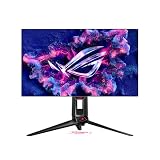
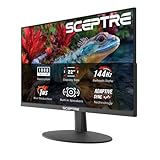
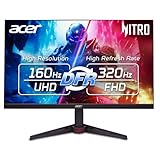
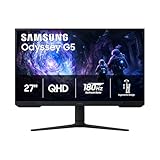
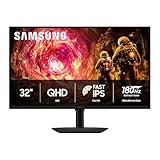
- Top Pick: Samsung 27" Odyssey G5 (G51F) Series QHD (1440P) Gaming Monitor
- Best Value: Samsung 32” Odyssey G5 (G50F) Series QHD Gaming Monitor
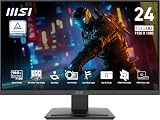
- Premium Choice: msi PRO MP243L E14 24-inch IPS 1920 x 1080 (FHD) Gaming Office Monitor, 144Hz, Free-Synch, HDR Ready, HDMI, VGA Port,VESA Mountable, Tilt, 4-Side Slim Bezel,1ms, Black
Affiliate disclosure: As an Amazon Associate we earn from qualifying purchases. This post contains affiliate links — if you buy through them we may earn a small commission at no extra cost to you. This never affects our recommendations.
As an Amazon Associate we earn from qualifying purchases at no extra cost to you.





If you’ve been gaming on a standard SDR monitor, switching to true HDR is one of the most dramatic visual upgrades you can make. But “HDR” on a monitor label means almost nothing on its own — a $200 panel slapping “HDR400” on the box delivers a fundamentally different experience from an OLED display hitting 1,000 nits of peak brightness with pixel-level dimming. True HDR hinges on three factors: peak brightness (measured in nits), contrast ratio, and local dimming precision. Without all three working together, highlights blow out, shadow detail collapses, and that ultra-realistic lighting in your favorite open-world game looks flat. In 2026, the best HDR gaming monitors have finally reached a point where the technology genuinely transforms competitive and immersive gaming alike — this guide cuts through the marketing noise to show you exactly which panels deliver.
In a hurry? See the top-rated HDR Gaming Monitor deals available right now:
🛒 Check Hdr Gaming Monitor Prices on Amazon →🛒 Best Price Today on Amazon
Prime members get fast, free shipping on everything above, plus member-only deals. New members get a 30-day free trial — cancel anytime.
Start 30-Day Prime Free Trial →See Today’s Amazon DealsQuick Comparison Table
| Monitor Name | Panel | HDR Tier | Peak Brightness | Resolution | Price (Approx.) |
|---|---|---|---|---|---|
| LG 27GR95QE-B OLED | WOLED | DisplayHDR True Black 400 | 1,000 nits (peak) | 2560×1440 | ~$799 |
| ASUS ROG Swift PG32UCDM | QD-OLED | DisplayHDR True Black 400 | 1,000 nits (peak) | 3840×2160 | ~$1,299 |
| Samsung Odyssey Neo G8 | VA Mini-LED | DisplayHDR 1000 | 2,000 nits (peak) | 3840×2160 | ~$899 |
| LG 27GP850-B | IPS Nano | DisplayHDR 600 | 600 nits (peak) | 2560×1440 | ~$349 |
| MSI MAG274QRF-QD | IPS Quantum Dot | DisplayHDR 400 | 400 nits (peak) | 2560×1440 | ~$279 |
Our Top 5 HDR Gaming Monitor Picks (2026)
1. [Best Overall] LG 27GR95QE-B OLED — Best True HDR with Infinite Contrast
The LG 27GR95QE-B OLED remains the benchmark for true HDR in a 27-inch form factor, earning its place as our best overall pick. As a WOLED panel with DisplayHDR True Black 400 certification, it achieves what no LCD ever can: a mathematically infinite contrast ratio, because individual pixels switch completely off for pure blacks. Peak brightness of 1,000 nits on a sub-35% window means HDR highlights in games like Cyberpunk 2077 and Elden Ring pop with startling realism, while the 240Hz refresh rate and 0.03ms GtG response time make it equally at home in competitive play. It is the ideal choice for gamers who want the single best HDR image quality at 1440p without compromising on speed.
2. [Runner-Up] ASUS ROG Swift PG32UCDM — Best 4K OLED HDR
The ASUS ROG Swift PG32UCDM steps up to a 32-inch QD-OLED panel at 4K resolution, making it the premium choice for gamers who want both cinematic HDR and pixel-dense detail. The Quantum Dot layer over OLED significantly boosts color volume compared to standard WOLED, covering over 99% of DCI-P3 with extraordinary vibrancy — reds and greens in particular reach saturation levels that WOLED panels cannot match. At 240Hz with NVIDIA G-Sync Ultimate certification and DisplayHDR True Black 400, it checks every box for a flagship HDR gaming display. The steep price is the only real barrier; if your GPU can push 4K at reasonable frame rates, this is the best HDR gaming monitor money can buy in 2026.
3. [Best Mini-LED HDR] Samsung Odyssey Neo G8 — Best Mini-LED HDR Value
The Samsung Odyssey Neo G8 proves that Mini-LED technology has matured into a genuinely compelling HDR solution, particularly for gamers who prioritize raw brightness over absolute black levels. With 2,000 nits of peak brightness — double what most OLED panels achieve — and 1,196 local dimming zones, the Neo G8 makes HDR specular highlights (sun reflections, explosions, neon signs) look almost physically bright on-screen. The 4K VA panel runs at 240Hz, supports both HDR10+ and FreeSync Premium Pro, and at roughly $899, undercuts competing 4K OLED monitors by several hundred dollars. It is the strongest pick for gamers who want DisplayHDR 1000-class performance without crossing into four-figure territory.
4. [Best 1440p HDR] LG 27GP850-B — Best Budget HDR 1440p
The LG 27GP850-B occupies a sweet spot for gamers who want meaningful HDR performance at a price that does not require a second mortgage. Its Nano IPS panel achieves DisplayHDR 600 certification with 600 nits of peak brightness — enough to produce genuinely noticeable HDR pop in supported games, even if it cannot match OLED’s contrast depth. The 165Hz refresh rate (overclockable to 180Hz), 1ms GtG response time, and wide color gamut coverage of 98% DCI-P3 make it an all-around outstanding 1440p gaming display. Gamers stepping up from a basic 1080p SDR monitor will find the HDR improvement here genuinely impressive rather than a mere checkbox feature.
5. [Best Budget] MSI MAG274QRF-QD — Best Entry HDR for Gamers
The MSI MAG274QRF-QD is the honest entry point for gamers curious about HDR without wanting to spend more than necessary to test the waters. DisplayHDR 400 certification with a Quantum Dot IPS panel delivers noticeably wider color coverage — around 95% DCI-P3 — that makes SDR content look richer even before enabling HDR mode. Peak brightness caps at 400 nits, which is not enough to produce dramatic HDR highlights, but the monitor’s 165Hz refresh rate, 1ms response time, and overall image quality make it a strong all-rounder for the price. Consider it a gateway monitor: excellent for gaming today, and one you will eventually upgrade once you experience what DisplayHDR 1000 or OLED delivers.

What Makes a Good HDR Gaming Monitor?
Not all HDR is created equal, and understanding the underlying specifications is the only way to separate genuine HDR performance from marketing claims.
DisplayHDR Certification Tiers
VESA’s DisplayHDR certification system provides the most standardized way to evaluate HDR capability. DisplayHDR 400 requires a minimum 400-nit peak brightness and is the entry point — it produces a marginally wider color range but minimal real-world HDR impact. DisplayHDR 600 is the first tier where HDR begins to feel meaningful, with 600 nits providing enough headroom for visible highlight contrast. DisplayHDR 1000 reaches serious HDR territory, with 1,000 nits of peak brightness producing genuinely dramatic specular highlights. DisplayHDR True Black 400 is a separate OLED-specific certification focused on contrast depth rather than peak brightness — the infinite contrast ratio of OLED makes 400 nits far more impactful than 400 nits on a backlit LCD.
OLED vs Mini-LED vs VA for HDR
OLED panels offer pixel-level dimming, meaning every pixel independently controls its own light output. This produces the deepest blacks possible (technically zero nits) and the highest contrast ratios, but OLED panels typically top out around 1,000–1,300 nits peak brightness on small highlight windows. Mini-LED LCD panels use thousands of small LED backlighting zones grouped behind the panel, allowing significantly higher peak brightness (up to 2,000+ nits) but with less precise dimming than OLED — light can “bloom” around bright objects against dark backgrounds. VA panels have inherently higher native contrast than IPS (typically 3,000:1 vs 1,000:1) and respond well to local dimming implementations, making them a cost-effective middle ground between IPS and OLED for HDR.
Local Dimming Zones
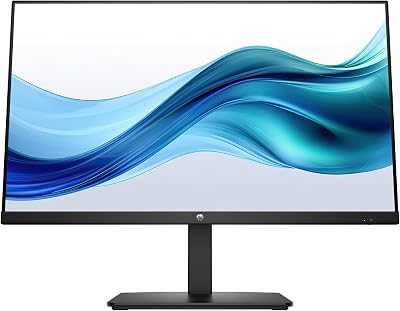
The number of dimming zones directly determines how precisely a panel can control brightness across different regions of the screen simultaneously. A monitor with 16 zones will produce visible halo artifacts around bright objects on dark backgrounds. A panel with 1,000+ zones (like modern Mini-LED flagships) significantly reduces this blooming. OLED side-steps the issue entirely with per-pixel control.
Peak Brightness and Color Gamut
For HDR to look dramatic, peak brightness matters enormously. A panel needs at minimum 600 nits to begin showing the “punch” that makes HDR worthwhile; 1,000 nits is where most users describe the “wow” reaction. DCI-P3 color gamut coverage is the standard reference for HDR color — aim for 95% coverage or above. Panels at 90% or below will render HDR content with noticeably muted colors in certain hues, particularly deep reds and saturated greens.
HDR10 vs HDR10+ vs Dolby Vision
HDR10 is the baseline open standard supported by virtually every HDR monitor and game. HDR10+ adds dynamic metadata, allowing the brightness mapping to adjust scene-by-scene rather than relying on a single static peak brightness value — it is more efficient on lower-brightness panels. Dolby Vision is a proprietary premium format requiring licensing, used primarily in home theater displays and some high-end gaming monitors; its dynamic metadata system is similar to HDR10+ but with tighter quality control. For PC gaming in 2026, HDR10 support covers the vast majority of titles; HDR10+ support is a bonus.
How to Choose the Best HDR Gaming Monitor
HDR Tier: DisplayHDR 400 vs 600 vs 1000
Your budget largely determines the HDR tier accessible to you. DisplayHDR 400 monitors cost the least but deliver the least convincing HDR experience — if HDR quality is a priority, treating 400 as the absolute floor rather than a target is advisable. DisplayHDR 600 monitors strike a genuine value balance, producing HDR that looks noticeably better than SDR without the premium of flagship hardware. DisplayHDR 1000 and above represents the tier where HDR becomes a primary reason to buy the display rather than a secondary feature — the brightness headroom for specular highlights, fire, explosions, and bright sky scenes creates a fundamentally different visual experience.

Panel Technology: OLED vs Mini-LED vs VA HDR
Choose OLED if contrast depth and black levels are your primary HDR priority — the infinite contrast ratio and per-pixel dimming make dark scenes, space environments, and horror games look extraordinary. Accept the trade-off of lower absolute peak brightness compared to Mini-LED flagships. Choose Mini-LED if peak brightness matters most and you primarily game in a bright room — the 1,500–2,000 nit capability of flagship Mini-LED panels makes HDR visible even under ambient lighting. Choose VA Mini-LED for a cost-conscious path to solid HDR, particularly if you want 4K at a price below premium OLED options.
Resolution and GPU Requirements for HDR
Running HDR at 4K resolution is GPU-intensive. To push a 4K HDR monitor at 120Hz or above with maximum settings, an RTX 4080 or RX 7900 XTX represents the practical minimum for demanding AAA titles. At 1440p HDR, an RTX 4070 or RX 7800 XT handles most games at high refresh rates comfortably. Buying a 4K HDR monitor without the GPU to drive it at acceptable frame rates will result in either HDR being disabled for performance or resolution being reduced — both defeat the purpose of the investment.
Refresh Rate vs HDR Quality Trade-offs
Higher refresh rates and peak HDR brightness are in constant tension on the same panel — many monitors reduce maximum brightness when running at 144Hz or above compared to their rated peak. Verify whether the monitor’s peak brightness specification applies at its maximum refresh rate before purchasing. OLED panels in particular may throttle sustained brightness to manage panel longevity, meaning peak brightness is achievable only on small highlight windows rather than sustained full-screen output. For competitive gaming where refresh rate matters more than HDR fidelity, a DisplayHDR 600 monitor at 240Hz is often a better fit than a DisplayHDR 1000 panel that sacrifices framerate for brightness.
Final Verdict
For most PC gamers, the LG 27GR95QE-B OLED is the best HDR gaming monitor in 2026 — its infinite contrast ratio, 240Hz refresh rate, and DisplayHDR True Black 400 certification deliver an HDR experience that no LCD at a comparable price can match. If your priority is 4K resolution with the widest possible color volume, the ASUS ROG Swift PG32UCDM justifies its premium for serious enthusiasts who demand the absolute best their system can render.
Frequently Asked Questions
Is HDR worth it on a gaming monitor?
True HDR adds striking contrast, brighter highlights, and richer color in supported games and media. It is well worth it on a monitor with real HDR capability, but weak HDR adds little.
What HDR specs should I look for?
Look for high peak brightness, ideally 600 nits or more, plus local dimming or an OLED panel and DisplayHDR certification. Avoid entry-level HDR monitors that cannot deliver a real HDR effect.
Why does my monitor HDR look washed out?
Often it is a low-end panel lacking the brightness and local dimming for proper HDR, or incorrect Windows and game HDR settings. Genuine HDR needs capable hardware plus correct configuration.
OLED or Mini-LED for HDR gaming?
OLED delivers perfect blacks and per-pixel contrast for the best HDR depth, while Mini-LED gets brighter and avoids burn-in risk. Both are excellent; choose based on brightness needs and budget.
Related Articles
Looking for more on this topic? Browse the hand-picked guides below — each one applies the same scoring rubric used in this review.