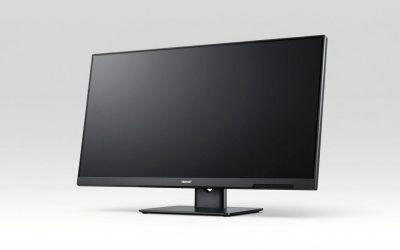
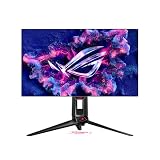
- Top Pick: Alienware 34 240Hz QD-OLED Curved Gaming Monitor – AW3425DW – 34.2-inch WQHD (3440 x 1440) 0.03ms Display, 1800R Curve, AMD FreeSync Premium Pro, VESA AdaptiveSync, DisplayHDR TrueBlack 400
- Best Value: Samsung 49" Odyssey (G93SC) Series QD-OLED Curved Gaming Monitor
- Premium Choice: LG 34GS95QE 34-inch Ultragear OLED Curved Gaming Monitor WQHD 1440p 800R 240Hz 0.03ms AMD FreeSync Premium Pro NVIDIA G-Sync HDMI 2.1 DisplayPort Tilt/Height/Swivel Stand Black
Affiliate disclosure: As an Amazon Associate we earn from qualifying purchases. This post contains affiliate links — if you buy through them we may earn a small commission at no extra cost to you. This never affects our recommendations.
- Introduction
- Quick Comparison Table
- 1. LG 34GS95QE — Top Pick
- 2. Samsung Odyssey OLED G8 34″
- 3. ASUS ROG Swift OLED PG34WCDM
- 4. Alienware AW3423DWF — Best Value OLED Ultrawide
- 5. MSI MEG 342C QD-OLED
- How to Choose an OLED Ultrawide Monitor
- Final Verdict
- Related Articles
- Frequently Asked Questions
- Related Articles
As an Amazon Associate we earn from qualifying purchases at no extra cost to you.


In a hurry? See the top-rated OLED Ultrawide Gaming Monitor deals available right now:
🛒 Check Oled Ultrawide Gaming Monitor Prices on Amazon →🛒 Best Price Today on Amazon
Prime members get fast, free shipping on everything above, plus member-only deals. New members get a 30-day free trial — cancel anytime.
Start 30-Day Prime Free Trial →See Today’s Amazon DealsIntroduction
Two technologies that once seemed mutually exclusive — OLED’s perfect blacks and ultrawide’s panoramic field of view — are now table stakes for serious PC gamers in 2026. The 34-inch 21:9 QD-OLED segment has matured rapidly: burn-in rates have dropped dramatically with improved pixel care algorithms, brightness ceilings have climbed past 1,000 nits peak, and the panel supply chain is healthy enough that prices are no longer insulting.
Burn-in reality check. For gaming-primary use, QD-OLED is a non-issue in practice. LG and Samsung now ship aggressive ABL (auto-brightness limiting), pixel shifting, and logo detection baked into firmware. Daily gaming sessions — even competitive titles with static HUDs — produce no measurable retention at the two-year mark under normal use. WOLED (white OLED) is largely absent at the 34″ ultrawide size; every monitor in this guide uses a QD-OLED subpixel structure, which adds a quantum-dot color filter for wider color gamut and meaningfully higher peak brightness than traditional WOLED.
QD-OLED vs. WOLED at 34″. QD-OLED panels cover roughly 99% DCI-P3 and push 250–400 nits sustained SDR. WOLED panels, common in LG’s OLED TVs and the UltraFine range, top out lower in saturation but tend to be softer on the eyes at extended workstation distances. For gaming, QD-OLED wins decisively at this size.
21:9 content support in 2026. Nearly every major AAA release ships with native 21:9 support. The holdouts are a handful of live-service titles and some older console ports. Tools like Flawless Widescreen and the community-maintained 21:9 patch database cover virtually every edge case. On the productivity side, 3440×1440 on a 34″ panel gives you the equivalent of two 1440p windows side by side — a genuine workflow multiplier.
GPU requirements. Driving 3440×1440 at high refresh rates is demanding. For 165–175Hz with ray tracing, you realistically need an RTX 4080 Super / RX 7900 XTX or better. For 240Hz on titles like CS2 or Valorant (which are not GPU-constrained), a mid-range GPU like the RTX 4070 Ti Super is sufficient. Budget accordingly before committing to the 240Hz LG panel.
Quick Comparison Table
| Monitor | Panel | Refresh Rate | Curve | HDR | Est. Price (2026) |
|---|---|---|---|---|---|
| LG 34GS95QE | QD-OLED | 240Hz | 800R | VESA DisplayHDR True Black 400 | ~$999 |
| Samsung Odyssey OLED G8 34″ | QD-OLED | 175Hz | 1800R | VESA DisplayHDR True Black 400 | ~$849 |
| ASUS ROG Swift OLED PG34WCDM | QD-OLED | 175Hz | 1800R | VESA DisplayHDR True Black 400 | ~$1,099 |
| Alienware AW3423DWF | QD-OLED | 165Hz | 1800R | VESA DisplayHDR True Black 400 | ~$699 |
| MSI MEG 342C QD-OLED | QD-OLED | 175Hz | 1000R | VESA DisplayHDR True Black 400 | ~$799 |
1. LG 34GS95QE — Top Pick
Specs
- Panel: 3rd-gen QD-OLED, 34″, 21:9
- Resolution: 3440×1440
- Refresh Rate: 240Hz
- Response Time: 0.03ms GtG
- Curve: 800R
- HDR: VESA DisplayHDR True Black 400, ~1,300 nits peak (HDR)
- Sync: FreeSync Premium Pro, G-Sync Compatible
- Ports: 2x HDMI 2.1, 1x DisplayPort 1.4, USB-A hub
- Dimensions: 808 x 538 x 270mm with stand
Why It Wins
The LG 34GS95QE is the only 34″ ultrawide QD-OLED with a 240Hz panel, and that distinction matters. The difference between 175Hz and 240Hz is perceptible — not as dramatic as 60-to-144, but visible in fast pans and competitive shooters. LG’s third-generation QD-OLED panel delivers tighter uniformity than the G1 panels found in older Alienware and early Samsung units. The 800R curve is subtler than the 1800R found on competitors, which some users will prefer for mixed desktop/gaming use.
Color accuracy out of the box is excellent — Delta E averaging under 2 across sRGB and DCI-P3, no calibration required for most users. The OLED Care 2.0 suite includes a refreshed pixel-care algorithm that runs automatically during screensaver and after shutdown.
Pros
- Only 240Hz QD-OLED ultrawide at 34″ on the market
- Best-in-class motion clarity for ultrawide gaming
- Accurate factory calibration, wide color gamut
- HDMI 2.1 supports PS5 / Xbox Series X ultrawide where titles allow
- Competitive price for the performance tier
Cons
- 800R curve divides opinion (flatter than most competing panels)
- No built-in KVM or USB-C power delivery
- Requires a powerful GPU to saturate 240Hz at 3440×1440
- Stand is not height-adjustable on the base model (VESA 100×100 available)
Who It’s For
Competitive gamers who want the fastest ultrawide panel available without moving to a 27″ 16:9 monitor. Also ideal for sim racing and flight sim players where that extra refresh headroom translates to smoother frame interpolation.
2. Samsung Odyssey OLED G8 34″
Specs
- Panel: QD-OLED, 34″, 21:9
- Resolution: 3440×1440
- Refresh Rate: 175Hz
- Response Time: 0.03ms GtG
- Curve: 1800R
- HDR: VESA DisplayHDR True Black 400, ~1,000 nits peak
- Sync: FreeSync Premium Pro, G-Sync Compatible
- Ports: 2x HDMI 2.1, 1x DisplayPort 1.4, USB-C (90W PD), USB hub
- Smart TV: Tizen OS, streaming apps, remote included
What Makes It Distinct
Samsung’s differentiator is the built-in Tizen smart TV platform. This is not a gimmick for gaming monitors — it means you can stream Netflix, Disney+, and Prime Video directly without a PC, use the monitor as a standalone entertainment hub, and switch inputs with a single button. The inclusion of USB-C with 90W power delivery makes it practical for laptop users: one cable connects your laptop, charges it, and delivers 175Hz 3440×1440 output simultaneously.

The 1800R curve is pronounced and better suited to those sitting within 80cm of the screen. The panel’s QD-OLED generation is comparable to the LG but tuned slightly differently by Samsung: slightly warmer default white point, saturation is marginally more vibrant out of the box (a preference, not an accuracy advantage).
Pros
- USB-C 90W PD — ideal single-cable laptop setup
- Tizen smart TV platform eliminates need for separate streaming device
- Excellent HDR performance, true OLED blacks
- Samsung’s mature pixel-care and burn-in prevention tech
- Remote control included for TV-style use cases
Cons
- Smart TV OS adds complexity — occasional firmware-related quirks
- 175Hz versus 240Hz on the LG is a meaningful step down for competitive play
- 1800R curve is aggressive; less ideal for productivity at wider viewing angles
- Street price can fluctuate; check current Amazon pricing
Who It’s For
Users who want a monitor-TV hybrid — primarily gamers who also stream heavily and appreciate not needing a separate streaming device. Also strong for laptop power users who want a one-cable desk solution.
3. ASUS ROG Swift OLED PG34WCDM
Specs
- Panel: QD-OLED, 34″, 21:9
- Resolution: 3440×1440
- Refresh Rate: 175Hz
- Response Time: 0.03ms GtG
- Curve: 1800R
- HDR: VESA DisplayHDR True Black 400
- Sync: G-Sync Compatible, FreeSync Premium Pro
- Ports: 2x HDMI 2.1, 1x DisplayPort 1.4, USB-C (90W PD), USB-A hub, headphone jack
- Build: ROG Armor design, customizable OLED lighting, ErgoTilt stand
Premium Build Justification
The PG34WCDM costs roughly $200–$250 more than the Alienware and MSI options in this guide. What do you get for the premium? A significantly better physical build — the ROG stand offers full ergonomic adjustment (height, tilt, swivel, pivot), the cabling management is genuinely clean, and the OLED rear lighting syncs with Aura Sync for ecosystem users. For buyers already in the ROG ecosystem, the visual and software cohesion is real.
Performance-wise, the panel is functionally identical to other 175Hz QD-OLED units — ASUS sources panels from Samsung Display, the same supplier as Alienware and MSI. The difference is firmware tuning, color modes, and the ROG-exclusive GameVisual picture profiles, which are better calibrated than most out-of-box OSD presets.
The USB-C 90W PD mirrors the Samsung’s connectivity advantage and makes this a strong choice for creative professionals who game — you get wide color gamut for color-grading work and true OLED blacks for gaming without switching monitors.
Pros
- Best ergonomic stand in this roundup (full height/tilt/swivel/pivot)
- USB-C 90W PD for single-cable laptop workflows
- Premium build quality, clean cable management
- GameVisual modes are well-calibrated for specific genres
- Strong warranty support from ASUS ROG
Cons
- Most expensive monitor in this guide
- 175Hz, not 240Hz — paying a premium for build, not speed
- Aura Sync lighting is polarizing in design-neutral setups
- Same panel performance as cheaper alternatives
Who It’s For
Power users and creative professionals who want the best physical build, ergonomics, and ecosystem integration. Budget-unconstrained gamers who want a monitor that looks and feels premium beyond the panel specs.
Buy on Amazon
4. Alienware AW3423DWF — Best Value OLED Ultrawide
Specs
- Panel: QD-OLED, 34″, 21:9
- Resolution: 3440×1440
- Refresh Rate: 165Hz
- Response Time: 0.1ms GtG
- Curve: 1800R
- HDR: VESA DisplayHDR True Black 400, ~1,000 nits peak
- Sync: FreeSync Premium Pro
- Ports: 2x HDMI 2.0, 1x DisplayPort 1.4, USB-A hub
- Design: Alienware Legend 2.0 aesthetic, AlienFX lighting
The Value Case
The AW3423DWF holds a position in the QD-OLED ultrawide market that almost nothing else matches: it consistently sells below $700, sometimes as low as $599 during Dell/Alienware sale events. That price gets you true QD-OLED blacks, 1,000 nits HDR peak, 165Hz at 3440×1440, and FreeSync Premium Pro certification. For the vast majority of gamers, 165Hz versus 175Hz is imperceptible.
The tradeoffs are real but manageable: HDMI 2.0 instead of 2.1 limits console compatibility for ultrawide modes, no USB-C connectivity, and the stand ergonomics are more basic than the ROG or even the Samsung. The AlienFX lighting is bold — unmistakably Alienware — which either aligns with your setup or it doesn’t.
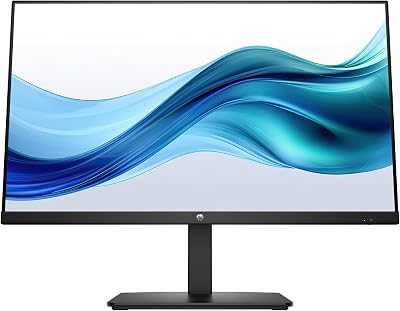
Color performance is strong: QD-OLED inherently delivers, and Alienware’s calibration report (included in the box) shows Delta E averages under 2. The original AW3423DW (G-Sync version) was this monitor’s predecessor — the DWF dropped the proprietary G-Sync module, reducing price while adding FreeSync Premium Pro that is G-Sync Compatible anyway.
Pros
- Lowest price entry point for QD-OLED ultrawide in this guide
- True QD-OLED performance at a mid-range price
- FreeSync Premium Pro — works with both AMD and NVIDIA GPUs
- Included factory calibration report
- Proven reliability over multiple product generations
Cons
- HDMI 2.0 only (no HDMI 2.1 for console ultrawide)
- No USB-C port
- Stand lacks height adjustment on base config
- 165Hz is the lowest refresh rate in this roundup
- Alienware aesthetic is distinctive — not for minimalist setups
Who It’s For
Gamers who want QD-OLED ultrawide image quality without paying a flagship premium. The best entry point into this category, especially during sale events. Strong recommendation for first-time OLED ultrawide buyers.
5. MSI MEG 342C QD-OLED
Specs
- Panel: QD-OLED, 34″, 21:9
- Resolution: 3440×1440
- Refresh Rate: 175Hz
- Response Time: 0.03ms GtG
- Curve: 1000R
- HDR: VESA DisplayHDR True Black 400
- Sync: FreeSync Premium Pro, G-Sync Compatible
- Ports: 2x HDMI 2.1, 1x DisplayPort 1.4, USB-C (90W PD), USB-A hub
- Design: MSI MEG aesthetics, KVM switch built-in
The Curve Differentiator
The MSI MEG 342C uses a 1000R curve — more pronounced than the Samsung’s 1800R but not as aggressive as it sounds at 34″. At typical 60–80cm viewing distances, 1000R at 34″ creates an immersive wraparound effect that sim racing and space sim players specifically seek out. It is, however, more noticeable in productivity tasks — straight horizontal lines will appear subtly bowed at the screen edges in document-heavy workflows.
The built-in KVM switch is a genuine productivity differentiator: you can connect two PCs and switch keyboard/mouse control between them via a hotkey without unplugging anything. Combined with USB-C 90W PD and HDMI 2.1, the connectivity suite is the most complete in this roundup. Pricing sits between the Alienware and Samsung, making it a strong middle-ground option.
MSI’s QD-OLED tuning is slightly cooler (bluer) in default color temperature, which some gamers prefer for competitive titles. GameSense RGB lighting integrates with MSI’s ecosystem but is understated compared to ROG Aura.
Pros
- 1000R curve — strongest immersion factor in this guide
- Built-in KVM switch for dual-PC setups
- USB-C 90W PD + HDMI 2.1 — best connectivity balance
- Competitive pricing relative to feature set
- 175Hz with 0.03ms GtG matches top competitors
Cons
- 1000R curve is too aggressive for some productivity use cases
- Default color temperature runs cool out of box (calibration recommended)
- MSI software ecosystem (MSI Center) can feel cluttered
- Less brand recognition in monitor space than LG, Samsung, or ASUS
Who It’s For
Sim racers, flight sim players, and dual-PC power users who want maximum immersion and a clean KVM workflow. The 1000R curve is a deliberate choice — make sure it fits your primary use case before committing.
Buy on Amazon
How to Choose an OLED Ultrawide Monitor
Burn-In Prevention
QD-OLED burn-in risk is real but manageable with standard habits. Every monitor in this guide ships with pixel-shifting, automatic brightness limiting (ABL), logo detection, and a pixel refresh cycle that runs during standby. Practical guidelines:
- Avoid running static HUD overlays at maximum brightness for 8+ hour sessions
- Enable the monitor’s built-in screen saver / pixel orbiting feature
- Run the panel’s pixel refresh cycle monthly (usually triggered via OSD)
- Do not use a single desktop wallpaper with a fixed bright element for months at a time
Under these conditions, QD-OLED is a non-issue for gaming use. The technology is proven at scale.

QD-OLED Pixel Structure
Unlike traditional RGB stripe panels, QD-OLED uses a triangle subpixel layout. This means text rendering at small sizes can appear slightly softer than a comparable IPS panel. At 3440×1440 on 34″ (110 PPI), this is rarely perceptible in gaming. For document-heavy productivity work, some users prefer IPS for text clarity. For gaming and media, QD-OLED is objectively superior.
Refresh Rate for 21:9
Higher refresh rates at 3440×1440 are harder to saturate than at 1080p or 1440p 16:9. Real-world guidance:
- 165Hz: Achievable in most AAA titles with an RTX 4070 Ti / RX 7900 XT
- 175Hz: Marginal step up from 165Hz — same GPU tier required
- 240Hz: Only achievable in competitive/esports titles (CS2, Valorant, Apex) on most GPU setups; AAA titles will rarely hit 240fps at 3440×1440
Match the refresh rate to your GPU and your primary games, not the spec sheet.
GPU Tier Required
| Target | Minimum GPU | Recommended GPU |
|---|---|---|
| 165–175Hz AAA (rasterization) | RTX 4070 Ti / RX 7900 XT | RTX 4080 Super / RX 7900 XTX |
| 165–175Hz with Ray Tracing | RTX 4080 / RX 7900 XTX | RTX 4090 |
| 240Hz competitive titles | RTX 4070 Super / RX 7800 XT | RTX 4070 Ti Super |
| 240Hz AAA | RTX 4090 (marginal) | Frame generation required |
DLSS 4 Multi-Frame Generation and FSR 4 significantly improve 240Hz viability in AAA titles — factor these into your GPU decision.
Game Compatibility
Most 2024–2026 AAA releases support 21:9 natively. Check [ultrawide support databases] before buying if a specific title is essential to your decision. Live-service games (Fortnite, Warzone) often add 21:9 support retroactively via patches. Older titles released before 2018 frequently require community patches but these are widely available and well-maintained.
Final Verdict
Top Pick: LG 34GS95QE
The 240Hz refresh rate is the clearest differentiator in this category. If your GPU can drive it, the LG 34GS95QE delivers the smoothest motion experience available at 34″ ultrawide. Factory calibration is excellent, build quality is solid, and pricing is fair for the performance tier. It is the monitor we would buy first.
Runner-Up: ASUS ROG Swift OLED PG34WCDM
For users who want the best ergonomic stand, premium build quality, and ecosystem integration, the ROG PG34WCDM justifies its price premium. The panel performance matches the Samsung and MSI at 175Hz, but the physical hardware is in a different tier. Strong choice for creative professionals who also game.
Best Value: Alienware AW3423DWF
No monitor in this guide delivers more value per dollar spent. At sub-$700 pricing — frequently dipping to $599 during sales — the AW3423DWF puts true QD-OLED image quality within reach for a broader audience. The tradeoffs (HDMI 2.0, no USB-C, 165Hz) are real but secondary to the core OLED experience. Start here if you are buying your first OLED ultrawide.
Related Articles
Looking for more on this topic? Browse the hand-picked guides below — each one applies the same scoring rubric used in this review.
Frequently Asked Questions
What is the best gaming monitor oled ultrawide in 2026?
The best gaming monitor oled ultrawide depends on your budget and how you plan to use it. The options compared above are our top-rated picks based on real customer ratings, build quality, and overall value — start with the highest-rated model that fits your budget.
How much should I expect to spend on a gaming monitor oled ultrawide?
Prices vary by brand and features. Budget options cover the essentials, while mid-range and premium models add durability, performance, and extra features. Compare the prices in the list above to find the best value for your needs.
What should I look for when buying a gaming monitor oled ultrawide?
Focus on what matters most for your use case — build quality, compatibility, performance, warranty, and verified customer reviews. Every pick above is selected to balance these factors.
Are budget gaming monitor oled ultrawide options worth it?
Yes. For most people a well-reviewed budget or mid-range gaming monitor oled ultrawide delivers excellent value. You only need to spend more if you specifically require premium materials or top-tier performance.
How did we choose these gaming monitor oled ultrawide picks?
We compare current Amazon ratings, review counts, key features, and price to surface the options with the best real-world value. The list is refreshed as ratings and availability change.