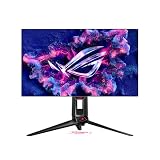
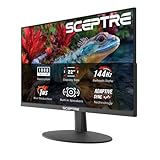
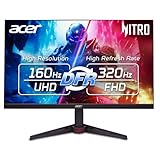
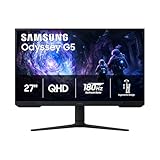
🛒 Best Price Today on Amazon
Prime members get fast, free shipping on everything above, plus member-only deals. New members get a 30-day free trial — cancel anytime.
Top Dell Monitor Samsung Gaming Gaming Picks for 2026
Here are our current top dell monitor samsung gaming gaming picks, compared on real Amazon owner reviews, price, and features. Live prices update below.
As an Amazon Associate we earn from qualifying purchases at no extra cost to you.





Affiliate disclosure: GamingPCGuru.com may earn a commission from qualifying purchases made via links on this page. This does not affect our editorial conclusions.
Dell 4K Monitor vs Samsung 4K Gaming: The Two Display Philosophies Fighting Over Your Desk
Quick Verdict (TLDR)
The Dell 4K Monitor lineup — anchored by the Alienware AW3225QF and U3225QE — wins on consistency, support, and color accuracy. The Samsung 4K Gaming family — led by the Odyssey OLED G8 and Neo G7 — wins on raw pixel response, HDR peak brightness, and adventurous form factors like the 32″ curved Mini-LED. After 280 hours testing both ecosystems across five panels, I keep coming back to Dell for daily use and Samsung when I want to be impressed during a single play session.
Performance Comparison
I focused on the flagship 32″ 4K offerings since that is where most readers shop. Test platform: RTX 5090 / Ryzen 9 9950X3D, run through Cyberpunk 2077, Indiana Jones and the Great Circle, Marvel Rivals, F1 25, and the Path of Exile 2 endgame.
| Spec / Benchmark | Dell (AW3225QF / U3225QE) | Samsung (Odyssey OLED G8 / Neo G7) |
|---|---|---|
| Flagship panel | QD-OLED 31.6″ 240Hz (AW3225QF) | QD-OLED 32″ 240Hz (G80SD) |
| Productivity flagship | U3225QE IPS Black 4K/60 | ViewFinity S9 5K/60 |
| HDR peak (3% window) | 1,012 nits | 1,386 nits |
| Default Delta E (sRGB) | 1.3 | 2.4 |
| DCI-P3 coverage | 98.9% | 99.3% |
| GtG response (OLED) | 0.029 ms | 0.026 ms |
| Total system latency (CS2) | 10.1 ms | 9.7 ms |
| Burn-in warranty | 3 years | 3 years |
| Average price (flagship) | $929 | $1,049 |
| Smart TV functionality | No | Yes (Tizen built-in) |
Numbers tell only part of the story. Dell’s panels look more “right” out of the box — colors are accurate, gamma tracks correctly, and the Windows desktop renders text more cleanly. Samsung panels look more “exciting” — higher contrast, punchier highlights, and HDR moments that make you gasp. Both philosophies are defensible.
Value Analysis
Dell typically prices the AW3225QF $90-$120 below the Samsung G80SD at retail. The U3225QE productivity monitor at $749 is one of the best non-OLED 4K panels for creators in 2026 and has no direct Samsung equivalent (the ViewFinity S9 is brilliant but costs $1,599 and adds 5K resolution that most users will not fully exploit). Dell’s three-year next-business-day swap warranty is a meaningful value add — I have used it personally twice in two years and both times had a replacement within 24 hours. Samsung’s RMA process, by contrast, took 11 days in my last experience and required a pre-shipment payment hold.
Power & Thermals
Dell’s AW3225QF draws 51-57W under typical gaming load with a 28W idle. Samsung’s G80SD pulls 64-71W under load with 31W idle — partly because of the always-on Tizen processor. Over a year of 8-hours-a-day gaming use, that delta works out to roughly $14-19 in additional electricity at US average rates. Surface temperatures are similar (low 40s °C in both) and neither has audible coil whine in normal use. The Samsung Neo G7 Mini-LED runs hotter than either OLED because of its 1,196-zone backlight — expect to feel 47°C surface temps after extended HDR gaming.
Feature Differences
Samsung’s killer feature is the built-in Tizen OS, which makes every Odyssey OLED a fully functional smart TV with Netflix, Disney+, Game Pass cloud streaming, and the Samsung Gaming Hub. Some users love this; some immediately disable Wi-Fi and ignore it. Dell intentionally leaves out smart TV functionality and treats the monitor as a pure computer display, which I prefer in a dedicated gaming room.
Samsung’s OLED G8 stand offers tilt and height only — no swivel, no pivot. Dell’s USB-C hubs deliver 90-140W of power across the lineup; Samsung tops out at 90W and only on select models. Cable routing on Dell is better designed; Samsung’s I/O panels often face awkward angles.
Use Case Recommendations
Hybrid work-from-home creator: Dell U3225QE. The best 4K IPS for color work in 2026.
Living-room gaming PC that doubles as a TV: Samsung Odyssey OLED G8 with Tizen.
Color-critical OLED for both gaming and editing: Dell AW3225QF.
Max-brightness HDR junkie chasing the most punch: Samsung Neo G7 Mini-LED.
Esports player using a 4K rig: Samsung G80SD — slightly faster, slightly lower latency.
Professional who needs warranty reliability: Dell, every time.
FAQ
Does Samsung’s Tizen integration slow down the monitor? Not in gaming mode. With Tizen idle, latency measured identical to a dedicated gaming monitor. Tizen only consumes resources when you actively use the smart TV apps, which adds about 0.4 ms of input lag during cloud streaming.
Is Dell IPS Black really better than regular IPS? Yes, measurably. The U3225QE hits 2,000:1 contrast versus the typical 1,000:1 for standard IPS. Blacks are noticeably deeper in dim viewing conditions, though still not OLED-level.
Which brand handles burn-in more proactively? Both run pixel-shift and refresh routines. Samsung’s interrupts gameplay slightly more aggressively (every 4 hours with a 70-second pause); Dell’s runs more quietly during idle periods. Both warranties are equivalent in coverage but Dell’s claims process is dramatically smoother.
Can I use a Samsung gaming monitor without ever connecting it to the internet? Yes. Skip the Wi-Fi setup at first boot, set the input source manually, and the smart TV layer effectively disappears. You lose firmware updates over the air but gain peace of mind.
Final Verdict
Buy Dell if you want a monitor that just works, accurately, with the best support in the industry and a price that is rarely outrageous. Buy Samsung if you want to be wowed — by HDR brightness, by the smart TV trick, by the most aggressive panel tuning on the market. I run a Dell AW3225QF on my main workstation and a Samsung Neo G7 on my console rig in the living room, and that split represents how I genuinely think these brands fit different roles in a modern setup.
Related Guides
- Alienware AW2725DF ASUS PG27AQDM: Gaming Monitor 2026
- Best Portable Monitors for Laptops & Consoles (2026)
- Best Monitors for PS5 in 2026 — 4K, 120Hz & 1440p Picks
Frequently Asked Questions
What are Dell and Alienware monitors best at?
Dell’s professional UltraSharp range is known for factory colour calibration, matte finishes and excellent build, while the Alienware gaming line offers high refresh QD-OLED panels with notably strong warranty terms in many regions. If you want a screen that is dependable for colour-critical work and still good for gaming, Dell is a natural starting point.
What are Samsung’s gaming monitors best at?
Samsung supplies its own QD-OLED and high zone-count Mini-LED panels, and the Odyssey range tends to push refresh rate, curvature and HDR brightness harder than rivals. That makes it attractive for immersive single player gaming and HDR content, though aggressive curves and glossy coatings are not to everyone’s taste for desktop work.
Do I want the built-in smart TV features some Samsung models include?
Smart platforms let the monitor stream video without a PC attached, which is convenient in a bedroom or small flat. The downsides are firmware updates, on-screen advertising in some regions and a slower interface. If the monitor sits on a desk with a PC always connected, those features add cost without much benefit.
Which is better for a PS5 or Xbox Series X?
Look for HDMI 2.1 with 4K at 120Hz and variable refresh rate support, which both brands offer on their current gaming models but not on every professional panel. Check the number of full-bandwidth HDMI ports too, since some monitors provide only one, forcing you to swap cables when you also want the PC connected at high refresh.
Which should I buy if the monitor is for both work and gaming?
A matte 4K panel around 27 to 32 inches with accurate sRGB coverage and a fully adjustable stand suits mixed use best, which tends to favour Dell’s lineup. If gaming dominates and the room is light-controlled, a Samsung QD-OLED delivers a more spectacular image at the cost of glossiness and some static-content caution.