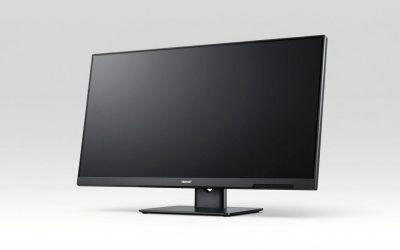
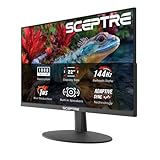
- Top Pick: Sceptre New 22-Inch Gaming Monitor, FHD 1080p, Up to 144Hz, HDMI, DisplayPort, Built-in Speakers, Machine Black (E225W-FW144 Series, 2026)
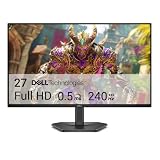
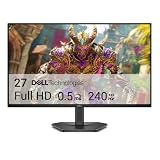
- Best Value: Dell 27 240Hz Gaming Monitor – SE2726HG – 27-inch FHD (1920×1080) 240Hz Display, in-Plane Switching (IPS) Technology, AMD FreeSync Premium, TÜV 3-Star, 2X HDMI, DisplayPort 1.4, Tilt
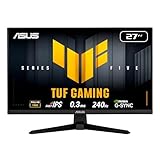
- Premium Choice: ASUS TUF Gaming 24” (23.8” viewable) 1080P Monitor (VG249QE5A) – FHD, 144Hz Overclock to 146Hz, IPS, Extreme Low Motion Blur Sync, 1ms, Speakers, Variable Overdrive, DisplayWidget Center, 3yr Warranty
Affiliate disclosure: As an Amazon Associate we earn from qualifying purchases. This post contains affiliate links — if you buy through them we may earn a small commission at no extra cost to you. This never affects our recommendations.
In 2025, 1080p gaming monitors remain the dominant choice for competitive gaming, entry-level setups, and secondary display configurations. The reasoning is straightforward: 1080p requires less GPU power to drive at high frame rates, enabling smooth 144Hz, 165Hz, or 200Hz+ gameplay on mid-range graphics cards that would struggle to push 1440p at comparable speeds.
For competitive gamers in CS2, Valorant, Overwatch 2, and Apex Legends, a high-refresh-rate 1080p monitor is often the superior choice over a 1440p display — the extra clarity of higher resolution matters far less than the fluidity of 200+ fps gameplay. Even for casual and single-player gamers, 1080p at 144Hz+ delivers a visibly smoother experience than 4K at 30–60fps on equivalent hardware budgets.
We evaluated response time, panel technology, refresh rate, adaptive sync support, and price-to-performance to identify the best 1080p monitors available in 2025.
In a hurry? See the top-rated 1080p Gaming Monitors deals available right now:
🛒 Check 1080P Gaming Monitors Prices on Amazon →🛒 Best Price Today on Amazon
Prime members get fast, free shipping on everything above, plus member-only deals. New members get a 30-day free trial — cancel anytime.
Start 30-Day Prime Free Trial →See Today’s Amazon DealsTop Picks at a Glance
| Product | Size | Refresh Rate | Panel | Best For |
|---|---|---|---|---|
| SANSUI 24″ 1500R 160Hz | 24″ | 160Hz | VA Curved | Best budget curved |
| Gawfolk 24.5″ 200Hz | 24.5″ | 200Hz | IPS | Best value 200Hz |
| Sceptre 22″ 144Hz | 22″ | 144Hz | TN | Best absolute budget |
| LG 27GS50F 180Hz | 27″ | 180Hz | IPS | Best overall |
| Dell SE2726HG 240Hz | 27″ | 240Hz | IPS | Best 240Hz value |
As an Amazon Associate we earn from qualifying purchases at no extra cost to you.





SANSUI 24″ 1500R 160Hz — Best Budget Curved
SANSUI’s 24-inch curved 1080p monitor offers an immersive 1500R curvature and 160Hz refresh rate at a price under $90. The VA panel delivers deeper contrast ratios than IPS at this price point, making dark scenes in horror games and cinematic titles look noticeably richer. The 1500R curve wraps the display comfortably around a typical desk viewing distance, adding perceived depth to gameplay. Response time is rated at 1ms (MPRT), keeping motion blur acceptable at 160Hz. For gamers who want curvature immersion without spending $200+, this SANSUI delivers genuine value.
- Pros: 1500R immersive curve, 160Hz for smooth gameplay, deep VA contrast, sub-$90 price
- Cons: VA panels have slower pixel response than IPS — ghosting visible in fast motion, limited viewing angles
Gawfolk 24.5″ 200Hz — Best Value 200Hz
The Gawfolk 24.5″ is the most notable bargain on this list — a 200Hz IPS panel at around $81. Finding an IPS panel at 200Hz for under $85 was not possible even 18 months ago. IPS panels deliver superior color accuracy and wide viewing angles compared to TN and VA at this resolution, and 200Hz is a meaningful competitive advantage in fast-paced FPS titles. Response time is rated at 1ms GtG, which holds up well on an IPS panel. The monitor’s build quality and stand stability are basic at this price, but the panel performance is the headline purchase reason here.
- Pros: 200Hz IPS panel under $85 — exceptional value, wide viewing angles, 1ms GtG, competitive refresh rate
- Cons: Basic stand with limited adjustability, brand less established than LG/Dell/ASUS, limited warranty support
Sceptre 22″ 144Hz — Best Absolute Budget
The Sceptre 22″ 144Hz is the pick for gamers who need a functional gaming monitor at the absolute floor of the market. At around $69, you get a 144Hz refresh rate — the baseline for smooth gaming — in a compact 22-inch footprint ideal for smaller desks, secondary displays, or bedroom setups. TN panel technology delivers fast response times with the trade-off of narrower viewing angles and less color richness than IPS. For competitive gaming where you sit directly in front of the monitor and prioritize frame rate over color accuracy, the Sceptre 22″ gets the job done efficiently at minimal cost.

- Pros: Lowest price on the list, 144Hz for smooth gaming, compact 22″ for small desks, fast TN response
- Cons: TN panel limited color accuracy and viewing angles, 22″ small for single-monitor productivity, basic feature set
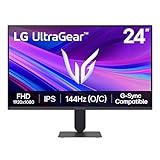
LG 27GS50F 180Hz — Best Overall
LG’s 27GS50F brings the quality assurance of one of the world’s largest panel manufacturers to the 1080p gaming monitor category at a highly competitive price. The IPS panel delivers LG’s characteristic color accuracy — wide color gamut, consistent brightness, and none of the ghosting issues common in budget VA curved panels. At 180Hz, it’s faster than standard 144Hz options without reaching the price premium of 240Hz displays. FreeSync Premium support ensures tear-free performance across a wide frame rate range. The 27-inch size at 1080p results in a pixel density of 82 PPI — comfortable for desk viewing at 50–70cm distance. LG’s build quality and warranty support are industry-leading at this price tier.
- Pros: LG IPS panel quality, 180Hz, FreeSync Premium, trusted brand warranty, 27″ gaming-friendly size
- Cons: 82 PPI pixel density lower than 24″ 1080p — text less sharp for productivity, 1080p limiting at this screen size for some users
Dell SE2726HG 240Hz — Best 240Hz Value
Dell’s SE2726HG is the top pick for competitive gamers who want the maximum refresh rate advantage at 1080p. At 240Hz and around $130 — the same price as the LG 27GS50F 180Hz — the Dell delivers a significantly higher frame rate ceiling, which matters in competitive titles where every rendered frame reduces input lag and improves the fluidity of character movement. The IPS panel maintains Dell’s reliable color consistency, and the SE series’ build quality is well-regarded in the budget monitor space. AMD FreeSync Premium support keeps tearing eliminated through variable refresh rate across the full Hz range. For CS2 and Valorant players who can push 200+ fps consistently, this is the monitor to buy.
- Pros: 240Hz for maximum competitive advantage, IPS panel at around $130, Dell reliability, FreeSync Premium, same price as 180Hz LG
- Cons: 1080p at 27″ lower pixel density, 240Hz advantage only realized if GPU can push 200+ fps consistently
Buying Guide
IPS vs VA vs TN for 1080p Gaming
Panel technology fundamentally shapes your viewing experience. IPS panels offer the best color accuracy, widest viewing angles, and most consistent brightness — making them ideal for both gaming and productivity use. VA panels deliver superior contrast ratios and deeper blacks, making dark scenes look more cinematic, but suffer from slower pixel response and ghosting in fast motion. TN panels have the fastest raw response times and highest potential refresh rates at low cost, but their color reproduction and viewing angles are noticeably inferior. In 2025, IPS panels at competitive refresh rates have dropped in price enough that TN is rarely the ideal choice unless you’re working with the tightest possible budget.

Refresh Rate: How High Do You Need?
The improvement from 60Hz to 144Hz is dramatic and immediately visible to any gamer. The improvement from 144Hz to 200Hz is meaningful for competitive play. The improvement from 200Hz to 240Hz is subtle and primarily valuable in professional esports contexts. Unless you’re playing competitively at a high level where every frame matters, 144–165Hz is the sweet spot. 200–240Hz monitors on this list are excellent for competitive players whose GPU can consistently output 150+ fps.
Screen Size and Pixel Density at 1080p
1080p resolution distributes pixels across the screen area, so larger screens have lower pixel density (less sharpness). A 22″ 1080p monitor is noticeably sharper per pixel than a 27″ 1080p monitor. For purely gaming use at typical desk distances (50–70cm), 27″ 1080p is comfortable. For mixed productivity and gaming use where you read text and browse at the monitor, a 24″ delivers a sharper experience. 32″ and larger monitors at 1080p will show visible pixelation at standard viewing distances — avoid 1080p at 32″ and above.

Adaptive Sync: FreeSync vs G-Sync
All five monitors on this list support AMD FreeSync, which works with AMD Radeon GPUs and also functions on most NVIDIA RTX/GTX cards via “G-Sync Compatible” mode. FreeSync eliminates screen tearing by synchronizing the monitor’s refresh rate to the GPU’s output frame rate in real time. This is particularly valuable at 1080p where frame rates vary more dramatically across gaming scenarios. If you have an NVIDIA GPU, verify the monitor is “G-Sync Compatible” certified for optimal performance — most FreeSync monitors on this list qualify.
Response Time: GtG vs MPRT
Monitor manufacturers use two response time measurements: Gray-to-Gray (GtG) measures actual pixel transition speed, while MPRT (Moving Picture Response Time) is a perceived blur metric often artificially enhanced by backlight strobing. A 1ms MPRT rating on a VA panel does not mean the panel transitions pixels as fast as a 1ms GtG IPS panel. When comparing monitors, prioritize GtG specifications from independent reviews rather than manufacturer MPRT claims. In practice, any IPS panel at 144Hz or higher will deliver visually smooth motion in gaming scenarios.
Frequently Asked Questions
Is 1080p still worth buying in 2026?
Yes — for competitive gaming, secondary monitors, and budget-focused setups, 1080p is absolutely worth buying in 2025. The high refresh rates available at 1080p (up to 360Hz on premium options) cannot be matched at 1440p on equivalent hardware. For casual and single-player gaming, 1440p delivers a noticeably sharper image, but requires a more powerful and expensive GPU to drive at high frame rates. 1080p at 144–240Hz remains the optimal competitive gaming configuration in 2025.
What GPU do I need for 144Hz 1080p?
To consistently reach 144fps at 1080p in demanding AAA titles (medium to high settings), you need at minimum an NVIDIA RTX 4060 or AMD RX 7600. For esports titles like Valorant, CS2, and Fortnite, mid-range cards from the previous generation — GTX 1660 Super, RX 5700 — will achieve 144fps at high settings without difficulty. For 200–240Hz targets in demanding titles, step up to RTX 4070 or RX 7700 XT class GPUs.
Is 27″ too big for 1080p gaming?
At typical desk gaming distances (50–70cm), 27″ 1080p is comfortable for gaming purposes. The lower pixel density (82 PPI) becomes noticeable if you sit very close or use the monitor for text-heavy productivity work. For purely gaming use, the larger 27″ screen provides a more immersive field of view. For mixed use including productivity, a 24″ 1080p (91 PPI) delivers visibly sharper text and is the better general-purpose choice.
Do I need HDR on a 1080p gaming monitor?
Most 1080p gaming monitors that advertise HDR support offer HDR400 certification at best, which provides minimal real-world HDR benefit compared to premium HDR1000 displays. At the price points of monitors in this guide, HDR is largely a marketing feature rather than a meaningful visual upgrade. Focus on refresh rate, panel type, and response time for gaming-first purchases — save HDR prioritization for 4K display budgets where proper HDR implementation is feasible.
Verdict
The LG 27GS50F 180Hz is the best-balanced 1080p gaming monitor for most buyers in 2025 — trusted IPS panel quality, 180Hz competitive performance, and reliable brand support at around $130. Competitive FPS players who can push high frame rates should buy the Dell SE2726HG 240Hz at the same price point for the refresh rate advantage. Budget buyers should look at the Gawfolk 24.5″ 200Hz for the most impressive specs per dollar on the market. All five monitors on this list deliver smooth, capable 1080p gaming performance without requiring a premium budget.
Related Articles
Looking for more on this topic? Browse the hand-picked guides below — each one applies the same scoring rubric used in this review.
Ready to decide? Our #1 pick for 2026 is the SANSUI 24" 1500R 160Hz.
Live price & availability on Amazon.