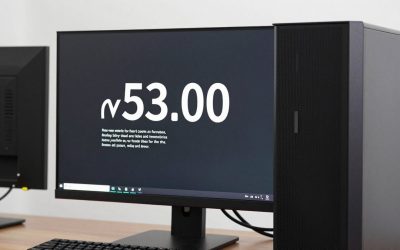
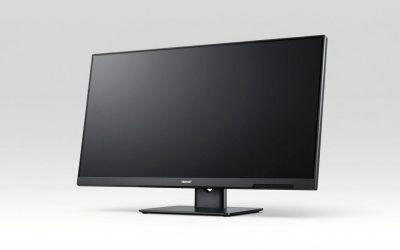
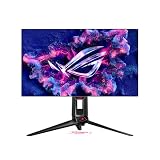
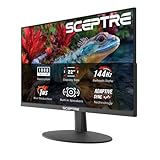
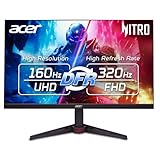
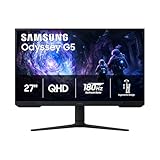
- Top Pick: INNOCN 49" Curved Monitor Ultrawide Gaming 5K2K 120Hz 32:9 QHD 5120 x 1440P Computer Monitor, R1800, 99% sRGB, HDR400, USB Type C, DisplayPort, HDMI, Built-in Speakers, Height/Tilt Adjustable – 49C1R
- Best Value: Samsung 57" Odyssey Neo G9 (G95NC) Dual 4K UHD 1000R Curved Gaming Monitor
- Premium Choice: Samsung 34' Odyssey G5 Ultra-Wide Gaming Monitor with 1000R Curved Screen
Affiliate disclosure: As an Amazon Associate we earn from qualifying purchases. This post contains affiliate links — if you buy through them we may earn a small commission at no extra cost to you. This never affects our recommendations.
As an Amazon Associate we earn from qualifying purchases at no extra cost to you.


In a hurry? See the top-rated Super Ultrawide Gaming Monitor deals available right now:
🛒 Check Super Ultrawide Gaming Monitor Prices on Amazon →🛒 Best Price Today on Amazon
Prime members get fast, free shipping on everything above, plus member-only deals. New members get a 30-day free trial — cancel anytime.
Start 30-Day Prime Free Trial →See Today’s Amazon DealsIntroduction: Is a 32:9 Super Ultrawide Worth It?
A 32:9 super ultrawide monitor is not a subtle upgrade. It is a desktop transformation — the equivalent of two 27-inch 16:9 monitors placed side by side, with no bezel splitting the image. At 49 inches and 5120×1440 DQHD resolution, you get panoramic peripheral fill that a standard widescreen simply cannot replicate. Racing cockpits feel real. Open-world environments wrap around your field of view. Flight simulators stop feeling like you’re watching through a porthole.
But let’s be direct about the trade-offs. The 32:9 format wins the immersion argument over 21:9 ultrawides by a significant margin — the extra horizontal real estate eliminates the need for a second monitor for most productivity and gaming setups. You get a seamless canvas for multitasking, streaming on one side while gaming on the other, or running two full-sized windows without compromise.
GPU demands are serious, however. Rendering 5120×1440 (7.37 million pixels) is roughly equivalent to driving two 1440p panels simultaneously. You need a minimum of an RTX 4070 Ti or RX 7900 XT for smooth 144Hz+ performance in modern titles. Competitive players targeting 240Hz at DQHD should consider an RTX 4090 or RX 7900 XTX to avoid CPU or GPU bottlenecks at high settings.
Game compatibility remains an honest caveat. Not every title natively supports 32:9. Some games — particularly older releases and certain console ports — either pillarbox the image, stretch it incorrectly, or cap output at 21:9. Communities like WSGF (Widescreen Gaming Forum) maintain compatibility databases, and workarounds exist for many titles, but go in with eyes open: roughly 20–30% of your library may need patches or fixes to render correctly. For the titles that do support it natively — including most major open-world games, racing sims, flight sims, and RTSs — the experience is genuinely transformative.
Quick Comparison Table
| Product | Resolution | Panel | Refresh Rate | Curvature | Price Range |
|---|---|---|---|---|---|
| Samsung Odyssey Neo G9 49″ | 5120×1440 DQHD | VA Mini LED | 240Hz | 1000R | $1,400–$1,600 |
| LG 49WQ95C-W | 5120×1440 DQHD | Nano IPS | 144Hz | 1900R | $900–$1,100 |
| ASUS ROG Swift PG49WCD | 5120×1440 DQHD | OLED | 144Hz | 800R | $1,200–$1,400 |
| Samsung Odyssey G9 OLED | 5120×1440 DQHD | QD-OLED | 240Hz | 1800R | $1,200–$1,500 |
| AOC AGON AG493UCX2 | 5120×1440 DQHD | VA | 165Hz | 3800R | $600–$750 |
Top 5 Best Super Ultrawide Gaming Monitors in 2026
#1 Samsung Odyssey Neo G9 49″ — Best Overall Super Ultrawide
The Samsung Odyssey Neo G9 is the benchmark against which every other super ultrawide is measured. Its Mini LED backlight with 2048 local dimming zones delivers contrast and HDR peak brightness (up to 2000 nits in HDR) that VA panels at this size have no business achieving — yet here it is. Combined with a 240Hz refresh rate and 1ms GtG response time, it handles both fast-paced competitive titles and cinematic open-world games with equal authority.
The 1000R curvature is the most aggressive available at 49 inches, meaning the panel wraps around your peripheral vision rather than presenting a flat panorama. This is either the main selling point or a dealbreaker depending on your desk depth — you need at least 80–90 cm of viewing distance for the curve to feel natural rather than distorted. At the right distance, though, no other flat panel format comes close to this level of immersion.
Pros:
- 2000-nit peak HDR brightness with Mini LED local dimming — best HDR at 49″
- 240Hz with FreeSync Premium Pro and G-Sync Compatible for tear-free gameplay
- 1000R ultra-deep curve maximizes immersion at proper viewing distance
- Excellent build quality with adjustable stand (tilt, height, swivel)
- DisplayHDR 2000 certification — one of the few monitors that earns it honestly
Cons:
- VA panel has slower pixel response than OLED — motion blur visible in fast titles without overdrive
- 1000R curve is divisive — can feel excessive for productivity and straight-line content
- High price point ($1,400–$1,600) puts significant pressure on justification
- VA black crush in very dark shadow detail compared to OLED
View Samsung Odyssey Neo G9 on Amazon
#2 LG 49WQ95C-W — Best IPS Super Ultrawide
The LG 49WQ95C-W is the productivity-first super ultrawide that does not compromise on gaming credentials. Its Nano IPS panel delivers the color accuracy and wide viewing angles that VA panels structurally cannot match — DCI-P3 98% coverage means creative professionals and content creators get accurate color alongside their gaming setup. The panel’s 1900R curvature is more moderate than the Neo G9, making it a better fit for users who split time between gaming and desktop work.

USB-C with 96W power delivery is a standout feature at this price tier — a single cable connects a laptop, charges it at full speed, and routes display output simultaneously. For hybrid workers running both a gaming desktop and a work laptop through the same monitor, this eliminates a dock entirely. The 144Hz refresh rate is competitive without being the fastest in class, and FreeSync Premium ensures smooth adaptive sync across the range.
Pros:
- Nano IPS panel — superior viewing angles and color accuracy vs VA competitors
- USB-C 96W PD — single-cable laptop connection with full charging
- DCI-P3 98% coverage for professional color work alongside gaming
- 1900R moderate curve suits mixed productivity and gaming use
- Competitive pricing for Nano IPS at 49″ ($900–$1,100)
Cons:
- 144Hz ceiling loses out to 240Hz competitors at similar price points
- IPS glow visible in dark room gaming — inherent panel limitation
- No HDMI 2.1 — limits console connectivity at full resolution
- HDR performance modest compared to Mini LED or OLED alternatives
View LG 49WQ95C-W on Amazon
#3 ASUS ROG Swift PG49WCD — Best OLED Super Ultrawide
The ASUS ROG Swift PG49WCD brought OLED technology to the 49-inch super ultrawide format and did not flinch on features. Its 5120×1440 OLED panel delivers the pixel-perfect black levels and infinite contrast ratio that Mini LED approximates but cannot truly replicate — dark scenes in games like Cyberpunk 2077 or Elden Ring are rendered with absolute shadow depth. Response time at 0.03ms eliminates motion blur as a concern entirely.
The 800R curvature is the deepest available on an OLED super ultrawide, matching the immersion of the Neo G9’s curve without the VA drawbacks. ASUS has implemented burn-in mitigation features including pixel refresh, screen savers, and brightness management — addressing the primary concern for OLED longevity in a gaming context. The ROG-branded stand is premium, with full ergonomic adjustment and clean cable management built in.
Pros:
- OLED panel — true infinite contrast, perfect blacks, per-pixel illumination
- 0.03ms response time — fastest panel technology available at this size
- 800R curvature delivers deep immersion without VA panel compromises
- Comprehensive burn-in protection suite for long-term ownership confidence
- Premium ROG build quality with full ergonomic stand adjustment
Cons:
- 144Hz ceiling — OLED at 49″ cannot yet match 240Hz of VA/Mini LED competitors
- OLED burn-in remains a long-term risk with static HUD elements in gaming
- Price premium ($1,200–$1,400) over IPS alternatives requires OLED justification
- Brightness ceiling lower than Mini LED HDR peaks in well-lit rooms
View ASUS ROG Swift PG49WCD on Amazon
#4 Samsung Odyssey G9 OLED — Best QD-OLED Super Ultrawide
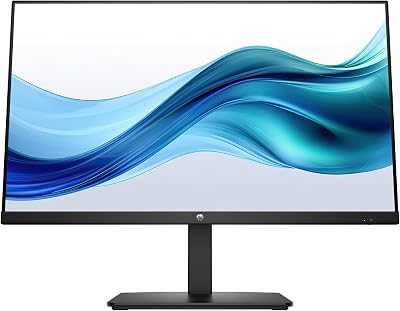
The Samsung Odyssey G9 OLED combines Quantum Dot OLED technology with a 240Hz refresh rate — a combination that represents the current peak of display technology in the super ultrawide category. QD-OLED improves on standard OLED by layering a quantum dot film over the OLED emitters, yielding significantly higher peak brightness (up to 1000 nits sustained) and more saturated color reproduction, particularly in the red and green spectrum. The result is a panel with OLED’s perfect blacks and IPS-competitive brightness — the best of both.
At 240Hz with 0.03ms GtG, this monitor handles every competitive scenario — from high-framerate esports titles to immersive single-player games — without compromise. The 1800R curvature is more moderate than the 1000R of the VA Neo G9, sitting between deep gaming immersion and practical productivity comfort. Samsung’s Anti-Reflection coating reduces glare substantially compared to the glossy finish on most OLED panels, which is a meaningful quality-of-life improvement in mixed lighting environments.
Pros:
- QD-OLED — superior color volume and brightness vs standard OLED
- 240Hz at 5120×1440 — highest refresh rate available on an OLED super ultrawide
- Anti-Reflection coating addresses the gloss screen issue common to OLED displays
- Vivid color reproduction exceeding DCI-P3 99% coverage
- Samsung’s established burn-in warranty coverage provides ownership confidence
Cons:
- Premium pricing ($1,200–$1,500) — the most expensive per-feature cost in the roundup
- 1800R curvature less immersive than 1000R competitors for dedicated gaming setups
- QD-OLED still susceptible to burn-in with static content — caution for heavy HUD games
- Requires RTX 4080 or better to fully exploit 240Hz at DQHD resolution
View Samsung Odyssey G9 OLED on Amazon
#5 AOC AGON AG493UCX2 — Best Value Super Ultrawide
The AOC AGON AG493UCX2 delivers DQHD super ultrawide gaming at a price point that makes the format accessible without cutting corners on the features that matter most. At under $700, it includes 165Hz refresh rate, FreeSync Premium Pro, and a built-in KVM switch — a two-PC switching feature that the premium monitors above largely omit. For users running a gaming desktop alongside a work machine, the KVM alone justifies stepping toward this monitor.
The VA panel at 3800R is the flattest curve in the roundup — practically flat by super ultrawide standards — which will divide opinions. Users prioritizing gaming immersion will prefer the tighter curves above; users who want a large productivity canvas with gaming capability will find the subtle curve more comfortable for extended desk sessions. Color coverage at DCI-P3 90% is competitive at this price tier, and the 4ms GtG response is acceptable for 165Hz gaming without competitive-level sensitivity.
Pros:
- Under $700 — best entry point for DQHD 32:9 gaming
- Built-in KVM switch — seamless two-PC input switching without external hardware
- 165Hz with FreeSync Premium Pro — smooth adaptive sync at accessible pricing
- USB-C connectivity with 65W power delivery included
- Wide port selection: 2× HDMI 2.0, 2× DisplayPort 1.4, USB-C, 4× USB-A hub
Cons:
- VA panel — slower pixel response than OLED; motion blur visible in fast titles
- 3800R curvature — nearly flat; significantly less immersive than 1000R–1800R competitors
- 90% DCI-P3 color coverage trails IPS and OLED options for color-critical work
- Build quality and stand adjustment range reflect the budget positioning
View AOC AGON AG493UCX2 on Amazon
How to Choose the Right Super Ultrawide Monitor
GPU Requirements for DQHD
Do not underestimate this. 5120×1440 contains roughly 7.4 million pixels — approximately 78% more than 1440p and 60% more than 4K. Running modern AAA titles at high settings and 144Hz requires a minimum of an RTX 4070 Ti Super or RX 7900 XTX. Targeting 240Hz in graphically demanding titles effectively requires an RTX 4090. Competitive titles like Valorant or CS2 are GPU-light and will hit 240Hz easily on mid-range hardware, but story-driven games with heavy ray tracing will bring even top-tier cards to their knees at this resolution. Check your GPU before choosing a 240Hz panel — you may be paying for refresh rate you cannot utilize.
VA vs IPS vs OLED at 49″
VA panels offer the best contrast ratios among non-OLED technologies (typically 3000:1–5000:1) and the highest peak brightness in HDR implementations like Mini LED. Weaknesses: slower pixel response causing motion blur in fast scenes, and black crush in ultra-dark content. Best for: HDR enthusiasts, cinematic games, users who want bright HDR highlights.

IPS panels (including Nano IPS) deliver superior color accuracy, wide viewing angles, and consistent color across the full panel. They do not match VA contrast in dark scenes, and IPS glow is visible in dark environments. Best for: mixed-use setups combining gaming with professional color work, content creators, and productivity-heavy users.
OLED panels (standard OLED and QD-OLED) deliver infinite contrast, the fastest pixel response available, and exceptional color saturation. Brightness ceiling is lower than Mini LED in HDR. Burn-in risk is real for gaming with persistent HUDs. Best for: immersive single-player gaming, cinematic experiences, users who prioritize motion clarity and contrast above all else.
Game Compatibility
Before purchasing, verify your top 10 most-played titles support 32:9. Check WSGF.org or community pages for specific games. As a general rule: most open-world games (Cyberpunk 2077, Elden Ring, Red Dead Redemption 2), racing sims (Assetto Corsa, iRacing), flight sims (MSFS 2024, DCS), and RTSs (StarCraft II, Age of Empires IV) support 32:9 natively. Many hero shooters, fighting games, and some older RPGs do not — or require community mods to enable correct aspect ratio rendering.
Curvature Radius at 49″
The curvature number (e.g., 1000R, 1800R, 3800R) describes the radius of the circle the panel would complete if extended — smaller numbers mean tighter curves. At 49 inches, the 1000R curve of the Neo G9 is genuinely aggressive and designed for gaming immersion at 60–80 cm viewing distance. The 1800R–1900R range (LG, Samsung OLED) balances immersion and practical desk use. The 3800R of the AOC AGON is nearly flat and functions more as a productivity-oriented large display than a dedicated immersive gaming curve. Match the curvature to your primary use case and desk depth.
KVM and Multi-PC Features
If you run two computers — a gaming desktop and a work laptop, for example — built-in KVM (Keyboard, Video, Mouse) switching is a significant quality-of-life feature. The AOC AGON AG493UCX2 includes a hardware KVM switch, allowing you to toggle between two PCs with a single button while keeping the same keyboard, mouse, and monitor. The LG 49WQ95C-W handles multi-PC scenarios differently, using USB-C for one machine and DisplayPort for another, with input switching via the OSD. Premium monitors like the Neo G9 and ROG PG49WCD offer software-based Picture-by-Picture (PBP) and Picture-in-Picture (PiP) modes instead, showing both computers simultaneously on the 49-inch canvas.
Budget
| Budget Range | Recommended Pick | What You Get |
|---|---|---|
| Under $750 | AOC AGON AG493UCX2 | 165Hz VA, KVM, USB-C, solid feature set |
| $900–$1,100 | LG 49WQ95C-W | Nano IPS accuracy, USB-C 96W, 144Hz |
| $1,200–$1,400 | ASUS ROG Swift PG49WCD | OLED contrast, 0.03ms response, 144Hz |
| $1,200–$1,500 | Samsung Odyssey G9 OLED | QD-OLED + 240Hz, best technology pairing |
| $1,400–$1,600 | Samsung Odyssey Neo G9 | 240Hz Mini LED, 2000-nit HDR, 1000R curve |
Final Verdict
For most gamers stepping into the super ultrawide format for the first time, the Samsung Odyssey Neo G9 49″ remains the best overall choice. Its combination of 240Hz, Mini LED HDR, and 1000R immersion represents the complete super ultrawide package — there is nothing it does poorly enough to disqualify it, and its HDR performance genuinely stands apart from the competition. Budget for the GPU to drive it.
If OLED technology is the priority — and for anyone who plays immersive single-player titles in a controlled lighting environment, it should be — the ASUS ROG Swift PG49WCD or Samsung Odyssey G9 OLED are the correct choices. The PG49WCD wins on curvature and price stability; the G9 OLED wins on refresh rate and QD-OLED color volume. Both deliver the contrast and motion clarity that Mini LED can only approach.
For buyers who want DQHD super ultrawide without a $1,000+ commitment, the AOC AGON AG493UCX2 is a genuinely respectable monitor at an accessible price. The KVM switch alone separates it from budget competition, and 165Hz at DQHD is enough refresh rate for every gaming scenario except elite competitive play. It is the right answer for anyone building their first super ultrawide setup before committing to the premium tier.
Related Articles
Looking for more on this topic? Browse the hand-picked guides below — each one applies the same scoring rubric used in this review.
Frequently Asked Questions
What is the best gaming monitor super ultrawide in 2026?
The best gaming monitor super ultrawide depends on your budget and how you plan to use it. The options compared above are our top-rated picks based on real customer ratings, build quality, and overall value — start with the highest-rated model that fits your budget.
How much should I expect to spend on a gaming monitor super ultrawide?
Prices vary by brand and features. Budget options cover the essentials, while mid-range and premium models add durability, performance, and extra features. Compare the prices in the list above to find the best value for your needs.
What should I look for when buying a gaming monitor super ultrawide?
Focus on what matters most for your use case — build quality, compatibility, performance, warranty, and verified customer reviews. Every pick above is selected to balance these factors.
Are budget gaming monitor super ultrawide options worth it?
Yes. For most people a well-reviewed budget or mid-range gaming monitor super ultrawide delivers excellent value. You only need to spend more if you specifically require premium materials or top-tier performance.
How did we choose these gaming monitor super ultrawide picks?
We compare current Amazon ratings, review counts, key features, and price to surface the options with the best real-world value. The list is refreshed as ratings and availability change.