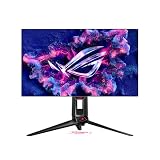
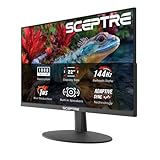
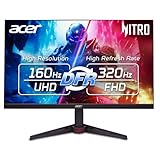
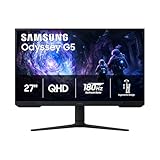
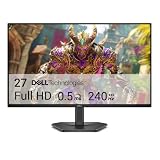
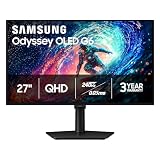
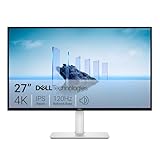
- Top Pick: INNOCN 49" Curved Monitor Ultrawide Gaming 5K2K 120Hz 32:9 QHD 5120 x 1440P Computer Monitor, R1800, 99% sRGB, HDR400, USB Type C, DisplayPort, HDMI, Built-in Speakers, Height/Tilt Adjustable – 49C1R
- Best Value: INNOCN 49" Curved Gaming Monitor 144Hz Ultrawide 32:9 WDFHD 3840 x 1080P, R1800, 99% sRGB, HDR400, USB Type C, DisplayPort, HDMI, Built-in Speakers, Height/Tilt Adjustable – 49C1G
- Premium Choice: CRUA 49" DQHD 165Hz Ultrawide Curved Gaming Monitor, 1500R, FreeSync, Black
Affiliate disclosure: As an Amazon Associate we earn from qualifying purchases. This post contains affiliate links — if you buy through them we may earn a small commission at no extra cost to you. This never affects our recommendations.
As an Amazon Associate we earn from qualifying purchases at no extra cost to you.


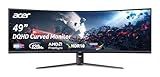

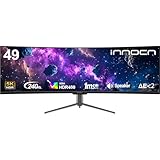

If you’ve ever tried to manage two separate monitors — wrestling with mismatched bezels, cable clutter, and the eternal frustration of a split screen in the middle of a firefight — a 49-inch super ultrawide is the answer you didn’t know you needed. These behemoths pack the horizontal real estate of two 27-inch 1440p displays into a single seamless panel, delivering an immersive gaming experience and a legitimately useful productivity workspace in one shot. In 2026, the category has matured enough that you’re no longer choosing between compromise and cost: Mini LED, OLED, and QD-OLED options all sit below $1,500, and the performance differences are meaningful enough to matter. This guide breaks down the top five picks, tells you exactly what each is best for, and gives you a clear framework for choosing the right one.
In a hurry? See the top-rated 49-Inch Super Ultrawide Gaming Monitor deals available right now:
🛒 Check 49-Inch Super Ultrawide Gaming Monitor Prices on Amazon →🛒 Best Price Today on Amazon
Prime members get fast, free shipping on everything above, plus member-only deals. New members get a 30-day free trial — cancel anytime.
Start 30-Day Prime Free Trial →See Today’s Amazon DealsQuick Comparison Table
| Monitor | Panel | Resolution | Refresh Rate | Response Time | HDR |
|---|---|---|---|---|---|
| Samsung Odyssey Neo G9 49″ | VA Mini LED | 5120×1440 | 240Hz | 1ms | HDR2000 |
| LG UltraGear 49GR85DC | OLED | 5120×1440 | 240Hz | 0.03ms | OLED (True Black) |
| ASUS ROG Swift OLED PG49WCD | QD-OLED | 5120×1440 | 144Hz | 0.03ms | DisplayHDR TrueBlack |
| Alienware AW4923DW | IPS | 5120×1440 | 165Hz | 2ms | VESA HDR600 |
| MSI MEG 491C QD-OLED | QD-OLED | 5120×1440 | 144Hz | 0.03ms | DisplayHDR TrueBlack |
Our Top Picks
1. Samsung Odyssey Neo G9 49″ — Best Overall
The Samsung Odyssey Neo G9 49″ is the flagship of 49-inch super ultrawide gaming, and it earns that title through a combination of raw brightness, industry-leading refresh rate, and a Mini LED backlight system that competes seriously with OLED in dynamic range. Rated at HDR2000, this panel can hit peak brightness levels that make HDR content look genuinely cinematic, not just marginally better than SDR. The 240Hz refresh rate is the highest in this category, and combined with both G-Sync and FreeSync Premium Pro support, you get buttery-smooth gameplay across Nvidia and AMD GPU setups alike.
The 1000R curvature is aggressive — more so than most super ultrawides — which some users love for immersion and others find disorienting at close viewing distances. The VA panel’s contrast ratio is exceptional, producing deep blacks that IPS alternatives simply cannot match. Color accuracy out of the box is good, and the monitor’s onboard software includes multiple game-optimized presets.
At $1,499, it’s the most expensive pick in this guide, but it’s also the most capable single display you can buy for gaming in 2026 if maximum brightness, peak refresh rate, and HDR performance are your priorities.
Pros
- Highest refresh rate in category (240Hz)
- HDR2000 peak brightness is class-leading
- Dual G-Sync/FreeSync compatibility
- Exceptional contrast from VA Mini LED
- 1000R curve maximizes immersion
Cons
- Most expensive option at ~$1,499
- Aggressive curve not ideal for flat content or precise productivity work
- VA panel has slower pixel response than OLED at lower brightness levels
- Requires powerful GPU to fully utilize at 5120×1440 240Hz
2. LG UltraGear 49GR85DC — Best OLED
The LG UltraGear 49GR85DC brings true OLED technology to the 49-inch super ultrawide format, pairing it with an unmatched 240Hz refresh rate. OLED’s self-emissive pixels deliver perfect black levels (not just deep blacks — actual zero light output) and a 0.03ms response time that makes every other panel type feel sluggish by comparison. If you play competitive titles — fast-paced shooters, fighting games, racing sims — this is the display where motion clarity becomes a legitimate performance edge, not just a marketing talking point.
LG’s anti-glare coating is well-implemented here, reducing reflections without the hazy texture that plagues some matte displays. The color reproduction is wide-gamut and accurate, covering DCI-P3 well enough for creative professionals who also want a gaming display. The 49GR85DC connects via DisplayPort 1.4, HDMI 2.1, and USB-C, giving it flexible connectivity for both PC and console inputs.
The primary trade-off versus the Neo G9 is peak brightness. OLED panels top out lower in sustained brightness, which can feel less impactful in brightly lit rooms during HDR content. But for most gaming environments — and especially in darker rooms — the OLED’s infinite contrast ratio and motion performance outclass the Mini LED approach in ways that matter on a frame-to-frame basis.
Pros
- True OLED: perfect blacks, infinite contrast
- 240Hz + 0.03ms — best motion clarity in class
- Excellent anti-glare coating
- Wide color gamut for creative work
- HDMI 2.1 and USB-C connectivity
Cons
- Lower sustained peak brightness than Mini LED
- OLED burn-in risk with static UI elements (mitigated by LG’s care features)
- $1,299 price point is premium
- Larger footprint requires a deep, wide desk
3. ASUS ROG Swift OLED PG49WCD — Best for Productivity + Gaming
The ASUS ROG Swift OLED PG49WCD makes a case for itself as the most versatile pick in this guide. The QD-OLED panel combines quantum dot color enhancement with OLED’s self-emissive pixel architecture, resulting in a display that offers broader color volume than standard OLED — meaning it can produce more saturated colors at higher brightness levels simultaneously. For content creators, graphic designers, or anyone doing color-sensitive work alongside gaming, this matters.

The 144Hz refresh rate is lower than the OLED and Mini LED options, but for single-player games, simulation titles, strategy games, and productivity, 144Hz is more than adequate. Where the PG49WCD distinguishes itself further is in connectivity: the 90W USB-C power delivery port means you can connect a laptop, power it, and use the monitor as a single-cable hub — a genuinely useful feature in a hybrid work-from-home setup.
ASUS ROG’s build quality is excellent, the OSD controls are intuitive, and the included lighting effects are tastefully implemented rather than garish. At $1,199, it occupies the sweet spot between the ultra-premium OLED options and the more budget-oriented picks below.
Pros
- QD-OLED: superior color volume vs standard OLED
- 90W USB-C for laptop single-cable setups
- Excellent build quality and ROG ecosystem support
- Strong color accuracy for professional work
- 0.03ms response time for sharp motion
Cons
- 144Hz is the lowest refresh rate among top three picks
- QD-OLED has risk of image retention with static content
- Lacks the extreme brightness of the Neo G9’s Mini LED
- Larger 800R curve may not suit all desk configurations
4. Alienware AW4923DW — Best Budget Pick
The Alienware AW4923DW is the entry point for 49-inch super ultrawide gaming that doesn’t feel like a compromise. At $899, it is nearly $400 cheaper than the next step up, and it delivers genuine value: a 5120×1440 IPS panel running at 165Hz with a 2ms response time, VESA HDR600 certification, and USB-C connectivity with power delivery.
IPS technology means wider viewing angles than VA and better out-of-box color accuracy than VA panels — useful if you share the display across multiple seating positions or use it for color-sensitive creative work. The 165Hz refresh rate hits the sweet spot for most gaming scenarios without demanding the GPU headroom required to push 240Hz at this resolution.
Alienware’s build quality is solid, and the AlienFX lighting integration works cleanly with their broader ecosystem. The HDR600 certification is honest — it won’t compete with HDR2000 or OLED for dynamic range, but it provides a tangible improvement over SDR for compatible titles and streaming content.
For a first-time super ultrawide buyer, someone upgrading from a standard 27-inch setup, or anyone working within a tighter budget, the AW4923DW is the rational choice without sacrificing the core 5120×1440 49-inch experience.
Pros
- Most affordable option at ~$899
- IPS panel with wide viewing angles
- 165Hz solid for most gaming use cases
- USB-C with power delivery
- Reliable Alienware build quality
Cons
- IPS lacks the contrast of VA or the blacks of OLED
- 2ms response time is slower than OLED options
- HDR600 is entry-level HDR, not the show-stopper of higher-tier panels
- No G-Sync hardware module (uses G-Sync Compatible/FreeSync)
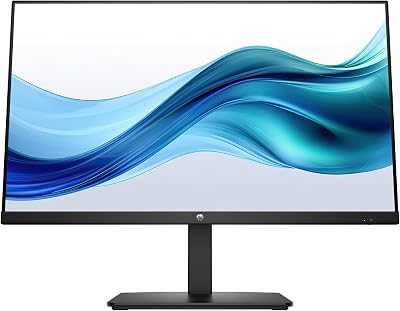
5. MSI MEG 491C QD-OLED — Best for Console + PC Dual Setup
The MSI MEG 491C QD-OLED closes out the list with a compelling mix of connectivity and QD-OLED performance at a mid-tier price. At $1,099, it undercuts the LG OLED and ASUS ROG options while matching them on panel technology fundamentals. What sets the MEG 491C apart is its dual USB-C ports paired with HDMI 2.1 — a combination that makes it the most input-flexible option in this roundup, particularly useful for users running both a gaming PC and a current-gen console simultaneously.
The QD-OLED panel delivers the same fundamental advantages as the ASUS ROG Swift — perfect blacks, 0.03ms response, wide color gamut — and the 144Hz refresh rate is appropriate for the broader range of use cases this monitor targets. MSI’s OSD interface is functional, and the monitor’s stand includes height, tilt, and swivel adjustments, giving it good ergonomic flexibility.
For users who want OLED-class image quality, strong multi-device connectivity, and don’t need the top-tier 240Hz refresh rate, the MSI MEG 491C is a sharp value proposition.
Pros
- QD-OLED image quality at a competitive price
- Dual USB-C + HDMI 2.1 for flexible multi-device setups
- 0.03ms response for clean motion rendering
- Strong ergonomic stand adjustability
- Good value for QD-OLED technology
Cons
- 144Hz ceiling limits competitive gaming ceiling vs 240Hz options
- MSI’s software ecosystem less polished than ASUS/Samsung/LG
- QD-OLED image retention risk for static UI elements
- Less brand recognition for monitor warranties vs Alienware or LG
How to Choose the Best 49-Inch Super Ultrawide Gaming Monitor
49-Inch vs Dual Monitor Setup
The core argument for a 49-inch super ultrawide over dual monitors is seamlessness. A dual 27-inch 1440p setup gives you the same total pixel count (5120×1440), but also gives you a physical bezel cutting through the middle of your screen — and through the middle of games, applications, and your field of view. With a 49-inch panel, that center seam disappears.
Beyond immersion, a single display simplifies cable management, reduces GPU output demands (one display signal instead of two), and removes the mouse-cursor-catching-the-bezel problem that dual-monitor users know intimately. The trade-off is that a 49-inch panel is physically large and requires a desk with both the width (approximately 47 inches of usable surface) and the depth to achieve proper viewing distance. If your workspace is tight, two 24-inch monitors may be the more practical solution.
5120×1440 Resolution and GPU Demands
5120×1440 is approximately 7.37 million pixels — about 78% more than standard 2560×1440 and roughly equivalent to two 1440p displays combined. Pushing this resolution at high refresh rates demands a powerful GPU. In 2026, for 144Hz gameplay in demanding AAA titles, you’ll want at minimum an RTX 4080 or RX 7900 XTX. For 240Hz competitive gaming, an RTX 5090 or equivalent is recommended.
If you’re running a mid-range GPU — an RTX 4070 or similar — you can still get excellent performance in less demanding games, or by running more demanding titles at lower settings. The resolution also scales well for productivity use, where GPU demands are minimal regardless of panel size.
Mini LED vs OLED vs QD-OLED at 49 Inches
Mini LED (Samsung Neo G9) uses thousands of small LEDs behind an LCD panel with local dimming zones. The result is very high peak brightness — up to 2,000 nits — but it cannot achieve the true blacks of OLED because there is always some backlight bleed between zones.
OLED (LG 49GR85DC) uses self-emissive pixels that turn off completely to produce true black. This means infinite contrast, but peak brightness is lower than Mini LED, typically around 800–1,000 nits for HDR highlights.
QD-OLED (ASUS PG49WCD, MSI MEG 491C) adds a quantum dot layer to OLED, expanding color volume so the panel can produce more saturated colors at higher brightness levels simultaneously. QD-OLED is generally considered the best balance of contrast and color performance, though it still doesn’t reach Mini LED brightness peaks.
Practical summary: Dark gaming room or content creation — OLED or QD-OLED. Bright room or maximum HDR punch — Mini LED.
Desk Space and Viewing Distance Requirements
A 49-inch super ultrawide panel measures approximately 47 inches wide and 13 inches tall. It needs a desk at least 55–60 inches wide to sit comfortably with room for keyboard, mouse, and peripherals. Desk depth matters equally: the recommended viewing distance for this panel size and resolution is 90–100cm (roughly 35–40 inches) from screen to eyes. A desk shallower than 80cm will force you uncomfortably close.

Monitor arms are strongly recommended over included stands — they allow precise depth and height adjustment and reclaim desk surface space that standard stands occupy. Check that your chosen arm can support the weight (most 49-inch panels weigh 15–22 lbs with stand removed) and spans the required VESA mount spacing (typically 100×100mm).
Productivity and Multi-Tasking Benefits
Beyond gaming, a 49-inch super ultrawide is a genuine productivity accelerator. The horizontal expanse supports true side-by-side application windows — a full-width browser or document editor alongside a full-width communications tool or terminal, without either window feeling cramped. Picture-by-Picture (PBP) mode, available on most monitors in this guide, lets you drive the left and right halves from two separate devices simultaneously, effectively turning one display into two independent screens.
For developers, financial analysts, video editors, and writers who spend long days in front of their setup, the reduced neck rotation compared to dual monitors and the uninterrupted screen space for timeline or spreadsheet work are practical, day-to-day benefits that compound over time.
Final Verdict
The best 49-inch super ultrawide for most users in 2026 is the LG UltraGear 49GR85DC — its OLED panel technology, 240Hz refresh rate, and 0.03ms response time represent the most complete combination of gaming performance and image quality at its price point. True blacks and perfect motion clarity are the features that age best in a monitor you plan to use for years.
If peak HDR brightness and the absolute highest refresh rate are your priority, the Samsung Odyssey Neo G9 remains the benchmark. For a productivity-first buyer who also games, the ASUS ROG Swift OLED PG49WCD’s USB-C laptop connectivity and QD-OLED color volume make it the most versatile all-rounder. Budget-conscious buyers should look no further than the Alienware AW4923DW — $899 for a genuine 5120×1440 49-inch experience with no meaningful compromise on the core use case.
Whatever your budget or use case, a 49-inch super ultrawide is one of those upgrades that makes every prior setup feel irreversibly small. Choose the panel technology that fits your room, your GPU, and your workflow — and then stop worrying about dual monitor alignment forever.
Related Articles
Looking for more on this topic? Browse the hand-picked guides below — each one applies the same scoring rubric used in this review.
Frequently Asked Questions
What is the best gaming monitor 49 superultrawide in 2026?
The best gaming monitor 49 superultrawide depends on your budget and how you plan to use it. The options compared above are our top-rated picks based on real customer ratings, build quality, and overall value — start with the highest-rated model that fits your budget.
How much should I expect to spend on a gaming monitor 49 superultrawide?
Prices vary by brand and features. Budget options cover the essentials, while mid-range and premium models add durability, performance, and extra features. Compare the prices in the list above to find the best value for your needs.
What should I look for when buying a gaming monitor 49 superultrawide?
Focus on what matters most for your use case — build quality, compatibility, performance, warranty, and verified customer reviews. Every pick above is selected to balance these factors.
Are budget gaming monitor 49 superultrawide options worth it?
Yes. For most people a well-reviewed budget or mid-range gaming monitor 49 superultrawide delivers excellent value. You only need to spend more if you specifically require premium materials or top-tier performance.
How did we choose these gaming monitor 49 superultrawide picks?
We compare current Amazon ratings, review counts, key features, and price to surface the options with the best real-world value. The list is refreshed as ratings and availability change.
Ready to decide? Our #1 pick for 2026 is the Monitor.
Live price & availability on Amazon.