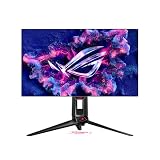
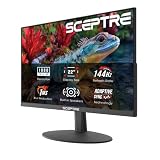
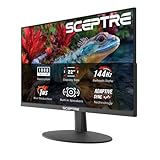
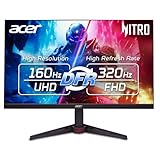
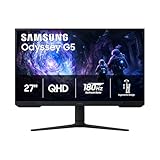
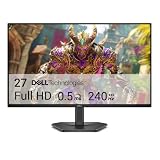
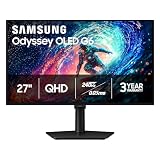
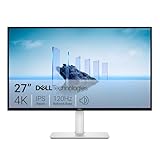
- Top Pick: Definitive Technology ProMonitor 1000 2-Way Satellite or Bookshelf Speaker for Home Theater Speaker/Surround Sound System (Single, Black)
- Best Value: Definitive Technology ProMonitor 800 Bookshelf Speakers | 2 Speakers, Black | for Home Theater, At Par with Any Large Speaker | Compact High-Definition Satellite Speaker | 1 Pair
- Premium Choice: Definitive Technology ProMonitor 1000 2-Way Satellite Speakers (Pair, Black) – Compact Bookshelf Speakers for Home Theater with Large Speaker Performance
🛒 Best Price Today on Amazon
Prime members get fast, free shipping on everything above, plus member-only deals. New members get a 30-day free trial — cancel anytime.
Top Buy Gaming Monitor Definitive Buyer Picks for 2026
Here are our current top buy gaming monitor definitive buyer picks, compared on real Amazon owner reviews, price, and features. Live prices update below.
As an Amazon Associate we earn from qualifying purchases at no extra cost to you. Product prices and availability are accurate as of the date shown and are subject to change.


Dropped $38.00

Lowest in 30 days

Dropped $15.99
Affiliate disclosure: GamingPCGuru is reader-supported. When you buy through links on our site, we may earn an affiliate commission at no extra cost to you. This does not influence our independent reviews.
By Alex Rivera, Hardware Reviewer · May 2026
How to Buy a Gaming Monitor in 2026: OLED Has Won, But Not for Everyone
Quick Answer (TLDR)
The 2026 gaming monitor market has been reshaped by affordable OLED. A 27-inch 1440p 240Hz QD-OLED from LG, Samsung, or ASUS now sells for $599–$799 — territory that was IPS-exclusive 18 months ago. For 90% of buyers chasing a great visual experience, this is the buy. The exceptions are competitive esports players who want maximum brightness and the absolute longest panel life (high-end IPS at 360Hz+), and budget-constrained buyers who can score quality 1440p 165Hz IPS displays for $260–$350. Avoid 4K 240Hz unless you have an RTX 5080+ to drive it; the panels are excellent but you’re paying $1,200+ for resolution your GPU can’t fully exploit. Ultrawide 34-inch OLEDs at 1440p ultrawide remain the productivity-plus-gaming sweet spot.
The Five Criteria That Matter
1. Panel technology fundamentally changes your experience. OLED (specifically QD-OLED from Samsung Display, or W-OLED from LG Display) delivers perfect blacks, sub-millisecond response times, and infinite contrast. IPS delivers higher peak brightness (450–1000 nits sustained), longer expected lifespan, no burn-in risk, and lower pricing. VA sits between, with excellent contrast but slower response times. For story-driven and atmospheric games, OLED is transformative. For sun-drenched office gaming or competitive esports where peak brightness matters, IPS still earns its place.
2. Resolution must match your GPU. A 4K 240Hz monitor with an RTX 5070 is a constant DLSS-and-low-settings compromise. A 1440p 240Hz monitor with the same GPU lets you push ultra settings comfortably. Match your panel to what your GPU can drive — for RTX 5060 Ti / 5070, 1440p 144–240Hz is sweet spot. For RTX 5070 Ti / 5080, 1440p 360Hz or 4K 144Hz. For RTX 5090, 4K 240Hz OLED is the no-compromise endgame.
3. Refresh rate vs response time. Above 144Hz, GtG (gray-to-gray) response time matters more than the raw refresh rate. A 360Hz IPS with 4ms GtG actually delivers blurrier motion than a 240Hz OLED with 0.03ms GtG because pixel transitions can’t keep up. For competitive gaming, look at MPRT (Moving Picture Response Time) and motion clarity test data, not just the Hz number on the box.
4. HDR implementation determines if HDR is usable. DisplayHDR 400 certification is essentially fake HDR — peak brightness too low, no local dimming. DisplayHDR 600 with edge-lit local dimming is decent. DisplayHDR 1000 with full-array local dimming or OLED’s per-pixel brightness control is real HDR that’s worth enabling. If you want HDR for games like Cyberpunk 2077 with the HDR mod, prioritize OLED or DisplayHDR 1000 IPS panels with 1000+ zone FALD.
5. Connectivity and cable bandwidth. 4K 240Hz requires DisplayPort 2.1 UHBR 20 or HDMI 2.1 with DSC. Many monitors ship with DisplayPort 1.4 and require DSC compression to hit advertised specs. Verify your GPU supports the required cable standard — RTX 50 series and RX 90 series both ship with DisplayPort 2.1. RTX 40 series is DisplayPort 1.4 only, which means 4K 240Hz monitors require DSC on those cards.
Buying Checklist
- Identify your primary use case (competitive esports vs immersive single-player vs mixed)
- Match resolution and refresh rate to your GPU’s realistic capability
- Choose panel technology: OLED for image quality, IPS for brightness and longevity, VA for budget contrast
- Verify HDR implementation if HDR matters to you (DisplayHDR 600 minimum for usable HDR)
- Check cable standard compatibility with your GPU’s outputs
- Confirm panel size fits viewing distance (27-inch for 60cm distance, 32-inch for 75cm)
- Check VRR support: G-Sync compatibility and FreeSync Premium Pro
- Verify stand ergonomics or VESA mount compatibility
- Check OLED warranty coverage for burn-in (LG offers 3-year, ASUS offers 3-year burn-in coverage on most models)
- Read panel-lottery reviews for the specific SKU you’re buying — IPS especially varies between units
Spec Primer: What the Numbers Actually Mean
Refresh rate (Hz). Frames per second the panel can display. Above 144Hz, returns diminish for non-competitive gaming. 240Hz is the visible-improvement ceiling for most users; 360Hz+ matters primarily for competitive shooters.
Response time (GtG vs MPRT). GtG measures pixel transition time. MPRT measures perceived motion blur. OLED’s sub-millisecond GtG means motion looks crisp even at 120Hz. IPS at 1–4ms GtG benefits from backlight strobing or BFI (Black Frame Insertion) to match OLED motion clarity.
Peak brightness (nits). 300 nits is desktop work. 400–500 nits handles bright rooms. 600 nits is good HDR floor. 1000+ nits delivers real HDR impact. OLED typically lists “10% window” brightness because OLED can’t sustain peak across the entire panel.
Color gamut coverage. 95%+ DCI-P3 is the modern gaming/HDR standard. 100% sRGB is desktop work standard. Wide-gamut OLEDs typically cover 99% DCI-P3 and 98%+ Adobe RGB without additional calibration.
Pixel density (PPI). 27-inch 1440p = 109 PPI (sharp). 27-inch 4K = 163 PPI (oversharp for gaming, great for text). 32-inch 4K = 138 PPI (sweet spot for large-screen 4K). 32-inch 1440p = 92 PPI (visible pixels at close viewing distance).
Common Buyer Mistakes
Buying 4K when your GPU can’t drive it. A 4K 144Hz monitor with an RTX 5060 means perpetual DLSS Performance mode at low settings. You’d have a vastly better experience at 1440p 144Hz with the same GPU running ultra settings natively.
Ignoring viewing distance. 32-inch 1440p looks pixelated at typical desk distance (60cm). 27-inch 4K is sometimes too sharp — text becomes microscopic without OS scaling. Match panel size to your sit distance: 24-inch for 50cm desks, 27-inch for 60-70cm, 32-inch for 75cm+.
Trusting marketing HDR badges. “HDR Ready” and “HDR 400” are essentially meaningless. Look for DisplayHDR 600 minimum (with edge-lit local dimming) or DisplayHDR 1000 (FALD or OLED) for HDR that actually looks better than SDR.
Skipping the panel lottery check. IPS panels in particular vary significantly between production batches for backlight bleed, IPS glow, and dead pixels. Check recent reviews for the specific model and consider buying from retailers with good return policies for visual defects.
Forgetting about OLED burn-in mitigation. OLED panels need pixel-shift and brightness-limiting features enabled. Don’t disable these even if you don’t notice them — they’re protecting your $700 investment. Avoid running static UIs (taskbar, browser navigation) at full brightness for 8+ hours daily.
FAQ
Is OLED burn-in really a problem in 2026? Much less so than in 2022. Modern OLED panels with proper pixel-shift, brightness limiting, and panel refresh cycles show minimal degradation over 3–4 year ownership for typical gaming use. Heavy static-content workloads (8+ hours daily of text editing) still pose risk. For mixed gaming + occasional desktop use, modern OLEDs are reliable.
Should I buy 240Hz or 360Hz for competitive gaming? 240Hz OLED is the sweet spot for nearly everyone. The motion clarity difference from 240 to 360Hz on OLED is barely perceptible to most players, while 360Hz on IPS often has worse response times that nullify the refresh rate gain. Save the $200 unless you’re a top-1% competitive player.
Is 32-inch 4K better than 27-inch 4K? For most viewing distances, yes. 32-inch 4K at 138 PPI matches typical desk usage perfectly, while 27-inch 4K at 163 PPI is excessive sharpness that requires Windows scaling to make text readable. 27-inch 4K is best for builds with very close viewing distances or eye-strain users who want maximum text clarity.
What’s the deal with QD-OLED versus WOLED? QD-OLED (Samsung Display) uses blue OLED emitter with quantum dot color conversion — better color volume, better peak brightness, slight risk of pink-tint near subpixel boundaries. WOLED (LG Display) uses white OLED with color filters — slightly lower color volume, slightly lower peak brightness, better text rendering due to RGBW subpixel structure. For gaming, QD-OLED edges out. For mixed desktop work, WOLED handles text rendering better.
What About Ultrawide and Super-Ultrawide?
The 34-inch 1440p ultrawide (3440×1440) format has settled into a strong niche in 2026, particularly with LG and Samsung’s 34-inch QD-OLED panels at 240Hz. For productivity-plus-gaming hybrid use, ultrawide is genuinely better than dual monitors — no bezel down the middle, single seamless display. For competitive shooters, ultrawide can be a competitive disadvantage in games that don’t properly support the 21:9 aspect ratio. The 49-inch super-ultrawide (5120×1440) format remains expensive ($1,200–$2,000) and benefits only specific simulation and racing-game enthusiasts.
Cable and Refresh Rate Considerations
Don’t forget the cable. A 4K 240Hz panel requires DisplayPort 2.1 UHBR 20 cable for uncompressed signal, or DisplayPort 1.4 + DSC for compressed. Most monitors ship with DSC-compatible cables in the box. If you upgrade an old monitor to a new GPU, you may need to purchase a DP 2.1 cable separately. For RTX 50 series with DisplayPort 2.1 UHBR 20 native, get a certified DP 2.1 cable for the absolute best signal integrity at 4K 240Hz+.
Final Take
The gaming monitor purchase in 2026 has been democratized by affordable OLED. For visual impact, image quality, and gaming feel, a 27-inch or 32-inch QD-OLED at 1440p 240Hz is the clear winner for any buyer with budget above $600 and a GPU capable of pushing 1440p smoothly. IPS still earns its place for competitive esports demanding maximum brightness, for buyers prioritizing longevity over color, and for budget builds under $400 where IPS quality matches OLED’s most affordable tier. Don’t oversize your resolution beyond what your GPU can drive — a 1440p panel running at native is dramatically better than a 4K panel running at DLSS Performance mode. Match monitor to GPU to viewing distance, prioritize panel technology over absolute Hz numbers, and you’ll be happy for years.
Frequently Asked Questions
What resolution and size should I pair with my GPU?
1080p suits 24 to 25 inch panels and mid-range cards aiming at very high frame rates. 1440p at 27 inches is the mainstream sweet spot and needs roughly an RTX 4070 or RX 7800 XT class card. 4K works best at 27 to 32 inches and demands high-end hardware or upscaling.
Which panel type should I choose?
OLED gives the best contrast, near-instant response and superb motion clarity, at the cost of price and some burn-in risk with static elements. Fast IPS delivers excellent colour and viewing angles with good response for less money. VA offers deep blacks and high contrast but can smear in dark transitions.
How much refresh rate is worth paying for?
The step from 60Hz to 144Hz is transformative and worth it for everyone. From 144Hz to 240Hz is a clear but smaller improvement that mainly benefits competitive shooters. Beyond 240Hz the returns are small unless you are playing esports titles at very high frame rates already.
Do I need G-Sync or FreeSync?
Yes, some form of variable refresh rate is worth having because it eliminates tearing and smooths frame-time variance without the input lag of traditional vsync. Most modern panels support the open Adaptive-Sync standard and work with both AMD and NVIDIA cards, so a dedicated G-Sync module is rarely necessary.
Which cable and port do I need?
DisplayPort 1.4 with Display Stream Compression handles 1440p at very high refresh and 4K at 144Hz. HDMI 2.1 is required for 4K 120Hz over HDMI and for consoles. Use the cable supplied with the monitor, since cheap cables are a common cause of dropouts and refresh rate limits.