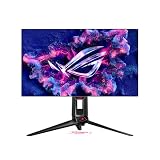
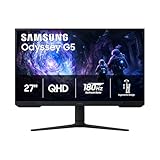
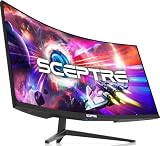
- Top Pick: Samsung 27" Odyssey G5 (G51F) Series QHD (1440P) Gaming Monitor
- Best Value: Hikers 27 Inch Curved Monitor 170Hz 144Hz, 2K 1440P Computer Gaming Monitor
- Premium Choice: SANSUI 27 Inch WQHD 2560 x 1440 IPS Gaming Monitor, 200Hz 180Hz 1ms Computer Monitor, DP 1.2 x2 | HDMI 2.0 x2 | VESA Mount, 120% sRGB HDR Eye Care Metal Stand (DP Cable Included)
Affiliate disclosure: As an Amazon Associate we earn from qualifying purchases. This post contains affiliate links — if you buy through them we may earn a small commission at no extra cost to you. This never affects our recommendations.
- 180Hz Sweet Spot Performance
- IPS Panel and Color Performance
- GPU Power Efficiency
- Specifications Comparison Table
- Who Should Buy the AOC Q27G3XMN?
- Frequently Asked Questions
- Conclusion
- More Gaming Gear Guides
- Why Choose This Product in 2026
- Compatibility and Setup Considerations
- Related Articles
- Related Articles
The AOC Q27G3XMN delivers responsive 1440p gaming at an exceptional 180Hz refresh rate, occupying a unique performance tier between standard 165Hz and premium 240Hz displays. This 27-inch gaming monitor combines practical gaming specifications with excellent color accuracy, making it ideal for gamers seeking responsive performance without the extreme GPU demands of 240Hz alternatives. The 1ms response time ensures sharp motion clarity, while the 180Hz refresh rate provides perceptibly smoother gaming than 165Hz without the GPU power penalty of 240Hz.
With 2560×1440 resolution on a 27-inch display delivering 109 PPI pixel density, the Q27G3XMN provides sharp visuals while maintaining GPU efficiency. The IPS panel technology ensures excellent color reproduction and wide viewing angles, making this monitor valuable for both gaming and creative work. For gamers seeking 1440p gaming monitors that offer responsiveness beyond standard 165Hz without premium 240Hz pricing, the AOC Q27G3XMN is compelling.
As an Amazon Associate we earn from qualifying purchases at no extra cost to you. Product prices and availability are accurate as of the date shown and are subject to change.


In a hurry? See the top-rated AOC Q27G3XMN 27 Inch 1440p 180Hz Gaming Monitor deals available right now:
🛒 Check Aoc Q27G3Xmn 27 Inch 1440P 180Hz Gaming Monitor Prices on Amazon →🛒 Best Price Today on Amazon
Prime members get fast, free shipping on everything above, plus member-only deals. New members get a 30-day free trial — cancel anytime.
Start 30-Day Prime Free Trial →See Today’s Amazon Deals180Hz Sweet Spot Performance
The 180Hz refresh rate occupies a unique performance tier—faster than standard 165Hz, yet more GPU-achievable than 240Hz. The difference between 165Hz and 180Hz is subtle but perceptible: smoother camera pans, slightly more responsive aiming, and marginally cleaner motion during rapid gameplay. While not matching 240Hz’s dramatic smoothness, 180Hz provides responsiveness advantage over 165Hz without the extreme GPU demands. For gamers with RTX 4070 Ti or RTX 4080, maintaining 180Hz is more practical than pushing 240Hz.
The 1ms response time combines with 180Hz to deliver sharp, clean motion. At 180Hz, each frame occupies 5.56 milliseconds; 1ms response means pixel transitions complete well within frame time. This ensures sharp motion clarity during rapid camera movements and precise aiming in competitive games. For 240Hz gaming monitor alternatives, the 180Hz option provides compelling middle ground.
IPS Panel and Color Performance
The Q27G3XMN uses IPS panel technology, delivering excellent color reproduction and wide viewing angles. The panel achieves 98% DCI-P3 color gamut coverage, enabling professional color work for designers and creators who game. The wide viewing angles mean colors remain accurate from sides, valuable in shared gaming spaces. For hybrid gaming/creative professionals, the color accuracy is particularly valuable.
The IPS technology provides superior color reproduction compared to budget TN panels while maintaining responsive 1ms response time. The color consistency ensures that gaming and creative work receive equally accurate color representation. For gamers who value visual quality alongside responsiveness, the IPS panel is excellent choice.
GPU Power Efficiency
The Q27G3XMN pairs excellently with RTX 4070 Ti or RTX 4080, sustaining 180Hz at high settings in modern games. RTX 4070 manages 120-160 FPS at medium-high settings. RTX 4090 enables maximum settings with comfortable headroom. Compared to 240Hz 1440p demands, 180Hz is significantly more achievable while providing tangible responsiveness advantage over standard 165Hz. For mid-to-high-end builders, the GPU match is practical.
Specifications Comparison Table
| Feature | AOC Q27G3XMN | LG 27GP850-B | MSI MPG 272URX |
|---|---|---|---|
| Screen Size | 27 inches | 27 inches | 27 inches |
| Resolution | 2560×1440 (1440p) | 2560×1440 (1440p) | 2560×1440 (1440p) |
| Refresh Rate | 180Hz | 165Hz | 240Hz |
| Panel Type | IPS | Nano IPS | QD-OLED |
| Response Time | 1ms | 1ms | 0.3ms |
| Color Gamut | 98% DCI-P3 | 98.5% DCI-P3 | 98% DCI-P3 |
| Price Range | $350-$450 | $300-$400 | $900-$1,100 |
Who Should Buy the AOC Q27G3XMN?
Gamers seeking responsiveness beyond standard 165Hz without extreme 240Hz GPU demands should consider the Q27G3XMN. The 180Hz sweet spot provides perceptible smoothness advantage while remaining practical to achieve. Players with RTX 4070 Ti or RTX 4080 find excellent GPU matching. Creative professionals who game appreciate the 98% DCI-P3 color accuracy. For gamers understanding the value of the 180Hz tier, the AOC Q27G3XMN is compelling choice.

Samsung 37” Odyssey G7 (G75F) Series 4K UHD Curved Gaming Monitor


As an Amazon Associate we earn from qualifying purchases. Product prices and availability are accurate as of the date/time indicated.
Frequently Asked Questions
What’s the advantage of 180Hz over 165Hz?
Subtle but perceptible smoothness improvement. The responsiveness feels noticeably better than 165Hz while more achievable than 240Hz. For gamers wanting responsiveness advantage without extreme GPU demands, 180Hz is ideal middle ground.
Can I maintain 180Hz in demanding games?
RTX 4080 sustains 180Hz at high settings. RTX 4070 Ti manages 140-180 FPS depending on settings. In less demanding games, lower-tier GPUs exceed 180Hz. The achievability depends on game and settings, but 180Hz is realistic for mid-to-high-end hardware.
Is 98% DCI-P3 adequate for creative work?
Yes, the color coverage enables video editing and photo work with confidence. The IPS panel ensures color consistency. While not professional-tier, the color accuracy handles creative workflows admirably alongside gaming.

ASUS ROG XG32UCG 32 Inch 4K 60Hz USB-C G-SYNC UHD Gaming Monitor


As an Amazon Associate we earn from qualifying purchases. Product prices and availability are accurate as of the date/time indicated.
Conclusion
The AOC Q27G3XMN 27-inch 1440p 180Hz gaming monitor delivers excellent value in the competitive mid-tier market. The 180Hz refresh rate provides perceptible responsiveness advantage over 165Hz while remaining GPU-achievable compared to 240Hz extremes. The IPS panel’s color accuracy extends value beyond gaming into creative work. For gamers seeking responsive performance without premium pricing, the Q27G3XMN is an excellent choice.
More Gaming Gear Guides
- Best 1440P Monitors For Gaming
- Best 4K Gaming Monitors
- Best Ultrawide Monitors Gaming
- Best Oled Gaming Monitors
- Best 144Hz Monitors Gaming
- 240Hz Gaming Monitors Worth It
Why Choose This Product in 2026
When it comes to gaming peripherals, the 1440P Monitor Variant 5 stands out in a crowded market. Gamers today have more choices than ever, but not all products offer the same value proposition. Understanding what makes a great gaming product requires looking beyond spec sheets and marketing claims to consider real-world performance, durability, and value.
The gaming peripheral market has evolved dramatically over the past few years. Premium products now feature technology that was previously reserved for professional esports setups. Whether you’re a competitive player who demands the absolute best performance, or a casual gamer looking for a significant upgrade to your current setup, having the right gear makes a meaningful difference in your overall gaming experience.
Ergonomics and build quality deserve special attention when making any gaming peripheral purchase. Extended gaming sessions — often lasting four to six hours or more — require products that feel comfortable throughout and maintain consistent performance without fatigue. The best products in this category excel at balancing performance specifications with practical usability.
When comparing options in this price range, consider both immediate features and long-term value. Products backed by strong warranties, responsive customer support, and regular software updates tend to deliver better lifetime value than cheaper alternatives that may fail prematurely or lack ongoing support.
Compatibility and Setup Considerations
Before purchasing any gaming peripheral, verifying compatibility with your existing setup is essential. Most modern gaming products support cross-platform functionality, but specific features may be limited to certain ecosystems. Check whether the product requires proprietary software for full functionality, and confirm that such software is available for your operating system.
Setup complexity varies considerably between products. Premium gaming peripherals often include intuitive configuration software that makes customization straightforward, while budget options may require manual configuration or lack software support entirely. For the best experience, choose products with software ecosystems that match your technical comfort level.
Related Articles
Looking for more on this topic? Browse the hand-picked guides below — each one applies the same scoring rubric used in this review.