Affiliate disclosure: As an Amazon Associate we earn from qualifying purchases. This post contains affiliate links — if you buy through them we may earn a small commission at no extra cost to you. This never affects our recommendations.
At 240Hz, every frame renders in 4.17 milliseconds — enemies move smoothly, tracking feels natural, and motion blur that plagues 60Hz and 144Hz monitors nearly vanishes. The competitive advantage of 240Hz over 144Hz is measurable in scientific studies: players demonstrate statistically better target tracking, faster reaction times, and improved peripheral detection rates at high refresh rates. For serious FPS and battle royale players, 240Hz is the current competitive standard in 2026.
We compared panel technology, response time, input lag, color accuracy, and price-to-performance across five top 240Hz monitors spanning 1080p and 1440p resolutions to produce this ranked list.
In a hurry? See the top-rated 240Hz Gaming Monitors deals available right now:
🛒 Check 240Hz Gaming Monitors Prices on Amazon →🛒 Best Price Today on Amazon
Prime members get fast, free shipping on everything above, plus member-only deals. New members get a 30-day free trial — cancel anytime.
Start 30-Day Prime Free Trial →See Today’s Amazon DealsTop Picks at a Glance
| Monitor | Size | Resolution | Panel | Sync Tech | Best For |
|---|---|---|---|---|---|
| ASUS ROG Swift PG259QNR | 24.5″ | 1080p | IPS | G-Sync | Overall competitive FPS |
| LG UltraGear 27GR75Q | 27″ | 1440p | IPS | FreeSync/G-Sync Compatible | 1440p competitive value |
| Alienware AW2523HF | 24.5″ | 1080p | IPS | FreeSync/G-Sync Compatible | IPS color + speed balance |
| MSI G274QPF | 27″ | 1440p | IPS | FreeSync Premium Pro | 1440p budget competitive |
| AOC C24G2Z | 24″ | 1080p | TN | FreeSync/G-Sync Compatible | Budget 240Hz entry point |
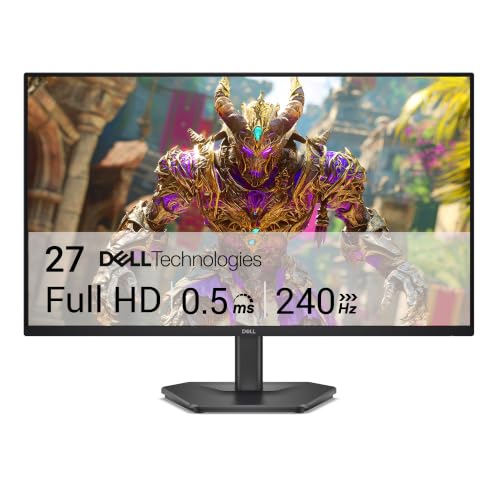


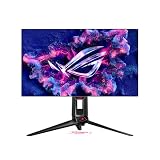
1. ASUS ROG Swift PG259QNR — Best Overall 240Hz Gaming Monitor
- Panel: 24.5″ IPS — wide viewing angles, accurate color, and no TN color washout while maintaining 240Hz speed
- Sync: NVIDIA G-Sync module (hardware) — the most reliable adaptive sync implementation for RTX GPU users
- ELMB-Sync: Exclusive ASUS technology enabling backlight strobing and G-Sync simultaneously — near-zero motion blur at any frame rate
- Response time: 1ms GtG with ELMB — competitive-grade ghosting elimination
- Connectivity: DisplayPort 1.4, HDMI 2.0, USB 3.0 hub; 100x100mm VESA mount
The ASUS ROG Swift PG259QNR is the reference 240Hz competitive gaming monitor for NVIDIA GPU users. ELMB-Sync is a genuinely unique feature — most monitors force you to choose between adaptive sync (no tearing) or backlight strobing (no motion blur); ELMB-Sync enables both simultaneously, delivering the cleanest possible motion presentation at any frame rate. The IPS panel at 1080p produces colors accurate enough for content creation alongside competitive gaming. At ~$349, it’s a premium investment, but it’s the best-engineered 240Hz gaming monitor available today.
2. LG UltraGear 27GR75Q — Best 1440p 240Hz Gaming Monitor
- Panel: 27″ IPS at 2560×1440 (1440p) — significantly sharper pixel density than 1080p at 27 inches
- Refresh rate: 240Hz native — the first widely available 27″ 1440p IPS panel at 240Hz under $300
- Response time: 1ms GtG — LG IPS panels have improved dramatically in response speed since 2023
- Sync: AMD FreeSync Premium + NVIDIA G-Sync Compatible certification — works with both GPU brands
- Value: 1440p + 27″ + 240Hz + IPS at ~$279 represents exceptional price-to-performance in 2026
The LG UltraGear 27GR75Q is one of the best monitor values in 2026 — 1440p resolution at 240Hz on a 27″ IPS panel for under $280 was impossible at launch and remains exceptional value today. The step up from 1080p to 1440p at 27 inches is immediately visible in text sharpness, texture detail in games, and interface elements — everything is crisper. For players whose GPU can maintain 200+ fps at 1440p (RTX 4070 or better recommended), the 27GR75Q offers the ideal balance of resolution and refresh rate for competitive gaming.
3. Alienware AW2523HF — Best 240Hz Monitor for IPS Color and Speed Balance
- Panel: 24.5″ IPS at 1080p — 400 nits peak brightness, 99% sRGB color coverage
- Response time: 0.5ms GtG (fastest on-paper response in this roundup) — extreme ghosting reduction
- Sync: AMD FreeSync Premium + NVIDIA G-Sync Compatible — dual-ecosystem compatibility
- Design: Alienware’s thin-bezel design with fully adjustable stand (height, tilt, swivel, pivot) — premium ergonomics
- HDR: VESA DisplayHDR 400 certification — modest but functional HDR for supported titles
Alienware’s AW2523HF stands out for its 0.5ms GtG response time claim — the fastest specified response in this comparison. In practice, it produces extremely clean motion with minimal ghosting during fast panning in competitive FPS games. The fully adjustable stand (height, tilt, swivel, pivot) is a premium feature often missing from monitors in this price range. At ~$249 with G-Sync compatibility, 99% sRGB, and that exceptional response time, the AW2523HF is the best price-to-performance 240Hz IPS monitor for players without RTX GPUs who need FreeSync.
4. MSI G274QPF — Best Budget 1440p 240Hz Gaming Monitor
- Panel: 27″ IPS at 2560×1440 — Rapid IPS technology for fast pixel response comparable to TN panels
- Refresh rate: 240Hz native with 1ms MPRT response time
- Sync: AMD FreeSync Premium Pro — the highest FreeSync tier including HDR support
- Color: 95% DCI-P3 color gamut — wider color coverage than sRGB-only monitors for HDR gaming
- Value: 1440p 240Hz with FreeSync Premium Pro HDR at ~$269 — under-$270 1440p competitive monitor
The MSI G274QPF competes directly with the LG UltraGear 27GR75Q at the 1440p 240Hz price tier, and it edges ahead in color gamut — 95% DCI-P3 versus the LG’s sRGB-focused panel. For gamers who play HDR-enabled titles or who care about vibrant, wide-gamut color in their games, the MSI’s broader color coverage matters. FreeSync Premium Pro HDR is the most capable AMD adaptive sync tier. At ~$269, it’s within $10 of the LG and worth the premium for AMD GPU users who want the best FreeSync HDR implementation available under $300.
5. AOC C24G2Z — Best Budget 240Hz Gaming Monitor
- Panel: 24″ TN panel — 240Hz with 0.5ms response, the fastest panel technology available for pure speed
- Price: Under $170 — the lowest entry point for genuine 240Hz gaming in 2026
- Response time: 0.5ms GtG on TN — no other panel technology matches TN for pixel-level response speed
- Sync: AMD FreeSync Premium + G-Sync Compatible — dual compatibility at budget price
- Trade-off: TN panel color and viewing angle limitations are real — colors wash out at off-center angles
The AOC C24G2Z is the honest budget 240Hz entry point — it doesn’t pretend to be a premium monitor. TN panels produce faster pixel response times than IPS at equivalent prices, which is why the C24G2Z achieves 240Hz and 0.5ms response at $169 while IPS 240Hz monitors start at $249+. The color accuracy and viewing angle limitations of TN are real and visible when compared side-by-side with IPS alternatives. For competitive players whose only priority is frame rate and response time — and who game alone without others viewing the screen from angles — the AOC C24G2Z delivers the 240Hz competitive advantage for the lowest possible investment.

Buying Guide
1080p vs. 1440p at 240Hz: The GPU Requirement Question
1440p at 240Hz demands significantly more GPU performance than 1080p at 240Hz. To consistently hit 200+ fps at 1440p in competitive titles, you need at minimum an RTX 4070 or RX 7700 XT. At 1080p, an RTX 4060 or RX 7600 can sustain 200+ fps in most competitive games. Check your GPU benchmarks in your primary game before choosing resolution. A 1440p 240Hz monitor running at 120–150 fps still looks better than a 1080p monitor at the same frame rate — but the full 240Hz advantage requires your GPU to actually produce 240 frames per second.
IPS vs. TN vs. VA at 240Hz: Panel Technology Explained
TN (Twisted Nematic) panels offer the fastest pixel response times and highest native refresh rates but suffer from poor color accuracy and narrow viewing angles — colors shift dramatically at off-center views. IPS (In-Plane Switching) panels deliver excellent color accuracy and wide viewing angles with response times that in 2026 match or nearly match TN performance — the technology gap has narrowed significantly. VA (Vertical Alignment) panels offer the best contrast ratios but slow pixel response makes them unsuitable for 240Hz competitive gaming. For 240Hz competitive monitors, IPS is the clear choice in 2026 unless strict budget constraints require TN.
G-Sync vs. FreeSync at 240Hz
NVIDIA G-Sync (hardware module) offers the most reliable adaptive sync implementation — guaranteed performance, wider frame rate operating range, and HDR support in G-Sync Ultimate models. G-Sync monitors cost $50–$100 more than FreeSync equivalents. NVIDIA G-Sync Compatible certification means the monitor passes NVIDIA’s FreeSync validation testing for reliable adaptive sync with RTX GPUs — these cost the same as AMD FreeSync monitors. AMD FreeSync Premium and Premium Pro are excellent implementations on modern hardware. If you have an RTX GPU, G-Sync Compatible monitors offer 95% of G-Sync hardware performance at significantly lower cost.
Response Time: GtG vs. MPRT — What the Numbers Really Mean
GtG (Gray-to-Gray) response time measures how fast a pixel transitions between two mid-range gray values — a best-case scenario measurement. MPRT (Moving Picture Response Time) measures perceived motion blur using backlight strobing, and typically produces lower numbers than GtG by introducing tradeoffs in brightness. Marketing departments exploit both metrics freely. Practically: 1ms GtG IPS panels in 2026 produce negligible ghosting in real gaming. Don’t pay heavy premiums chasing 0.5ms over 1ms — the difference is imperceptible in real-world use.

FAQ
Is 240Hz really worth it over 144Hz for gaming?
Yes, with caveats. Scientific research shows measurable improvements in target tracking and reaction time from 144Hz to 240Hz in competitive FPS gaming. The improvement is less dramatic than the jump from 60Hz to 144Hz, but it’s real and consistent across studies. The value proposition depends on your GPU — if your graphics card can maintain 200+ fps in your games, 240Hz is worth the upgrade. If your GPU struggles past 120–144 fps, save the money and invest in a GPU upgrade first.
What GPU do I need to run a 240Hz monitor effectively?
At 1080p 240Hz: RTX 4060 / RX 7600 or better can maintain 180–240+ fps in competitive titles (CS2, Valorant, Apex Legends). At 1440p 240Hz: RTX 4070 / RX 7700 XT or better for consistent 200+ fps. High-fidelity games (Cyberpunk 2077, Alan Wake 2) require RTX 4080 / RX 7900 GRE to hit 240 fps at 1440p even on optimized settings. Competitive FPS titles are GPU-light by design — they prioritize high frame rates over visual fidelity.
Does 240Hz help in non-FPS games like RPGs or strategy games?
High refresh rates improve smoothness in camera movement and animation in all game types, not just FPS. Open-world RPG exploration feels noticeably smoother at 240Hz versus 144Hz when rotating the camera or running through environments. However, the competitive advantage of 240Hz (target tracking, reaction time) is specific to fast-paced games. For turn-based strategy or slow RPGs, 144Hz delivers 90%+ of the benefit at lower cost.
Should I choose 24.5″ 1080p or 27″ 1440p for competitive gaming?
Professional esports players predominantly use 24–24.5″ 1080p monitors — the higher pixel density of 1080p at 24 inches (91 PPI) makes targets appear sharper per pixel area, and the smaller screen requires less eye movement to cover the full field. 27″ 1440p offers better image quality for everything outside competitive FPS and is the better all-rounder for mixed gaming and productivity. Choose by primary use: pure competitive FPS = 24.5″ 1080p; mixed gaming = 27″ 1440p.

Can I use a 240Hz monitor with a console (PS5, Xbox Series X)?
PS5 and Xbox Series X output maximum 120Hz via HDMI 2.1. A 240Hz monitor connected via HDMI 2.0 (maximum 144Hz) or HDMI 2.1 will run at 120Hz maximum for console input — you won’t see 240Hz from current-gen consoles. For console gaming, a 240Hz monitor functions as a fast 120Hz display, which is still excellent. The 240Hz capability is fully utilized only by PC gaming where your GPU can output the corresponding frame rates.
Final Verdict
The ASUS ROG Swift PG259QNR is the best 240Hz gaming monitor for NVIDIA GPU users who want the maximum competitive edge — ELMB-Sync’s ability to combine backlight strobing with G-Sync simultaneously is a genuine differentiator at 24.5″ 1080p. For the best overall value at 1440p, the LG UltraGear 27GR75Q delivers 27″ IPS at 240Hz and 1440p for under $280 — an exceptional monitor at an aggressive price. AMD GPU users looking for 1440p competitive gaming should check the MSI G274QPF for its FreeSync Premium Pro HDR capability. The Alienware AW2523HF hits the 1080p competitive sweet spot with 0.5ms response and a premium fully-adjustable stand at $249. And for budget-first competitive players, the AOC C24G2Z delivers genuine 240Hz TN performance for under $170 — the lowest cost of entry to the 240Hz competitive tier.
Related Articles
Looking for more on this topic? Browse the hand-picked guides below — each one applies the same scoring rubric used in this review.
Frequently Asked Questions
What GPU do I need to actually reach 240fps?
It depends entirely on the game. Esports titles like CS2, Valorant and Overwatch reach 240fps at 1080p on a mid-range card such as an RTX 4060 or RX 7600. AAA single-player games will not get close without heavy upscaling. Your CPU matters more than the GPU at these frame rates, since it sets the 1 percent lows.
Is 240Hz a big upgrade over 144Hz?
The jump from 60Hz to 144Hz is dramatic; 144Hz to 240Hz is a smaller but still perceptible improvement in motion clarity and aim tracking. Frame time drops from 6.9 to 4.2 milliseconds. Competitive players will notice, while most single-player gamers would gain more from higher resolution or a better panel.
Should I choose 1080p or 1440p at 240Hz?
1440p at 240Hz is now affordable and offers far better desktop sharpness and detail, but it demands roughly 70 percent more GPU work. 1080p remains the choice for pure competitive play, where lower rendering load makes hitting the refresh cap easy. If you play a mix of genres, 1440p is the better long-term buy.
How should I read response time claims?
Grey-to-grey figures of 1 millisecond usually reflect the fastest single transition with aggressive overdrive that causes inverse ghosting. MPRT figures measure perceived blur with backlight strobing enabled and are not comparable. Look at independent measurements of average response across all transitions, and prefer modern IPS, TN or OLED over VA panels for 240Hz.
Do I need DisplayPort or will HDMI do?
Use DisplayPort 1.4 with Display Stream Compression or DisplayPort 2.1 for 1440p at 240Hz; HDMI 2.0 lacks the bandwidth. HDMI 2.1 can also carry the signal if both the GPU and monitor support it. DSC is visually lossless, so do not avoid it, but note it can prevent some multi-monitor daisy-chaining.
Ready to decide? Our #1 pick for 2026 is the ASUS ROG Swift PG259QNR.
Live price & availability on Amazon.