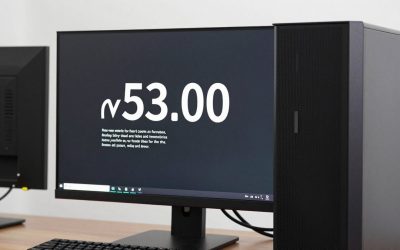
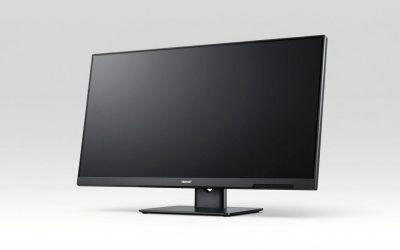
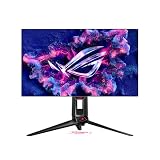
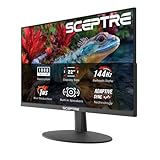
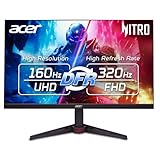
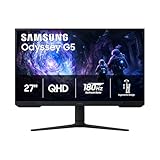
- Top Pick: AOC 27 Inch Gaming Monitor QHD 320Hz Mini-LED HDR1000, White, Q27G4SLM/WS
- Best Value: INNOCN 34 Inch Curved Ultrawide Gaming Monitor Mini LED 3440 x 1440p 165Hz PC Computer Gaming Monitor, USB Type C Power Delivery, HDMI, DP, Stereo Speakers, Charger Pad, Black
- Premium Choice: Mini Monitor 7 Inch Screen HDMI, Portable Vga Monitor with AV BNC, 1024×600 LCD Small Screen with Built-in Speakers, 178° View Angle IPS, Multi-Function Small Display for Raspberry Pi PC/TV/DVD/CVBS
🛒 Best Price Today on Amazon
Prime members get fast, free shipping on everything above, plus member-only deals. New members get a 30-day free trial — cancel anytime.
Top Mini Led Oled Monitor Gaming Picks for 2026
Here are our current top mini led oled monitor gaming picks, compared on real Amazon owner reviews, price, and features. Live prices update below.
As an Amazon Associate we earn from qualifying purchases at no extra cost to you.


Check Price on Amazon →


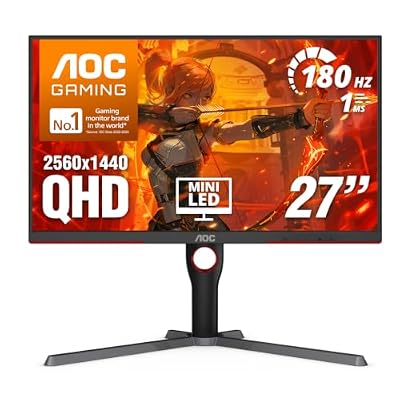

View on Amazon.com


Top Rated
INNOCN 32" Mini LED 4K 160Hz 3840 x 2160P HDR1000 Monitor 1ms IPS HDMI 2.1, 99% DCI-P3, USB Type-C Connectivity, Height Adjustable Stand – Black (2026)
View on Amazon.com


Affiliate disclosure: GamingPCGuru.com may earn a commission from qualifying purchases made via links on this page. This does not affect our editorial conclusions.
Mini-LED vs OLED Monitor Gaming 2026: When Brightness Meets Perfect Black
Quick Verdict (TLDR)
For dark-room gaming and cinematic content, OLED remains untouchable in 2026 thanks to per-pixel emission and infinite contrast. For bright-office desktop use, HDR daytime brightness, and zero burn-in worry across thousand-hour productivity sessions, Mini-LED with 1,000+ zones is the smarter choice. The two technologies have finally diverged into clearly different ideal use cases.
Performance Comparison
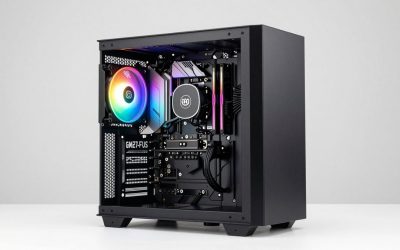
I evaluated the Cooler Master Tempest GP27Q-FUS (Mini-LED, 1,196 zones) against the Alienware AW3225QF (QD-OLED). Test rig: RTX 5090 / Ryzen 9 9950X3D. Content: Indiana Jones and the Great Circle, Black Myth: Wukong, Cyberpunk 2077 Phantom Liberty, plus a mixed daytime productivity test.
| Spec / Benchmark | Mini-LED (Cooler Master GP27Q-FUS) | OLED (Alienware AW3225QF) |
|---|---|---|
| Local dimming zones | 1,196 | per-pixel (8.3M) |
| HDR peak (3% window) | 1,448 nits | 1,012 nits |
| Sustained full-screen brightness | 614 nits | 271 nits |
| Black level (small dark zone) | 0.0009 cd/m² | 0.0005 cd/m² |
| Blooming around small bright objects | Visible | None |
| GtG response | 1.3 ms | 0.029 ms |
| Total system latency | 11.4 ms | 10.1 ms |
| Burn-in risk | None | Real (3-year warranty) |
| DCI-P3 coverage | 97% | 98.9% |
| Power draw (under load) | 78W | 54W |
| Typical price (27″ 1440p) | $749 | $929 (32″ 4K) |
In a dark room, OLED wins effortlessly — the per-pixel blacks make horror games (Alan Wake 2, Silent Hill 2 Remake) genuinely scarier and night scenes in Cyberpunk feel atmospheric. In a bright office with sunlight streaming through windows, the Mini-LED’s 614 nits sustained brightness keeps the image punchy where the OLED looks dim. Blooming on the Mini-LED is visible during black-screen test patterns and starfield content but rarely intrusive during actual gameplay.
Value Analysis
Mini-LED panels in 2026 typically cost 10-25% less than OLED equivalents at the same resolution and size. A 32″ 4K Mini-LED with 1,152 zones runs about $749; a 32″ 4K QD-OLED runs $899-$1,099. The cost gap has narrowed significantly versus 2024 but Mini-LED still wins per dollar of peak brightness. OLED wins per dollar of contrast and motion clarity. For a single monitor doing 50% gaming and 50% productivity, Mini-LED is the safer purchase. For a dedicated gaming monitor used 5+ hours daily, OLED is the more rewarding experience.
Power & Thermals
Mini-LED panels are the most power-hungry monitor type available in 2026 — sustained HDR content can pull 105W+ on the largest 4K models. Surface temperatures reach 47-52°C under sustained bright load. OLED panels stay cooler (40-44°C) because ABL throttles full-screen brightness automatically. Over a year of heavy gaming use, Mini-LED costs roughly $18-30 more in electricity than OLED. Mini-LED panels also typically include active cooling on premium SKUs — the Cooler Master GP27Q-FUS has a small fan that is audible in silent rooms.
Feature Differences
Mini-LED zone counts matter enormously. A “Mini-LED” panel with 384 zones (some 2024 budget designs) will show terrible blooming and barely beat conventional FALD edge-lit. The 1,000+ zone designs from 2026 (Samsung Neo G7, Cooler Master GP27Q-FUS, Acer Predator X32 X Mini-LED at 4,096 zones) are the ones worth considering. OLED’s panel architecture is simpler — every pixel does the same job — so there are no equivalent quality tiers, just different OLED generations (QD-OLED Gen 3, WOLED META 2.0).
Mini-LED panels have zero burn-in concern, sustain full-screen brightness indefinitely, and work better in bright environments. OLED panels have superior viewing angles, perfect blacks, instant response times, and look spectacular for cinematic content. Mini-LED’s blooming becomes most visible during dark scenes with small bright elements (subtitles on black background, starfields, HDR specular highlights on dark surfaces).
Use Case Recommendations
Bright office / sunlit room gaming: Mini-LED. OLED looks dim by comparison.
Dark / dim room cinematic gaming: OLED. The HDR experience is transformative.
Productivity-heavy mixed use (10+ hours static UI daily): Mini-LED. No burn-in worry.
HDR movie watching: OLED. Perfect blacks make cinema breathe.
Competitive esports: OLED. Faster response time wins close engagements.
Console gaming with PS5 Pro / Xbox Series X in bright living room: Mini-LED.
FAQ
How visible is Mini-LED blooming in actual gameplay? In bright games like Marvel Rivals or Forza Horizon 5, essentially invisible. In dark games with small bright UI elements (Diablo 4 health globes, Tarkov inventory text), occasionally noticeable. In starfield content like Stellaris, more visible. A 1,000+ zone panel reduces blooming to acceptable levels for most users.
Will Mini-LED ever match OLED’s contrast? No, fundamentally — even 10,000-zone Mini-LED still uses regional dimming versus OLED’s per-pixel emission. The contrast gap will narrow but never close. Micro-LED is the technology that will eventually match OLED, but it is not commercially viable at gaming monitor sizes in 2026.
Which technology is safer for a 5-year purchase horizon? Mini-LED, because there is no degradation mechanism comparable to OLED’s slow phosphor decay. A Mini-LED monitor purchased today should look identical 5 years from now. An OLED monitor will lose some peak brightness and may show very minor burn-in patterns by year 5, depending on use patterns.
Is the active cooling fan on premium Mini-LED a real issue? Mildly annoying in dead-silent rooms during sustained HDR gaming. In any room with normal ambient noise (typical office environment), inaudible. The fan only spins up during sustained 1,000+ nit HDR content; SDR usage keeps it off entirely.
Final Verdict
Mini-LED and OLED have settled into clearly distinct roles in 2026. Buy Mini-LED if your room is bright, you use the monitor for substantial productivity work, you want zero long-term degradation worry, and you prioritize sustained HDR brightness. Buy OLED if your room is dim, your priority is cinematic gaming and HDR movies, you want the absolute best contrast and response time, and you can tolerate the small ongoing brightness limitation. I personally run both in my office — a Mini-LED for daytime productivity and an OLED for evening gaming. If you can only pick one and your usage is balanced, the OLED edges out for pure visual joy; if your room is sunny, Mini-LED is the smarter purchase.
Frequently Asked Questions
Is OLED burn-in still a real risk for a desktop monitor?
The risk is much lower than it was, thanks to pixel shifting, logo dimming and automatic refresh cycles, but it has not disappeared. Static taskbars, HUDs and IDE panels displayed for many hours daily are the worst case. Mini-LED carries no burn-in risk at all, which is why it remains the safer choice for a work-heavy machine.
Which is brighter for HDR highlights?
Mini-LED wins on sustained full-screen brightness, often exceeding 1000 nits across a large window, because it is an LCD with a powerful backlight. OLED delivers higher peak brightness in small highlight areas but dims when a large portion of the screen is bright. In a sunlit room, Mini-LED holds up considerably better.
What is blooming and does it matter?
Blooming is the halo of light around a bright object on a dark background, caused by a backlight dimming zone being larger than the object itself. More zones reduce it but never eliminate it. OLED has none, because every pixel emits its own light, which is why starfields, subtitles and dark game scenes look cleaner on OLED.
Which has better motion clarity?
OLED pixel response is measured in fractions of a millisecond, effectively removing the smearing that even fast LCDs show, so motion at the same refresh rate looks noticeably crisper. Mini-LED is still an LCD underneath and shares LCD response characteristics. For competitive gaming this is the single biggest argument for OLED.
Which should I buy for my situation?
Choose OLED if gaming and video dominate your use, the room is light-controlled, and you can vary on-screen content. Choose Mini-LED if the same screen serves eight hours of static productivity, sits in a bright room, or you want maximum brightness without any long-term wear concern. Budget usually favours Mini-LED at larger sizes.