Top Picks at a Glance

SAMSUNG 49-inch Odyssey G9 (G91F) DQHD, 144Hz, Curved Gaming Monitor, Ultra-Wide 32:9 Screen, DisplayHDR 600, AMD FreeSync™ Premium Pro, Ergonomic Stand, LS49FG910ENXZA, 2025

Samsung 49" Odyssey (G93SC) Series QD-OLED Curved Gaming Monitor

SAMSUNG 970 EVO Plus SSD 250GB NVMe M.2 Internal Solid State Drive with V-NAND Technology, Storage and Memory Expansion for Gaming, Graphics w/ Heat Control, Max Speed, MZ-V7S250B/AM

ErgoFocus Heavy Duty Single Monitor Mount for Max 49" Ultrawide Screens

Samsung T9 Portable SSD 4TB, USB 3.2 Gen 2x2 External Solid State Drive
As an Amazon Associate we earn from qualifying purchases. Product prices and availability are accurate as of the date/time indicated.
Affiliate disclosure: We may earn a commission from qualifying purchases at no extra cost to you. Tested picks, honest verdicts.
By Alex Rivera, Senior Hardware Editor — May 2026
Best Samsung Odyssey Gaming Monitors in 2026
Quick Answer
The Samsung Odyssey OLED G80SD (S32DG80) is the headline 32″ 4K 240Hz QD-OLED at around $999 after the spring price drop. For ultrawides, the Odyssey OLED G95SD (S57DG95) is the 57″ dual-4K behemoth nothing else matches. Budget-conscious buyers should pick the Odyssey G7 G75NC, the 27″ 1440p 240Hz QD-OLED that finally cracked $599.
Why Samsung Odyssey
Samsung Display makes the QD-OLED panels that Alienware, MSI, and Dell rebadge — and Samsung itself uses them in the Odyssey OLED lineup with the brand’s own tuning. QD-OLED differs from LG’s WOLED by using a blue OLED layer with red and green quantum dot conversion, producing higher colour volume but slightly raised black levels in bright rooms (the so-called “purple cast”). For dim or controlled-light setups, QD-OLED is the brighter, more saturated alternative to WOLED.
The 2026 Odyssey lineup leans into form factor extremes. The G95SD (57″ 7680×2160) is the widest mainstream monitor ever shipped. The G95NC (49″ 5120×1440) defined the dual-1440p ultrawide category. The G80SD is the 32″ 4K 240Hz that competes head-to-head with LG’s 32GS95UE. And the new Smart Monitor M9 line adds webOS-style smart features to OLED gaming monitors for those who want a 2-in-1 TV replacement.
Our Top 5 Picks
1. Samsung Odyssey OLED G80SD (S32DG80) — The 32″ 4K flagship. 32″ QD-OLED at 240Hz, 0.03ms response, DisplayPort 2.1, the Odyssey-exclusive Tizen smart OS. Around $999. Why it wins: only 32″ QD-OLED with built-in smart TV functionality. Target buyer: RTX 5080/5090 gamers who want a single monitor that doubles as a smart TV.
2. Samsung Odyssey OLED G95SD (S57DG95) — The 57″ super-ultrawide. 7680×2160 (dual 4K) QD-OLED at 240Hz, 1000R curvature. Around $2,199 after promotional pricing. Why it wins: widest 240Hz monitor on the market. Target buyer: sim racing, flight sim, and multi-monitor-replacement productivity users.
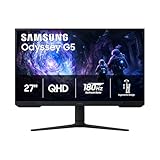
3. Samsung Odyssey G7 G75NC — The 27″ value QD-OLED. 27″ 1440p QD-OLED at 360Hz, 0.03ms response. Around $599 after May discounts. Why it wins: cheapest 27″ QD-OLED 360Hz monitor from a tier-1 brand. Target buyer: competitive players upgrading from an IPS 240Hz panel.
4. Samsung Odyssey OLED G95NC (S49CG95) — The 49″ dual-1440p classic. 49″ 5120×1440 QD-OLED at 240Hz, 1800R curvature. Around $1,499. Why it wins: still the standard-bearer for dual-1440p ultrawide. Target buyer: productivity-plus-gaming users who want two displays in one chassis.
5. Samsung Odyssey Neo G8 G85NB — The Mini-LED alternative. 32″ 4K Mini-LED at 240Hz, 1196-zone local dimming, 2000-nit HDR peak. Around $1,199. Why it wins: brightest 32″ 4K 240Hz monitor on the market. Target buyer: HDR enthusiasts and bright-room gamers who can’t go OLED.
Buyer’s Guide
The QD-OLED versus WOLED decision is real. QD-OLED (Samsung Odyssey, Alienware, MSI) gives higher peak HDR brightness, deeper colour volume, and the well-documented purple cast in bright rooms. WOLED (LG UltraGear, ASUS PG variant) gives slightly lower peak brightness but better daytime contrast and no purple cast. If your gaming room has controlled lighting (curtains, dim bias light), QD-OLED is the brighter, more saturated choice. If you game in a sunlit room, WOLED handles ambient light better.
Form factor is the second decision. A 32″ 4K monitor (G80SD) is the most flexible single display — works for gaming, productivity, and media. A 49″ or 57″ super-ultrawide replaces dual monitor setups but requires a deeper desk and forces single-app focus. A 27″ 1440p (G75NC) is the esports specialist.
Samsung’s Tizen smart OS on the G80SD and G95SD is genuinely useful — built-in Netflix, Spotify, AirPlay, and SmartThings make these monitors function as standalone TVs when your PC is off. It’s the differentiator versus LG’s UltraGear lineup (which moved smart features to the GS suffix only).
HDR performance matters for OLED monitors. The G80SD hits 1300 nits peak with the True Black 400 profile; the Neo G8 hits 2000 nits with HDR 2000. For pure HDR brightness, the Neo G8 (Mini-LED) outperforms any OLED on the market. For per-pixel contrast and black levels, OLED wins.
Common Brand-Specific Pitfalls
Samsung’s model numbering is genuinely user-hostile. The “G80SD” and “S32DG80” refer to the same monitor — the SD/DG numbers are regional SKUs. The “G80SD” lineage from 2024 is different from the “G80SD” of 2026 (refreshed panel). Always confirm year of manufacture and panel generation before buying, particularly on Amazon third-party listings.
The G95SD’s massive size requires real desk planning. At 57″ wide with a 1000R curve, the monitor consumes roughly 1.4 metres of horizontal space and demands a 750mm-deep desk to view comfortably. Measure your desk before ordering.
Samsung’s OLED burn-in warranty on the Odyssey OLED line is 3 years — better than LG’s 2-year coverage. But the warranty requires you to use the included pixel-cycling features and refresh routines. Disable them at your own risk.
Finally: Samsung’s firmware updates on Tizen monitors are over-the-air and generally smooth, but some updates have temporarily disabled features (notably DSC over HDMI on early G80SD firmware). If a feature you need just stopped working, check the firmware changelog before assuming hardware failure.
FAQ
How bad is the purple cast on QD-OLED in a normal room? Noticeable in direct sunlight, barely visible with curtains closed. The 2025+ panel revisions (including the G80SD) have a slight anti-reflective coating improvement that reduces but doesn’t eliminate the effect.
Does the G95SD work as one giant display or does it use PBP? It works as a single 7680×2160 display by default, but the OSD includes a PBP mode that splits it into two 3840×2160 inputs from separate sources. Useful for KVM-style workflows.
Will the G80SD run at 4K 240Hz over HDMI 2.1? Yes with DSC enabled — bandwidth is sufficient on HDMI 2.1. For lossless 240Hz at 10-bit, DisplayPort 2.1 is preferred (RTX 5080/5090 cards have DP 2.1).
How is Samsung’s RMA process for OLED issues? Generally responsive in North America (2-3 weeks turnaround), slower in EU. Burn-in claims under the 3-year warranty are honoured but require you to demonstrate the issue with a uniform colour test pattern.
Final Take
Samsung Odyssey in 2026 is the strongest QD-OLED brand experience you can buy. The G80SD is the smart-features 4K 240Hz pick, the G95SD is the ultimate super-ultrawide, and the G75NC finally puts a 27″ QD-OLED 360Hz panel under $600. Just navigate the model numbers carefully and confirm you’re buying current-generation panels before clicking checkout.