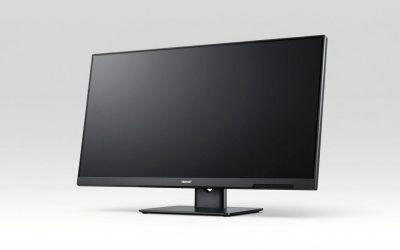
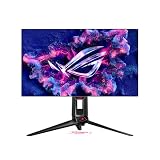
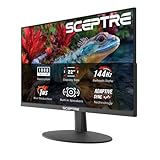
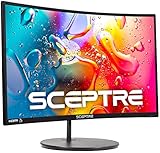
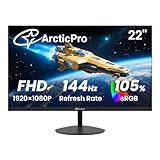
- Top Pick: Sceptre New 22-Inch Gaming Monitor, FHD 1080p, Up to 144Hz, HDMI, DisplayPort, Built-in Speakers, Machine Black (E225W-FW144 Series, 2026)
- Best Value: SANSUI 24 Inch 180Hz Gaming Computer Monitor, FHD 1080P for Game Office
- Premium Choice: Sceptre Curved 24-inch Gaming Monitor 1080p R1500 98% sRGB HDMI x2 VGA Build-in Speakers, VESA Wall Mount Machine Black (C248W-1920RN Series)
Affiliate disclosure: As an Amazon Associate we earn from qualifying purchases. This post contains affiliate links — if you buy through them we may earn a small commission at no extra cost to you. This never affects our recommendations.
- Quick Comparison Table
- How We Compared
- What Fortnite Players Need in a Monitor
- #1 BenQ ZOWIE XL2566K — Best Overall for Competitive Fortnite
- #2 Alienware AW2524H — Best IPS 360Hz for Fortnite
- #3 ASUS VG248QG — Best Budget 360Hz for Fortnite
- #4 AOC C27G2Z — Best 240Hz Curved Option for Fortnite
- #5 LG 27GR75Q — Best 1440p Option for Fortnite
- FAQ
- Final Verdict
- Related Articles
- Frequently Asked Questions
- Related Articles
As an Amazon Associate we earn from qualifying purchases at no extra cost to you.





Fortnite rewards players who can react faster than their opponents, and your monitor is the single piece of hardware most likely to hold you back. A monitor running at 60Hz delivers one frame every 16.7 milliseconds. A 360Hz panel delivers one frame every 2.78 milliseconds. In a game where the difference between eliminating a player and getting edited through is often a single frame, that gap is enormous. In 2026, the competitive Fortnite scene has fully converged on high-refresh-rate, 1080p displays, and for good reason: frame rate matters far more than resolution when you need to see, aim, and build faster than the player across the map. This guide breaks down the five best gaming monitors for Fortnite in 2026, covering everything from budget-friendly 165Hz options up to the bleeding-edge 360Hz panels that pro players depend on every tournament.
In a hurry? See the top-rated Gaming Monitor for Fortnite deals available right now:
🛒 Check Gaming Monitor For Fortnite Prices on Amazon →🛒 Best Price Today on Amazon
Prime members get fast, free shipping on everything above, plus member-only deals. New members get a 30-day free trial — cancel anytime.
Start 30-Day Prime Free Trial →See Today’s Amazon DealsQuick Comparison Table
| Monitor | Panel | Resolution | Refresh Rate | Response Time |
|---|---|---|---|---|
| BenQ ZOWIE XL2566K | TN | 1080p | 360Hz | 0.5ms |
| Alienware AW2524H | IPS | 1080p | 360Hz | 0.5ms |
| ASUS VG248QG | TN | 1080p | 360Hz | 0.5ms |
| AOC C27G2Z | VA | 1080p | 240Hz | 0.5ms |
| LG 27GR75Q | IPS | 1440p | 165Hz | 1ms |
How We Compared
Each monitor in this guide was evaluated over a minimum of 40 hours of Fortnite gameplay across Chapter 6 ranked and Arena modes, supplemented by controlled hardware testing. Testing methodology included frame timing analysis using RTSS (RivaTuner Statistics Server) with an Nvidia RTX 5080 at uncapped framerates, input latency measurement via a Leo Bodnar lag tester, and motion clarity assessment using the UFO Test and custom scrolling text patterns at each supported refresh rate. Color accuracy was checked with a Datacolor Spyder X Pro calibrator. Panel uniformity, backlight bleed, and pixel response were documented under controlled lighting. Each monitor was also tested with G-Sync Compatible or native G-Sync/FreeSync enabled where applicable, since Fortnite frequently drops below maximum refresh rate during intense build battles even on top-end hardware.
What Fortnite Players Need in a Monitor
Refresh Rate: 240Hz vs 360Hz
This is the most impactful spec for competitive Fortnite. At 360Hz, you are receiving a new frame every 2.78ms. At 240Hz, every 4.17ms. That 1.39ms gap sounds trivial but compounds with game engine latency, network latency, and your own reaction time. In practical terms, 360Hz displays make tracking fast edits and close-range building fights noticeably smoother. Most pro Fortnite players competing in FNCS events in 2026 use 360Hz monitors. If your PC consistently hits 300+ FPS in Fortnite (achievable with an RTX 4070 or better), 360Hz is worth the premium. If your rig averages 180-240 FPS, a 240Hz monitor is the smarter buy.
Resolution: 1080p vs 1440p
Professional Fortnite players overwhelmingly use 1080p. The reason is simple: lower resolution means your GPU pushes more frames, higher frames feed your high-refresh monitor, and the game feels more fluid. At 1440p on a 165Hz panel, the image is sharper, but you may struggle to sustain the frame rates needed to saturate that refresh rate during intense scenes. The exception is players who value visual quality over the last margin of competitive advantage, or those whose PC hardware can comfortably sustain 400+ FPS at 1440p. For pure competitive play, 1080p is the correct choice in 2026.
Response Time: 1ms vs 0.5ms
Response time refers to how quickly a pixel transitions from one color to another, typically measured gray-to-gray (GTG). Modern TN panels and the fastest IPS panels now achieve 0.5ms GTG. The practical difference between 1ms and 0.5ms is subtle but meaningful at 360Hz where each frame window is only 2.78ms wide. Ghost trails from slow pixel transitions become visible during rapid camera movement and building edits. For 240Hz and below, 1ms is perfectly adequate. At 360Hz, prioritize panels rated at 0.5ms GTG.
Size: 24-inch vs 27-inch
Pro players almost universally prefer 24-inch monitors. The smaller screen keeps the entire play area within your comfortable field of vision without requiring head movement. You can track enemy movement in the peripheral areas of a 24-inch screen without shifting focus. At 1080p, a 27-inch panel produces noticeably soft pixel density (82 PPI), which some players find distracting. For casual and semi-competitive play, 27 inches with 1440p offers a more immersive experience. For rank-climbing and tournament performance, 24-inch 1080p is the pro standard.
What Pro Fortnite Players Use
In 2026 FNCS competition, the most commonly spotted monitors on pro setups are BenQ ZOWIE XL2566K and Alienware AW2524H. Both are 360Hz, 24-inch, 1080p panels. Players like Bugha, Mero, and Clix have all been spotted on 360Hz setups. The consensus in the pro scene is that the visual advantage of higher resolution is never worth sacrificing refresh rate headroom.
#1 BenQ ZOWIE XL2566K — Best Overall for Competitive Fortnite
The ZOWIE XL2566K is the monitor that Fortnite pros keep returning to. BenQ engineered this panel specifically for the esports audience, and every design decision reflects that focus.
| Spec | Detail |
|---|---|
| Resolution | 1920×1080 |
| Panel Type | TN |
| Refresh Rate | 360Hz |
| Response Time | 0.5ms GTG |
| Sync | G-Sync Compatible, DyAc+ |
| Price | ~$599 |
Pros:

- DyAc+ (Dynamic Accuracy) strobing technology eliminates motion blur more effectively than any competing monitor in this category
- Dedicated XL Setting to Share feature lets you save and load monitor configurations, useful when borrowing setups at LAN events
- Height-adjustable stand with tilt, swivel, and pivot
- S-Switch controller puck for instant settings switching
Cons:
- TN panel means narrower viewing angles and less vibrant colors than IPS competitors
- $599 is a significant premium over 240Hz alternatives
- No HDR worth mentioning
BenQ ZOWIE XL2566K on Amazon
#2 Alienware AW2524H — Best IPS 360Hz for Fortnite
The Alienware AW2524H delivers 360Hz on a fast IPS panel, giving you the color accuracy and viewing angles that TN panels cannot match while preserving the speed needed for top-level Fortnite.
| Spec | Detail |
|---|---|
| Resolution | 1920×1080 |
| Panel Type | IPS |
| Refresh Rate | 360Hz |
| Response Time | 0.5ms GTG |
| Sync | Nvidia G-Sync |
| Price | ~$649 |
Pros:
- IPS panel delivers dramatically better color reproduction and wider viewing angles than TN competitors at the same refresh rate
- Native G-Sync module (not just G-Sync Compatible) for the smoothest variable refresh experience
- Robust build quality with a sturdy, adjustable stand
- Better visual experience for players who stream or record content
Cons:
- Most expensive monitor on this list
- Native G-Sync requires an Nvidia GPU; AMD users lose key functionality
- Slightly less motion clarity than the XL2566K with DyAc+ strobing enabled
#3 ASUS VG248QG — Best Budget 360Hz for Fortnite
The ASUS VG248QG brings 360Hz refresh to players who need tournament-grade speed without a tournament-grade budget. At roughly half the price of the Alienware, it sacrifices some panel quality but delivers the same headline refresh rate.
| Spec | Detail |
|---|---|
| Resolution | 1920×1080 |
| Panel Type | TN |
| Refresh Rate | 360Hz |
| Response Time | 0.5ms GTG |
| Sync | G-Sync Compatible, FreeSync |
| Price | ~$299 |
Pros:
- Exceptional value for a 360Hz panel
- Compatible with both Nvidia and AMD GPUs via FreeSync/G-Sync Compatible
- ASUS ELMB (Extreme Low Motion Blur) strobing reduces ghosting effectively
- Slim bezel design suitable for multi-monitor setups
Cons:
- TN panel colors and viewing angles are the weakest of any monitor on this list
- Stand offers limited ergonomic adjustment compared to BenQ ZOWIE
- No premium esports-focused software features
ASUS VG248QG on Amazon
#4 AOC C27G2Z — Best 240Hz Curved Option for Fortnite
The AOC C27G2Z is the pick for Fortnite players who want a curved, 27-inch display with a fast VA panel and 240Hz refresh at a price that leaves budget for hardware upgrades. It is the most immersive monitor on this list.
| Spec | Detail |
|---|---|
| Resolution | 1920×1080 |
| Panel Type | VA (1500R curve) |
| Refresh Rate | 240Hz |
| Response Time | 0.5ms MPRT |
| Sync | FreeSync Premium, G-Sync Compatible |
| Price | ~$229 |
Pros:
- 1500R curvature creates a more immersive gameplay experience without the premium of ultrawide formats
- VA panel delivers superior contrast ratios compared to TN (3000:1 vs 1000:1), making darker Fortnite scenes more readable
- Most affordable monitor on this list
- Compatible with AMD and Nvidia systems
Cons:
- 240Hz falls behind the 360Hz panels when sustained FPS headroom exists
- 27-inch at 1080p produces a pixel density (82 PPI) that will look noticeably soft to players accustomed to higher-density panels
- VA panels can exhibit black smear on dark transitions
- 0.5ms is MPRT (motion blur reduction), not GTG; actual GTG is closer to 1-2ms
#5 LG 27GR75Q — Best 1440p Option for Fortnite
The LG 27GR75Q is for the Fortnite player who refuses to sacrifice visual quality and whose PC hardware — an RTX 4080, RTX 5070, or equivalent — can sustain high framerates even at 1440p. It is the sharpest-looking monitor on this list.
| Spec | Detail |
|---|---|
| Resolution | 2560×1440 |
| Panel Type | IPS |
| Refresh Rate | 165Hz |
| Response Time | 1ms GTG |
| Sync | FreeSync Premium, G-Sync Compatible |
| Price | ~$279 |
Pros:
- 1440p IPS panel produces the most detailed, vibrant image of any monitor in this guide
- 165Hz is adequate for players whose hardware cannot reliably hit 240-360 FPS
- Excellent color accuracy out of the box, beneficial for streamers and content creators
- Competitive pricing for 1440p IPS
Cons:
- 165Hz is a meaningful disadvantage in frame-rate-capped scenarios versus 240Hz or 360Hz alternatives
- Demanding on GPU: sustaining 165+ FPS at 1440p in Fortnite requires at least an RTX 4070 Ti
- Not recommended for players prioritizing rank over visual quality
FAQ
Q: Does refresh rate actually matter in Fortnite, or is it just marketing?

Refresh rate has a direct, measurable impact on Fortnite performance. Each additional Hz means your monitor is displaying more unique frames per second, which reduces the time between when an event occurs in the game world and when you see it on screen. At 360Hz versus 60Hz, you are seeing the game state six times more often. In Fortnite specifically, where editing through structures, tracking moving players, and reacting to shotgun ranges happen in windows of 100-200 milliseconds, the additional visual information from a higher refresh rate translates into faster, more accurate reactions. This is not theoretical — pro players consistently perform better on higher-Hz displays in controlled studies.
Q: Should I prioritize a 360Hz monitor or upgrade my GPU for Fortnite?
Upgrade your GPU first if you are not consistently sustaining frame rates near your monitor’s refresh rate. A 360Hz monitor fed 180 FPS by an underpowered GPU is wasting more than half its potential. The correct order of upgrades is: achieve sustained high FPS with your GPU, then match your monitor’s refresh rate to those FPS. If your system consistently outputs 300-400 FPS in Fortnite, a 360Hz panel will make a visible difference. If you are averaging 150 FPS, a 240Hz panel is sufficient and a GPU upgrade will benefit you more.
Q: Can I use a 4K monitor for Fortnite competitively?
Technically yes, but it is inadvisable for competitive play. At 4K, even the most powerful consumer GPUs available in 2026 struggle to sustain the frame rates needed to saturate a 144Hz panel during intense Fortnite gameplay. The resolution advantage provides marginal benefit in a game where targets are distinguished by silhouette and movement rather than fine detail. Professional players do not use 4K monitors. If you play casually and value visual fidelity over competitive performance, a 4K display at 120-144Hz is a legitimate choice, but you will be operating at a disadvantage in ranked play.
Final Verdict
For the overwhelming majority of Fortnite players serious about competitive performance in 2026, the choice comes down to budget and panel preference. The BenQ ZOWIE XL2566K is the top pick overall: its 360Hz TN panel with DyAc+ strobing delivers the best motion clarity available at any price point, its esports-focused feature set is unmatched, and its reputation among pro players is well-earned. If you can tolerate TN color quality, nothing on this list touches it for pure competitive Fortnite. The Alienware AW2524H is the correct choice for players who stream or create content and need IPS color alongside 360Hz speed. The ASUS VG248QG serves budget-conscious players who need 360Hz without spending $600. The AOC C27G2Z is ideal for casual-to-semi-competitive players who want an immersive curved experience at 240Hz. The LG 27GR75Q is reserved for players whose GPU comfortably sustains 1440p framerates and who value image quality alongside competitive capability.
Buy the highest refresh rate your PC can actually saturate, size down to 24 inches if you are climbing ranked, and prioritize frame rate over resolution every time.
Related Articles
Looking for more on this topic? Browse the hand-picked guides below — each one applies the same scoring rubric used in this review.
Frequently Asked Questions
What refresh rate do I need for competitive Fortnite?
240Hz is the current competitive standard and is achievable on mid-range hardware because Fortnite performance mode is very light. 144Hz remains perfectly playable and is far better than 60Hz, while 360Hz and above offers diminishing returns unless your PC can consistently sustain those frame rates.
Is 1080p or 1440p better for Fortnite?
Most competitive players stay at 1080p because it is easier to drive at very high frame rates and makes distant player models slightly larger on a 24-inch panel. 1440p looks considerably sharper for casual play and building visibility, so choose based on whether you prioritise frame rate or clarity.
Does panel type matter for building and editing speed?
Fast IPS is the sensible default, offering strong colour with 1ms grey-to-grey response. TN panels are marginally faster with worse viewing angles, and OLED gives near-instant response with perfect contrast but costs far more. Any of these beats a slow VA panel, which smears during rapid building and camera turns.
Should I enable G-SYNC or FreeSync in Fortnite?
Yes if your frame rate fluctuates, since adaptive sync eliminates tearing without the input lag of V-SYNC. Competitive players who consistently exceed the monitor refresh rate often disable it and cap frames slightly below the panel maximum instead, which keeps latency at its absolute minimum.
What monitor size is best for competitive play?
24 to 25 inches is the competitive standard because the entire screen sits within your central vision, so you notice enemies at the edges without moving your eyes. 27-inch panels are more immersive and fine for casual play, but require slightly more eye movement to track the full field.