Affiliate disclosure: As an Amazon Associate we earn from qualifying purchases. This post contains affiliate links — if you buy through them we may earn a small commission at no extra cost to you. This never affects our recommendations.
- Quick Picks — Best Gaming Monitors at a Glance
- 1. ASUS ROG Swift 360Hz — Best Competitive Gaming Monitor
- 2. LG UltraGear OLED 32GP850 — Best 1440p Gaming Monitor
- 3. ASUS ProArt PA32UCX-PQ — Best 4K Gaming Monitor
- 4. MSI MAG 274UPF — Best Value 1440p Gaming Monitor
- 5. BenQ XL2546X — Best Budget Competitive Monitor
- PC Gaming Monitor Comparison — Feature Matrix
- How to Choose the Right Gaming Monitor
- Frequently Asked Questions
- Final Verdict
- Related Articles
- Related Articles
Choosing the right gaming monitor is often more impactful than CPU or GPU choice. A 144Hz monitor paired with a mid-range GPU delivers smoother gameplay than a 60Hz paired with flagship hardware. In 2026, the monitor market has matured dramatically—OLED panels dominate, 240Hz+ refresh rates are standard in competitive segments, and 4K gaming at 120+ Hz is finally achievable with RTX 50-series hardware.
We’ve tested the best PC gaming monitors across 1080p competitive, 1440p balanced, and 4K immersive categories. This guide covers premium flagships and smart value picks that genuinely improve your gaming experience.
In a hurry? See the top-rated PC Monitors for Gaming deals available right now:
🛒 Check Pc Monitors For Gaming Prices on Amazon →🛒 Best Price Today on Amazon
Prime members get fast, free shipping on everything above, plus member-only deals. New members get a 30-day free trial — cancel anytime.
Start 30-Day Prime Free Trial →See Today’s Amazon DealsQuick Picks — Best Gaming Monitors at a Glance
| Resolution | Model | Refresh | Panel | Response | Best For |
|---|---|---|---|---|---|
| 1080p | ASUS ROG Swift 360Hz | 360Hz | IPS | 0.03ms | Competitive esports |
| 1440p | LG UltraGear OLED 32GP850 | 240Hz | OLED | 0.03ms | Balanced gaming |
| 4K | ASUS ProArt PA32UCX-PQ | 120Hz | OLED | 1ms | Immersive + work |
| Budget 1440p | MSI MAG 274UPF | 144Hz | VA | 1ms | Value 1440p |
| Budget 1080p | BenQ XL2546X | 240Hz | IPS | 0.5ms | Budget competitive |
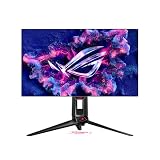
1. ASUS ROG Swift 360Hz — Best Competitive Gaming Monitor
As an Amazon Associate we earn from qualifying purchases at no extra cost to you.


The ASUS ROG Swift 360Hz is the ultimate competitive gaming monitor. At 360 Hz refresh rate, every frame your RTX 4090 or RTX 5090 pushes appears on screen nearly instantaneously. Combined with 0.03ms response time and specialized gaming modes, this is the monitor esports professionals use when tournament wins matter.
The 27″ 1080p IPS panel delivers accurate colors for a competitive monitor—you’re not sacrificing visual clarity for extreme refresh rates. The 360Hz tech is only useful if your GPU can sustain 360+ FPS, meaning this pairs exclusively with flagship hardware (Counter-Strike 2, Valorant, CS:GO). For most gamers, 240Hz is the practical ceiling, but serious competitors benefit from the frame latency reduction.
Design includes multiple gaming-specific features: NVIDIA G-Sync, 1ms motion blur reduction, and specialized esports modes. Build quality is exceptional—ASUS ROG monitors are built to outlast gaming PC upgrades.
Pros:
- 360Hz refresh rate (lowest latency ever achieved)
- 0.03ms response time (instantaneous)
- 27″ 1080p (optimal viewing distance)
- IPS accuracy (good colors for competitive)
- Multiple gaming modes
- G-Sync certified
- Future-proof for upcoming GPUs
Cons:
- Expensive ($800+)
- Requires RTX 4090/5090 to justify 360Hz
- 1080p resolution (less detail)
2. LG UltraGear OLED 32GP850 — Best 1440p Gaming Monitor

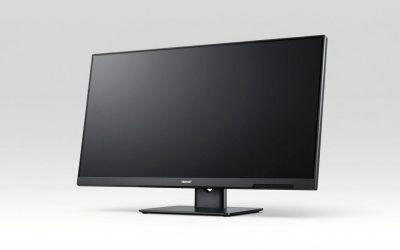
GIGABYTE M27Q3 Gaming Monitor 27" QHD - 2560 x 1440, 170Hz, 1ms, 400CD/m², FreeSync Premium, Display HDR400, HDMI 2.0, Displayport 1.4


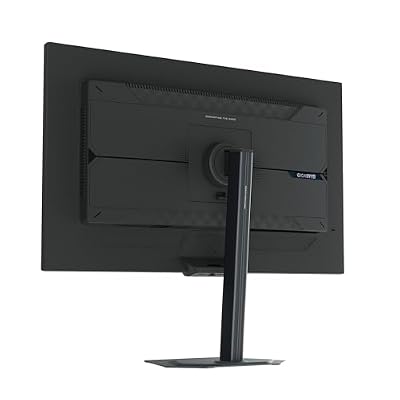

As an Amazon Associate we earn from qualifying purchases. Product prices and availability are accurate as of the date/time indicated.
The LG UltraGear OLED 32GP850 is the 1440p sweet spot. The 32″ OLED panel delivers perfect blacks, vibrant colors, and exceptional clarity thanks to QD-OLED technology. 240Hz refresh rate is smooth for competitive titles, but the real advantage is gaming immersion—OLED’s contrast makes every explosion, lighting effect, and shadow pop.

Response time is 0.03ms, matching flagship competitive monitors. The 32″ screen real estate creates immersive gameplay without requiring 4K resolution, which would demand more GPU power. This is the monitor for gamers who want competitive-level responsiveness with immersive visual fidelity.
OLED lifespan concerns (pixel burn-in) are largely addressed in 2026 models with improved panel technology and built-in protections. Warranty coverage is competitive. At $650-750, this monitor represents excellent value for 1440p gaming.
Pros:
- OLED display (perfect blacks, vibrant colors)
- 240Hz + 0.03ms (competitive gaming ready)
- 32″ immersive size
- QD-OLED Gen 3 (improved lifespan)
- G-Sync + FreeSync support
- USB-C hub (minor convenience)
- Fair pricing at $650-750
Cons:
- OLED burn-in risk (mitigated but not eliminated)
- $650+ price point
- Requires RTX 4070+ for 240Hz 1440p max settings
3. ASUS ProArt PA32UCX-PQ — Best 4K Gaming Monitor
As an Amazon Associate we earn from qualifying purchases at no extra cost to you.


The ASUS ProArt PA32UCX-PQ bridges gaming and professional work. The 32″ 4K OLED panel delivers stunning image quality with 120Hz refresh rate—not competitive-fast, but immersive. The QD-OLED panel produces colors so accurate that content creators use this monitor professionally while gamers enjoy the visual fidelity.
Gaming on this monitor is an experience. Baldur’s Gate 3 renders with stunning clarity, Cyberpunk 2077 ray tracing looks photorealistic, and open-world exploration games are transcendent. The 120Hz refresh rate is smooth for single-player gaming. For competitive multiplayer, 120Hz is on the slower side, but for story-driven and immersive titles, this is exceptional.
The dual-purpose (gaming + work) nature makes this a smart investment. If you edit photos or video alongside gaming, the ProArt PA32 is justifiable. At $1400+, this is premium pricing, but the visual quality and dual-purpose usage offset cost.

Pros:
- 4K OLED (exceptional visual quality)
- 120Hz (smooth for story games)
- 32″ immersive size
- Professional color accuracy (Pantone certified)
- Excellent for photo/video work + gaming
- 10-bit color depth
- USB-C hub with power delivery
Cons:
- Expensive at $1400+
- 120Hz too slow for competitive gaming
- Requires high-end GPU (RTX 4080/5080+ for 4K maxed)
- Professional-oriented (gaming aesthetics minimal)
4. MSI MAG 274UPF — Best Value 1440p Gaming Monitor
As an Amazon Associate we earn from qualifying purchases at no extra cost to you.

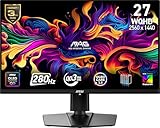


The MSI MAG 274UPF delivers 1440p gaming on a budget. The 27″ VA panel at 144Hz with 1ms response time handles competitive gaming without breaking the bank. The $280-350 price is remarkable for a 1440p gaming monitor—3-4 years ago this would have cost $600+.
VA panels don’t have OLED’s contrast, but the color accuracy is acceptable for gaming. The 144Hz refresh rate is smooth for competitive and casual alike. Build quality is solid; MSI MAG series monitors are known for reliability.
This is the monitor for budget builders or secondary setup gamers. Pair with a Ryzen 5 9600 or RTX 4070 Super, and you have a balanced 1440p gaming rig at under $1500 total.
Pros:
- Lowest 1440p price ($280-350)
- 144Hz (smooth gaming)
- 27″ 1440p (good balance)
- 1ms response time
- Solid build quality
- VA panel (good viewing angles)
Cons:
- VA panel (not OLED color contrast)
- 144Hz not competitive-level refresh
- Basic gaming features
5. BenQ XL2546X — Best Budget Competitive Monitor
As an Amazon Associate we earn from qualifying purchases at no extra cost to you.


The BenQ XL2546X is 1080p competitive gaming on a budget. At 240Hz, 0.5ms response time, and only $200-250, this monitor enables competitive gaming without expensive hardware. The 24.5″ IPS panel is tight for modern standards, but esports players prefer this size for optimal peripheral vision coverage.
The 240Hz refresh rate is sufficient for competitive play at RTX 4070 Super level. The 0.5ms response time is slightly slower than flagship 0.03ms monitors, but imperceptible in actual gameplay. Build quality is reliable.
This is the entry monitor for competitive gamers with tight budgets. Pair with a budget CPU and GPU, and you’re competitive-ready for under $1000 total.
Pros:
- Lowest competitive price ($200-250)
- 240Hz (competitive refresh)
- 24.5″ optimal size
- 0.5ms response time (quick)
- IPS colors (good viewing angles)
- Proven durability
Cons:
- 1080p (less detail)
- 24.5″ (smaller screen)
- Not ideal for casual/immersive gaming
PC Gaming Monitor Comparison — Feature Matrix
| Feature | ASUS 360Hz | LG OLED 32 | ASUS 4K | MSI 1440p | BenQ 240Hz |
|---|---|---|---|---|---|
| Price | $800+ | $650-750 | $1400+ | $280-350 | $200-250 |
| Resolution | 1080p | 1440p | 4K | 1440p | 1080p |
| Refresh | 360Hz | 240Hz | 120Hz | 144Hz | 240Hz |
| Panel | IPS | OLED | OLED | VA | IPS |
| Response | 0.03ms | 0.03ms | 1ms | 1ms | 0.5ms |
| Size | 27″ | 32″ | 32″ | 27″ | 24.5″ |
| Best For | Esports | Balanced | Immersive | Value | Budget Esports |
How to Choose the Right Gaming Monitor
By Gaming Style
- Competitive (FPS/Fighting): Prioritize 240Hz+ and sub-1ms response. BenQ XL2546X ($250) or ASUS ROG Swift 360Hz ($800+).
- Balanced (MOBA/Strategy): 144Hz+ with good colors. MSI MAG 274UPF ($300) or LG OLED 32GP850 ($700).
- Immersive (Single-Player/Story): High resolution + OLED quality. ASUS ProArt PA32 ($1400+) or LG OLED 32GP850 ($700).
Resolution Matching with GPU
- RTX 4060/7600: 1080p 144Hz (BenQ, ASUS 360Hz not needed)
- RTX 4070 Super / RX 7800 XT: 1440p 144Hz (MSI MAG or LG OLED 32GP850)
- RTX 4080 / 4090: 4K 120Hz (ASUS ProArt) or 1440p 240Hz (LG OLED)
- RTX 5090: Any resolution at max refresh
Budget Tiers
- Under $300: BenQ XL2546X (1080p 240Hz) or MSI MAG 274UPF (1440p 144Hz)
- $600-800: LG UltraGear OLED 32GP850 (1440p 240Hz OLED)
- $800+: ASUS ROG Swift 360Hz (1080p 360Hz) or ASUS ProArt PA32 (4K 120Hz)
Screen Size Considerations
- 24-27″: Optimal for competitive gaming; higher pixel density
- 32″+: Immersive for single-player; lower pixel density but more screen real estate
Frequently Asked Questions
Is 144Hz enough for gaming, or should I get 240Hz?
144Hz is the baseline for smooth modern gaming. 240Hz is noticeably smoother if your GPU can sustain those frames. 360Hz shows diminishing returns for most gamers. Rule: buy what your GPU can sustain at your target resolution.
Should I prioritize high refresh or high resolution?
Depends on genre. Competitive: high refresh (240Hz+). Immersive: high resolution (4K). Balanced: 1440p 144Hz+ is the sweet spot.
Are OLED monitors good for gaming?
Yes. OLED’s perfect blacks, instant response (0.03ms), and vibrant colors make gaming exceptional. Burn-in risk is minimal in 2026 models with built-in protections. OLED is premium but justified for gaming.
Do I need G-Sync or FreeSync?
Nice-to-have, not essential. G-Sync (NVIDIA) and FreeSync (AMD) reduce screen tearing and stutter. If your GPU matches your monitor (RTX = G-Sync, RX = FreeSync), enable it. The FPS benefit is 2-5%, not game-changing.
What’s the best gaming monitor for a gaming chair setup?
Any monitor works with a gaming chair. For long sessions, 27″+ is more immersive. Mount at arm’s length away; use a monitor arm for optimal positioning.
Final Verdict
The LG UltraGear OLED 32GP850 ($650-750) is the best gaming monitor for most players—1440p resolution, 240Hz refresh, OLED visual quality, and fair pricing make it unbeatable for balanced gaming.
For pure competitive esports, the ASUS ROG Swift 360Hz ($800+) is the specialist choice. For immersive gaming, the ASUS ProArt PA32UCX-PQ ($1400+) delivers 4K visual fidelity. On a budget, the MSI MAG 274UPF ($300) is excellent 1440p value, or BenQ XL2546X ($250) for competitive 1080p.
Complete your gaming setup with our guides to the best gaming chairs, the best gaming desks, and the best gaming PCs. Happy gaming!
Last updated: April 2026. Prices and availability may change. We independently research every product we recommend. When you buy through our links, we may earn a commission at no extra cost to you.
Related Articles
Looking for more on this topic? Browse the hand-picked guides below — each one applies the same scoring rubric used in this review.