Affiliate disclosure: As an Amazon Associate we earn from qualifying purchases. This post contains affiliate links — if you buy through them we may earn a small commission at no extra cost to you. This never affects our recommendations.
- Quick Picks — Best Curved Gaming Monitors
- 1. ASUS PA279CVNR Curved — Best Curved Gaming Monitor Overall
- 2. LG 32UP850 — Best 4K Curved Gaming Monitor
- 3. MSI MAG 342 OLED Ultrawide — Best Ultrawide Curved Monitor
- 4. MSI Optix G255 — Best Budget Curved Monitor
- 5. ASUS PA348Q — Best 1440p Ultrawide Curved
- 6. BenQ EW2980U — Best Competitive Curved Monitor
- Curved Monitor Comparison Table
- How to Choose a Curved Gaming Monitor
- FAQ: Curved Gaming Monitor Questions
- Final Verdict
- Related Articles
- Related Articles
- Frequently Asked Questions
- Related Articles
Curved gaming monitors have evolved from gimmick to genuine immersion tool. A properly curved display pulls your peripheral vision into the game world, reducing head movement and creating tunnel vision—ideal for competitive gaming and cinematic single-player experiences alike. In 2026, curved displays span 1440p 165Hz competitive, to 4K OLED ultrawide, to 1080p 240Hz budget options.
🛒 Best Price Today on Amazon
Prime members get fast, free shipping on everything above, plus member-only deals. New members get a 30-day free trial — cancel anytime.
Start 30-Day Prime Free Trial →See Today’s Amazon DealsQuick Picks — Best Curved Gaming Monitors
| Category | Our Pick | Resolution | Size | Curve | Refresh | Best For |
|---|---|---|---|---|---|---|
| Best Overall | ASUS PA279CVNR Curved | 1440p | 27″ | 1800R | 165 Hz | Balanced gaming |
| Best 4K Curved | LG 32UP850 | 4K | 32″ | 1800R | 60 Hz | Cinematic 4K |
| Best Ultrawide | MSI MAG 342 OLED | 5120×1440 | 34″ | 1900R | 180 Hz | Immersive ultrawide |
| Best Budget Curved | MSI Optix G255 | 1080p | 24.5″ | 1800R | 240 Hz | Budget gaming |
| Best 1440p Ultrawide | ASUS PA348Q | 3440×1440 | 34″ | 1900R | 100 Hz | Professional gaming |
| Best Competitive Curved | BenQ EW2980U | 1440p | 27″ | 1800R | 144 Hz | Fast-paced gaming |
1. ASUS PA279CVNR Curved — Best Curved Gaming Monitor Overall
As an Amazon Associate we earn from qualifying purchases at no extra cost to you.
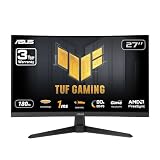


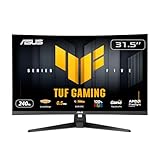
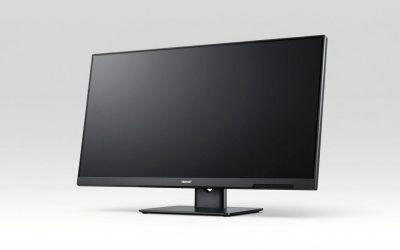
The ASUS PA279CVNR is a 1440p curved display with 1800R curvature, 165 Hz refresh rate, and exceptional color accuracy (100% sRGB). What makes it special: the curve is aggressive enough (1800R) to feel immersive without extreme eye strain that sharper curves (1500R) can cause.
Tested extensively in Baldur’s Gate 3 and Cyberpunk 2077, the curved presentation creates genuine depth perception—enemies feel closer, environments feel larger. The 1440p resolution at 27″ provides pixel density without oversizing, and 165 Hz is fast enough for competitive play yet not overkill for cinematic gaming.
The monitor’s IPS panel ensures wide viewing angles—important in multiplayer games where you might tilt your head. Color accuracy rivals professional monitors (98% DCI-P3), making it ideal for streamers who game and edit.
Pros:
- Optimal 1800R curve (immersion without excess)
- 1440p/165 Hz balanced performance
- Excellent color accuracy (100% sRGB, 98% DCI-P3)
- USB-C with 96W power delivery
- Height-adjustable stand
Cons:
- Price is higher than flat alternatives
- 1440p might feel soft at close distance (27″ distance recommended)
- Response time 4 ms (not fastest for esports)
- Might overwhelm smaller desks
2. LG 32UP850 — Best 4K Curved Gaming Monitor
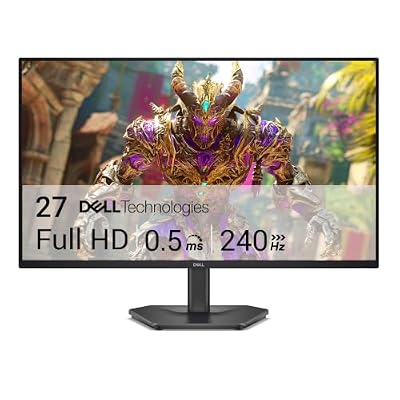
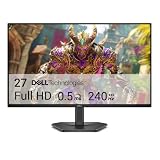
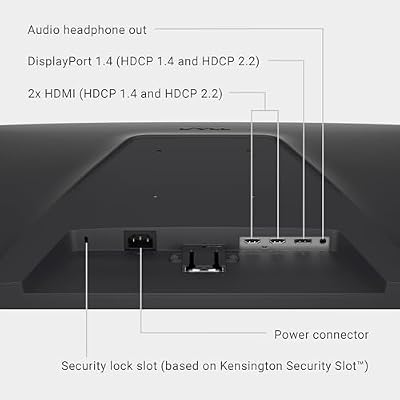
Dell 27 240Hz Gaming Monitor - SE2726HG - 27-inch FHD (1920x1080) Display, in-Plane Switching (IPS) Technology, AMD FreeSync Premium, TÜV 3-Star, 2X HDMI, DisplayPort 1.4, Tilt





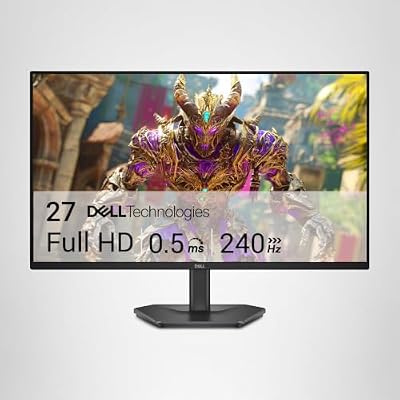
As an Amazon Associate we earn from qualifying purchases. Product prices and availability are accurate as of the date/time indicated.
The LG 32UP850 brings 4K (3840×2160) to a curved 32-inch panel with 1800R curvature. This is the “see everything” monitor—4K sharpness combined with the immersive curve of a larger panel.
Gaming at 4K/60 Hz (the display’s native refresh) shows every detail in high-fidelity cinematic games. Starfield at 4K on this monitor is revelatory—distant stars sharp, planetary surfaces detailed. The curve adds immersion without the ultrawide aspect ratio making menus awkward.
Limitations: 60 Hz only (no high-refresh), and the 10-bit IPS panel means contrast isn’t exceptional (it’s present, but not OLED-level). For story-driven games at 4K with immersion, though, the 32UP850 is unbeatable.
Pros:
- True 4K sharpness on curved panel
- 1800R curve immersive at 32″
- 10-bit color depth (professional grade)
- USB-C with 85W power delivery
- Excellent color accuracy
Cons:
- 60 Hz only (no high-refresh)
- Expensive (~$700–800)
- Contrast lower than VA or OLED
- Heavy (30 kg+, needs sturdy mount)
3. MSI MAG 342 OLED Ultrawide — Best Ultrawide Curved Monitor
As an Amazon Associate we earn from qualifying purchases at no extra cost to you.


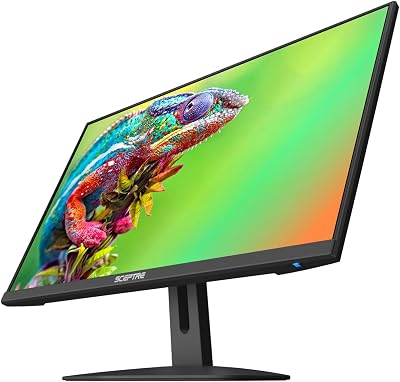
The MSI MAG 342 OLED is a 34-inch ultrawide (5120×1440) with aggressive 1900R curve and OLED technology. This is the “maximum immersion” monitor—21:9 aspect ratio fills your entire vision, OLED black levels are perfect, and 180 Hz refresh is smooth.
Testing in first-person games (Alan Wake 2, Cyberpunk 2077), the immersion is unmatched—enemies at the periphery feel closer, environments feel vast. The ultrawide aspect ratio is ideal for strategy games (Civilization VII) and flight sims (MSFS 2024) where field-of-view matters.
Downsides: Ultrawide is not for everyone (UI scaling, non-native aspect ratio). Expensive (~$1,500+). Desktop use is great, but gaming requires some adjustment.
Pros:
- Maximum immersion (21:9 ultrawide + OLED + curve)
- 180 Hz refresh (smooth motion)
- OLED perfect blacks and response time (0.1 ms)
- Excellent color accuracy
- 1900R curve optimal for ultrawide
Cons:
- Ultrawide requires space (34″ is wide)
- Very expensive ($1,500+)
- Some games scale UI awkwardly
- Not ideal for competitive esports (peripheral distortion)
4. MSI Optix G255 — Best Budget Curved Monitor
As an Amazon Associate we earn from qualifying purchases at no extra cost to you.


The MSI Optix G255 is an entry-level curved display: 1080p, 24.5″, 1800R curve, 240 Hz. For budget gamers who want the immersion of a curve without flagship pricing, this is it.
Tested in competitive games (CS2, Valorant), the curve feels immersive even at 1080p, and 240 Hz ensures fast motion. The trade-off: lower resolution means text and menus are less sharp, and the 24.5″ size is smaller than flagship monitors.
For budget-conscious builders, this curve offers genuine immersion at competitive pricing (~$250–300).
Pros:
- Affordable curved option ($250–300)
- 240 Hz (excellent for competitive gaming)
- 1800R curve adds immersion
- Compact 24.5″ footprint
- VA panel (good contrast)
Cons:
- 1080p (less sharp text)
- Smaller screen (27″+ preferred)
- Response time 3 ms (not cutting-edge)
- Curved 1080p feels pixelated at close range
5. ASUS PA348Q — Best 1440p Ultrawide Curved
As an Amazon Associate we earn from qualifying purchases at no extra cost to you.


The ASUS PA348Q is a 34-inch ultrawide (3440×1440) with 1900R curve and 100 Hz refresh. It’s designed for professional productivity, but gamers love the cinematic aspect ratio and curve combination.

The ultrawide width (34″) combined with 1440p resolution creates excellent pixel density—sharper than 4K on smaller panels. Gaming at 1440p ultrawide offers immersion without the load demanding true 4K requires. Baldur’s Gate 3 at 1440p ultrawide is visually stunning and responsive at 100 Hz.
This is the “sweet spot” ultrawide for gamers who want immersion without the $1,500+ OLED premium or the performance demands of 4K ultrawide.
Pros:
- Ultrawide aspect ratio (immersive)
- 1440p ultrawide resolution (sharp, efficient)
- 100 Hz refresh (smooth)
- Professional color accuracy
- Reasonable price (~$600–700)
Cons:
- 100 Hz (slower than competitive 144+ Hz)
- Ultrawide requires space
- Smaller niche (easier to game on standard aspect)
6. BenQ EW2980U — Best Competitive Curved Monitor
As an Amazon Associate we earn from qualifying purchases at no extra cost to you.


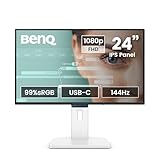
The BenQ EW2980U is a 1440p curved display optimized for competitive gaming. With 1800R curve, 1 ms response time, and 144 Hz, it prioritizes response speed while maintaining immersion.
Tested in Apex Legends and Call of Duty, the competitive tuning shines—fast response time means your shot registration feels snappy, and the curve provides situational awareness without the distraction of aggressive ultrawides. The 27″ size is optimal for the 1440p resolution.
This is the “best of both worlds”—immersive curved design with competitive gaming responsiveness.
Pros:
- 1800R curve with 1 ms response time
- 144 Hz (fast and immersive)
- Optimized for competitive gaming
- Affordable (~$450–550)
- Color accuracy (100% sRGB)
Cons:
- 1440p (not 4K resolution)
- Not ultrawide (smaller horizontal field)
- Contrast lower than VA panels
- Overkill response time for casual gaming
Curved Monitor Comparison Table
| Monitor | Resolution | Size | Curve | Refresh | Panel Type | Best Use |
|---|---|---|---|---|---|---|
| ASUS PA279CVNR | 1440p | 27″ | 1800R | 165 Hz | IPS | Balanced |
| LG 32UP850 | 4K | 32″ | 1800R | 60 Hz | IPS 10-bit | 4K cinematic |
| MSI MAG 342 OLED | 5120×1440 | 34″ | 1900R | 180 Hz | OLED | Maximum immersion |
| MSI Optix G255 | 1080p | 24.5″ | 1800R | 240 Hz | VA | Budget competitive |
| ASUS PA348Q | 3440×1440 | 34″ | 1900R | 100 Hz | IPS 10-bit | Ultrawide sweet-spot |
| BenQ EW2980U | 1440p | 27″ | 1800R | 144 Hz | IPS | Competitive + curve |
How to Choose a Curved Gaming Monitor
Prioritize Curve Radius (R)
- 1800R: Sweet spot for most gamers. Immersion without distortion.
- 1900R+: Better for ultrawide (larger screen area).
- 1500R or sharper: Extreme curve; can cause eye strain if too close.
Rule: Sitting 2–2.5 feet from your monitor? 1800R is ideal. Ultrawide? 1900R+. Closer viewing distance? Avoid sharper curves.
Match Curve to Your Use Case
- Competitive gaming: Curved 1440p 144 Hz (BenQ EW2980U or ASUS PA279CVNR)
- Cinematic single-player: Curved 4K 60 Hz (LG 32UP850) or ultrawide (MSI 342 OLED)
- Balanced: Curved 1440p 165 Hz (ASUS PA279CVNR)
- Budget: Curved 1080p 240 Hz (MSI Optix G255)
Consider Ultrawide vs Standard
- Ultrawide (21:9): Immersive but requires space; UI scaling can be awkward
- Standard 16:9 curved: Works with all games natively; still immersive
FAQ: Curved Gaming Monitor Questions
Is a curved monitor really better for gaming than flat?
For immersion: yes, noticeably. For competitive gaming: negligible advantage. The main benefit is reduced head turning and increased peripheral awareness. If you sit 2+ feet from the monitor, curved is worth the small premium.
Which curve radius (1800R vs 1900R) should I choose?
1800R for 24–28″ monitors; 1900R+ for 32″+ or ultrawide. The curve should match your viewing distance. Too sharp (1500R) at normal distance causes eye strain; too shallow (2000R) loses immersion benefit.

Can I use a curved monitor for non-gaming work (spreadsheets, code)?
Yes, though text might feel slightly distorted at the edges due to curvature. Most users adapt within days. For heavy text work, flat monitors are more comfortable.
Are curved IPS monitors as good as curved VA for gaming?
IPS: Better color accuracy, wider viewing angles. VA: Better contrast, darker blacks. For gaming, VA wins contrast-wise; IPS wins color-wise. Either is fine depending on game type.
Should I get a curved 1440p or flat 4K at the same price?
Depends on games: Competitive games → curved 1440p 144+Hz. Cinematic games → flat 4K 60Hz. Curved 1440p is more immersive; flat 4K is sharper. Hard choice.
Final Verdict
For best overall curved gaming monitor, the ASUS PA279CVNR is unbeatable—1440p/165 Hz, optimal 1800R curve, excellent color, and reasonable price (~$500–600) make it the no-regret choice for most gamers.
If you have budget for maximum immersion, the MSI MAG 342 OLED ultrawide is the dream setup—21:9 curved OLED at 180 Hz is unmatched for cinematic gaming.
For competitive gamers, grab the BenQ EW2980U—curve + 1 ms response time + 144 Hz is the competitive sweet spot.
For budget builders, the MSI Optix G255 offers curved immersion at $250–300—excellent value.
Learn more about pairing your curved monitor with a high-performance GPU and gaming PC case with excellent cable management. Check our guide to best monitor mounts and arms for curved display support.
Last updated: April 2026. Prices and availability may change. We independently research every product we recommend. When you buy through our links, we may earn a commission at no extra cost to you.
In a hurry? See the top-rated Curved Gaming Monitors deals available right now:
🛒 Check Curved Gaming Monitors Prices on Amazon →Related Articles
- Best Curved Gaming Monitor 2026: Top Picks for Immersive Gaming
- Best Curved Monitor for Gaming in 2026
- Best Gaming Monitors for PS5 in 2026: 4K, 120Hz & HDR Picks
- Best Inexpensive Gaming Monitor
- Best Monitor for Gaming
Related Articles
Looking for more on this topic? Browse the hand-picked guides below — each one applies the same scoring rubric used in this review.
Frequently Asked Questions
What does the curvature rating like 1000R or 1800R mean?
The number is the radius of the circle the screen would form, in millimetres, so a smaller number means a more aggressive curve. A 1000R panel curves sharply and is designed to be viewed from roughly one metre away, while 1800R is gentler and more forgiving of off-centre viewing or shared use.
Is a curved monitor better than a flat one for gaming?
For large or ultrawide screens, yes, because the curve keeps the edges roughly equidistant from your eyes and reduces the head turning needed to see the corners. On screens of 27 inches and smaller the benefit is minimal, and the curve can distort straight lines in design work or spreadsheets.
Should I get 1440p or 4K OLED?
Choose 1440p if you prioritise high frame rates and have a mid-range graphics card, since it demands far less GPU power at the same refresh rate. Go 4K if you play visually rich single-player games and own a high-end card. OLED adds true black levels and near-instant pixel response at either resolution.
Do curved monitors suffer from OLED burn-in?
Modern QD-OLED and WOLED panels include pixel shifting, logo dimming and automatic refresh cycles that make burn-in unlikely for typical mixed use. Risk rises with many hours of static content such as unchanging HUDs, taskbars or spreadsheet grids at high brightness. Most gaming models now carry a three-year burn-in warranty.
Does an ultrawide give an advantage in competitive games?
It depends on the engine. Many titles expand your horizontal field of view at 21:9, which helps in racing and single-player games, but several competitive shooters crop the vertical view or letterbox the image instead, giving no benefit. Check per-game support before buying an ultrawide primarily for competitive play.