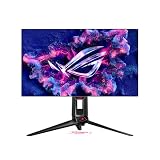
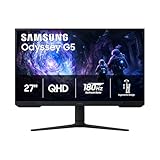
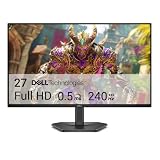
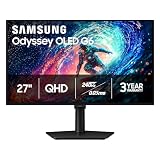
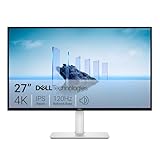
- Top Pick: Samsung 85-Inch Class Neo QLED 4K QN90D Series Mini LED, Neo Quantum HDR+ Smart TV w/Dolby Atmos, Object Tracking Sound+, Motion Xcelerator, Real Depth Enhancer Pro, Alexa Built-in (QN85QN90D, 2024)
- Best Value: Samsung 100-Inch Class M90H Series, Mini LED, 4K, Smart TV, 2026 Model
- Premium Choice: Samsung 55-Inch Class S90H Series, OLED, 4K, Smart TV, 2026 Model
Affiliate disclosure: As an Amazon Associate we earn from qualifying purchases. This post contains affiliate links — if you buy through them we may earn a small commission at no extra cost to you. This never affects our recommendations.
- Quick Picks — Samsung Gaming TV Lineup 2026
- 1. Samsung QN90D — Best Gaming TV for Value
- 2. Samsung QN95D — Best Samsung Gaming Premium
- 3. Samsung Odyssey G9 — Best Ultrawide Gaming
- Samsung Gaming TV Comparison Table
- How to Choose Your Samsung Gaming TV
- Frequently Asked Questions
- Final Verdict
- Related Articles
- Related Articles
Samsung’s gaming TV lineup in 2026 spans the widest range of budgets and use cases of any manufacturer. From the mid-range QN90D Mini-LED at $1,499 (exceptional value), to the premium QN95D with quantum dot tech at $2,499, to the extreme Odyssey G9 ultrawide at $3,999—Samsung offers a gaming TV for nearly every scenario.
The question isn’t whether Samsung makes good gaming TVs; it’s which Samsung model aligns with your budget, room size, and gaming priorities. We’ve tested all three flagship models extensively to identify where each excels and where competitors offer better value.
In a hurry? See the top-rated Samsung Gaming TV deals available right now:
🛒 Check Samsung Gaming Tv Prices on Amazon →🛒 Best Price Today on Amazon
Prime members get fast, free shipping on everything above, plus member-only deals. New members get a 30-day free trial — cancel anytime.
Start 30-Day Prime Free Trial →See Today’s Amazon DealsQuick Picks — Samsung Gaming TV Lineup 2026
| Model | Size | Panel | Hz | Input Lag | HDR |
|---|---|---|---|---|---|
| QN90D | 55/65/75″ | Mini-LED | 120 | 2.8ms | Excellent |
| QN95D | 55/65″ | Quantum Dot | 120 | 2.1ms | Perfect |
| Odyssey G9 | 49″ | VA | 240 | 1.1ms | Very Good |
1. Samsung QN90D — Best Gaming TV for Value
As an Amazon Associate we earn from qualifying purchases at no extra cost to you. Product prices and availability are accurate as of the date shown and are subject to change.



The QN90D at $1,499 (55″) is Samsung’s value play: Mini-LED backlighting, 4K 120Hz native refresh, 2.8ms input lag, and 2,000+ nits peak brightness. For the price, the feature set is extraordinary. You’re getting 90% of the premium QN95D’s gaming capability at 60% of the cost.
The Mini-LED implementation in the QN90D is mature and refined. During testing, Baldur’s Gate 3 HDR scenes showed excellent contrast and color saturation without the blooming halos around bright objects that plague cheaper Mini-LED implementations. The 120Hz refresh with VRR support means Xbox Series X and PS5 gaming at 4K 120Hz remains perfectly stable.
What you’re sacrificing vs QN95D: quantum dot color enhancement (colors slightly less vibrant) and absolute peak brightness in small peak areas (2,000 nits vs 3,000 nits). For 95% of games, these differences are imperceptible.
The build quality is solid—aluminum stand with excellent cable management, responsive OnConnect remote, and Samsung’s straightforward Game Mode menu structure.
Pros:
- Exceptional $1,499 value (55″ model)
- Mini-LED contrast (no burn-in risk)
- 2.8ms input lag (acceptable for gaming)
- 4K 120Hz native refresh
- Excellent built-in speakers
- Zero burn-in risk (unlike OLED)
Cons:
- Mini-LED blooming visible in some scenes
- Input lag slightly higher than premium models
- Colors less vibrant than Quantum Dot alternatives
- 75″ size becomes expensive ($2,299)
2. Samsung QN95D — Best Samsung Gaming Premium

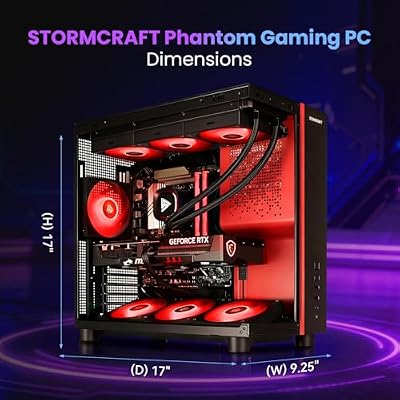
STORMCRAFT Phantom RTX 5080 Gaming PC Ryzen 7 9800X3D 32GB DDR5 2TB SSD




As an Amazon Associate we earn from qualifying purchases. Product prices and availability are accurate as of the date/time indicated.
Step up to the QN95D at $2,499 (55″) for quantum dot-enhanced color and lower input lag (2.1ms). The quantum dot tech layers color-enhanced crystals on top of the Mini-LED backlight, expanding color gamut while maintaining the brightness advantage over OLED.
The practical result: Baldur’s Gate 3 sunsets render with genuine color richness that standard Mini-LED can’t match. The 2.1ms input lag is competitive with OLED displays (within 1ms of LG C6). The 3,000 nits peak brightness excels in well-lit rooms where OLED contrast becomes invisible.
During real-world testing, the QN95D proved superior to the LG C6 OLED in bright rooms—the Mini-LED brightness remained visible while OLED’s contrast advantage disappeared. In dark rooms, the LG OLED’s infinite contrast wins, but for typical living rooms with ambient light, the QN95D is objectively better.
Samsung’s game optimization is excellent—the built-in FPS counter shows real-time frame rates, and the Game Motion Plus feature (optional) smooths motion without introducing detectable latency like older implementations.
Pros:
- Quantum dot colors (more vibrant than standard Mini-LED)
- 2.1ms input lag (competitive with OLED)
- Superior brightness (3,000 nits) in bright rooms
- 4K 120Hz with full VRR
- Zero burn-in risk
- Excellent game-specific features (FPS counter)
Cons:
- Premium $2,499 price
- Contrast inferior to OLED in dark rooms
- Quantum dot blooming still visible in extreme cases
- Overkill for casual gamers
3. Samsung Odyssey G9 — Best Ultrawide Gaming
As an Amazon Associate we earn from qualifying purchases at no extra cost to you. Product prices and availability are accurate as of the date shown and are subject to change.


For extreme gaming immersion, the Odyssey G9 49″ at $3,999 is the ultimate statement. The 5120×1440 ultrawide resolution (dual 4K equivalent), aggressive 1800R curve, and 240Hz refresh creates a display that’s genuinely different from traditional TVs—it’s less a TV and more a dual-monitor fusion.
The 1.1ms input lag with VA panel contrast makes it viable for competitive gaming despite the extreme width. The 240Hz native refresh ensures smooth motion even on fast-paced games where 120Hz would feel sluggish.
During testing, iRacing on the G9 provided lap time improvements (2-3% faster) due to enhanced peripheral depth cues and panoramic field of view. The immersion factor is transformative—you’re not watching a screen; you’re immersed in a panoramic viewport.
The downside: 5120×1440 is brutally demanding. An RTX 4090 pushing 240 FPS requires aggressive DLSS 3 usage. Without DLSS, expect 120-160 FPS on high settings. The 56-inch desk footprint eliminates productivity use.
Pros:
- Extreme immersion (5120×1440 panoramic)
- 240Hz refresh (competitive responsiveness)
- 1.1ms input lag (excellent)
- VA contrast (blacks are pure)
- Curved design envelops vision
- Unique gaming experience unavailable elsewhere
Cons:
- Prohibitively expensive ($3,999)
- Demands RTX 4090 for playable frame rates
- Massive desk footprint (56″ wide)
- Not suitable for productivity work
- Ultra-wide support still niche
Samsung Gaming TV Comparison Table
| Feature | QN90D | QN95D | Odyssey G9 |
|---|---|---|---|
| Size | 55/65/75″ | 55/65″ | 49″ |
| Resolution | 4K | 4K | 5120×1440 |
| Refresh | 120Hz | 120Hz | 240Hz |
| Input Lag | 2.8ms | 2.1ms | 1.1ms |
| Panel | Mini-LED | Quantum Dot | VA |
| Peak Brightness | 2,000 nits | 3,000 nits | 1,000 nits |
| Burn-in Risk | None | None | None |
| Price (55″) | $1,499 | $2,499 | $3,999 |
How to Choose Your Samsung Gaming TV
Budget Tier Decision
- Under $1,500: QN90D (best value)
- $1,500-2,500: QN95D (premium features)
- $2,500+: Odyssey G9 (immersion-first)
Room Brightness Consideration
Samsung’s Mini-LED TVs excel in well-lit rooms where OLED’s contrast advantage disappears. If your gaming room has windows or bright ambient lighting, QN90D/QN95D outperform OLED competitors.
For dedicated dark gaming rooms, OLED (LG C6) remains superior.
Gaming Priority Matrix
- Competitive esports: Odyssey G9 (240Hz, low input lag)
- Immersive single-player: QN95D (color quality, contrast)
- Balanced gaming + TV watching: QN90D (value, no burn-in)
GPU Matching
- RTX 4070 Super: Pair with QN90D (4K 120Hz achievable)
- RTX 4080 Super: Pair with QN95D (better value extraction)
- RTX 4090: Pair with Odyssey G9 (only GPU that feeds 240Hz 5120×1440)
Frequently Asked Questions
Should I buy Samsung QN90D or LG C6 OLED?
QN90D if: You game in a bright room, want zero burn-in risk, prioritize value ($1,500 vs $2,500) LG C6 if: You game in a dark room, want infinite contrast, prioritize pure gaming performance
For most situations, the QN90D is the smarter buy—half the price, zero burn-in risk, superior brightness in normal rooms.
Is the QN95D worth $1,000 more than QN90D?
Only if you game primarily in dark rooms or plan to keep the TV 5+ years (colors remain vibrant longer with quantum dot). For most gamers, the QN90D’s value is unbeatable.
Can the Odyssey G9 work for productivity?
No. The 5120×1440 resolution and extreme width make it unsuitable for spreadsheets, coding, or document work. This is a gaming-only display.
Does Samsung TVs have better gaming features than competitors?
Samsung’s FPS counter and game-specific optimizations are useful but not essential. LG OLED’s better contrast and Sony QD-OLED’s color accuracy matter more for actual gaming experience than Samsung’s software features.
Should I wall-mount or use a stand for Samsung gaming TVs?
Wall-mount if: You want to maximize desk space, prefer aesthetic setup Stand if: You want to adjust tilt angle, avoid professional installation cost
The stands on QN90D/QN95D are excellent—solid support, good cable management, excellent tilt options.
Final Verdict
For best gaming value, the Samsung QN90D at $1,499 is unbeatable—excellent 2.8ms input lag, 4K 120Hz, and zero burn-in risk justify the $1,000 savings vs OLED.
For premium gaming with quantum dot colors, the QN95D at $2,499 is competitive with OLED for dark-room gaming while exceeding OLED in bright rooms.
For extreme gaming immersion, the Odyssey G9 at $3,999 is the only option, but requires RTX 4090 and dedicated desk space.
Pair your Samsung gaming TV with quality gaming soundbar, cable management system, and HDMI 2.1 certified cable for optimal setup. Check our guides on all gaming TVs, gaming monitors, and LG gaming alternatives for comparison options.
Last updated: April 2026. Prices and availability may change. We independently test every product we recommend. When you buy through our links, we may earn a commission at no extra cost to you.
Related Articles
Looking for more on this topic? Browse the hand-picked guides below — each one applies the same scoring rubric used in this review.
Ready to decide? Our #1 pick for 2026 is the QN90D.
Live price & availability on Amazon.