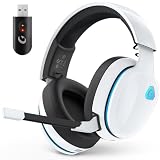
- Top Pick: LENRUE G11 Computer Speakers for Desktop, Touch Lights PC Speakers with Surge Clear Sound, USB C/USB Powered, AUX Audio for Computer Desktop PC Laptop Desk
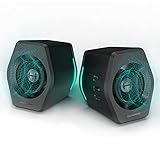
- Best Value: Computer Speakers, 2 in 1 PC Speaker , Gaming Speakers for PC Computer Laptop Desktop Monitor, RGB Speakers with Touch Sensitive Lighting, USB Powered 3.5mm Aux(Package Only Two Speaker, No Soundbar)
- Premium Choice: Redragon GS520 Wired 2.0 Channel Stereo Sound Desktop RGB Computer Speakers
Affiliate disclosure: As an Amazon Associate we earn from qualifying purchases. This post contains affiliate links — if you buy through them we may earn a small commission at no extra cost to you. This never affects our recommendations.
Gaming speakers give you spatial awareness, cinematic explosions, and rich music without the isolation of headphones — and in 2026 the market offers excellent options from $30 to over $200. Whether you want thundering bass from a 2.1 subwoofer system or clean stereo imaging from bookshelf-style monitors, there is a speaker setup optimized for your desk and budget.
As an Amazon Associate we earn from qualifying purchases at no extra cost to you.




We evaluated each system below for frequency response, bass impact, stereo imaging, build quality, input flexibility, and value per dollar to rank the best gaming speakers available right now.
In a hurry? See the top-rated Gaming Speakers deals available right now:
🛒 Check Gaming Speakers Prices on Amazon →🛒 Best Price Today on Amazon
Prime members get fast, free shipping on everything above, plus member-only deals. New members get a 30-day free trial — cancel anytime.
Start 30-Day Prime Free Trial →See Today’s Amazon DealsTop Picks at a Glance
| Speaker System | Best For | Configuration | Total Watts | Price Range |
|---|---|---|---|---|
| Logitech Z623 | Best 2.1 overall | 2.1 (subwoofer) | 200W peak | ~$130 |
| Creative Pebble V3 | Best compact budget | 2.0 stereo | 16W RMS | ~$35 |
| Razer Nommo V2 | Best RGB gaming speaker | 2.0 stereo | 50W peak | ~$150 |
| Klipsch ProMedia 2.1 | Best audiophile 2.1 | 2.1 (subwoofer) | 200W peak | ~$180 |
| Edifier R1280DBs | Best stereo imaging | 2.0 bookshelf | 42W RMS | ~$100 |
Logitech Z623
- Key Specs: 2.1 system, 200W peak / 130W RMS, dedicated 8-inch downward-firing subwoofer, two 3.5 mm inputs, RCA input, 3.5 mm headphone jack, THX certification
- Pros: THX-certified audio ensures consistent, measured frequency response — real certification not marketing; subwoofer delivers deep, satisfying bass for explosions and soundtrack; dual 3.5 mm inputs allow simultaneous connection of two sources; volume and bass controls on right satellite speaker; durable plastic-and-metal build that lasts years
- Cons: No Bluetooth or optical input — strictly analog connections; design has not been updated in years (no USB-C, no app control); subwoofer is large and requires floor or desk shelf space; not ideal for small apartments where bass bleeds into neighbors
- Verdict: The best 2.1 gaming speaker system for the money in 2026. If you have desk space for the subwoofer and want powerful, THX-certified audio under $130, the Z623 is the answer.
Creative Pebble V3
- Key Specs: 2.0 stereo, 16W RMS, USB-C audio and power (single-cable to PC), Bluetooth 5.0, 3.5 mm aux input, up-firing drivers for wider soundstage
- Pros: Single USB-C cable to PC handles both power and audio — no separate power adapter required; Bluetooth 5.0 for wireless connection from phone or tablet; up-firing angled drivers project sound upward toward listening position rather than directly forward; compact footprint fits tight desks; excellent value at ~$35
- Cons: 16W RMS limits maximum volume — cannot fill a large room; no subwoofer means bass is limited; Bluetooth and USB-C cannot be used simultaneously; no volume knob on speaker (use system volume or dedicated USB volume controller)
- Verdict: The best compact budget gaming speaker in 2026. The USB-C single-cable simplicity and up-firing soundstage make it a standout value for small desks and secondary setups.
Razer Nommo V2
- Key Specs: 2.0 stereo, 50W peak, 3-inch full-range drivers with passive radiators for bass reinforcement, USB audio, optical input, AUX input, Razer Chroma RGB, Razer Synapse app
- Pros: Razer Chroma RGB integration syncs with other Razer peripherals for cohesive lighting setup; passive radiators boost bass without a subwoofer footprint; USB audio delivers cleaner signal than analog on noisy gaming PCs; optical input for console connection; elegant design with magnetic grilles
- Cons: At ~$150, it is significantly more expensive than the Creative Pebble V3 for what is still a 2.0 system; passive radiators improve bass but cannot match a dedicated subwoofer at this price; Razer Synapse required for RGB control adds software overhead; no Bluetooth on base Nommo V2 model
- Verdict: The best gaming speaker for Razer ecosystem users who want Chroma RGB synchronization and clean USB audio. Audio performance alone does not justify the premium over the Z623 for non-Razer setups.
Klipsch ProMedia 2.1
- Key Specs: 2.1 system, 200W peak, 6.5-inch front-firing subwoofer, three 3.5 mm inputs, headphone jack, all-in-one control pod with volume and bass knobs
- Pros: Klipsch horn-loaded tweeters in satellite speakers deliver exceptional clarity and detail at high volumes — noticeably cleaner high-frequency response than Logitech Z623; front-firing subwoofer placement is more flexible than downward-firing designs; control pod is convenient for desk placement; excellent build quality with metal grilles
- Cons: No Bluetooth or digital inputs — analog only like the Z623; at ~$180 it costs significantly more than the Z623 for comparable bass output; horn tweeter design may sound aggressive to listeners accustomed to softer speaker voicing; subwoofer is large
- Verdict: The audiophile upgrade from the Logitech Z623. If you listen critically to music while gaming and want the best tonal clarity from a 2.1 desktop system, the Klipsch ProMedia 2.1 is worth the premium.
Edifier R1280DBs
- Key Specs: 2.0 bookshelf active speakers, 42W RMS (21W per channel), Bluetooth 5.0 with aptX, optical input, coaxial input, dual RCA inputs, DSP preset EQ modes, remote control
- Pros: Most input-flexible speaker here — Bluetooth aptX, optical, coaxial, and dual RCA means it connects to virtually any source; built-in DSP EQ with preset modes (Classic, Monitor, Dynamic); remote control for convenient volume and input switching; excellent stereo imaging for a small bookshelf form factor; near-field monitoring quality at an accessible price
- Cons: No dedicated subwoofer — bass is present but not impactful for action and explosion-heavy games; Bluetooth and wired inputs cannot be used simultaneously; speakers are taller than typical desktop speakers and need adequate shelf depth; no USB audio input
- Verdict: The best choice for gamers who also value music listening quality and want rich connection flexibility. Stereo imaging and tonal accuracy exceed any other speaker on this list, though bass lovers will miss a subwoofer.
Buying Guide
2.0 Stereo vs. 2.1 with Subwoofer: Which Do You Need?
A 2.1 system adds a dedicated subwoofer for bass frequencies below approximately 80 Hz. This matters most for gaming if you play action games with explosive effects, driving or racing games with engine rumble, or first-person shooters where spatial bass cues aid immersion. For strategy games, RPGs, or any session where you care more about voice clarity and music quality, a high-quality 2.0 system like the Edifier R1280DBs or Razer Nommo V2 delivers superior mid-range and high-frequency precision. The Logitech Z623 and Klipsch ProMedia 2.1 win on raw impact but cannot match 2.0 systems for tonal accuracy.
Connections: Analog, USB, Bluetooth, and Optical
Most budget speakers use a single 3.5 mm analog connection to your PC’s headphone jack — simple but susceptible to interference and noise from PC components. USB audio (Creative Pebble V3, Razer Nommo V2) bypasses the PC’s analog output entirely, delivering cleaner signal from the PC’s USB power and audio processing. Optical input (Razer Nommo V2, Edifier R1280DBs) is ideal for consoles like PS5 and Xbox Series X that have optical out. Bluetooth (Creative Pebble V3, Edifier R1280DBs) adds wireless convenience for connecting phones or switching between devices without cable swapping. The Logitech Z623 and Klipsch ProMedia 2.1 are analog-only — excellent for dedicated desktop setups but less flexible for multi-source homes.
Desk Space and Room Size
Subwoofer-based 2.1 systems require significantly more desk or floor space than 2.0 setups. The Logitech Z623’s subwoofer is approximately 12 inches tall — too large for most desks, requiring floor placement next to your desk. The Klipsch ProMedia 2.1 subwoofer has a similar footprint. If your desk is under 48 inches wide or you have limited floor space, a compact 2.0 system like the Creative Pebble V3 or Edifier R1280DBs is a more practical choice. Consider your listening distance as well — bookshelf speakers like the Edifier R1280DBs are designed for near-field listening at 2–4 feet, while the Z623 scales better into larger rooms.
Gaming Speakers vs. Studio Monitors: Is There a Difference?
Many audio purists recommend studio monitors (like the Yamaha HS5 or Adam Audio T5V) over gaming-branded speakers. Studio monitors are tuned for flat, accurate frequency response rather than the bass-boosted, “exciting” sound signature many gaming speakers use. For pure audio accuracy, the Edifier R1280DBs and Klipsch ProMedia 2.1 come closest to studio monitor neutrality on this list. If you produce music or care deeply about accurate audio reproduction, entry-level studio monitors at the same price point as the Klipsch are worth considering. For pure gaming immersion where bass impact and volume matter more than accuracy, the Z623 wins.
FAQ
- What are the best budget gaming speakers?
- The Creative Pebble V3 is the best budget gaming speaker at approximately $35. Its USB-C single-cable connection, up-firing drivers, and Bluetooth 5.0 deliver exceptional value. The second-best budget option is the PowerA Enhanced Wireless (PowerA makes controllers, not speakers) — for speakers, the Logitech Z623 is the best value step up at ~$130 if you need a subwoofer.
- Do gaming speakers make a difference compared to headsets?
- Yes, but in different ways. Gaming headsets provide positional audio accuracy, noise isolation, and a built-in microphone — ideal for competitive multiplayer. Gaming speakers provide a more natural, immersive listening experience without ear fatigue, better for long casual sessions and single-player games. Many gamers own both and choose based on what they are playing. Speakers also benefit everyone in the room, which headsets cannot.
- Are the Logitech Z623 speakers still good in 2026?
- Yes. The Logitech Z623 remains one of the best-value 2.1 gaming speaker systems available in 2026 despite being an older design. THX certification ensures a measured, consistent frequency response, and the subwoofer output remains competitive with newer systems at the same price. The only meaningful limitation is the absence of Bluetooth and digital inputs, which newer speakers include. If you do not need wireless connectivity, the Z623 is still a top recommendation.
- Can I connect gaming speakers to a PS5 or Xbox?
- Yes, with the right connection. Most gaming speakers have a 3.5 mm aux input that connects to a TV or monitor’s headphone output. The Razer Nommo V2 and Edifier R1280DBs offer optical inputs that connect directly to PS5’s optical audio out (Xbox Series X does not have optical out). The Edifier R1280DBs’ RCA inputs also work with older AV receivers or consoles that have RCA audio out. For the cleanest console connection, optical input is preferred when available.
- How much should I spend on gaming speakers?
- For most gamers, the $30–$130 range covers everything needed. The Creative Pebble V3 ($35) is the best entry point. The Logitech Z623 ($130) is the best jump for players who want real bass impact. Beyond $130, you pay primarily for audio quality improvements (Klipsch ProMedia 2.1) or ecosystem features like RGB (Razer Nommo V2) or connection flexibility (Edifier R1280DBs). Spending more than $200 on desktop gaming speakers without also upgrading your room acoustics offers diminishing returns.
Final Verdict
The Logitech Z623 earns its top spot as the best gaming speaker system in 2026 — 200W THX-certified audio with a powerful subwoofer at $130 is genuinely hard to beat for desktop gaming immersion.

Budget-constrained shoppers should grab the Creative Pebble V3 for its astonishing value and USB-C simplicity. Razer ecosystem users will appreciate the Razer Nommo V2’s Chroma RGB integration and USB audio quality. Audiophiles who also listen critically to music should invest in the Klipsch ProMedia 2.1 for the best tonal clarity in a 2.1 system. The Edifier R1280DBs is the pick for gamers who value input flexibility and stereo imaging above all else.
Related Gaming Guides

Related Articles
Looking for more on this topic? Browse the hand-picked guides below — each one applies the same scoring rubric used in this review.
Frequently Asked Questions
Should I get 2.0 or 2.1 speakers?
A 2.0 pair with decent 4 or 5 inch woofers gives cleaner, better integrated bass and takes up less space. A 2.1 system adds a subwoofer for explosions and music impact, but poorly crossed-over subs sound boomy and can annoy neighbours. If your desk is against a shared wall or you sit close, 2.0 is usually better.
What does powered or active mean?
Active speakers have amplifiers built in, so you connect a source directly by USB, 3.5mm or optical. Passive speakers need a separate amplifier or receiver, which adds cost and desk space but lets you upgrade components independently. For a desktop gaming setup, active monitors are simpler and generally the better value choice.
Which connection should I use?
A USB connection bypasses noisy motherboard audio by using the speaker internal DAC and is usually the cleanest option. Optical is ideal for consoles and avoids ground loops. Analogue 3.5mm or RCA works everywhere but can pick up interference from the PC. Bluetooth is convenient for music but adds latency unsuitable for gaming.
How should I position desktop speakers?
Aim for an equilateral triangle with the tweeters at ear height, angled inward toward your listening position. Raising them on stands or foam isolation pads decouples them from the desk, which reduces the muddy resonance that makes bass sound boomy. Pull them a few inches away from the wall if they have rear ports.
Do I still need a headset if I have speakers?
For team voice chat, yes, because open speakers feed game audio back into your microphone and cause echo unless you rely on aggressive noise suppression. Many players use speakers for single-player and switch to a headset for multiplayer. A desktop microphone with a cardioid pattern reduces but does not eliminate the bleed.
Ready to decide? Our #1 pick for 2026 is the Logitech Z623.
Live price & availability on Amazon.