🛒 Best Price Today on Amazon
Prime members get fast, free shipping on everything above, plus member-only deals. New members get a 30-day free trial — cancel anytime.
Top Xlr Microphones Streaming Step Audio Picks for 2026
Here are our current top xlr microphones streaming step audio picks, compared on real Amazon owner reviews, price, and features. Live prices update below.
As an Amazon Associate we earn from qualifying purchases at no extra cost to you.

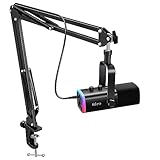

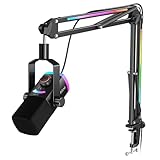


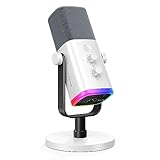

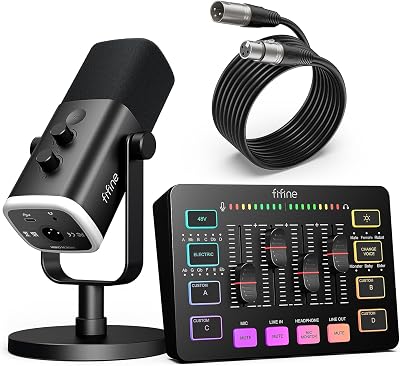


Top Picks at a Glance
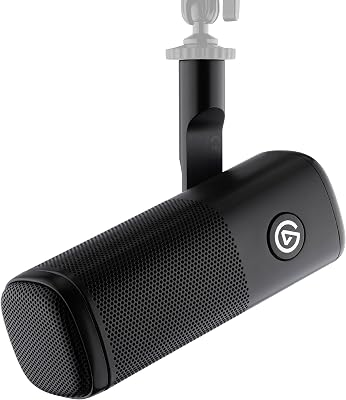
Elgato
Elgato Wave DX – Dynamic XLR Microphone, Cardioid pattern, Noise Rejection, speech optimised for Podcasting, Streaming, Broadcasting, No Signal Booster Required, works with any Interface, for Mac, PC

Audio-Technica AT2020 Cardioid Condenser Studio XLR Microphone, Ideal for Project/Home Studio Applications, Black

Samson
Samson Q2U Dynamic USB-C/XLR Microphone

Elgato
Elgato Wave XLR MK.2 USB Audio Interface and DSP Mixer
As an Amazon Associate we earn from qualifying purchases. Product prices and availability are accurate as of the date/time indicated.
Why Streamers Are Choosing XLR Over USB
USB microphones are convenient — plug in, open OBS, done. But convenience has a ceiling. USB mics integrate the analog-to-digital converter, preamp, and capsule into one consumer-grade package with limited upgradeability. XLR microphones separate these components: the mic captures audio, an audio interface or mixer handles the conversion and preamp gain, and you can upgrade each piece independently over time.
The practical result? Better noise floor, more headroom for loud environments, cleaner gain staging, and access to professional-grade capsules that simply aren’t available in USB form. For streamers who’ve outgrown their USB mic — or who are building a setup from scratch and want to do it once — an XLR mic with a quality interface is the right foundation. It’s not dramatically more expensive than a premium USB mic; the Elgato Wave DX with the Wave XLR interface runs $270 total, which is only $70 more than a top-tier USB mic.
Building Your XLR Streaming Chain: Key Decisions
Dynamic vs. Condenser Capsule
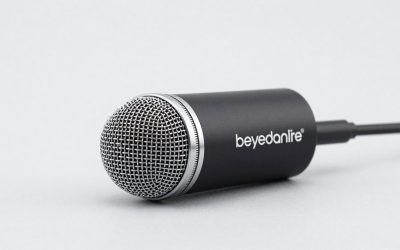
This is the most important choice. Dynamic microphones (Elgato Wave DX, Samson Q2U’s XLR mode) are less sensitive — they reject room noise, keyboard clatter, and fan sound effectively. Ideal for gaming environments that aren’t acoustically treated. Condenser microphones (Audio-Technica AT2020) capture more detail and nuance but also capture more background noise. Better for treated rooms or controlled environments where ambient noise is minimal.
Cardioid Polar Pattern
All four mics here use a cardioid pattern — they capture sound from directly in front and reject sides and rear. Correct mic positioning (on-axis, 6-12 inches from mouth) is critical for cardioid mics. A pop filter or foam windscreen handles plosives (hard P and B sounds).
The Interface: Elgato Wave XLR MK.2
The Elgato Wave XLR MK.2 appears in this roundup as both an interface recommendation and a DSP processor. At around $170, it’s not just a signal converter — it includes onboard DSP mixing, streaming-specific features like clip-guard limiter, and tight Wave Link software integration. For a streamer already using Elgato gear, this is the ecosystem-native interface choice. For a more flexible interface, options like the Focusrite Scarlett Solo ($119) or Audient iD4 MkII are alternatives worth comparing.
USB/XLR Hybrid Mics
The Samson Q2U is both a USB and XLR microphone — you can start with USB and add an interface later without buying a new mic. An excellent bridging option for someone not ready to commit to a full XLR chain immediately.

Best XLR Microphones for Streaming in 2026
Elgato Wave DX Dynamic XLR — Best for Noisy Gaming Rooms
At with a 4.7/5 rating, the Elgato Wave DX is purpose-built for streamers. As a dynamic mic with a tight cardioid pattern, it aggressively rejects keyboard noise, mechanical switches, cooling fans, and ambient room sound — the exact conditions of a typical gaming setup. No acoustic treatment required. Pairs naturally with the Wave XLR MK.2 interface for a complete Elgato streaming chain. For a gamer-streamer who wants professional audio without deadening their room with foam panels, the Wave DX is the starting point.
Audio-Technica AT2020 — The Streamer’s Classic Condenser
At $119 (4.7/5), the AT2020 has been the entry-level studio condenser recommendation for over a decade — and it remains one in 2026. The large-diaphragm cardioid condenser captures vocal detail and warmth that dynamic mics can’t quite match. The trade-off is sensitivity to room noise — this mic rewards a quiet, treated space. For a streamer with a dedicated setup room, acoustic panels, or a broadcast booth-style environment, the AT2020’s vocal clarity is exceptional at $119. Pairs with any XLR interface.
Samson Q2U Dynamic USB-C/XLR — Best Entry XLR Mic
At (4.5/5), the Samson Q2U solves the commitment problem of going XLR. It operates in both USB-C and XLR modes — use it as a USB mic today, plug it into an interface tomorrow. The dynamic capsule handles gaming room noise tolerably. The USB-C connection is the modern standard (no older Mini-USB awkwardness). For someone dipping their toes into XLR without wanting to buy an interface on day one, the Q2U is the smart bridge purchase. When you’re ready for the interface, the mic is already capable of handling the upgrade.
Elgato Wave XLR MK.2 Interface and DSP Mixer — The Interface Pick
At (4.0/5), the Elgato Wave XLR MK.2 is the interface that completes an XLR streaming chain rather than a standalone microphone. A single XLR input, onboard DSP processing (noise gate, EQ, compression), Clip Guard limiter that prevents audio peaking during loud moments, and Wave Link software integration for multi-source mixing. The 4.0/5 rating reflects that it’s a specialized streaming interface (single input, limited flexibility) rather than a full multi-channel audio interface — which is exactly what a dedicated streamer needs. Pair it with the Wave DX or AT2020 for a complete streaming audio rig.
The Complete Streaming Audio Chains
- Noise-tolerant gaming room: Elgato Wave DX (around $99) + Wave XLR MK.2 (around $170) = $270 total
- Treated/quiet room: Audio-Technica AT2020 ($119) + Wave XLR MK.2 (around $170) = $289 total
- Budget flexible entry: Samson Q2U (around $99) USB mode now, add interface later
Frequently Asked Questions
Do I need an audio interface to use an XLR microphone?
Yes — XLR microphones output an analog balanced signal that requires a preamp and analog-to-digital converter to reach your PC. An audio interface (like the Elgato Wave XLR MK.2, Focusrite Scarlett Solo, or similar) provides both. Some mixing boards also work, but a dedicated interface is simpler for streaming setups. The Samson Q2U is the exception — it includes a built-in USB audio interface, so it can run without a separate interface unit.
Is an XLR setup noticeably better than a quality USB mic for streaming?
For most viewers on Twitch or YouTube, the difference between a $100 USB mic and a $100 XLR mic with a $100 interface isn’t dramatic in the final stream audio. The real advantages of XLR show at higher tiers: better preamps, lower noise floor, and the ability to add compressors, EQ hardware, or mixers in the signal chain. For streamers upgrading from a budget USB mic, the jump to XLR is worthwhile; for those already on a premium USB mic, the upgrade is incremental rather than transformational.
Can I use an XLR mic for gaming voice chat as well as streaming?
Yes — the audio interface appears as a standard audio input device in Windows, and all voice chat applications (Discord, TeamSpeak, in-game voice) can be routed through it. The Wave XLR MK.2’s Wave Link software allows independent routing of streaming audio versus Discord audio, so your stream captures the mic signal while your chat uses the same input. This is a genuine quality-of-life advantage over juggling separate audio sources.