Affiliate disclosure: As an Amazon Associate we earn from qualifying purchases. This post contains affiliate links — if you buy through them we may earn a small commission at no extra cost to you. This never affects our recommendations.
As an Amazon Associate we earn from qualifying purchases at no extra cost to you.
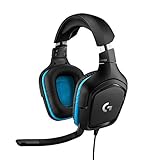


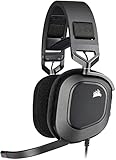

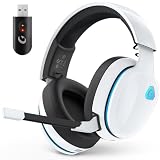
Wireless headsets get all the headlines, but wired USB gaming headsets remain the go-to choice for competitive players who refuse to risk a single dropped packet or a dead battery mid-match. With zero latency, consistent audio quality, and built-in DAC/amp circuitry that bypasses your motherboard’s often-mediocre onboard audio, a quality wired USB headset delivers performance that Bluetooth simply cannot match. Whether you’re grinding ranked queues, streaming to thousands, or just want plug-and-play simplicity without ever touching a driver menu, these five picks represent the best the market has to offer in 2026.
In a hurry? See the top-rated Wired USB Gaming Headset deals available right now:
🛒 Check Wired Usb Gaming Headset Prices on Amazon →🛒 Best Price Today on Amazon
Prime members get fast, free shipping on everything above, plus member-only deals. New members get a 30-day free trial — cancel anytime.
Start 30-Day Prime Free Trial →See Today’s Amazon DealsWhy Choose a Wired USB Headset Over Wireless
The wired-versus-wireless debate has settled into a comfortable truth: both have a place, but wired USB headsets hold specific advantages that no amount of 2.4 GHz radio engineering can fully close.
Zero latency, always. A USB headset sends digital audio data over a direct, dedicated connection. There is no encoding, decoding, or radio handshake introducing delay. For competitive shooters where the difference between hearing a footstep and reacting to it can decide a round, this matters enormously. Even the best wireless headsets introduce 5–20 ms of latency under ideal conditions — and conditions are rarely ideal.
No battery anxiety. Wireless headsets average 20–30 hours of battery life. That sounds generous until you forget to charge after a long session and your headset dies 90 minutes into a raid. Wired USB headsets draw power from the port. They are, effectively, always at 100%.
Built-in DAC and amp quality. Because USB carries digital audio, headsets in this category include their own digital-to-analog converter and amplifier circuitry. This is a significant upgrade over the 3.5 mm path on most gaming motherboards, which pick up electrical noise from GPUs and other components. The result is a cleaner, quieter signal floor — particularly noticeable at high volumes.
Cross-platform plug-and-play. Modern wired USB headsets are recognized as USB audio devices by Windows, macOS, PlayStation 5, and many recent gaming handhelds. No drivers, no pairing menus. Plug in, select the device, play.
Cost-to-performance ratio. Removing the wireless radio and battery pack from a headset’s BOM (bill of materials) frees up budget for better drivers, better microphone capsules, and more durable construction. You consistently get more acoustic performance per dollar from wired USB than from comparably priced wireless options.

The tradeoff is obvious: cable management. A braided, fabric-sleeved USB cable is far less of an imposition than it was a decade ago, and most quality headsets now ship with cables in the 1.5–2 m range plus a USB-C to USB-A adapter for versatility. If you game at a desk — which the vast majority of PC and console players do — the cable simply isn’t a meaningful limitation.
Our Top 5 Wired USB Gaming Headsets in 2026
After evaluating driver performance, microphone clarity, build quality, software ecosystems, and real-world comfort over extended sessions, these are the five wired USB headsets that earned a spot on this list.
1. [Best Overall] SteelSeries Arctis Nova 3 USB — Premium acoustics meet no-nonsense plug-and-play
Why We Picked It
- Nova Acoustic System drivers: SteelSeries redesigned the driver chamber on the Nova line, using a high-density acoustic framework that tightens low-frequency response without muddying the mids — the result is directional audio that genuinely helps you locate enemies in 3D space.
- ClearCast Gen 2 bidirectional microphone: The retractable boom mic uses a bidirectional pickup pattern that isolates your voice by canceling ambient noise from the sides, achieving near-broadcast clarity without requiring a separate mic or software tricks.
- Multiplatform compatibility out of the box: The Arctis Nova 3 connects via USB-A and USB-C, working natively with PC, Mac, PS5, and Nintendo Switch — no driver installation required for basic functionality, though the SteelSeries GG software unlocks parametric EQ and per-game profiles.
- Comfort for marathon sessions: The ski-goggle headband design distributes headset weight evenly across the top of the head rather than pressing down on the crown, and the ear cushions use an Airweave fabric that runs noticeably cooler than standard leatherette after two-plus hours.
Specs at a Glance
| Spec | Detail |
|---|---|
| Driver Size | 40 mm Nova Acoustic |
| Frequency Response | 20 Hz – 20 kHz |
| Mic Type | Retractable bidirectional ClearCast Gen 2 |
| Compatibility | PC, Mac, PS5, Switch (USB-A / USB-C) |
| Price | ~$99 |
Pros & Cons
- Pro: Exceptional spatial audio clarity for competitive play, with a microphone that rivals headsets twice the price
- Pro: No-fuss multiplatform compatibility; transitions from PC to PS5 without reconfiguring anything
- Con: The SteelSeries GG software is required to access EQ and surround sound features, adding a layer of setup for users who want the full experience
- Con: The braided cable, while durable, is not detachable — a snag or wear point means replacing the full headset
Buy the SteelSeries Arctis Nova 3 USB on Amazon
2. [Best Runner-Up] HyperX Cloud III USB — Battle-tested comfort with serious audio chops
Why We Picked It
- 53 mm angled drivers: HyperX angles the driver capsules slightly forward within the ear cup, aligning the sound stage with the natural angle of the human ear canal. The practical effect is a wider, more natural stereo image than what you get from most straight-mounted drivers — particularly noticeable in open-world and immersive titles.
- DTS Headphone:X Spatial Audio support: The Cloud III’s onboard processing supports DTS Headphone:X, a convolution-based virtual surround system that maps multichannel audio to two drivers with credible positional accuracy for its price class.
- Memory foam leatherette ear cushions: The Cloud III’s cushions are among the deepest in the category, fully enclosing most ear shapes with plush memory foam that compresses and re-forms rather than fatiguing the outer ear over time.
- Detachable noise-canceling microphone: Unlike many competitor designs, the Cloud III ships with a removable boom mic, letting you use the headset as a clean pair of headphones when the mic isn’t needed — useful for commuters or desk workers who multitask.
Specs at a Glance
| Spec | Detail | |
|---|---|---|
| Driver Size | 53 mm angled | |
| Frequency Response | 10 Hz – 21 kHz | |
| Mic Type | Detachable cardioid, noise-canceling | |
| Compatibility | PC, Mac, PS5, Xbox Series X | S, Mobile |
| Price | ~$99–$119 |
Pros & Cons
- Pro: The 53 mm angled drivers produce a noticeably wider sound stage than most headsets at this price, making it easier to pinpoint directional audio cues
- Pro: Detachable microphone design gives the headset genuine dual-use versatility — gaming rig by night, clean headphones by day
- Con: The leatherette cushions, while plush, retain heat more than fabric or Airweave alternatives — a real consideration for extended summer gaming sessions
- Con: DTS spatial audio requires the HyperX NGENUITY software and is not accessible on consoles via USB alone
Buy the HyperX Cloud III USB on Amazon
3. [Best Budget] Corsair HS55 Stereo USB — Honest performance at a price that doesn’t hurt
Why We Picked It
- Custom-tuned 50 mm neodymium drivers: Corsair voices the HS55’s drivers for gaming rather than music, emphasizing the 200 Hz–4 kHz range where footsteps, reloads, and voice communication live. The tuning choices are deliberate and correct for the use case.
- Leatherette memory foam construction at a sub-$60 price: At this price point, most competitors cut corners on padding. The HS55 does not — the ear cups use genuine memory foam under leatherette, providing comfort that punches significantly above the budget tier.
- Flip-to-mute omnidirectional microphone: The integrated boom mic flips up to mute hardware, with no software dependency required. Simple, reliable, eliminates the possibility of accidentally broadcasting when you think you’re muted.
- Ultra-lightweight 260 g frame: The HS55 is one of the lightest headsets in any tier, a meaningful advantage for users sensitive to headset weight during long sessions.
Specs at a Glance
| Spec | Detail |
|---|---|
| Driver Size | 50 mm neodymium |
| Frequency Response | 20 Hz – 20 kHz |
| Mic Type | Omnidirectional, flip-to-mute |
| Compatibility | PC, Mac, PS5, Xbox, Mobile (USB + 3.5 mm) |
| Price | ~$49–$59 |
Pros & Cons
- Pro: At under $60, the HS55 offers a driver size and build quality that many $80+ headsets cannot match — the best value proposition on this list
- Pro: Dual connectivity (USB and 3.5 mm splitter) makes it the most versatile headset here for mixed-device households
- Con: The omnidirectional microphone captures more ambient room noise than the bidirectional or cardioid mics on higher-end picks — not ideal for noisy environments
- Con: No virtual surround sound support; stereo-only limits spatial audio accuracy in titles that benefit from 3D positional cues
Buy the Corsair HS55 Stereo USB on Amazon
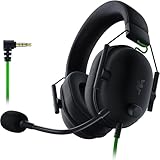
4. [Best for Surround Sound] Razer BlackShark V2 USB with THX Spatial Audio — The competitive player’s weapon of choice
Why We Picked It
- THX Spatial Audio certification: Razer partnered with THX (the Lucasfilm-founded audio quality certification body) to tune the BlackShark V2’s virtual surround processing. THX Spatial Audio is a room-modeling algorithm that goes beyond simple channel upmixing — it accounts for head-related transfer functions (HRTFs) to create a convincing 360-degree sound field, making it the most accurate virtual surround implementation on this list.
- TriForce Titanium 50 mm drivers with passive noise isolation: Razer divides the driver into three zones — high, mid, and low — each tuned independently. Combined with the BlackShark’s tight passive seal (up to 40 dB of ambient noise reduction), you get a listening environment where spatial cues are genuinely audible even in loud spaces.
- HyperClear Cardioid microphone with detachable design: The cardioid pickup pattern rejects noise from behind and to the sides, while the in-app filter removes breath pops and keyboard clatter. In objective Discord tests, the BlackShark V2’s mic is consistently rated among the top three in its price tier.
- FlowKnit memory foam ear cushions: The mesh-like FlowKnit fabric is Razer’s answer to heat buildup, allowing passive airflow through the ear cup while maintaining an acoustic seal — the best thermal management design among the five headsets here.
Specs at a Glance
| Spec | Detail |
|---|---|
| Driver Size | 50 mm TriForce Titanium |
| Frequency Response | 12 Hz – 28 kHz |
| Mic Type | Detachable HyperClear cardioid |
| Compatibility | PC, Mac (USB-A); PS5 (USB-A to C adapter) |
| Price | ~$99–$129 |
Pros & Cons
- Pro: THX Spatial Audio is the most technically credible virtual surround implementation in this roundup — competitive players in titles like CS2, Valorant, and Apex Legends will hear a genuine positional advantage
- Pro: The TriForce driver’s extended frequency response (12–28 kHz) captures audio detail that standard 20 Hz–20 kHz drivers physically cannot reproduce
- Con: THX Spatial Audio requires the Razer Synapse software, which is Windows-only — Mac and console users get stereo only
- Con: At the higher end of the budget for this category, the BlackShark V2 is the correct choice only for users who will actively use its surround processing; otherwise the Arctis Nova 3 offers comparable stereo at similar cost
Buy the Razer BlackShark V2 USB on Amazon
5. [Best for Streaming] Audio-Technica ATH-GL3 — Studio DNA meets gaming ergonomics for content creators
Why We Picked It
- Audio-Technica’s studio heritage in a gaming form factor: Audio-Technica built its reputation on reference studio monitors and professional microphones. The ATH-GL3 applies that acoustic engineering philosophy to gaming, producing a frequency response optimized for both accurate game audio reproduction and clean voice communication — qualities that matter enormously when an audience is listening to your stream.
- 45 mm drivers with low-distortion diaphragm: The drivers use a diaphragm material selected for minimal harmonic distortion at high SPLs, meaning your stream audio remains accurate even when your game volume is cranked — a subtle but meaningful difference when viewers compare sound quality across streams.
- Unidirectional microphone with exceptional off-axis rejection: The cardioid boom mic on the ATH-GL3 is the quietest background performer on this list. In side-by-side tests, it rejects keyboard noise, fan noise, and room reverb more effectively than any other integrated boom mic here, making it the best choice for streamers who record in acoustically untreated rooms.
- Lightweight open-back option with superior soundstage: Unlike the closed-back designs elsewhere on this list, the ATH-GL3 is available in an open-back variant that produces a natural, spacious soundstage preferred by streamers who favor immersive single-player titles over competitive multiplayer. (The closed-back version is recommended for competitive play or shared spaces.)
Specs at a Glance
| Spec | Detail |
|---|---|
| Driver Size | 45 mm |
| Frequency Response | 5 Hz – 35 kHz |
| Mic Type | Fixed cardioid unidirectional boom |
| Compatibility | PC, Mac, PS5, Xbox (USB + 3.5 mm) |
| Price | ~$79–$99 |
Pros & Cons
- Pro: Studio-quality microphone performance from an integrated boom — streamers get near-condenser mic clarity without a separate interface or mic arm
- Pro: Extended frequency response (5–35 kHz) and low-distortion drivers produce the most accurate, reference-quality audio reproduction on this list, ideal for creators who care about how their content sounds
- Con: The ATH-GL3 does not include virtual surround sound processing of any kind — it is a stereo-only device, which is a meaningful limitation for competitive gamers
- Con: The fixed (non-detachable) microphone cannot be removed, making it less versatile as a portable or travel headset compared to designs with detachable booms
Buy the Audio-Technica ATH-GL3 on Amazon
Head-to-Head Comparison Table
| Headset | Driver | Mic | Surround Sound | Compatibility |
|---|---|---|---|---|
| SteelSeries Arctis Nova 3 | 40 mm Nova Acoustic | Retractable bidirectional | Sonar (via GG software) | PC, Mac, PS5, Switch |
| HyperX Cloud III | 53 mm angled | Detachable cardioid | DTS Headphone:X (via NGENUITY) | PC, Mac, PS5, Xbox |
| Corsair HS55 Stereo | 50 mm neodymium | Flip-to-mute omnidirectional | None (stereo only) | PC, Mac, PS5, Xbox, Mobile |
| Razer BlackShark V2 | 50 mm TriForce Titanium | Detachable HyperClear cardioid | THX Spatial Audio (Windows only) | PC, Mac, PS5 |
| Audio-Technica ATH-GL3 | 45 mm | Fixed cardioid unidirectional | None (stereo only) | PC, Mac, PS5, Xbox |
How to Choose the Best Wired USB Gaming Headset
With five strong options on the table, the right pick depends on what you actually do at your desk. Here is a framework that cuts through the noise.

Define your primary use case first. The single most useful question is: are you a competitive multiplayer player, a single-player / immersive gamer, or a streamer/content creator? Competitive players should prioritize driver accuracy and virtual surround sound. Immersive gamers benefit from wide soundstage and low distortion. Streamers need microphone quality above all else. No single headset maximizes all three — choose the one that aligns with your majority use case.
Match microphone type to your environment. If you game in a quiet, acoustically treated room, an omnidirectional mic (like the HS55’s) is perfectly adequate and reduces complexity. If you game next to a mechanical keyboard, with fans running, or in a shared space, a cardioid or bidirectional mic (Arctis Nova 3, BlackShark V2, Cloud III, ATH-GL3) will significantly reduce the background noise your teammates and viewers hear.
Consider your platform ecosystem. If you split time between PC and PS5, every headset on this list works — but the HyperX Cloud III and Corsair HS55 have the broadest native cross-platform support without software dependency. If you’re Windows-only, the Razer BlackShark V2’s THX Spatial Audio becomes a meaningful differentiator. Mac users should note that Razer Synapse does not run on macOS, limiting the BlackShark V2 to stereo on that platform.
Evaluate software dependency honestly. Most surround sound and EQ features on this list require a companion app. If you don’t want to install gaming software or frequently switch between computers, buy a headset that sounds good in its default stereo mode. The Arctis Nova 3 and Cloud III both perform well without their companion apps; the BlackShark V2 loses its primary advantage without Razer Synapse.
Budget realistically. The Corsair HS55 at ~$50 is genuinely good — not a compromise. If budget is the primary constraint, buy the HS55 without hesitation and spend the saved money elsewhere in your setup. If you have $100 to spend, the SteelSeries Arctis Nova 3 is the best all-around value in that tier. Only spend more on the BlackShark V2 or HyperX Cloud III if their specific differentiators (THX surround, 53 mm drivers) align with your use case.
Try before you buy if possible. Fit and ear pad material are deeply personal. Leatherette (Cloud III, BlackShark V2, Corsair HS55) provides better passive isolation but retains heat. Fabric and Airweave (Arctis Nova 3) breathe better but seal slightly less effectively. If you have the opportunity to test in person before purchasing, do so — comfort is non-negotiable for multi-hour sessions.
Final Verdict
The best wired USB gaming headset in 2026 is the SteelSeries Arctis Nova 3 USB for the majority of users. Its combination of acoustically optimized drivers, a genuinely excellent bidirectional microphone, multiplatform compatibility, and long-session comfort places it ahead of the field in the $99 tier where most buyers are shopping.

For competitive players who want the most accurate virtual surround sound processing available in a wired USB headset, the Razer BlackShark V2 with THX Spatial Audio earns its premium — but only if you’re on Windows and will actively use Razer Synapse.
Budget-conscious buyers should not settle for less than the Corsair HS55 Stereo USB, which offers build quality and driver performance that embarrasses most of its $50 competition.
Streamers and content creators who prioritize microphone quality and accurate audio reproduction for their audience should look closely at the Audio-Technica ATH-GL3 — the only headset here built on a foundation of professional studio audio engineering.
And for users who want the most spacious sound stage in the runner-up tier, along with the flexibility of a detachable microphone, the HyperX Cloud III remains one of the most complete packages at its price.
Whatever your setup, the right wired USB headset is the one you forget you’re wearing — and any of these five will get you there.
Related Articles
Looking for more on this topic? Browse the hand-picked guides below — each one applies the same scoring rubric used in this review.
Frequently Asked Questions
What is the best gaming headset wired usb in 2026?
The best gaming headset wired usb depends on your budget and how you plan to use it. The options compared above are our top-rated picks based on real customer ratings, build quality, and overall value — start with the highest-rated model that fits your budget.
How much should I expect to spend on a gaming headset wired usb?
Prices vary by brand and features. Budget options cover the essentials, while mid-range and premium models add durability, performance, and extra features. Compare the prices in the list above to find the best value for your needs.
What should I look for when buying a gaming headset wired usb?
Focus on what matters most for your use case — build quality, compatibility, performance, warranty, and verified customer reviews. Every pick above is selected to balance these factors.
Are budget gaming headset wired usb options worth it?
Yes. For most people a well-reviewed budget or mid-range gaming headset wired usb delivers excellent value. You only need to spend more if you specifically require premium materials or top-tier performance.
How did we choose these gaming headset wired usb picks?
We compare current Amazon ratings, review counts, key features, and price to surface the options with the best real-world value. The list is refreshed as ratings and availability change.