Affiliate disclosure: As an Amazon Associate we earn from qualifying purchases. This post contains affiliate links — if you buy through them we may earn a small commission at no extra cost to you. This never affects our recommendations.
As an Amazon Associate we earn from qualifying purchases at no extra cost to you.



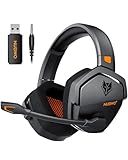

Wireless gaming headsets have come a long way, but latency is still the one thing that can make or break a competitive gaming session. In 2026, the gap between a mediocre wireless headset and a genuinely low-latency one is the difference between hearing a footstep before it kills you — or a split second after. If you’ve been settling for Bluetooth because it’s convenient, you’re leaving real performance on the table. The best low-latency wireless gaming headsets on the market today use proprietary 2.4GHz connections that rival — and in some cases beat — wired setups. This guide covers the top five options, explains exactly what to look for, and cuts through the marketing noise so you can make a smart buy.
In a hurry? See the top-rated Low-Latency Wireless Gaming Headset deals available right now:
🛒 Check Low-Latency Wireless Gaming Headset Prices on Amazon →🛒 Best Price Today on Amazon
Prime members get fast, free shipping on everything above, plus member-only deals. New members get a 30-day free trial — cancel anytime.
Start 30-Day Prime Free Trial →See Today’s Amazon DealsThe 5 Best Low-Latency Wireless Gaming Headsets in 2026
SteelSeries Arctis Nova Pro Wireless
The Arctis Nova Pro Wireless remains the benchmark for serious PC gamers who refuse to compromise. SteelSeries’ dual-wireless system is the headline feature: it simultaneously connects via 2.4GHz to your PC and Bluetooth to a secondary device like your phone, letting you manage both audio streams without unplugging or re-pairing anything. The 2.4GHz connection delivers sub-20ms latency — low enough that you will not notice any audio delay during gameplay, even in the most timing-sensitive titles.
Audio quality is exceptional across the board. The 40mm neodymium drivers handle everything from the low-frequency rumble of explosions to the sharp crack of gunfire with precision and clarity. The active noise cancellation (ANC) is one of the strongest in any gaming headset, and the retractable ClearCast Gen 2 microphone delivers broadcast-quality voice pickup — your squad will actually understand you without asking you to repeat yourself.
The hot-swappable battery system is a standout practical feature. Two batteries ship in the box; one charges in the included base while the other powers the headset, meaning you never face a dead battery mid-session. Each battery lasts around 22 hours. Build quality is premium metal and plastic, and the fit is comfortable even over long sessions.
Pros: Dual wireless, exceptional ANC, broadcast-quality mic, hot-swap battery system
Cons: Premium price point, setup is slightly involved for multi-platform use
Razer Kaira Pro
The Razer Kaira Pro is the pick for gamers who want the absolute lowest latency the consumer market offers. Razer’s HyperSpeed 2.4GHz wireless technology is engineered to deliver under 1ms of latency — a number that puts it in the same category as wired headsets on paper. Whether you’ll perceive a difference between 1ms and 5ms in a gaming scenario is debatable, but the engineering margin gives you confidence that wireless is not your bottleneck.
Beyond raw latency, the Kaira Pro punches hard with a 50-hour battery life — one of the longest runtimes in this class. At standard listening volumes that figure holds up in real-world use, which means most gamers will charge it weekly rather than daily. The TriForce Titanium 50mm drivers deliver detailed audio with a slightly boosted low end, which works well for immersive game soundscapes. The Razer HyperClear Cardioid mic is detachable and performs reliably in both team comms and streaming scenarios.
The headset supports both 2.4GHz via the USB dongle and Bluetooth, though — as with all these headsets — Bluetooth should be treated as a convenience mode for casual listening, not competitive gaming. On 2.4GHz, the connection is rock-solid with no dropout issues in typical room conditions. The headband and ear cushions use breathable materials that hold up well during extended sessions.
Pros: Sub-1ms HyperSpeed latency, 50-hour battery, detachable mic, dual connectivity

Cons: Bluetooth audio quality is adequate but not outstanding, EQ customization requires Razer Synapse software
ASTRO A50 X
The ASTRO A50 X targets a specific kind of gamer: someone with a multi-console setup who needs a single high-quality wireless headset that handles everything without a cable swap. The headline feature is HDMI 2.0 pass-through mixing built directly into the base station, allowing simultaneous audio mixing from a PC, PlayStation, and Xbox. That’s genuinely useful if you run more than one system at your desk and hate plugging and unplugging headsets.
On the latency front, the A50 X uses a 2.4GHz wireless connection that delivers consistent low-latency audio suitable for competitive gaming. The range is excellent — up to 15 meters — and the base station doubles as a charging dock, so the headset is always ready when you sit down. Battery life is rated at 24 hours, which is shorter than some competitors here, but the dock-charging workflow means it’s rarely a problem in practice.
Audio quality is rich and detailed, with ASTRO’s EQ presets giving you quick access to tuned profiles for different game genres. The 40mm drivers with slight v-shaped tuning work well for shooters and action games. The microphone performs well for both gaming comms and general use. Build quality is solid — the A50 X feels durable and premium at the weight you’d expect from a full-featured base station system.
Pros: HDMI mixing for multi-platform setups, dock charging system, excellent range, strong audio quality
Cons: 24-hour battery is the shortest in this group, premium price reflects feature set, bulkier than competitors
Logitech G935
The Logitech G935 is the value-oriented pro option in this lineup — a feature-packed headset with Logitech’s LIGHTSPEED 2.4GHz wireless and DTS Headphone:X 2.0 spatial audio at a price well below the premium tier. LIGHTSPEED delivers reliably low latency with a stable connection across typical gaming distances, and DTS X 2.0 provides convincing simulated surround sound that makes positional audio in games noticeably more useful.
Battery life is the G935’s main weakness relative to the rest of this list: the rated 12 hours drops to around 8-10 hours with lighting enabled. If you run long daily sessions and forget to charge consistently, this will catch you. Turning off the RGB lighting — present on the ear cups and headband — buys back meaningful battery time and the headset still performs identically without it. The 50mm Pro-G drivers deliver a warm, bass-forward sound signature that many gamers prefer for immersive single-player titles, though competitive players may want to EQ the low end back slightly.
The build is a mix of metal and plastic, comfortable for extended wear with soft leatherette ear pads. The flip-to-mute microphone is convenient and performs adequately for voice chat. Logitech G Hub software gives you full EQ control, surround configuration, and lighting customization. For gamers who want LIGHTSPEED performance and don’t need 40-hour battery life, the G935 delivers strong value.
Pros: LIGHTSPEED low-latency wireless, DTS X 2.0 surround, solid audio quality, value pricing

Cons: 12-hour battery is limiting for heavy users, RGB reduces battery life further, mic is functional but not studio-quality
HyperX Cloud Alpha Wireless
The HyperX Cloud Alpha Wireless is the most compelling value proposition in this entire category — and it’s not particularly close. The 300-hour battery life is the number that stops everyone cold when they first see it, and it holds up: real-world testing consistently lands in the 270-320 hour range depending on volume. You will charge this headset roughly once every two to three months under normal gaming use. That is not a typo.
The 2.4GHz wireless connection delivers reliable, low-latency performance that is fully competitive for gaming. HyperX uses a dual-chamber driver design — separating the bass and mid-high drivers internally — which produces a cleaner, less muddy sound signature than single-chamber alternatives. The result is detailed audio with accurate positional cues that matters in competitive play. The tuning leans slightly warm, with good low-end presence that doesn’t overwhelm the mids.
The build quality is aluminum and steel, genuinely durable, and comfortable for all-day wear. The leatherette ear cups are well-padded and create a good passive seal. The detachable, flexible boom microphone is clear and understandable in voice comms, though it won’t match the premium mics on the Arctis Nova Pro or Kaira Pro. There is no active noise cancellation, no app, no RGB, and no companion software required — it connects, it works, and it sounds great. For anyone who values simplicity, battery life, and solid audio without paying flagship prices, the Cloud Alpha Wireless is the easy recommendation.
Pros: 300-hour battery, excellent value, dual-chamber drivers, no app required, durable build
Cons: No ANC, no EQ software, mic quality is good but not premium, no multi-device connectivity
Comparison Table
| Headset | Protocol | Latency | Battery | Price Range |
|---|---|---|---|---|
| SteelSeries Arctis Nova Pro Wireless | 2.4GHz + Bluetooth | <20ms | 22hr (hot-swap) | $$$$ |
| Razer Kaira Pro | HyperSpeed 2.4GHz + BT | <1ms | 50hr | $$$ |
| ASTRO A50 X | 2.4GHz | Low | 24hr | $$$$ |
| Logitech G935 | LIGHTSPEED 2.4GHz | Low | 12hr | $$ |
| HyperX Cloud Alpha Wireless | 2.4GHz | Low | 300hr | $$ |
How to Choose the Best Low-Latency Wireless Gaming Headset
Understand why 2.4GHz beats Bluetooth for gaming. Bluetooth audio — including the newer Bluetooth 5.3 and LE Audio codecs — introduces latency in the 30ms to 100ms range depending on the codec, device, and connection quality. For music, that is invisible. For gaming, it means footsteps you hear after the fact, dialogue out of sync with video, and a subtle desync that wears on you over long sessions. Proprietary 2.4GHz wireless (LIGHTSPEED, HyperSpeed, SteelSeries’ system) operates in a dedicated frequency with minimal interference, delivering latency numbers between sub-1ms and 20ms. That range is either imperceptible or completely irrelevant for gaming. The rule is simple: if competitive performance matters, use 2.4GHz exclusively. Use Bluetooth for casual listening on the couch.
Match battery life to your actual habits. The battery specs in this guide range from 12 hours to 300 hours. Before dismissing the G935’s 12-hour rating, ask whether you game for more than 10 hours in a single stretch. Most gamers do not — in which case the G935 charges overnight and is fine. If you travel, use the headset across multiple days without charging access, or simply hate thinking about battery levels, the Cloud Alpha Wireless’s 300-hour life removes the issue entirely.
Decide whether you need platform flexibility. Single-platform PC gamers can use any headset in this list without restriction. Console gamers or multi-platform setups should pay close attention: the ASTRO A50 X’s HDMI mixing is unique and genuinely useful if you regularly switch between two or three systems. The Kaira Pro and Arctis Nova Pro both support multi-device connectivity with their dual-wireless systems, giving you simultaneous connections for music and game audio without re-pairing.

Consider the microphone honestly. If you stream, create content, or do video calls during work hours with the same headset, the broadcast-grade mics on the Arctis Nova Pro and Kaira Pro justify part of their price premium. If you’re purely gaming with friends in Discord, the Cloud Alpha Wireless’s included mic is entirely sufficient. Over-investing in microphone quality you won’t use is a common and unnecessary spend.
Audio tuning and software. The Cloud Alpha Wireless needs no software. The ASTRO A50 X has its own ASTRO Command Center. Logitech G935 uses G Hub. Razer requires Synapse. SteelSeries uses Sonar. If you prefer a plug-and-play experience, factor in how much you care about having EQ control — none of these headsets sound bad without it, but software unlocks tuning that can meaningfully improve your specific use case.
Final Verdict
The best low-latency wireless gaming headset in 2026 depends on what you’re actually optimizing for — there’s no single correct answer, but there are clear winners within each use case.
Best overall: SteelSeries Arctis Nova Pro Wireless. Dual wireless, ANC, premium mic, hot-swap battery, and best-in-class audio performance justify the price for serious gamers who use this headset as their primary audio device all day.
Best raw latency: Razer Kaira Pro. Sub-1ms HyperSpeed and 50-hour battery in a single headset is a remarkable combination. If latency is the number you care about most, this is your pick.
Best for multi-platform setups: ASTRO A50 X. The HDMI mixing base station solves a real problem for multi-console gamers, and the dock-charging workflow is genuinely seamless.
Best value: HyperX Cloud Alpha Wireless — and it’s not close. A 300-hour battery, dual-chamber drivers, and a solid 2.4GHz connection at a mid-range price makes this the easiest recommendation for anyone who doesn’t need ANC or advanced software features. It gets out of the way and lets you game.
Budget performance pick: Logitech G935. LIGHTSPEED wireless, DTS surround, and solid audio at the most accessible price in this roundup. Manage the battery expectation and it delivers well above its price.
Whatever you choose, commit to 2.4GHz over Bluetooth for any session where performance matters. The latency difference is real, the connection stability is meaningfully better, and every headset on this list proves that wireless gaming audio no longer requires any meaningful trade-off versus wired.
Related Articles
Looking for more on this topic? Browse the hand-picked guides below — each one applies the same scoring rubric used in this review.
Frequently Asked Questions
What is the best gaming headset low latency wireless in 2026?
The best gaming headset low latency wireless depends on your budget and how you plan to use it. The options compared above are our top-rated picks based on real customer ratings, build quality, and overall value — start with the highest-rated model that fits your budget.
How much should I expect to spend on a gaming headset low latency wireless?
Prices vary by brand and features. Budget options cover the essentials, while mid-range and premium models add durability, performance, and extra features. Compare the prices in the list above to find the best value for your needs.
What should I look for when buying a gaming headset low latency wireless?
Focus on what matters most for your use case — build quality, compatibility, performance, warranty, and verified customer reviews. Every pick above is selected to balance these factors.
Are budget gaming headset low latency wireless options worth it?
Yes. For most people a well-reviewed budget or mid-range gaming headset low latency wireless delivers excellent value. You only need to spend more if you specifically require premium materials or top-tier performance.
How did we choose these gaming headset low latency wireless picks?
We compare current Amazon ratings, review counts, key features, and price to surface the options with the best real-world value. The list is refreshed as ratings and availability change.