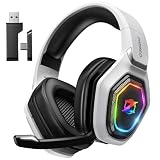
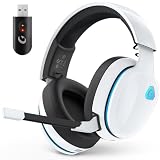
- Top Pick: Razer BlackShark V2 X Gaming Headset: 7.1 Surround Sound – 50mm Drivers – Memory Foam Cushion – For PC, PS4, PS5, Switch – 3.5mm Audio Jack – Black
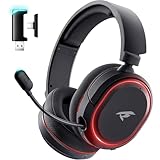
- Best Value: JBL Quantum 100M2 Wired Gaming Headset, Detachable Mic – Black
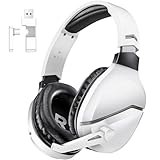
- Premium Choice: HyperX Cloud III – Wired Gaming Headset, PC, PS5, Xbox Series X|S, Angled 53mm Drivers, Spatial Audio, Memory Foam, Durable Frame, Ultra-Clear 10mm Mic, USB-C, USB-A, 3.5mm – Black
Affiliate disclosure: As an Amazon Associate we earn from qualifying purchases. This post contains affiliate links — if you buy through them we may earn a small commission at no extra cost to you. This never affects our recommendations.
- Quick Picks: Top 5 Wired Gaming Headsets at a Glance
- Wired vs. Wireless in 2026: The Case for Wired
- USB vs. 3.5mm: Which Connection Is Better?
- Top 5 Wired Gaming Headsets in 2026
- Full Comparison Table
- What to Look For When Buying a Wired Gaming Headset
- Verdict: Which Best Wired Gaming Headset Should You Buy?
- Frequently Asked Questions
- Related Articles
- Related Articles
As an Amazon Associate we earn from qualifying purchases at no extra cost to you.


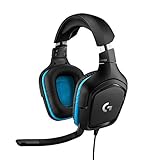

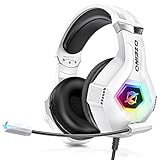
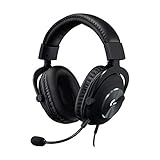

In a hurry? See the top-rated Wired Gaming Headset deals available right now:
🛒 Check Wired Gaming Headset Prices on Amazon →🛒 Best Price Today on Amazon
Prime members get fast, free shipping on everything above, plus member-only deals. New members get a 30-day free trial — cancel anytime.
Start 30-Day Prime Free Trial →See Today’s Amazon DealsQuick Picks: Top 5 Wired Gaming Headsets at a Glance
| Rank | Headset | Connection | Best For | Price Range |
|---|---|---|---|---|
| 1 | HyperX Cloud II | USB / 3.5mm | Best Overall | ~$99 |
| 2 | SteelSeries Arctis Nova 3 | USB / 3.5mm | Best Mic Clarity | ~$79 |
| 3 | Razer BlackShark V2 | USB + 3.5mm | Best Audio Quality | ~$99 |
| 4 | Audio-Technica ATH-G1 | 3.5mm | Best for Audiophiles | ~$129 |
| 5 | Corsair HS80 RGB USB | USB | Best Value USB | ~$69 |
Wired vs. Wireless in 2026: The Case for Wired
Wireless headsets have gotten dramatically better. Low-latency 2.4GHz connections, 30+ hour batteries, and lossless audio codecs have closed the gap considerably. So why go wired in 2026?
Zero latency — guaranteed. The fundamental physics argument holds. A wired connection delivers audio with effectively 0ms of processing delay. Wireless headsets, even the fastest ones using proprietary 2.4GHz protocols, introduce anywhere from 10ms to 40ms of latency. For casual gaming, that is imperceptible. For competitive FPS players — where pinpointing a footstep’s exact direction determines whether you live or die — those milliseconds matter.
No battery anxiety. A wired headset is always on. You plug it in, it works. No checking charge levels before a session, no mid-raid dead battery, no forgetting to plug it in overnight.
Better audio per dollar. The wireless radio, battery, and power management circuitry built into wireless headsets cost money — money that does not go into drivers, cushions, or microphone quality. At the same $99 price point, a wired headset consistently delivers better raw acoustic performance than its wireless counterpart.
Compatibility is universal. 3.5mm analog connections work with every gaming platform — PC, PS5, Xbox, Nintendo Switch, and even mobile. No dongles to lose, no proprietary receivers to pair.
The bottom line: if you play competitively or simply want the most audio for your money, wired is still the right choice in 2026.
USB vs. 3.5mm: Which Connection Is Better?
Both connection types have real-world merit. The right choice depends on your setup and priorities.
3.5mm Analog
The 3.5mm jack sends a raw analog signal. Audio processing happens in your PC’s or console’s sound hardware. That is either a feature or a liability depending on the quality of your onboard audio.
Pros:
- Universal compatibility — works on PC, consoles, phones, controllers
- Lower latency (purely analog signal chain)
- No drivers required
- Sound quality is ceiling-limited by your DAC/amp, meaning it scales with better hardware
Cons:
- Onboard motherboard audio is often noisy — you may hear electrical interference (buzz, hiss, static)
- No built-in EQ or virtual surround processing
- Volume control usually requires software or inline hardware
USB
USB headsets include their own dedicated DAC and amplifier built into the cable or headset body. They bypass your motherboard’s audio entirely and process everything internally.
Pros:
- Consistent, clean audio regardless of motherboard quality
- Often includes built-in 7.1 virtual surround, EQ, and sidetone control
- No interference from electrical components on the motherboard
- Volume and mic controls handled directly by the headset
Cons:
- Slightly more latency than pure analog (DAC conversion adds ~1–5ms)
- Not compatible with console controllers natively (needs a USB port on the console)
- Sound quality is ceiling-limited by the headset’s built-in DAC quality
Verdict: If your motherboard has a quality audio chipset (or you use an external DAC), go 3.5mm for purity and flexibility. If you are on a mid-range motherboard and want plug-and-play quality, USB is the safer pick.
Top 5 Wired Gaming Headsets in 2026
1. HyperX Cloud II — Best Overall

The HyperX Cloud II has been a benchmark in wired gaming audio for years — and it remains the best overall pick in 2026 because nothing at its price point beats its combination of comfort, sound quality, and versatility.
Drivers: 53mm custom-tuned neodymium drivers. Larger drivers generally move more air, producing deeper, more impactful low-end. The Cloud II’s drivers deliver clean, detailed audio across the full frequency range with a slight V-shaped signature — boosted bass and treble, slightly recessed mids. That tuning suits gaming extremely well: bass-heavy explosions hit hard, and high-frequency audio cues like gunshots and footsteps cut through clearly.
7.1 Virtual Surround: The USB sound card adapter enables simulated 7.1 surround sound via software processing. Results are headset-dependent, and the Cloud II’s implementation is one of the better ones — directional audio is noticeably improved in large open-world environments and tactical shooters. Toggle it off for music listening or studio-style competitive play.
Comfort: The memory foam ear cushions and leatherette headband padding are genuinely comfortable for extended sessions. The headset clamps firmly without causing fatigue. Clamping force may be noticeable for users with wider heads during the first few hours of use, after which the headband breaks in well.
Microphone: Detachable cardioid condenser. Voice pickup is solid — clear and present, with decent background noise rejection. Not broadcast-quality, but more than adequate for in-game comms.
Connection: Ships with a 3.5mm cable and a USB audio control box. Use 3.5mm directly on consoles and controllers; use the USB box on PC for volume/mic control and 7.1 surround.
Why it wins: The Cloud II threads every needle — great audio, versatile connectivity, proven comfort, and a track record that spans years of competitive gaming. It remains the headset to beat.
2. SteelSeries Arctis Nova 3 — Best Mic Clarity
SteelSeries Arctis Nova 3 on Amazon
The Arctis Nova 3 is SteelSeries’ most accessible wired entry in the Nova lineup, and it punches above its price class on both audio and microphone quality.
Nova Acoustic System: SteelSeries redesigned their acoustic chamber for the Nova line, resulting in a more balanced, neutral sound signature compared to the previous Arctis line. Bass is present without overwhelming mids. Voices and instrument separation in games are notably clean. If you find V-shaped signatures fatiguing, the Nova 3’s tuning will feel more natural.
ClearCast Gen 2 Microphone: This is the Nova 3’s standout feature. The bidirectional microphone uses noise cancellation to aggressively filter background noise while preserving voice clarity. In practice, teammates consistently report cleaner, more natural-sounding voice compared to most gaming headsets in this price range. The microphone retracts cleanly into the earcup housing — no cable management needed when not in use.
Design: The ski-goggle suspension headband system returns from the original Arctis lineup. It distributes clamping pressure across the top of the head rather than concentrating it at the ear cups, which dramatically reduces long-session pressure hotspots. Users with glasses find this design particularly comfortable.
Connection: USB-C to USB-A cable provides clean, interference-free audio via built-in DAC. A standard 3.5mm cable is also included for analog use.
Limitations: The Nova 3 does not include virtual surround sound. For competitive players who keep spatial processing off anyway, that is a non-issue. For players who value immersive 7.1 surround, consider the Cloud II or BlackShark V2 instead.
3. Razer BlackShark V2 — Best Audio Quality
The Razer BlackShark V2 is the pick for players who want the closest thing to audiophile-grade sound from a dedicated gaming headset. The included USB sound card is what separates it.

TriForce Titanium 50mm Drivers: Razer’s TriForce driver design splits the diaphragm into three zones tuned separately for highs, mids, and lows. The effect is a more detailed, layered soundstage than a single unified driver can produce. Competitive players report better positional audio as a result — the distinction between sounds at different distances is more pronounced.
HyperClear Cardioid Microphone: The cardioid capsule is large relative to typical gaming headset mics. Frequency response is broader and more natural. Voice pickup is detailed enough that streamers use this headset without additional processing. The microphone arm is fully flexible for precise positioning.
USB Sound Card: The included USB sound card adapter supports 7.1 virtual surround and custom THX Spatial Audio processing via Razer’s Synapse software. THX Spatial implementation is among the better ones in gaming — the surround effect sounds less artificial than typical virtual surround. Using the USB card also bypasses motherboard audio entirely, eliminating interference.
Comfort: Oval ear cups with memory foam cushions fit most ear shapes without pressing against the ear canal. The headset is on the lighter side at 262g, which helps during extended sessions.
Limitations: Razer Synapse is required for full feature access, including EQ profiles and surround settings. The software has improved significantly but remains resource-heavy. Users who dislike persistent background software may prefer the Cloud II’s simpler controls.
4. Audio-Technica ATH-G1 — Best for Audiophiles
Audio-Technica ATH-G1 on Amazon
Audio-Technica built the ATH-G1 for one audience: players who refuse to compromise on audio quality and are willing to manage their own audio chain to achieve it.
45mm Drivers, Audiophile-Tuned: Audio-Technica’s driver tuning philosophy is flat frequency response — accurate reproduction of what is in the audio file without artificial boosting. The result is a sound signature that is neutral, detailed, and resolving. Instrument separation in game soundtracks is exceptional. Competitive players benefit from positional cues that are represented accurately rather than dramatized.
Detachable Cardioid Microphone: The microphone attaches via a 3.5mm connector on the left earcup. The capsule is optimized for voice frequency response and handles plosives well. Detachability is a genuine plus — the ATH-G1 doubles as an audiophile headphone when the microphone is removed.
3.5mm Analog Only: This is intentional. Audio-Technica wants the signal path as clean as possible. Pair this headset with a dedicated USB DAC/amp (like the FiiO E10K or JDS Labs Atom) for the best result. On a quality motherboard audio chip, it already sounds better than any USB gaming headset in this price range.
Build Quality: All-black matte housing with a metal headband adjustment mechanism. Build feels premium and durable, with a more restrained aesthetic than most gaming headsets.
Limitations: The ATH-G1 requires a quality audio source to perform at its best. Plugged into a budget motherboard with noisy onboard audio, it will underperform its potential. It has no virtual surround, no software ecosystem, and no integrated controls — this is a purist’s tool. If you need plug-and-play simplicity, look elsewhere.
5. Corsair HS80 RGB USB — Best Value USB Wired
Corsair HS80 RGB USB on Amazon
The Corsair HS80 RGB USB delivers premium USB features at a price point that undercuts most of the competition, making it the best value pick for players who want a no-compromise USB wired experience without the premium price.
50mm Neodymium Drivers: Corsair tunes the HS80 with a pronounced bass emphasis — more so than most headsets on this list. For players who enjoy bass-heavy games (battle royale, action RPGs, racing titles), the impact is deeply satisfying. Explosions, soundtrack bass lines, and environmental rumble are visceral and engaging.
Dolby Atmos Support: The HS80 includes a three-month Dolby Atmos for Headphones trial (subscription ongoing after trial). Dolby Atmos processing adds vertical axis audio cues to the surround sound field, which is more sophisticated than standard 7.1 virtual surround. Height cues — overhead gunfire, aircraft, falling objects — are processed separately, adding a layer of spatial depth that standard surround does not replicate.

iCUE Integration: Corsair’s iCUE software controls RGB lighting, EQ presets, and surround settings. The software is polished and actively maintained. Audiophile-grade EQ control is available if you want to reshape the sound signature.
Comfort: Plush memory foam ear cushions with leatherette covering. Earcups are generously sized and fully enclose most ear shapes. Build quality is solid with an aluminum yoke reinforcement on the headband.
Limitations: The bass-heavy tuning, while exciting, is not neutral. Competitive players who rely on precise mid-range audio cues may find the bass coloration less ideal than the HyperX Cloud II or BlackShark V2. The RGB lighting, while attractive, adds marginal weight.
Full Comparison Table
| Feature | HyperX Cloud II | Arctis Nova 3 | BlackShark V2 | ATH-G1 | Corsair HS80 |
|---|---|---|---|---|---|
| Driver Size | 53mm | Custom Nova | 50mm TriForce | 45mm | 50mm |
| Connection | USB + 3.5mm | USB-C + 3.5mm | USB + 3.5mm | 3.5mm only | USB |
| Virtual Surround | 7.1 (USB) | No | 7.1 + THX | No | Dolby Atmos |
| Mic Type | Detachable cardioid | Retractable bidirectional | Cardioid | Detachable cardioid | Fixed boom |
| Mic Quality | Good | Excellent | Excellent | Very Good | Good |
| Sound Signature | V-shaped | Balanced | Detailed/layered | Flat/neutral | Bass-heavy |
| Comfort (extended) | Very Good | Excellent | Good | Very Good | Excellent |
| Software Required | Optional | Optional | Synapse (recommended) | None | iCUE (recommended) |
| Price (approx.) | ~$99 | ~$79 | ~$99 | ~$129 | ~$69 |
| Best Use Case | All-around | Comms-heavy play | Competitive/streaming | Audio-first purists | Budget USB |
What to Look For When Buying a Wired Gaming Headset
Driver Size
Larger drivers (45mm–53mm) move more air and generally produce deeper bass and a wider soundstage. Driver size is not the only variable — tuning and diaphragm material matter equally — but all else being equal, 50mm+ drivers are preferable for gaming.
Connection Type
Match your connection to your setup. If your motherboard has a quality audio chip (Realtek ALC4080 or similar high-tier codec), 3.5mm lets you take full advantage of it. If you have no idea what codec is on your board, USB is the safer, more consistent choice.
Microphone Type
For gaming communications, cardioid or bidirectional microphones outperform omnidirectional designs. Cardioid mics pick up audio primarily in front of the capsule, rejecting background noise from the sides and rear. Bidirectional mics (used in the Arctis Nova 3) cancel even more aggressively. Fixed boom microphones with integrated pop filters are more convenient; detachable designs double as headphones for non-gaming use.
Comfort and Clamping Force
Ear cup depth, cushion material, and headband padding collectively determine comfort during multi-hour sessions. Memory foam over leatherette or fabric is the current standard for premium gaming headsets. Check headband adjustment range if you have a larger or smaller head than average. Suspension-style headbands (Arctis Nova 3) distribute weight more evenly than rigid padded designs.
Software and Features
Only invest in software features you will actually use. Virtual surround sound benefits immersive single-player games significantly. For competitive play, many players disable it entirely — the processed surround can muddy precise directional cues. A headset that sounds great with no software running is more versatile than one that depends on EQ software to reach its potential.
Verdict: Which Best Wired Gaming Headset Should You Buy?
For most players, the HyperX Cloud II is the clear winner. Its combination of 53mm drivers, versatile dual-connection design, proven comfort, and consistent performance across all game types makes it the safest and most rewarding choice at the $99 price point. It has earned its reputation over years of competitive play, and the 2026 version continues to deliver.
Spend less? The Corsair HS80 RGB USB at ~$69 delivers legitimate USB audio quality with Dolby Atmos support — impressive value for a headset this capable.
Need the best possible mic? Go with the SteelSeries Arctis Nova 3. The ClearCast Gen 2 microphone is genuinely best-in-class at this price tier.
Want the highest raw audio quality? The Razer BlackShark V2 with its TriForce drivers and included USB sound card edges out the competition for sheer audio detail and competitive-grade positional accuracy.
Building an audiophile gaming setup around a dedicated DAC? The Audio-Technica ATH-G1 rewards that investment with a transparency and accuracy that no purpose-built gaming headset can match.
Wired gaming headsets remain the most reliable, most cost-efficient path to high-quality game audio in 2026. Pick the one that fits your setup, and stop second-guessing your audio.
Frequently Asked Questions
Are wired gaming headsets better than wireless?
Wired headsets give reliable, lag-free audio, never need charging, and often cost less for the same sound quality. Wireless wins on freedom of movement. For value and simplicity, wired leads.
Do wired headsets have lower latency?
Wired connections have effectively zero audio latency. Modern wireless gaming headsets are also very low-latency, but wired removes any doubt, which appeals to competitive players.
How do wired gaming headsets connect?
Via a 3.5mm analog jack or USB. 3.5mm works across consoles, PC, and mobile, while USB headsets include a built-in sound card and often virtual surround. Choose based on your devices.
Is a wired headset good for competitive gaming?
Yes. The guaranteed lag-free connection, no battery to die mid-match, and lower price make wired headsets a favorite for competitive players who prioritize reliability.
Related Articles
Looking for more on this topic? Browse the hand-picked guides below — each one applies the same scoring rubric used in this review.