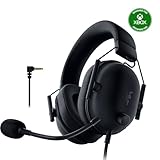
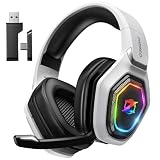
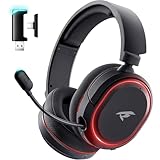
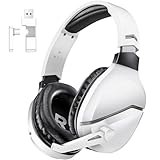
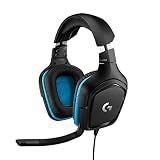
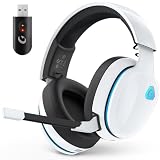
- Top Pick: Razer BlackShark V2 X Xbox Gaming Headset, 3.5mm Audio Jack, Black
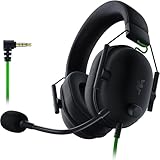
- Best Value: Razer BlackShark V2 X Gaming Headset: 7.1 Surround Sound – 50mm Drivers – Memory Foam Cushion – For PC, PS4, PS5, Switch – 3.5mm Audio Jack – Black
- Premium Choice: Razer BlackShark V2 X Wired PlayStation Gaming Headset, Black
Affiliate disclosure: As an Amazon Associate we earn from qualifying purchases. This post contains affiliate links — if you buy through them we may earn a small commission at no extra cost to you. This never affects our recommendations.
As an Amazon Associate we earn from qualifying purchases at no extra cost to you.





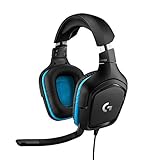

In a hurry? See the top-rated Gaming Headset for Competitive Play deals available right now:
🛒 Check Gaming Headset For Competitive Play Prices on Amazon →🛒 Best Price Today on Amazon
Prime members get fast, free shipping on everything above, plus member-only deals. New members get a 30-day free trial — cancel anytime.
Start 30-Day Prime Free Trial →See Today’s Amazon DealsQuick Picks
| # | Headset | Connection | Best For | Price Range |
|---|---|---|---|---|
| 1 | SteelSeries Arctis Nova Pro Wireless | 2.4GHz + Bluetooth | Best competitive overall | $$$$ |
| 2 | HyperX Cloud III | Wired (USB-C / 3.5mm) | Best wired competitive | $$ |
| 3 | Beyerdynamic MMX 300 Pro | Wired (XLR / 3.5mm) | Best imaging / audiophile | $$$$ |
| 4 | SteelSeries Arctis 7+ | 2.4GHz wireless | Best value wireless | $$$ |
| 5 | Logitech G Pro X 2 LIGHTSPEED | 2.4GHz wireless | Best wireless mic quality | $$$$ |
What Makes a Headset Good for Competitive Gaming
Competitive audio is a discipline of its own. You are not optimizing for movie immersion or bass-heavy music — you are optimizing for one thing: hearing where your enemy is before they hear you. Three technical factors decide whether a headset helps or hurts you in ranked play.
Soundstage Width
Soundstage refers to how spacious and three-dimensional the perceived audio environment feels. A headset with a wide soundstage makes the game world feel open — sounds originate from clearly distinct points in space rather than collapsing into your skull. For competitive play, a wider soundstage means distant footsteps feel distant and close threats feel close, giving you more reaction time. Open-back headphones traditionally deliver wider soundstage than closed-back, though several closed-back gaming headsets now use angled driver configurations and acoustic chamber tuning to close the gap.
Imaging Precision
Soundstage width means nothing without precise imaging. Imaging is your headset’s ability to render a sound at a specific, stable point in space — not just “somewhere to the left” but “hard left, slightly ahead, one floor up.” In games like CS2, Valorant, and Apex Legends, imaging precision directly translates to pixel-accurate information. You hear a footstep at eight o’clock and your crosshair moves there before you consciously decide to. Headsets with phase-accurate stereo reproduction and minimal resonance coloration produce the tightest imaging.
Frequency Response and Footstep Clarity
Footsteps in most competitive titles produce audio energy in the 150 Hz–3 kHz range, with the characteristic “thump” of a footstep sitting around 200–400 Hz and the surface texture (concrete vs. grass vs. wood) carrying detail in the 1–3 kHz range. A headset that over-emphasizes sub-bass muddies this range and turns distinct footsteps into undifferentiated rumble. You want a relatively flat or slightly mid-forward response in competitive use — not the V-shaped tuning common in consumer gaming headsets. Several models covered below can be EQ-tuned to competitive profiles if their stock tuning skews too bassy.
Virtual Surround: Helps or Hurts Competitive Awareness
This is one of the most misunderstood settings in competitive gaming. Virtual surround sound — whether it is Windows Sonic, Dolby Atmos for Headphones, DTS Headphone:X, or a proprietary implementation like SteelSeries Sonar or HyperX Spatial Audio — uses digital signal processing to simulate a surround speaker arrangement through two drivers.
The appeal is obvious: real surround-sound cues without a speaker array. The reality in competitive play is more complicated.
Virtual surround processing introduces phase artifacts. The algorithms that simulate speaker positions work by manipulating inter-aural timing and frequency shaping, and they do not always agree with a game’s own HRTF (Head-Related Transfer Function) implementation. When you stack the game’s spatial audio engine on top of a headset’s virtual surround DSP, you get coloration and smearing — sounds that should be at hard angles collapse toward center-left or center-right, and vertical separation becomes unreliable.
The consistent advice from high-level competitive players is to use stereo with the game’s built-in HRTF enabled where available, and keep the headset’s virtual surround off. CS2, Valorant, and Apex all handle their own spatial processing. Let them do it, and keep your headset signal chain clean. The headsets below are evaluated on stereo imaging performance, not on how convincing their surround mode sounds.
Wired vs. Wireless for Competitive: Latency Reality Check
The wired-vs-wireless debate has largely been settled by 2026. Modern 2.4 GHz wireless headsets operate at latencies that are imperceptible during gameplay. The SteelSeries Nova Pro Wireless, Arctis 7+, and Logitech G Pro X 2 LIGHTSPEED all report wireless audio latency under 10 ms at 2.4 GHz — the same order of magnitude as USB wired headsets, which introduce their own processing delay through the DAC.
Where wired connections still hold an edge: zero battery anxiety, no RF interference in crowded LAN environments, and lower total signal complexity. A 3.5 mm analog connection from headset to dedicated DAC/amp is the purest signal path you can get. For home use, wireless at 2.4 GHz is not a meaningful disadvantage. For LAN tournaments or dense RF environments, wired remains the safer choice.
Bluetooth is a different story. Bluetooth audio in SBC or AAC codec delivers 100–250 ms latency — completely unacceptable for competitive play. If you use a dual-wireless headset like the Nova Pro Wireless, verify that you are connected via the 2.4 GHz dongle and not Bluetooth when gaming.

Top 5 Picks
1. SteelSeries Arctis Nova Pro Wireless — Best Competitive Overall
SteelSeries Arctis Nova Pro Wireless
The Nova Pro Wireless is the most complete competitive headset on the market in 2026. Its dual wireless system (simultaneous 2.4 GHz + Bluetooth) with a hot-swap dual-battery system means you are never waiting for a charge mid-session. The real story for competitive players is the acoustic design: high-density neodymium drivers with a tuning that leans mid-forward in the critical 1–4 kHz band, which is exactly where footstep texture and weapon reload sounds live.
Soundstage is wide for a closed-back design — noticeably wider than the previous Nova Pro generation. Imaging is precise enough to confidently call out enemy positions in CS2 and Valorant based on audio alone. The retractable ClearCast Gen 2 microphone is the best built-in competitive mic in this roundup: clear pick-up, effective background noise rejection, and no separate arm to manage.
SteelSeries Sonar software (PC) provides a clean parametric EQ. The competitive preset tightens the low end and brings footstep frequencies forward — enable it and leave virtual surround off.
Driver: High-density neodymium (40 mm) | Connection: 2.4 GHz + Bluetooth | Battery: Dual hot-swap, ~22 hrs per pack | Mic: Retractable ClearCast Gen 2
2. HyperX Cloud III — Best Wired Competitive
The Cloud III continues HyperX’s tradition of delivering competitive-grade audio at a price that does not require a second mortgage. The defining technical feature is the 53 mm angled drivers — tilted to better approximate the angle of the human outer ear, which tightens stereo imaging and brings soundstage width closer to open-back performance from a closed housing.
In practice, the Cloud III’s positional audio in CS2 is among the best in the wired mid-range segment. Footsteps are distinct and directionally stable. The frequency response is moderately V-shaped out of the box, but the bass is controlled enough that it does not obscure mid-range detail. Running the Cloud III through a standalone DAC/amp and applying a slight low-shelf cut at 200 Hz brings the imaging to reference levels.
The DTS Headphone:X Spatial Audio option is there, but as discussed above, leave it off for competitive. Dual-connection via USB-C or 3.5 mm means you can use it across PC, console, and mobile without adapters.
Driver: 53 mm angled neodymium | Connection: USB-C, 3.5 mm | Weight: 320 g | Mic: Detachable, cardioid condenser
3. Beyerdynamic MMX 300 Pro — Best Imaging / Audiophile Pick
If you want the most accurate, least-colored positional audio of any closed-back gaming headset in 2026, the MMX 300 Pro is the answer. Beyerdynamic’s proprietary Tesla driver technology, derived from their studio monitor headphone line, delivers a soundstage that genuinely rivals open-back headsets and imaging precision that is simply in a different class from the gaming-branded competition.

The frequency response is studio-flat — no artificial bass boost, no hyped treble. What you hear is what is in the game audio. For competitive players with trained ears and willingness to learn what a flat response sounds like in-game, this is a significant advantage: footstep layering becomes audible (multiple players at different distances), and the vertical axis — ceiling, floor, stairs above/below — resolves with clarity that most headsets smear.
The built-in microphone is a genuine studio-quality condenser: it captures voice with definition that the detachable mics on gaming headsets cannot match. Latency is zero — pure analog 3.5 mm. The trade-off is price and the requirement of a decent external DAC/amp to drive the 250 Ω impedance version properly.
Driver: Tesla proprietary dynamic | Connection: 3.5 mm (XLR on Pro version) | Impedance: 32 Ω / 250 Ω | Mic: Fixed boom, condenser
4. SteelSeries Arctis 7+ — Best Value Wireless
At roughly half the price of the Nova Pro Wireless, the Arctis 7+ delivers 80–85% of the competitive audio performance. The 2.4 GHz connection is rock-solid — 30 hours of battery life means you are charging roughly twice a week in heavy use rather than daily. The headset is USB-C rechargeable and multi-platform (PC, PlayStation, Switch via USB dongle).
The acoustic performance is strong: the Arctis 7+ uses a slightly revised version of the acoustic chamber tuning from the earlier Arctis 7 line, with a tighter low-end response and a more articulate mid-range than the original. Footstep clarity in Apex Legends and Warzone is competitive-grade. Soundstage is narrower than the Nova Pro Wireless but wider than many budget wireless options.
The ClearCast microphone (non-retractable, boom arm) is among the best in the value wireless category. Background noise isolation is effective for home environments. For players who want wireless freedom without the premium price tag, the Arctis 7+ is the straightforward recommendation.
Driver: 40 mm neodymium | Connection: 2.4 GHz wireless | Battery: ~30 hrs | Mic: ClearCast bidirectional
5. Logitech G Pro X 2 LIGHTSPEED — Best Wireless Mic Quality
The G Pro X 2 LIGHTSPEED earns its place in this roundup through two specific strengths: the 50 mm PRO-G Graphene drivers and the Blue VO!CE microphone processing. Graphene is lighter and stiffer than conventional mylar driver membranes, which reduces distortion at high frequencies and tightens transient response — the snap of a footstep sounds crisper, the click of a reload is more distinct.
Blue VO!CE processing in G HUB gives you a broadcast-quality mic chain in a gaming headset: noise gate, de-esser, compressor, and multiple voice enhancement presets. For streamers who compete at a high level, this is the only headset that handles both use cases without compromise.
LIGHTSPEED wireless at 2.4 GHz delivers sub-10 ms audio latency. The 50-hour battery life is class-leading and removes battery management from your mental load entirely. The on-ear weight (480 g) is heavier than the competition — long sessions may cause fatigue for some users.

Driver: 50 mm PRO-G Graphene | Connection: LIGHTSPEED 2.4 GHz | Battery: ~50 hrs | Mic: Detachable, Blue VO!CE processing
Comparison Table
| Headset | Soundstage | Imaging | Footstep Clarity | Mic Quality | Wireless Latency | Battery |
|---|---|---|---|---|---|---|
| Arctis Nova Pro Wireless | Wide | Excellent | Excellent | Excellent | <10 ms | Dual hot-swap |
| HyperX Cloud III | Medium-Wide | Very Good | Very Good | Good | N/A (wired) | N/A |
| Beyerdynamic MMX 300 Pro | Very Wide | Outstanding | Outstanding | Excellent | N/A (wired) | N/A |
| Arctis 7+ | Medium | Good | Good | Good | <10 ms | ~30 hrs |
| Logitech G Pro X 2 | Medium-Wide | Very Good | Very Good | Excellent | <10 ms | ~50 hrs |
What to Look For When Buying
Driver size is not the whole story. A 50 mm driver with poor acoustic chamber design will lose to a well-tuned 40 mm driver. Look for driver tilt/angle specifications and user reports on imaging — raw diameter tells you almost nothing about competitive performance.
Closed-back vs. open-back. Open-back headphones (like Beyerdynamic’s DT 900 Pro X) deliver superior soundstage and imaging but leak audio in both directions — your mic picks up game audio and everyone in the room hears your music. For competitive gaming at home with a standalone microphone, open-back is worth considering. For integrated mic use, closed-back is the practical choice.
Impedance and your source. If you buy the Beyerdynamic MMX 300 Pro in 250 Ω configuration, plugging it into a laptop headphone jack will produce thin, quiet audio. A budget USB DAC/amp (Fosi Audio DS2, FIIO K5 Pro) resolves this immediately and is worth factoring into the total cost.
Software EQ availability. Factory tuning on gaming headsets almost always emphasizes bass for casual listening appeal. A headset with parametric EQ software (SteelSeries Sonar, HyperX NGenuity, Logitech G HUB) lets you correct the tuning to a competitive-appropriate curve. Prioritize headsets with parametric EQ over fixed presets.
Mic monitoring (sidetone). Playing at high volume without hearing your own voice leads to voice fatigue and shouting. All five headsets here offer sidetone — verify it is enabled in software if you experience vocal fatigue during long sessions.
Verdict
For most competitive players in 2026, the SteelSeries Arctis Nova Pro Wireless is the right call. It combines the widest soundstage and the best imaging in the wireless closed-back segment, an excellent integrated mic, and the hot-swap battery system that removes the only real competitive cost of going wireless. At its price point, it does everything a ranked player needs without requiring external hardware.
If budget is the primary constraint, the HyperX Cloud III punches well above its category with angled drivers that produce genuinely competitive positional audio over a simple USB-C or 3.5 mm connection.
If you are chasing the absolute ceiling of imaging accuracy and are willing to pair the headset with an external DAC, the Beyerdynamic MMX 300 Pro is in a different league — it is a studio monitoring instrument that happens to have a microphone, and it will tell you things about your game audio that other headsets mask.
Whichever you choose: disable virtual surround, enable the game’s native HRTF, dial in a flat or slightly mid-forward EQ, and use stereo. Your positioning will improve before the headset even breaks in.
Frequently Asked Questions
What headset features matter most for competitive gaming?
Accurate positional audio to pinpoint footsteps, a clear microphone for team comms, a comfortable long-session fit, and low latency. Precise sound imaging matters more than heavy bass.
Is surround sound or stereo better for competitive gaming?
Many competitive players prefer good stereo, since accurate stereo imaging gives reliable directional cues. Virtual surround can help some players, but precise stereo is the safe choice.
Do I need an expensive headset to compete?
No. A mid-range headset with clear, accurate sound and a decent mic is enough to compete. Spend more for comfort, build quality, and wireless rather than a competitive advantage.
Wired or wireless headset for competitive gaming?
Both work. Wired guarantees zero latency and no battery worries, which some competitive players prefer. Modern 2.4GHz wireless headsets are also low-latency and fully competitive-ready.
Related Articles
Looking for more on this topic? Browse the hand-picked guides below — each one applies the same scoring rubric used in this review.