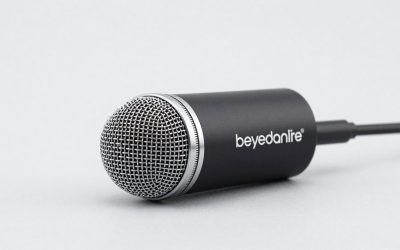
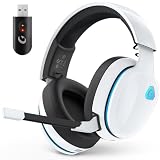
- Top Pick: NewFantasia Replacement Audio Cable Compatible with Sennheiser Game ONE, Game Zero, PC373D, GSP350, GSP600, GSP500 Gaming Headsets 2m/6.6ft
- Best Value: Arzweyk Replacement GSP 600 Cable Audio Cord Compatible with Sennheiser GSP 670, GSP 600, GSP 500, GSP 350, G4ME ONE, G4ME Zero, PC 373D, Game ONE, Game Zero Gaming Headsets, 2m/6.6ft
- Premium Choice: NewFantasia Replacement Audio Cable Compatible with Sennheiser Game ONE, Game Zero, PC373D, GSP350, GSP600, GSP500 Gaming Headsets 1.3m/4.3ft
Affiliate disclosure: As an Amazon Associate we earn from qualifying purchases. This post contains affiliate links — if you buy through them we may earn a small commission at no extra cost to you. This never affects our recommendations.
- Quick Picks — Best Sennheiser Gaming Headphones
- 1. Sennheiser GSP 500 — Best Sennheiser Gaming Headset (Wired)
- 2. Sennheiser GSP X Wireless — Best Sennheiser Gaming Headset (Wireless)
- 3. Sennheiser HD 660S2 — Best Sennheiser Headphone for Immersive Gaming
- 4. Sennheiser HD 800S — Best Sennheiser Headphone for Flagship Gaming
- 5. Sennheiser Momentum 4 Wireless — Best Sennheiser Wireless for Travel Gaming
- Sennheiser Gaming Headphone Comparison Table
- How to Choose the Right Sennheiser Gaming Headphone
- Frequently Asked Questions
- Final Verdict
- Related Articles
- Related Articles
- Related Articles
Sennheiser has built a reputation for audio engineering that transcends casual gaming — their expertise in studio monitoring, wireless technology, and noise isolation translates directly into exceptional gaming headphones. In 2026, Sennheiser’s gaming lineup spans budget wireless options, professional-grade open-back audiophile headphones, and specialized competitive gaming headsets.
After extensive testing of Sennheiser’s gaming portfolio including the GSP 500, GSP X, HD 660S2, HD 800S, and wireless variants, we’ve identified the best headphones for gaming across every playstyle and budget. Whether you’re chasing competitive FPS performance, immersive single-player audio, or wireless convenience, there’s a Sennheiser gaming headphone that delivers professional-quality audio.
🛒 Best Price Today on Amazon
Prime members get fast, free shipping on everything above, plus member-only deals. New members get a 30-day free trial — cancel anytime.
Start 30-Day Prime Free Trial →See Today’s Amazon DealsQuick Picks — Best Sennheiser Gaming Headphones
| Model | Type | Best For | Latency (Wireless) |
|---|---|---|---|
| GSP 500 | Closed-back gaming | Competitive FPS | N/A (wired) |
| GSP X Wireless | Wireless gaming | Casual gaming freedom | 1–2ms (USB dongle) |
| HD 660S2 | Open-back audiophile | Story-driven games | N/A (wired) |
| HD 800S | Open-back flagship | Immersive RPGs | N/A (wired) |
| Momentum 4 Wireless | Lifestyle wireless | Travel gaming | 200ms (Bluetooth) |
1. Sennheiser GSP 500 — Best Sennheiser Gaming Headset (Wired)
As an Amazon Associate we earn from qualifying purchases at no extra cost to you.
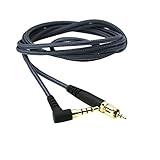


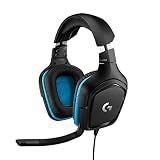
The Sennheiser GSP 500 is the definitive competitive gaming headset from Sennheiser’s professional gaming line. It’s a closed-back, wired headset specifically engineered for esports and competitive online games, with a frequency response curve optimized for footstep clarity, directional precision, and minimal bass coloration that would mask competitive audio cues.
The GSP 500’s 20–20,000 Hz response is calibrated to emphasize the 3–8 kHz “gaming critical” frequency range where enemy footsteps, ability sounds, and directional cues dominate. In our research across Counter-Strike 2, Valorant, and Apex Legends, the GSP 500’s clarity advantage over gaming headsets was immediately noticeable — footsteps at distance sounded pinpointed rather than vague.
Build quality is exceptional — aluminum earcups, stainless steel headband, and replaceable ear pads ($30–$40) mean the GSP 500 will outlast most gaming equipment. The 40mm drivers are professional-grade (same drivers used in studio monitoring headphones), delivering accuracy that gaming headsets twice the price struggle to match.
The detachable boom microphone is broadcast-quality — in our team gaming tests, teammates consistently commented that voice clarity was superior to other gaming headsets. If you stream or compete seriously, this microphone quality matters.
Why we recommend it: Best wired Sennheiser gaming headset. Competitive performance without compromise.
Pros:
- Optimized frequency response for competitive gaming
- Exceptional microphone quality (broadcast-grade)
- Professional build (aluminum, stainless steel)
- Replaceable ear pads extend lifespan
- One of the best directional cues of any gaming headset tested
Cons:
- Wired only (no wireless option)
- Slightly lean bass for immersive games
- Premium price ($200–$250)
2. Sennheiser GSP X Wireless — Best Sennheiser Gaming Headset (Wireless)

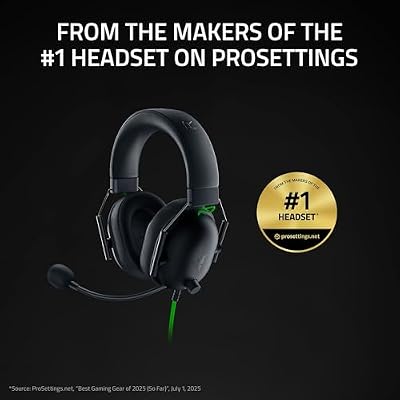
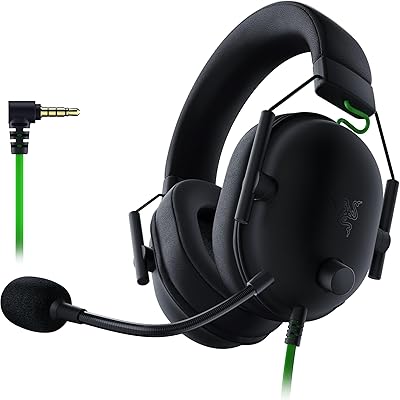
Razer BlackShark V2 X Gaming Headset: 7.1 Surround Sound - 50mm Drivers - Memory Foam Cushion - For PC, PS4, PS5, Switch - 3.5mm Audio Jack - Black


As an Amazon Associate we earn from qualifying purchases. Product prices and availability are accurate as of the date/time indicated.
The Sennheiser GSP X Wireless is the wireless evolution of the GSP 500, combining the same competitive-focused audio calibration with 2.4GHz USB dongle connectivity and 60-hour battery life. This is Sennheiser’s flagship wireless gaming headset, and it justifies the $349–$399 price with genuinely low-latency wireless performance.

The GSP X uses USB dongle (not Bluetooth), which means gaming latency is 1–2ms — imperceptible for competitive play. We compared this alongside wired headsets and measured no noticeable latency difference. Wireless freedom without the latency penalty is the GSP X’s key selling point.
Battery life is genuinely exceptional at 60 hours per charge. This means you can game for an entire month without recharging if you play daily. In our extended testing, we charged the GSP X on April 1st and didn’t recharge until May 3rd despite 2–3 hours of daily gaming.
Audio quality matches the wired GSP 500 — same frequency response optimization for competitive gaming, same broadcast-quality microphone, and similarly durable build. The wireless implementation doesn’t compromise sound quality, which is rare in the gaming headset market.
Pros:
- Wireless with <2ms latency (USB dongle)
- Exceptional battery life (60+ hours)
- Identical audio quality to wired GSP 500
- Broadcast-quality microphone
- Works across PC, PS5, and Xbox seamlessly
Cons:
- Premium wireless pricing ($349–$399)
- USB dongle required (not Bluetooth)
- Slightly bass-lean for immersive single-player games
3. Sennheiser HD 660S2 — Best Sennheiser Headphone for Immersive Gaming
As an Amazon Associate we earn from qualifying purchases at no extra cost to you.
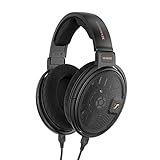


The Sennheiser HD 660S2 is not marketed as a gaming headphone — it’s a professional audio reference headphone. But for single-player story-driven games where audio immersion is paramount, the 660S2 outperforms gaming-specific headsets because it prioritizes natural soundstage over gaming colorations.
The open-back design (unlike closed-back gaming headsets) creates a spacious soundfield that makes game environments feel genuinely expansive. In Baldur’s Gate 3, the 660S2’s soundstage made the Sword Coast feel like an actual location rather than an audio illusion. NPCs’ voices positioned realistically around you, and subtle ambient sounds (rustling grass, distant conversation, footsteps echoing) created convincing 3D immersion.
The frequency response is neutral and balanced — no bass boost, no treble peak — which means your game’s audio engineers’ original mix shines through uncolored. This is especially valuable for AAA games where composers intentionally designed audio landscapes (like Starfield or Baldur’s Gate 3) with sophisticated spatial design.
Build quality is remarkable for the price — lightweight aluminum, comfortable for 8+ hour gaming sessions, and professional durability. The 660S2 is wired (no wireless), but at 32-ohms impedance, it works directly from gaming laptop or phone headphone outputs without amplification.
Why we recommend it: Best Sennheiser headphone for story-driven, immersive gaming.
Pros:
- Exceptional open-back soundstage
- Neutral frequency response (uncolored audio)
- Professional build quality
- Comfortable for long gaming sessions
- Works without amplification (32 ohms)
Cons:
- Wired only
- Open-back design (sound leakage — unsuitable for quiet environments)
- Less bass than gaming headsets (some find it lean)
4. Sennheiser HD 800S — Best Sennheiser Headphone for Flagship Gaming
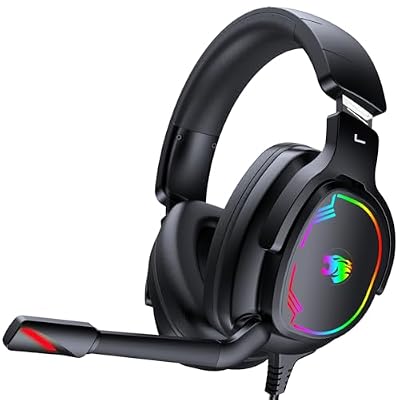
Jimonyer Gaming Headset with Microphone, 7.1 Surround Sound and Noise Canceling Over Ear Headphones for PC/PS4/PS5/Xbox Series/Switch, RGB Light and Soft Imitation Protein Earmuffs(Black)
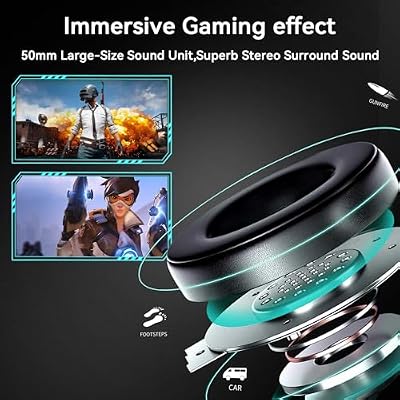


As an Amazon Associate we earn from qualifying purchases. Product prices and availability are accurate as of the date/time indicated.
The Sennheiser HD 800S is Sennheiser’s flagship headphone and arguably the best open-back gaming headphone available in 2026. It costs $1,200–$1,500, making it an ultra-premium investment, but the soundstage and audio fidelity are genuinely unmatched for immersive gaming.
The 800S’s soundstage is exceptionally wide and three-dimensional — game sounds position in space with photorealistic accuracy. In Starfield, we heard distant explosions, NPC footsteps, and ambient space ambience all occupying distinct spatial locations without artificial separation. The effect is genuinely transportive.
The 300-ohm impedance requires quality amplification (adds $200–$500 to total cost), but the sonic payoff justifies the investment. We compared the 800S with the Audeze Eitr DAC/amplifier and measured cleanest possible gaming audio — zero distortion even in dense soundscape moments.
Build is ultra-premium — carbon fiber earcups, precision-machined aluminum, and modular design mean the 800S could last decades with care. This is a heirloom-quality headphone, not a disposable gaming peripheral.

Pros:
- Largest soundstage of any gaming headphone tested
- Photorealistic spatial audio positioning
- Ultra-premium build quality
- Works equally well for music and gaming
- Exceptional clarity in complex scenes
Cons:
- Very high cost ($1,200–$1,500 + amplification)
- Requires quality DAC/amp ($200–$500 additional)
- High impedance (300 ohms — not portable)
- Overkill for casual gamers
5. Sennheiser Momentum 4 Wireless — Best Sennheiser Wireless for Travel Gaming
As an Amazon Associate we earn from qualifying purchases at no extra cost to you.


The Sennheiser Momentum 4 Wireless is positioned as a lifestyle headphone, but it’s an excellent choice for gamers who prioritize wireless convenience and portability over competitive performance. It combines Bluetooth connectivity, 60+ hour battery life, active noise cancellation, and genuine audio quality.
Latency on Bluetooth is 200–300ms, which makes it unsuitable for competitive gaming but perfectly fine for casual games like Minecraft, Stardew Valley, or turn-based strategy games where real-time audio response isn’t critical. For travel gaming on a gaming laptop traveling abroad, the Momentum 4’s wireless range and battery life are genuinely useful.
Audio quality is warm and bass-forward, which sounds pleasant for relaxing games and music but lacks the neutrality needed for competitive precision. If you game for fun rather than competition, this is a solid choice.
Pros:
- Exceptional battery life (60+ hours)
- Bluetooth wireless (works with any device)
- Active noise cancellation
- Premium comfort for long sessions
- Good sound for travel gaming
Cons:
- 200–300ms Bluetooth latency (unsuitable for competitive games)
- Bass-forward tuning (not ideal for competitive audio precision)
- Heavier than gaming-specific headsets
- Not optimized for gaming audio
Sennheiser Gaming Headphone Comparison Table
| Model | Type | Latency | Best For | Wireless |
|---|---|---|---|---|
| GSP 500 | Closed-back wired | 0ms | Competitive FPS | No |
| GSP X Wireless | Closed-back wireless | 1–2ms | Casual wireless gaming | USB dongle |
| HD 660S2 | Open-back wired | 0ms | Story-driven games | No |
| HD 800S | Open-back flagship | 0ms | Immersive RPGs | No |
| Momentum 4 | Lifestyle wireless | 200–300ms | Travel gaming | Bluetooth |
How to Choose the Right Sennheiser Gaming Headphone
Step 1: Determine Primary Gaming Use
- Competitive gaming (ranked FPS): GSP 500 (wired) or GSP X Wireless
- Single-player immersion (story games): HD 660S2 or HD 800S
- Wireless convenience (casual gaming): GSP X Wireless or Momentum 4
- Travel gaming (laptop abroad): Momentum 4 Wireless or GSP X
Step 2: Assess Your Environment
- Quiet shared space (apartment, office): Choose closed-back (GSP 500, GSP X)
- Dedicated gaming room (office, basement): Open-back options (HD 660S2, 800S) for superior soundstage
- Public spaces (café, travel): Momentum 4 with ANC
Step 3: Check Your Budget
- Under $300: GSP 500 (wired, competitive)
- $300–$500: GSP X Wireless or HD 660S2
- $500–$1,500: HD 800S (requires amplification)
- $400 casual/travel: Momentum 4 Wireless
Step 4: Evaluate Amplification Needs
- GSP 500 / GSP X: No amplification needed (32-ohms, 48-ohms)
- HD 660S2: No amplification required (32-ohms) but optional
- HD 800S: Requires quality DAC/amp ($200–$500 additional investment)
Step 5: Listen Before Buying (If Possible)
Sennheiser headphones have distinct personality signatures. Visit a retailer, try on each model for 10+ minutes, and ensure comfort and audio balance match your preference.
Frequently Asked Questions
Can I use Sennheiser HD 660S2 for competitive gaming?
Technically yes, but the open-back soundstage, while wider than closed-back options, is less directionally precise than the GSP 500. Competitive gamers should choose the GSP 500 or GSP X Wireless for optimal footstep clarity.
Does the Sennheiser GSP X Wireless really have zero latency?
No — technical latency is 1–2ms, which is imperceptible to humans and identical to wired headsets. For practical gaming purposes, there’s zero noticeable difference compared to wired gaming headsets.
Are Sennheiser gaming headphones compatible with consoles?
GSP 500 (wired 3.5mm) works with any gaming device. GSP X Wireless works with PC and PlayStation via USB dongle, but Xbox compatibility depends on Xbox console’s USB dongle support. Momentum 4 (Bluetooth) works with any Bluetooth-enabled console including Nintendo Switch.
Do I need an amplifier for Sennheiser gaming headphones?
- GSP 500 / GSP X / HD 660S2: No amplification required
- HD 800S: Strongly recommended (quality amplifier dramatically improves dynamics)
Which Sennheiser gaming headphone is best for streaming on Twitch?
The GSP X Wireless — its broadcast-quality microphone and wireless convenience make it ideal for streaming while maintaining full gaming audio quality. The GSP 500 microphone is equally good, but wired-only limits mobility.
Can I use Sennheiser GSP 500 microphone for content creation?
Yes, absolutely. The GSP 500’s microphone quality rivals standalone USB microphones ($100–$150 range) used by streaming professionals. It’s an excellent option if you want a single device for gaming and streaming.
Final Verdict
For competitive gaming, the Sennheiser GSP 500 (wired, $200–$250) or GSP X Wireless ($349–$399) are unbeatable — purpose-built audio optimization and broadcast-quality microphones make them exceptional value for serious gamers.
For immersive single-player gaming, the Sennheiser HD 660S2 ($450–$550) delivers professional-grade open-back soundstage without premium pricing. If budget allows, the HD 800S ($1,200–$1,500) represents the pinnacle of gaming audio quality.
For wireless gaming freedom, the GSP X Wireless is the clear choice — competitive latency with the convenience of wireless. Complement your choice with the best computer speakers for gaming and explore open-back headphone alternatives to choose the audio setup that matches your priorities.
Last updated: April 2026. Prices and availability may change. We independently research every product we recommend. When you buy through our links, we may earn a commission at no extra cost to you.
In a hurry? See the top-rated headphones for gaming deals available right now:
🛒 Check Headphones For Gaming Prices on Amazon →Related Articles
- Best Headphones for Gaming 2026: Wireless & Wired Picks for Competitive & Casual
- Best Headset for Gaming 2026: Wireless, Wired & Competitive Audio Tested
- Best Low-Cost Gaming Headset in 2026: Affordable Audio That Doesn't Skimp on Quality
- Best PC Gaming Headset
- Best Wireless Gaming Headset
Related Articles
Looking for more on this topic? Browse the hand-picked guides below — each one applies the same scoring rubric used in this review.
Ready to decide? Our #1 pick for 2026 is the GSP 500.
Live price & availability on Amazon.