Affiliate disclosure: As an Amazon Associate we earn from qualifying purchases. This post contains affiliate links — if you buy through them we may earn a small commission at no extra cost to you. This never affects our recommendations.
As an Amazon Associate we earn from qualifying purchases at no extra cost to you.

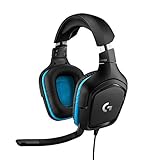
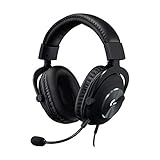


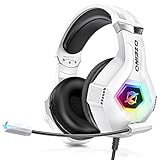

In a hurry? See the top-rated Wired Gaming Headset for PC deals available right now:
🛒 Check Wired Gaming Headset For Pc Prices on Amazon →🛒 Best Price Today on Amazon
Prime members get fast, free shipping on everything above, plus member-only deals. New members get a 30-day free trial — cancel anytime.
Start 30-Day Prime Free Trial →See Today’s Amazon DealsIntroduction: Why Wired Still Wins for PC Gaming in 2026
Wireless headsets have improved dramatically, but wired remains the gold standard for serious PC gaming — and for good reason.
Zero latency guarantee. Even the best wireless headsets introduce 10–40ms of audio latency depending on the protocol. For competitive shooters, that gap between hearing a footstep and reacting to it matters. Wired eliminates the variable entirely.
No charging interruptions. A dead headset mid-session is a real problem. Wired headsets draw power from your PC — plug in, play indefinitely.
USB DAC advantage. USB gaming headsets bypass your motherboard’s onboard audio entirely. Motherboards are electrically noisy environments; their integrated DACs pick up interference from GPU coils, RAM, and power circuitry. A USB headset ships with its own dedicated DAC and amp chain, often delivering measurably cleaner audio than even mid-range soundcards.
Audiophile signal chain. For the purists: a 3.5mm headset fed through a quality external DAC/amp (like the FiiO K3 or Schiit Modi/Magni stack) will outperform any wireless headset at the same price tier. Wired is the foundation of every high-end audio chain.
This guide covers the five best wired gaming headsets for PC in 2026, across USB, USB-C, and 3.5mm connections. We’ve evaluated driver quality, mic clarity, build, comfort, and software — then ranked them for real use cases.
Quick Comparison Table
| Headset | Driver | Connection | Surround | Mic Quality | Approx. Price |
|---|---|---|---|---|---|
| SteelSeries Arctis Nova Pro | 40mm Neodymium | USB (dual DAC) | 360° Spatial | Excellent (ClearCast Gen 2) | ~$250 |
| HyperX Cloud III | 53mm Dynamic | USB-C + 3.5mm | DTS Headphone:X | Very Good | ~$100 |
| Razer BlackShark V2 | 50mm TriForce | 3.5mm | THX Spatial Audio | Very Good (HyperClear) | ~$100 |
| Corsair HS80 RGB USB | 50mm Custom | USB | Dolby Atmos 7.1 | Good | ~$100 |
| Sennheiser GSP 600 | 40mm Proprietary | 3.5mm (2-cable) | None (stereo) | Excellent (studio-grade) | ~$200 |
Top 5 Wired Gaming Headsets for PC in 2026
1. SteelSeries Arctis Nova Pro (Wired) — Best Overall Wired PC Headset
The short version: The Nova Pro Wired is the most technically accomplished wired gaming headset you can buy in 2026. It’s priced for enthusiasts, but it earns every dollar.
Key Specs:
- Drivers: 40mm neodymium, hi-res audio certified (up to 40kHz)
- Connection: USB (dual DAC system — gaming + reference modes)
- Frequency response: 10–40,000Hz
- Mic: ClearCast Gen 2 bidirectional noise-cancelling
- Weight: 336g
- Software: SteelSeries GG / Sonar
What makes it stand out is the dual-DAC architecture. One DAC profile is tuned for spatial gaming audio; the second is a flat reference mode for music and content creation. You switch between them with a single button. The Sonar software suite gives you per-application EQ routing — a feature usually reserved for dedicated soundcards.
The ClearCast Gen 2 mic uses bidirectional pickup to eliminate ambient noise without the hollow, over-processed sound common in unidirectional gaming mics. Discord, Teamspeak, and streaming reviewers consistently rate it among the clearest gaming mics available.
Build quality is all-metal and premium ski-goggle-band suspension. Comfort over multi-hour sessions is exceptional — the suspension band self-adjusts with no clamping.
Pros:
- Dual DAC system is genuinely useful
- Hi-res audio certified — widest frequency response in this roundup
- ClearCast Gen 2 mic is best-in-class
- Sonar software is the best audio routing suite in gaming
- Exceptional long-session comfort
Cons:
- Expensive at ~$250
- Sonar software Windows-only
- Slightly bass-light out of box (correctable via EQ)
Who it’s for: PC gamers who want the best wired audio experience available and use their headset for gaming, music, and content creation.
2. HyperX Cloud III — Best All-Rounder Under $100
The short version: The Cloud III refines an already excellent formula with larger drivers, better materials, and dual connection options. It’s the most versatile wired headset at this price.
Key Specs:

- Drivers: 53mm angled dynamic neodymium
- Connection: USB-C + 3.5mm (detachable cable)
- Frequency response: 10–21,000Hz
- Mic: Detachable, noise-cancelling, cardioid
- Weight: 320g (USB-C cable), 298g (3.5mm cable)
- Software: HyperX NGENUITY
The 53mm drivers are larger than anything else in this price range. Larger drivers don’t automatically mean better sound — driver tuning matters more — but HyperX has calibrated these well. The soundstage is noticeably wider than the Cloud II, and low-frequency extension is strong without bleeding into the mids.
Dual connection is a practical advantage. USB-C gives you DTS Headphone:X spatial audio and onboard DSP. The 3.5mm cable bypasses all of that for a clean analog signal — useful if you’re running your own external DAC/amp. Few headsets at $100 offer this flexibility.
The aluminum frame is built to survive drops and travel. The leatherette earpads are plush, and the memory foam density is appropriate — not so soft it collapses under clamping pressure.
Pros:
- 53mm drivers deliver wide, detailed soundstage
- USB-C + 3.5mm dual connection is genuinely flexible
- Solid aluminum frame — built to last
- Detachable mic reduces wear on the connection point
- DTS Headphone:X spatial is among the better implementations at this price
Cons:
- Leatherette traps heat over long sessions
- NGENUITY software is functional but unremarkable
- Mic quality a step below the Nova Pro
Who it’s for: Gamers who want one headset that works across PC, console, and mobile without compromise.
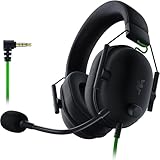
3. Razer BlackShark V2 — Best 3.5mm Headset for Competitive Gaming
The short version: The BlackShark V2 is tuned for competitive play — precise, detail-forward audio that prioritizes positional accuracy over bass impact, with a mic that punches well above its price.
Key Specs:
- Drivers: 50mm TriForce Titanium (three-zone frequency split)
- Connection: 3.5mm (USB sound card included)
- Frequency response: 12–28,000Hz
- Mic: HyperClear Cardioid, detachable
- Weight: 262g
- Software: Razer Synapse + THX Spatial Audio
The TriForce driver design splits the 50mm driver into three distinct zones — one for high, one for mid, one for low — each tuned independently. The result is notably cleaner separation than a single-voice-coil driver of equivalent size. Footsteps, gunshots, and environmental audio land in distinct positions rather than blurring together.
At 262g, it’s the lightest headset in this roundup. Lightweight matters for extended competitive sessions where headset fatigue compounds.
The HyperClear Cardioid mic has an unusually wide cardioid polar pattern that captures voice naturally while rejecting keyboard and fan noise effectively. Razer includes a USB sound card dongle that adds software volume control and THX Spatial Audio activation — the THX implementation here is one of the more transparent spatial solutions available.
Pros:
- TriForce drivers deliver best positional audio in this roundup
- Lightest headset here at 262g — minimal fatigue
- HyperClear mic is excellent for a detachable gaming mic
- USB sound card included — adds DSP without replacing your headset
- THX Spatial is well-tuned for FPS titles
Cons:
- 3.5mm only (plus dongle) — less clean than native USB
- Velour earpads attract debris
- Bass-light for music and casual listening
- THX Spatial Audio requires separate subscription after trial
Who it’s for: Competitive PC gamers — CS2, Valorant, Apex — who want maximum positional accuracy and low weight.
4. Corsair HS80 RGB USB — Best for Long Sessions and Comfort
The short version: The HS80 RGB USB is built around one priority: comfort. It’s the headset you reach for when you know you’ll be playing for six hours straight.
Key Specs:

- Drivers: 50mm custom neodymium
- Connection: USB-A
- Frequency response: 20–20,000Hz
- Mic: Detachable omnidirectional, noise-filtering
- Weight: 370g
- Software: Corsair iCUE + Dolby Atmos 7.1
The memory foam earcups use leatherette with a microfiber finish on the inner contact surface — a material choice that reduces heat buildup compared to full leatherette while maintaining the seal. The headband uses a reinforced steel yoke. At 370g it’s the heaviest headset in this guide, but the weight distribution and pad density are calibrated well enough that it doesn’t feel heavy in practice.
Audio tuning is warm and V-shaped — boosted bass and presence, slightly recessed mids. This works well for cinematic games (RPGs, story games, shooters with heavy sound design) and less well for competitive titles where midrange clarity drives positional cues.
Dolby Atmos 7.1 via iCUE is functional and reasonably convincing for the price. iCUE itself is Corsair’s full ecosystem software — RGB control, per-app audio profiles, EQ — and it integrates with other Corsair peripherals.
Pros:
- Best-in-class comfort for multi-hour sessions
- Dolby Atmos 7.1 included at no extra cost
- iCUE integration for Corsair ecosystem users
- Warm, enjoyable tuning for casual and story gaming
- Durable steel construction
Cons:
- Heaviest headset in this roundup at 370g
- V-shaped tuning hurts competitive positional accuracy
- Mic quality is the weakest of the five — passable, not impressive
- iCUE software is resource-heavy
Who it’s for: Casual and RPG gamers who prioritize comfort above all else, especially existing Corsair iCUE users.
5. Sennheiser GSP 600 — Best Audiophile-Leaning Gaming Headset
The short version: The GSP 600 is for the gamer who also takes music seriously. It’s a studio-informed headset with a two-cable system, a broadcast-quality mic, and flat-enough tuning to use with a proper DAC/amp stack.
Key Specs:
- Drivers: 40mm proprietary Sennheiser
- Connection: 3.5mm (dual-cable: PC split + single mobile)
- Frequency response: 10–30,000Hz
- Mic: Detachable broadcast-grade, flip-to-mute
- Weight: 395g
- Software: None (fully analog)
The two-cable system is the GSP 600’s most practical differentiator. The PC split cable runs separate 3.5mm connectors for headphone and mic to your front panel or soundcard. The single mobile cable terminates in a TRRS plug for phones and consoles. No adapters, no dongles — the right cable for the right device.
Sennheiser’s driver tuning is the most neutral in this roundup. The response curve is relatively flat with a controlled bass shelf — unlike the hyped V-shape of most gaming headsets. This is both a feature and a limitation: it sounds exceptional on a quality DAC/amp stack, but can feel thin on a basic onboard audio output.
The broadcast mic is the star for content creators. Pickup pattern is tight and consistent, with natural voice reproduction that doesn’t need post-processing to sound professional. The flip-to-mute mechanism gives tactile feedback — you feel it engage.
Pros:
- Most neutral, detailed audio in this roundup
- Broadcast-quality mic — best for streaming and recording
- Dual-cable system covers PC and mobile natively
- Fully analog — works with any DAC/amp chain
- Flip-to-mute mic has tactile feedback
Cons:
- No software, no DSP — purely passive
- Sounds thin on poor-quality onboard audio; needs a DAC/amp to shine
- Heaviest headset here at 395g
- Earcup adjustment mechanism feels dated
Who it’s for: Audiophile gamers and streamers who already own or plan to buy a quality external DAC/amp and want studio-grade mic performance.
How to Choose a Wired Gaming Headset for PC
USB vs 3.5mm vs USB-C
USB-A headsets are the most common for gaming. They ship with an integrated DAC/amp — your PC just sees them as a USB audio device. Quality ranges from adequate (budget) to excellent (Nova Pro’s dual-DAC system). You get consistent audio regardless of your motherboard.

3.5mm headsets rely entirely on whatever audio output you connect them to. On a quality external DAC or soundcard, they can outperform equivalent USB headsets. On noisy integrated audio, they’ll pick up interference. If you already own an external DAC/amp, 3.5mm is often the better choice. If you don’t, USB is safer.
USB-C is increasingly common on 2025–2026 headsets. Functionally equivalent to USB-A for audio purposes — the connection carries digital audio data to the headset’s onboard DAC. The primary benefit is physical: USB-C is more durable and reversible. The HyperX Cloud III’s dual USB-C/3.5mm approach is the smartest implementation in this roundup.
Onboard DAC Quality
Not all USB DACs are equal. Budget USB headsets often use generic DAC chips with limited bit depth and sample rate support. Premium headsets like the Nova Pro use dedicated ESS or AKM DAC chips. If specifications matter to you: look for 24-bit/96kHz support at minimum for genuine hi-res audio playback.
Driver Size vs Tuning
A common misconception: bigger drivers = better sound. Driver diameter (40mm, 50mm, 53mm) determines maximum acoustic displacement — relevant for bass extension. But tuning — the voicing applied via driver geometry, housing resonance, and EQ curve — determines how the headset actually sounds. A well-tuned 40mm driver (Nova Pro, GSP 600) will outperform a poorly-tuned 53mm driver in most listening scenarios.
Detachable Mic Benefit
Detachable mics extend headset lifespan significantly. The mic boom connection is the first component to fail — the joint experiences constant flex. All five headsets in this guide use detachable mics. This also lets you use the headset without a boom mic for music listening, which improves aesthetics and removes an unnecessary weight point.
Earcup Padding Materials
Leatherette (PU/faux leather): Provides best passive isolation and bass seal. Traps heat over long sessions. Cheaper leatherette cracks within 1–2 years with heavy use; quality leatherette lasts much longer.
Velour/fabric: Breathable, runs cooler, more comfortable for 4+ hour sessions. Slightly less isolation; some bass bleeding through the fabric weave. Picks up debris and is harder to clean.
Memory foam density: Higher density foam maintains shape and seal over long sessions. Low-density foam compresses, reducing isolation and increasing clamping pressure on your jaw.
Final Verdict
Top Pick: SteelSeries Arctis Nova Pro (Wired)
The dual-DAC system, ClearCast Gen 2 mic, hi-res audio certification, and Sonar software make this the most capable wired PC gaming headset in 2026. If budget isn’t the constraint, this is the answer.
Runner-Up: HyperX Cloud III
The most versatile headset in the $100 bracket. Large drivers, dual connection options, solid build, and a detachable mic combine into a package with no obvious weaknesses. The practical choice for most PC gamers.
Best Budget / Audiophile Pick: Razer BlackShark V2
At ~$100 with the USB sound card included, the BlackShark V2 delivers competitive-focused audio that rivals headsets at twice the price for positional accuracy. The TriForce driver design is legitimately differentiated. If you primarily play competitive FPS titles, this is your pick.
Prices are approximate and subject to change. Affiliate links support this site at no additional cost to you.
Related Articles
Looking for more on this topic? Browse the hand-picked guides below — each one applies the same scoring rubric used in this review.
Frequently Asked Questions
What is the best gaming headset wired pc in 2026?
The best gaming headset wired pc depends on your budget and how you plan to use it. The options compared above are our top-rated picks based on real customer ratings, build quality, and overall value — start with the highest-rated model that fits your budget.
How much should I expect to spend on a gaming headset wired pc?
Prices vary by brand and features. Budget options cover the essentials, while mid-range and premium models add durability, performance, and extra features. Compare the prices in the list above to find the best value for your needs.
What should I look for when buying a gaming headset wired pc?
Focus on what matters most for your use case — build quality, compatibility, performance, warranty, and verified customer reviews. Every pick above is selected to balance these factors.
Are budget gaming headset wired pc options worth it?
Yes. For most people a well-reviewed budget or mid-range gaming headset wired pc delivers excellent value. You only need to spend more if you specifically require premium materials or top-tier performance.
How did we choose these gaming headset wired pc picks?
We compare current Amazon ratings, review counts, key features, and price to surface the options with the best real-world value. The list is refreshed as ratings and availability change.